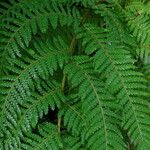
Dicksonia antarctica
Australian tree fern · Soft tree fern · Bristly Tree Fern · Australian treefern · Australian Tree Ferns
Description
Source: leafsnapDicksonia antarctica, the soft tree fern or man fern, is a species of evergreen tree fern native to eastern Australia, ranging from south-east Queensland, coastal New South Wales and Victoria to Tasmania.
💡 The "trunk" of this tree fern is essentially the decaying remains of its earlier frond growth. While it can grow up to nearly 15 meters tall, it more commonly reaches heights of 1.8 to 6 meters. This tree fern has been recognized with the Royal Horticultural Society's Award of Garden Merit.
🌳 Apart from its primeval beauty, australian tree fern has carved out a place in landscaping and horticulture around the world. It not only adds an exotic note to gardens, but australian tree fern is also valued by enthusiasts for its capacity to adapt to climates beyond its native habitat. That adaptability has produced a horticultural appeal that draws attention in public and private gardens and in conservatories worldwide. Although it is not chiefly used for products such as oils or spices, its ornamental worth is considerable and widely admired.
Care Guide
💧 Water
The Australian tree fern, native to the rainforests of Australia, thrives in environments with high humidity and consistently moist soil. Watering it twice a week is ideal for promoting its growth. As an evergreen plant, it can store water in its trunk, which allows it to tolerate moderate drought once it is well-established. This makes it a suitable choice for outdoor cultivation.
How should I water my Australian tree fern correctly?
To keep your Australian tree fern happy, it needs consistently moist soil that resembles its natural habitat. This means giving it water every one or two days. It's important to never let the soil dry out, so as soon as the top layer feels slightly dry, it's time to water again. Make sure to thoroughly soak the soil until water drains out from the bottom of the pot. After the excess water has drained, be sure to dispose of it so the pot doesn't sit in a puddle. This method will prevent the soil from getting too dry.
What do I need to think about when I water my Australian tree fern?
The frequency of watering your Australian tree fern is influenced by the humidity in the air. Higher humidity means less frequent watering. Avoid placing the plant near heating or cooling vents as it dries out the plant quickly. Choose a draft-free location. The fern prefers dappled and indirect sunlight and temperatures between 55-80 degrees F (13-27 degrees C). Too much sun and warmth can dehydrate the fern. Rainwater or distilled water is best for the plant, although tap water usually works fine. Tap water with minerals and chemicals can cause brown leaf tips due to the fern's delicate leaves. Small pots can dry out quickly, so it's best to use a larger pot with more room for the roots and potting medium. Consider using a self-watering planter for the fern. This type of pot keeps the soil consistently moist, preventing the need for frequent watering and providing a continuous supply of water to the roots.
☀️ Light Full shade
The Australian tree fern leans towards moderate sunlight levels but is considerably tolerant of lower light conditions. This trait is due to its origin in environments with thick upper foliage, where it has become used to the filtering of sunlight rather than direct exposure. The absence of sunlight or too much of it may obstruct its strong growth and vibrant green appearance. When it comes to its regrowth phase, there doesn't have to be a particular intensity of light.
What are the sunlight requirements for the Australian tree fern?
The Australian tree fern requires moderate levels of sunlight and is substantially adaptable to lower light conditions, thanks to its origin in habitats with dense overhead foliage. It thrives in partial sun, receiving about 3-6 hours of sunlight, and can also grow in full shade, with less than 3 hours of sunlight. However, too much or too little sunlight can impede its robust growth and lush greenery. Observing how sunlight moves through your garden will help you choose spots that provide the perfect balance for your plants.
How can artificial lighting benefit indoor Australian tree ferns?
Indoor Australian tree ferns require adequate lighting for optimal growth. When natural sunlight is insufficient, particularly in less sunny spaces or during winter, artificial lighting is a crucial solution. LED lights are popular for indoor plants because they can provide specific wavelengths needed for growth. Full sun plants need 30-50W/sq ft of artificial light, partial sun plants need 20-30W/sq ft, and full shade plants need 10-20W/sq ft. The light source should be placed 12-36 inches above the plant and kept on for 8-12 hours per day to mimic natural daylight hours.
What symptoms indicate inappropriate light levels for the Australian tree fern?
Symptoms of inappropriate light levels for the Australian tree fern include small and lighter-colored new leaves, indicating a lack of chlorophyll and essential nutrients. Leggy or sparse growth, faster leaf drop, and slower or no new growth can occur under low light conditions. Excessive sunlight can cause chlorosis, where leaves turn yellow, sunscald, leaf curling, wilting, and leaf scorching, showing damage on the tissue. These symptoms highlight the plant's struggle with either too much or too little light.
What solutions can help Australian tree ferns recover from inappropriate light exposure?
To help Australian tree ferns recover from inappropriate light exposure, gradually adapt them to changing light conditions by shifting them to sunnier spots each week until they receive the desired amount of sunlight. If moving the plant isn't feasible, consider using artificial lighting, keeping a lamp on for at least 8 hours daily or investing in professional grow lights. For outdoor plants, avoid sudden changes in light intensity that might cause sunburn. To increase sunlight exposure, you might need to reduce obstructions by pruning or even transplanting smaller plants during their dormant period to locations with better sunlight and good drainage. Remember, while parts of the plant that have suffered may not recover, new growth should be healthy with improved light conditions.
🌡️ Temperature 15–35°C
The Australian tree fern initially originates from a temperate climate, with temperatures fluctuating between 59 and 95 °F (15 to 35 ℃). These conditions are optimal for its growth, and it might need seasonal modifications if maintained in climates that are either colder or hotter.
What is the optimal environment for an Australian tree fern?
The Australian tree fern, known botanically as Dicksonia antarctica, thrives in a temperate environment where temperatures range from 59 to 95°F (15 to 35°C). This indicates its preference for moderate climates and can require adjustments if kept outside these conditions, potentially needing special care in regions with significantly cooler or warmer climates.
Does the Australian tree fern require special frost protection during winter?
The Australian tree fern exhibits a strong resistance to cold and typically does not require special frost protection measures during the winter months. In environments where winter temperatures are anticipated to drop below -15°C, it is advisable to provide protection by covering the plant with insulating materials like soil or straw. Additionally, watering the plant abundantly before the first freeze in autumn is recommended to ensure the soil remains moist, helping to prevent drought and water scarcity for the plant during the winter and early spring.
How does the Australian tree fern respond to low temperatures, and what solution is recommended?
The Australian tree fern is cold-tolerant, preferring temperatures above 15°C and should be kept above -10°C during the winter. If temperatures fall below -15°C, the fern may not exhibit immediate changes, but there could be a decrease in sprouting or even a lack of sprouting in spring. In such cases, removing any parts of the plant that have failed to sprout in spring is recommended as a solution.
How does the Australian tree fern react to high temperatures, and what are the recommended precautions?
During the summer, it's ideal to keep the Australian tree fern below 35°C. Temperatures exceeding 41°C can cause the leaves to lighten in color, curl, and become more susceptible to sunburn. The recommended solution for these conditions includes trimming away the sunburned and dried parts of the plant. Additionally, moving the plant to a location that provides shade during the midday and afternoon sun or employing a shade cloth can be beneficial. It's also advisable to water the plant in the morning and evening to maintain soil moisture.
💨 Humidity high (>60%)
This plant needs special care because it loves high humidity levels of 60-80% or more. The best way to achieve this is by placing a humidifier near the plant. Daily misting is also essential! Make sure the room has good ventilation.
🪴 Soil 4-6
🌱 Fertilizer
Feed your Australian tree fern with a granular fertilizer in the spring. Sprinkle the granules directly on the soil around the base of the plant. During its growing season, you can fertilize it with a liquid fertilizer diluted with water.
🪴 Pot & Repot 2-3 years
Repot your Australian tree fern every 2-3 years during the spring. Use a deep container to accommodate its fibrous roots. After repotting, maintain high humidity levels and provide indirect light. Be careful not to overwater the plant, as this can lead to root rot. Following these steps will help ensure that your fern grows lush and healthy.
✂️ Pruning
The Australian tree fern thrives with minimal pruning, which is best done in early spring. To maintain its health and prevent disease, focus on removing dead fronds and thinning out dense foliage to improve airflow. For your safety, be sure to wear gloves, and avoid cutting too much to protect the plant's core.
🌿 Propagating
🐛 Diseases & pets
☠️ Toxicity
The Australian tree fern has no known toxins and is not poisonous. In fact, the pith of the plant is considered a good source of starch and is eaten raw or cooked in certain regions.
Characteristics
- Plant Type
- Fern
- Life Cycle
- Perennial
- Genus
- Dicksonia
- Family
- Cyatheaceae
- Hardiness Zone
- 7-10
- Mature Height
- 4.57 m to 14.94 m
- Mature Spread
- 2.44 m to 3.66 m
- Leaf Color
- Green
- Leaf Type
- Evergreen
- Planting Time
- Spring, Summer, Autumn