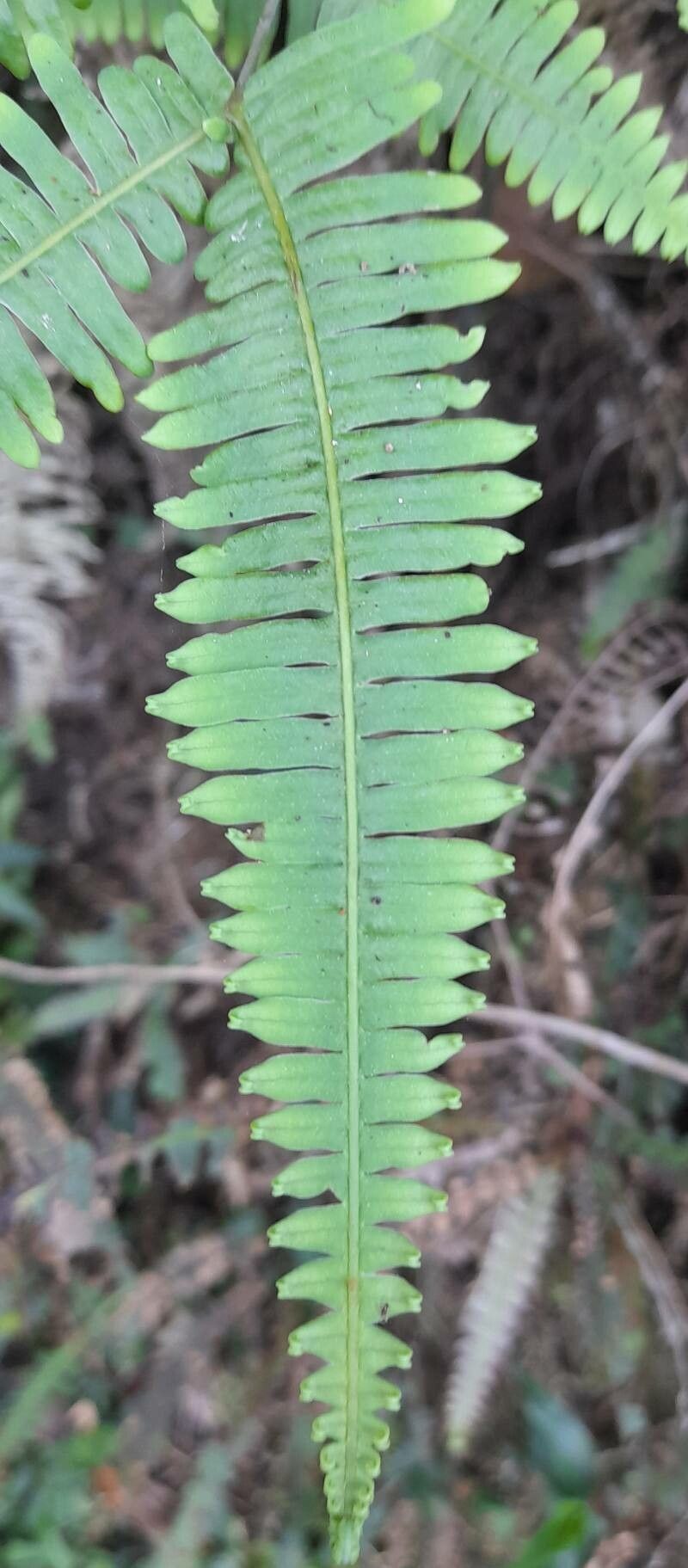
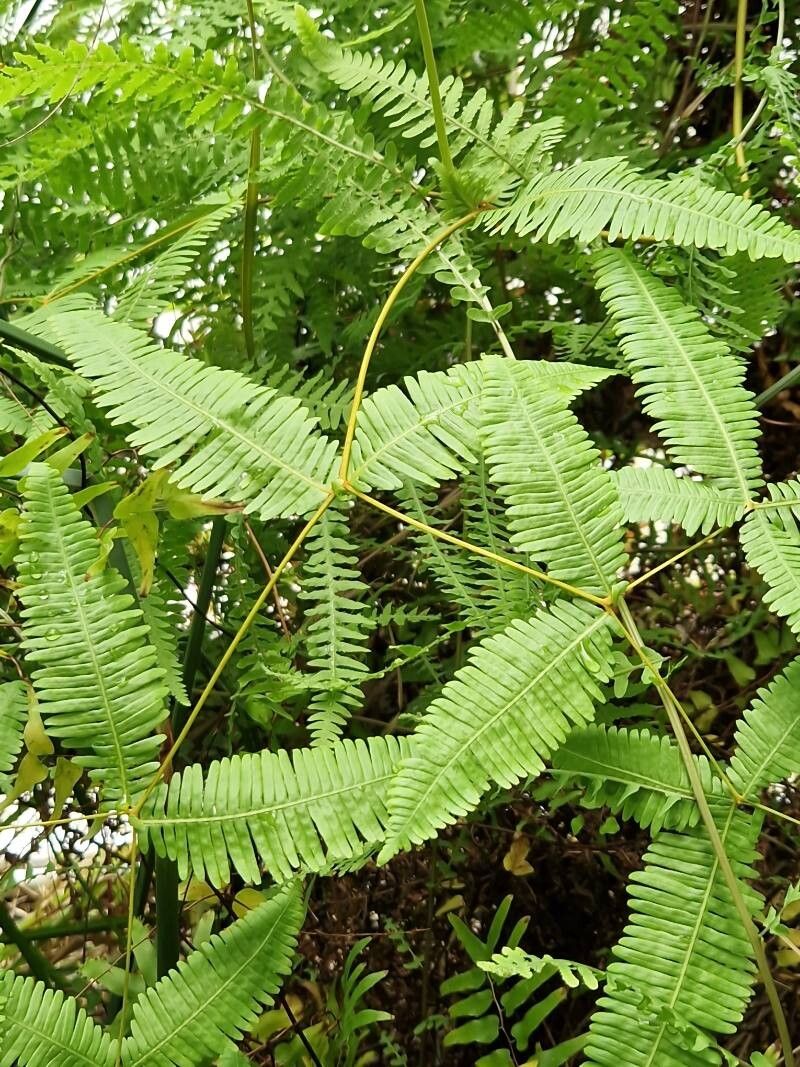
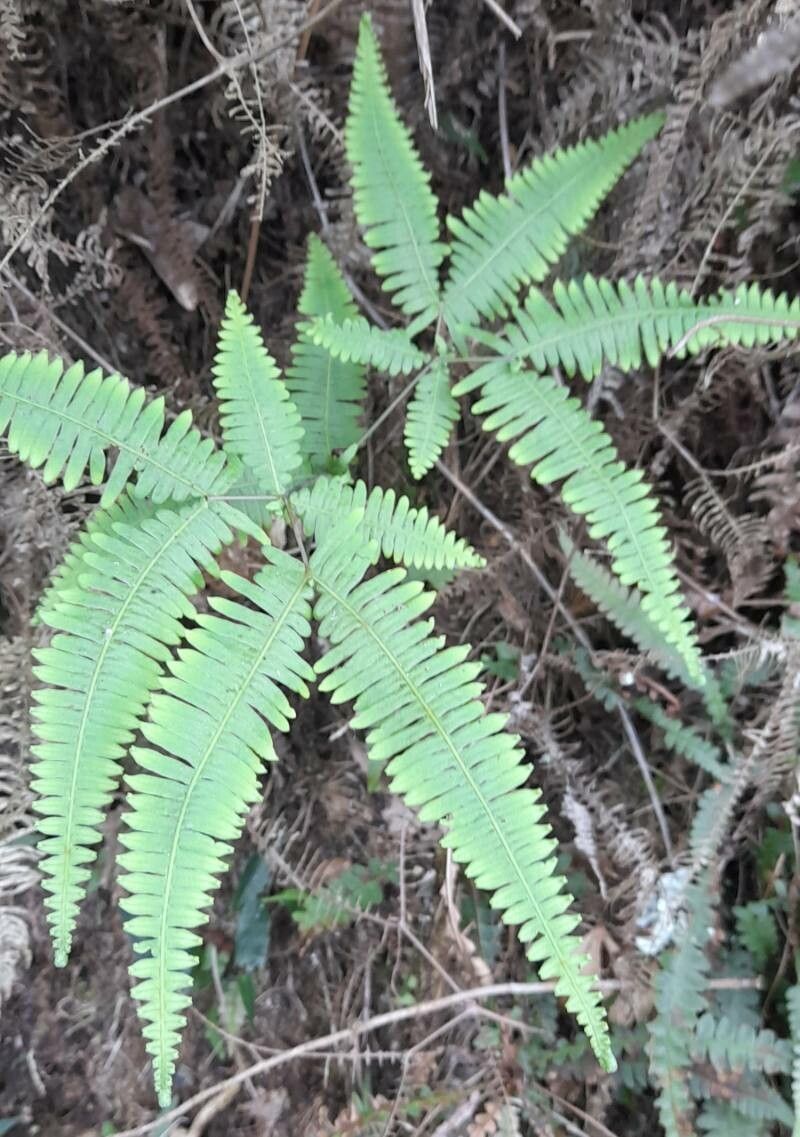
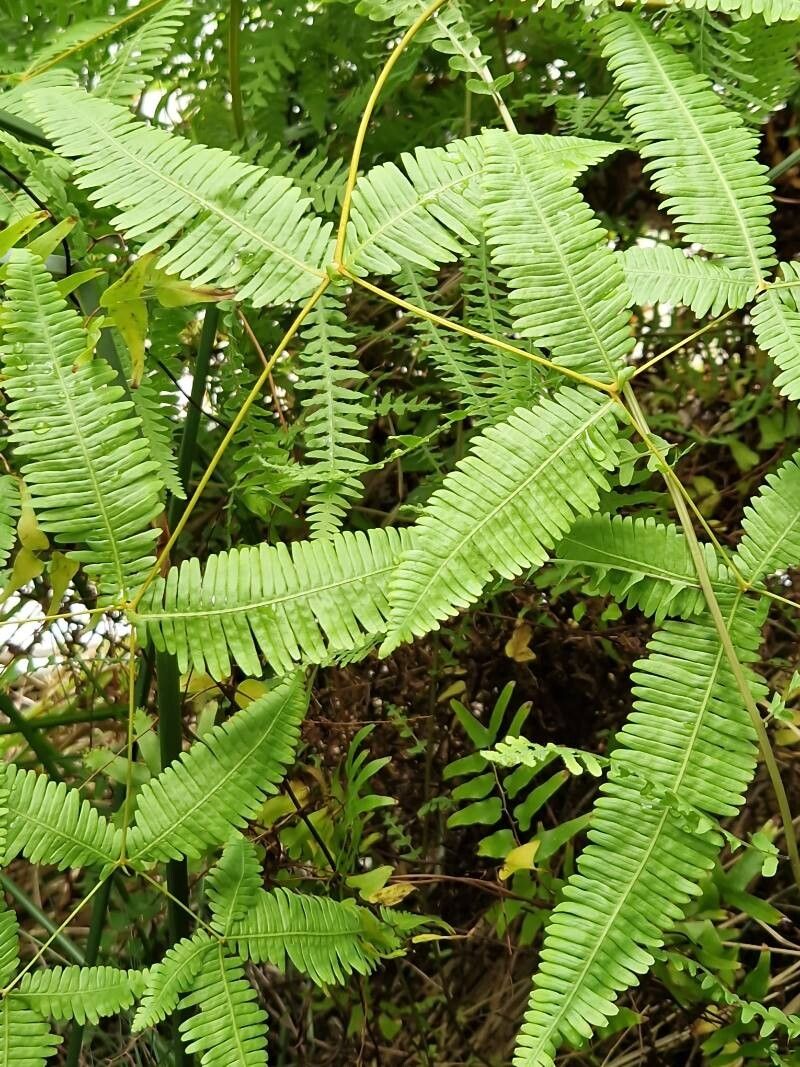
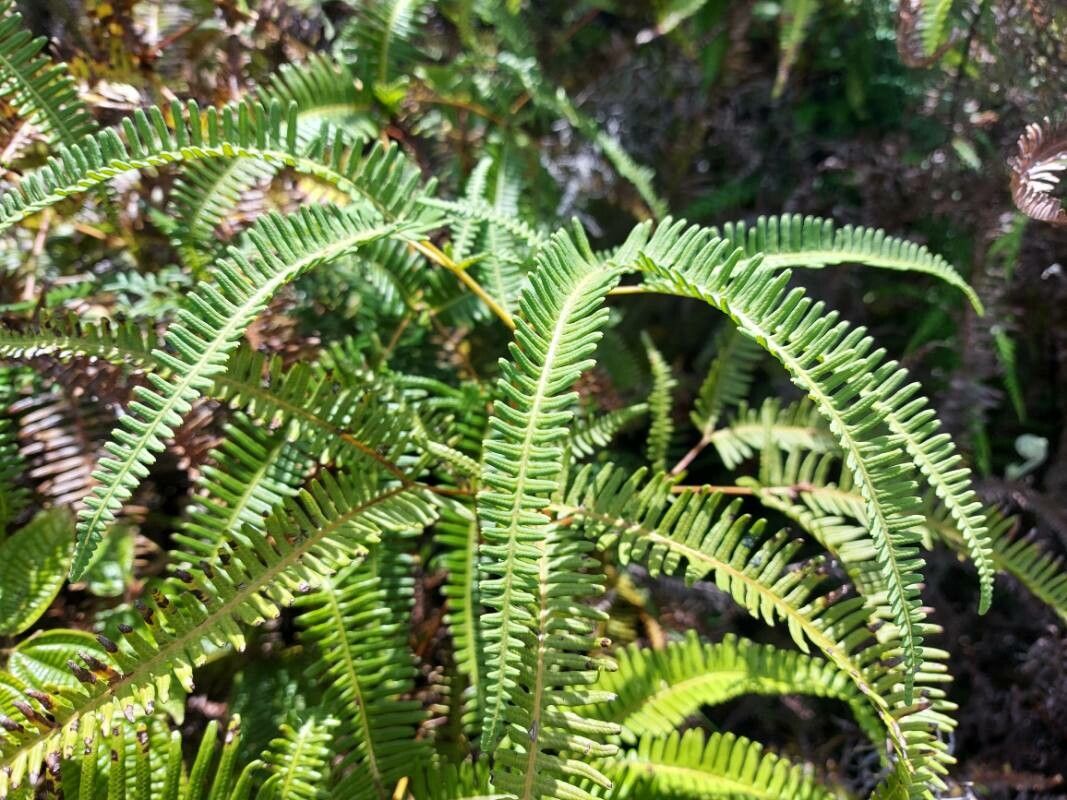
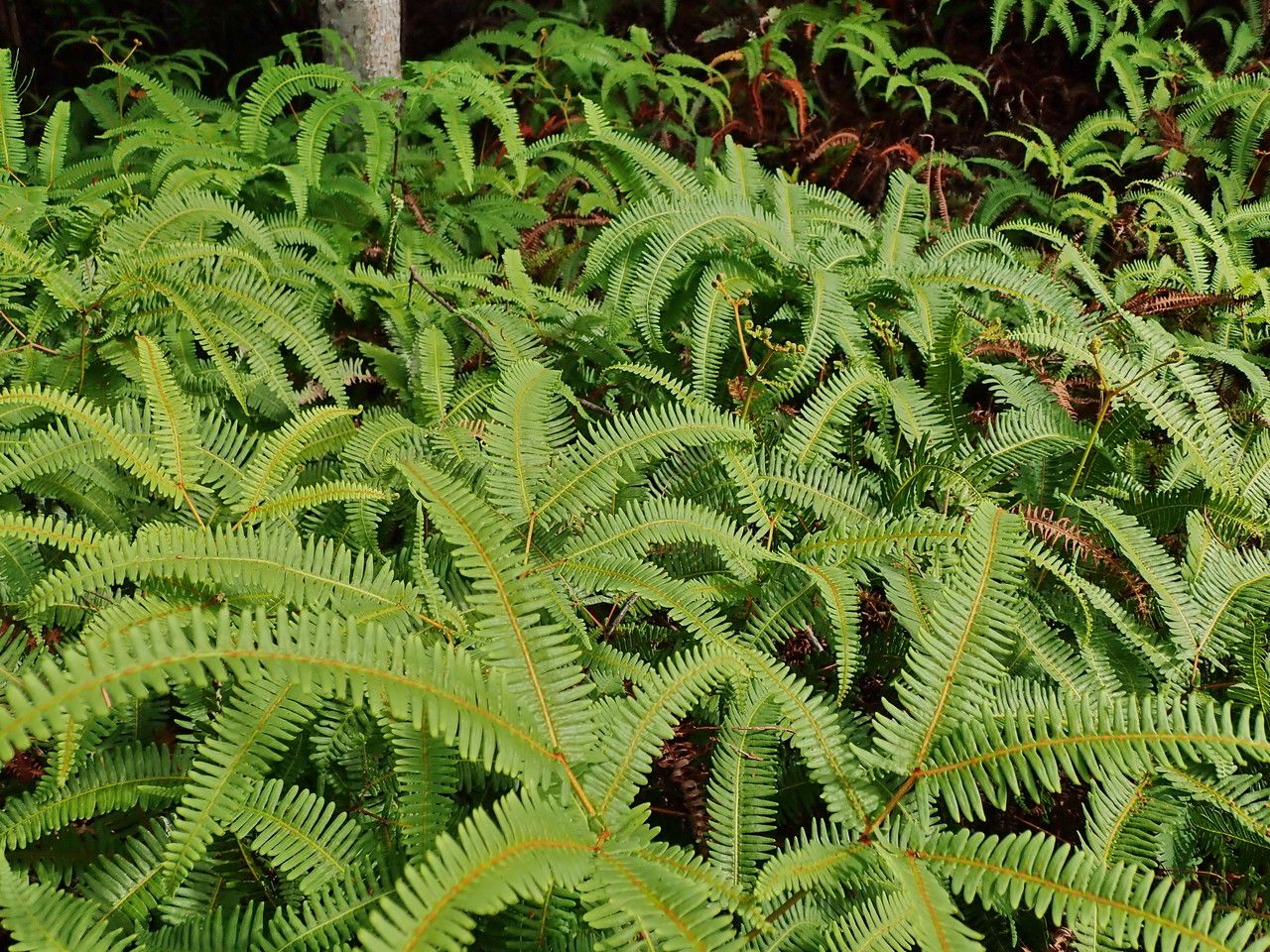
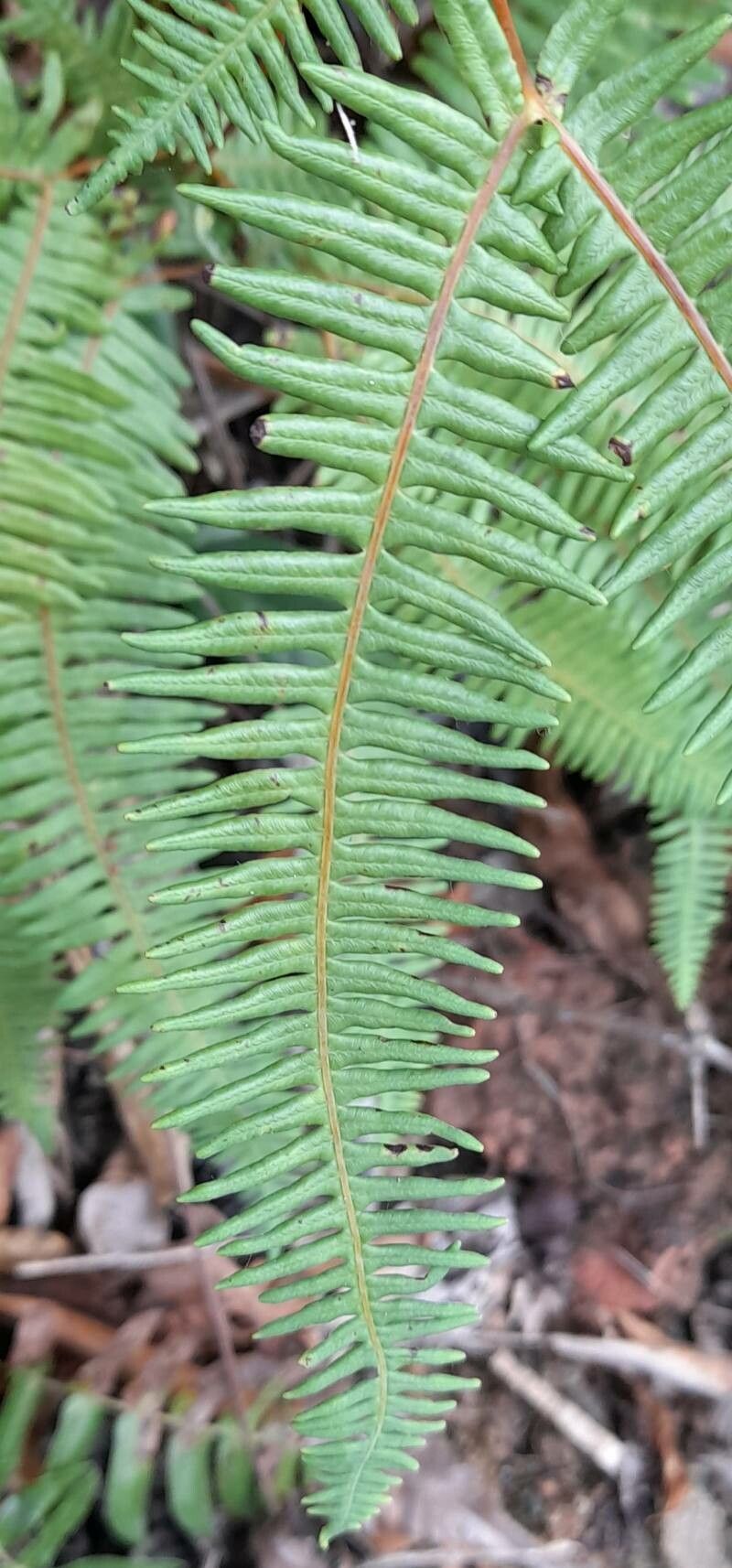
Dicranopteris flexuosa is a species of tropical fern in the family Gleicheniaceae, widely distributed across the Neotropics. Like other members of its genus, it is known for forming dense thickets in disturbed and open habitats, playing a key ecological role in tropical and subtropical forests by stabilizing soil, moderating microclimates, and promoting forest succession through rapid clonal growth and stress tolerance. Though often removed in forest management due to its dense growth, D. flexuosa may enhance ecosystem recovery by protecting soil and influencing plant community development.
Drooping forked fern generally has good resistance to disease and faces relatively few insect pests. Its care is considered difficult because it needs a moist environment and frequent watering. However, the roots are susceptible to rotting if overwatered or if the surroundings lack proper ventilation. Drooping forked fern is suitable for people with some growing experience, as most people can keep it alive for a certain period. Nevertheless, it may struggle to thrive and its leaves can dry out and become less healthy over time.
How to keep Dicranopteris Flexuosa.
Light
The drooping forked fern comes from habitats such as forest understories or rocky areas, which provide natural shade. Its preferred sunlight condition is Full Shade, but it can tolerate Partial Sun.
Temperature
Drooping forked fern grows in forest thickets. It is very sensitive to both temperature and humidity, and high temperatures, dry conditions, and strong sunlight can all make the Drooping forked fern uncomfortable. In summer it needs adequate shade and a consistently high-humidity environment. Generally it does not need special care in winter, but an extended winter drought can still be fatal to the plant.
Pruning
To promote growth in your drooping forked fern, it's best to prune it in early spring. Focus on trimming away dead or damaged fronds to improve air circulation and enhance its appearance, but be careful not to over-prune. Always use clean, sharp tools to prevent damage and disease, ensuring the plant remains healthy and visually appealing.
Botanical profile.
- Plant Type
- Fern
- Life Cycle
- Perennial
- Genus
- Dicranopteris
- Family
- Gleicheniaceae
- Hardiness Zone
- 9-11
- Mature Height
- 0.91 m to 2.13 m
- Mature Spread
- 0.91 m to 1.52 m
- Leaf Color
- Light Green, Yellow Green
- Leaf Type
- Evergreen
- Planting Time
- Spring
- Native Area
- Belize, Mexico, Peru, Panama, Jamaica, Colombia, Cuba, Bolivia, Venezuela, Guyana, El Salvador, Nicaragua, Brazil, Ecuador, Costa Rica
Other names.