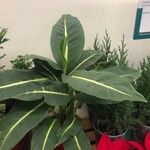
Dieffenbachia oerstedii
دیفن باخیا · Dieffenbachia Green Magic · Arrow crane
Description
Source: leafsnapDieffenbachia oerstedii is a tropical plant species belonging to the Araceae family. Commonly known as the Dumb Cane plant, it earns this name from its toxic sap, which can cause temporary speechlessness if ingested. This plant is native to Central and South America, where it thrives in rainforests and other tropical environments. Dieffenbachia oerstedii boasts large, glossy leaves that are typically green with white or yellow variegation. The leaves are oval-shaped, reaching up to 30 inches in length and 12 inches in width. The plant's stem is thick and fleshy, growing up to six feet tall. The Dumb Cane plant thrives in bright but indirect light conditions and prefers moderate humidity levels. It requires well-draining soil that should be kept consistently moist but not waterlogged. In traditional medicine, Dieffenbachia oerstedii is valued for its anti-inflammatory properties. It has been used to treat arthritis pain, skin rashes, insect bites, and more. Overall, Dieffenbachia oerstedii makes an excellent indoor ornamental houseplant, offering a touch of tropical beauty to homes and offices. However, it is important to handle the plant with care, especially around pets and children, due to its toxic properties when ingested.
Care Guide
💧 Water Every 7 days
Dieffenbachia oerstedii, originally from tropical rainforests, thrives in environments with high humidity and moist soil. It prefers consistent moisture and should be watered once a week. To maintain its vibrant appearance and support efficient photosynthesis, regular misting indoors is beneficial.
☀️ Light Partial sun
Dieffenbachia oerstedii stammt aus Lebensräumen wie dem Unterholz von Wäldern oder felsigen Gebieten, wo sie natürlichen Schatten erfährt. Sie bevorzugt Halbschatten, kann sich jedoch an volle Sonne oder dichten Schatten anpassen und zeigt damit ihre vielseitige und robuste Natur.
🌡️ Temperature 20–37.8°C
Dieffenbachia oerstedii stammt aus tropischen Regionen, in denen das Klima gewöhnlich warm und feucht ist. Daher ist sie gut an hohe Temperaturen und Feuchtigkeit angepasst. Plötzliche Temperaturschwankungen mag sie nicht und sie bevorzugt eine konstante Temperaturumgebung, weshalb man Temperaturschwankungen im Innenbereich vermeiden sollte. Kühle Temperaturen verträgt sie meist nicht und sie benötigt höhere Temperaturen zum Wachsen. Fällt die Umgebungstemperatur zu stark ab, kann die Pflanze das Wachstum einstellen oder sogar absterben.
💨 Humidity
🪴 Soil 6-7
🌱 Fertilizer
Appropriate feeding is essential for the health and appearance of Dieffenbachia oerstedii. Feed Dieffenbachia oerstedii in summer, applying fertilizer once a month throughout the season. Nutrients support growth and maintain the plant's parts. Fertilization improves Dieffenbachia oerstedii's flower display, ensuring the best blooms.
🪴 Pot & Repot Once a year
Repot Dieffenbachia oerstedii in spring or summer once it’s warm enough, choosing a pot a bit larger than the current one with adequate drainage. After repotting, water deeply and place the plant where it will receive bright, indirect light. You can also install a moss pole to support the plant as it grows.
✂️ Pruning
Dieffenbachia oerstedii features large, variegated leaves and thrives in warm, humid conditions. To maintain its shape and encourage fuller growth, it's best to prune in early spring using clean, sharp tools. Pruning at this time also helps remove any damaged leaves, leading to healthier growth, preventing legginess, and enhancing the plant's overall appearance.
🌿 Propagating
🐛 Diseases & pets
☠️ Toxicity
Dieffenbachia contains calcium oxalate, which can cause toxicity when the plant is handled improperly or eaten. Since this is a houseplant, the tendency for pets to chew on it is high. Animals who chew on the leaves will experience oral pain and intense burning, excessive drooling, and swelling that may cause difficulty in swallowing or breathing. Despite being considered as not severely toxic because of no significant consequences from indigestion, a trip to the vet is still highly advised. The oxalate component that it has may also cause swelling, drooling, and loss of speech in humans if swallowed. Human skin and eyes may also experience swelling, redness, and irritation if exposed to it. It is best to keep this plant away from the reach of children and pets.
Characteristics
- Plant Type
- Herb
- Life Cycle
- Perennial
- Genus
- Dieffenbachia
- Family
- Araceae
- Hardiness Zone
- 10-12
- Mature Height
- 2.13 m
- Mature Spread
- 49 cm
- Leaf Color
- Dark Green, Light Green
- Leaf Type
- Evergreen
- Flower Size
- 10.16 cm to 15.24 cm
- Bloom Time
- All year round
- Planting Time
- Spring, Summer, Autumn
- Harvest Time
- All year round
- Native Area
- Caribbean, South America