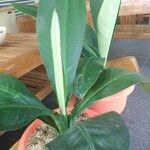
Dieffenbachia parlatorei
Travelling Plant
Description
Source: leafsnapDieffenbachia parlatorei, commonly known as the dumb cane plant, is a tropical plant native to South America. It is a popular houseplant due to its attractive foliage and ease of care. The leaves are large, glossy, and variegated with shades of green, yellow, and white. Under ideal conditions, the plant can grow up to 6 feet tall. The dumb cane plant thrives in bright but indirect light and prefers well-draining soil that is kept moist but not waterlogged. While it can tolerate low light conditions, it may not grow as vigorously or produce as much variegation in its leaves. One unique characteristic of Dieffenbachia parlatorei is that it contains calcium oxalate crystals, which are toxic if ingested by humans or pets. Therefore, it should be kept out of reach of children and pets who might be tempted to chew on the leaves. Overall, Dieffenbachia parlatorei makes an excellent indoor houseplant for those seeking an attractive foliage display with minimal maintenance requirements.
Care Guide
💧 Water Every 7 days
The Dumb Cane plant thrives with regular watering during its growing season, which is typically about twice a week. It prefers moist soil but does not tolerate standing water. During its dormant period, reduce the frequency of watering. To increase humidity around the plant, you can place trays filled with water and pebbles nearby. Additionally, keep the leaves clean by gently wiping them with a damp cloth.
☀️ Light Partial sun
Dumb cane grows naturally in habitats like forest understories and rocky areas, where it receives natural shade. It prefers partial sun but can tolerate full sun or full shade, illustrating its versatile and hardy nature.
🌡️ Temperature 20–37.8°C
Dumb cane comes from tropical areas, where the climate is generally warm and humid. As a result, it is well suited to high temperatures and humidity. It does not tolerate sudden temperature changes and prefers a steady temperature environment, so it is important to avoid indoor temperature fluctuations. It typically cannot withstand cold and requires warmer conditions for growth. If the surrounding temperature falls too low, the plant may stop growing or even die.
💨 Humidity
🪴 Soil 5-6
🌱 Fertilizer
Appropriate fertilization is essential for Dumb cane's health and appearance. Fertilize Dumb cane during the summer, repeating the treatment monthly throughout the season. Nutrients power growth and sustain the plant's tissues. Fertilizing Dumb cane enhances its flower display, helping it produce the best blooms.
🪴 Pot & Repot Once a year
Repot the dumb cane in spring or summer once it's warm enough, choosing a slightly larger pot with good drainage. Water thoroughly after repotting, and place it in a spot with bright, indirect light. Consider installing a moss pole to support the plant as it grows.
✂️ Pruning
Dumb cane requires minimal pruning, primarily focusing on the removal of damaged or diseased leaves. To manage the plant's height, trim the terminal buds if it grows larger than expected.
🌿 Propagating
🐛 Diseases & pets
☠️ Toxicity
Characteristics
- Plant Type
- Herb
- Life Cycle
- Perennial
- Genus
- Dieffenbachia
- Family
- Araceae
- Hardiness Zone
- 10-12
- Mature Height
- 0.61 m to 1.52 m
- Mature Spread
- 49 cm to 91 cm
- Leaf Color
- Dark Green, Forest Green
- Leaf Type
- Evergreen
- Flower Color
- White
- Bloom Time
- All year round
- Planting Time
- Spring, Summer, Autumn, Winter
- Harvest Time
- All year round
- Native Area
- Colombia, Venezuela