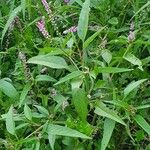
Digera muricata
False amaranth
Description
Source: leafsnapDigera muricata, commonly known as the spiny amaranth, is a plant species in the family Amaranthaceae. This herbaceous annual plant grows up to 1 meter in height and features spiny stems and leaves. The leaves are alternate, simple, ovate in shape, and have serrated margins. The flowers are small, inconspicuous, and have greenish-white petals arranged in clusters at the ends of branches. Native to Africa, the spiny amaranth has spread across tropical regions of Asia, Australia, and the Americas. It thrives in sandy soils but can also tolerate clay soils as long as they are well-drained. The plant has several medicinal uses, such as treating fever, diarrhea, dysentery, and other gastrointestinal disorders due to its anti-inflammatory properties. It also contains antioxidants that help prevent cell damage caused by free radicals. In addition to its medicinal properties, Digera muricata can be used for food. Young leaves can be cooked like spinach or added raw to salads, while the seeds can be ground into flour for making bread or porridge. Overall, Digera muricata is an important plant species due to its various uses, ranging from medicine to food, making it a significant part of many cultures around the world.
Care Guide
💧 Water Every 7 days
☀️ Light Full sun
False amaranth is native to habitats that receive abundant sunlight, such as open fields and sunny meadows. It favors full sun, although it can also tolerate partial sun.
🌡️ Temperature 20–37.8°C
False amaranth prefers moderate temperatures, similar to what people generally find comfortable. It does well in conditions that are neither overly hot nor overly cold. The chief concern with high temperatures is the risk of sunburn, so providing some shade in summer is recommended to avoid excessive heat. When temperatures fall, False amaranth becomes dormant. If you want it to keep growing, you need to maintain warmer temperatures through the winter. Frost can damage the plant and should be avoided.
💨 Humidity
🪴 Soil 6-7
🌱 Fertilizer
For False amaranth, choose natural organic materials like compost, grass clippings, or manure. A slow-release granular fertilizer or a commercial fertilizer may be applied sparingly. Work the organic fertilizer into the soil before planting. Usually, one to two fertilizer applications during the growing season are enough to yield a bountiful harvest.
🪴 Pot & Repot
✂️ Pruning
🌿 Propagating
🐛 Diseases & pets
☠️ Toxicity
Characteristics
- Plant Type
- Herb
- Life Cycle
- Annual
- Genus
- Digera
- Family
- Amaranthaceae
- Hardiness Zone
- 10-12
- Mature Height
- 30 cm to 91 cm
- Mature Spread
- 20 cm to 49 cm
- Leaf Color
- Green
- Leaf Type
- Deciduous
- Flower Size
- 0.20 cm to 0.25 cm
- Bloom Time
- Summer, Early fall, Mid fall
- Planting Time
- Spring, Summer, Autumn
- Harvest Time
- Late summer, Fall, Early winter
- Native Area
- Sri Lanka, Djibouti, Somalia, Egypt, India, Saudi Arabia, Sudan, Madagascar, Eritrea, Pakistan, Bangladesh, Yemen, Kenya, Uganda, Tanzania, China, Afghanistan, Indonesia, Burundi, Myanmar, Oman, Ethiopia