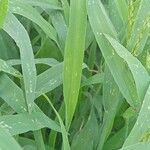
Digitaria ciliaris
Tropical finger grass · Common crabgrass · Crabgrass · Summer grass · Southern crabgrass
Description
Source: leafsnapDigitaria ciliaris is a species of grass known by the common names southern crabgrass, tropical finger-grass, tropical crabgrass or summer grass.The grass is known as "ගුරු තණ - guru thana" in Sri Lanka.
Care Guide
💧 Water
Southern crabgrass flourishes in warm and moist environments, thriving on steady moisture while also tolerating dry spells. To keep it healthy, it's best to water it weekly, ensuring it stays hydrated without becoming waterlogged. During the rainy season, its growth cycle is particularly strong, which affects both its water requirements and its overall well-being.
What should I do if I give my Southern crabgrass either too much or too little water?
Proper watering is essential for the well-being of this beautiful ornamental grass. When planted in the ground, watering issues can be resolved. However, in a container, too much or too little water can quickly kill Southern crabgrass. When Southern crabgrass doesn't receive the right amount of water, its growth may be stunted. Overwatering results in yellow leaves with brown tips, while underwatering can lead to drooping leaves, weak seed head production, and browned leaves. If you suspect improper watering, the first step is to determine if there is too much or too little water. If it's being overwatered, stop watering immediately. Keep in mind that it can take time for heavy soils to dry out. Once you notice new growth, test the soil moisture and decide if more water is needed. The solution for underwatering is simpler: give the grass a thorough drink and see if it improves. Remember, deep watering is better than frequent shallow watering. Deep watering promotes the growth of deep roots, making the grass more resistant to drought and less susceptible to watering-related problems.
How frequently should I water my Southern crabgrass?
The watering needs of Southern crabgrass will vary depending on where it is planted. In general, this type of grass should be watered every week. However, in hotter climates, it may be necessary to water it once or twice a week during the summer. In moderate climates, watering once every seven days or more should be enough. Keep in mind that grass in containers usually requires more frequent watering than grass planted in the ground. Additionally, the location of the grass matters. If it is in a shaded area, it will need less frequent watering compared to grass planted in the ground. It is important to only water Southern crabgrass when the soil is dry. You can check this by pressing your finger a couple of inches into the soil. For potted grass, you can also assess if it is dry by weighing the grass or feeling the lightness of the pot. Lack of water may cause the grass blades to appear folded and thinner than usual. Despite its drought tolerance, regular and deep waterings will result in a beautiful color. Although Southern crabgrass can withstand harsh, dry conditions, it still requires care and attention. When first planted, it will need more frequent watering until it establishes deep roots. For potted crabgrass, check the soil every 3 to 4 days and only water when it feels dry. Crabgrass planted in the ground generally requires less frequent watering, but it depends on the type of soil. Clay soils retain water for longer periods, so they may feel dry at the surface while still retaining moisture below ground. Sandy soils that drain quickly will need to be watered more often.
What do I need to be careful about when watering my Southern crabgrass in different seasons, climates, or during different stages of growth?
To determine if you are watering your grass enough, pay attention to the rate of growth. Southern crabgrass can double in size in a year, particularly during the hottest months. If the weather is hot but your grass is not growing vigorously, you may need to adjust your watering schedule. In winter, you can likely water once a month, but be sure to check the soil for moisture. In general, the grass will require more water during a growth cycle in the warmest months, while the need for water will be significantly reduced during winter and cooler months. It's crucial to let the soil dry out completely before adding water when dealing with Southern crabgrass.
☀️ Light Full sun
Southern crabgrass mainly prospers in the presence of ample light, crucial for its well-being and expansion. It is conditioned from its native habitat to endure areas with limited sunlight. Nonetheless, overexposure may have detrimental effects, and inadequate light might impede its growth.
What are the sunlight requirements for Southern crabgrass?
Southern crabgrass thrives with ample sunlight, essential for its growth and health. It has adapted to withstand areas with less sunlight from its origin habitat. Full sun, defined as above 6 hours of sunlight, and partial sun, about 3-6 hours of sunlight, are crucial. However, both excessive and insufficient light exposure can negatively impact its development. Observing how sunlight moves through your garden and selecting spots that balance light and shade will ensure your plants' happiness.
How does artificial lighting support plant growth indoors?
Indoor plants, including Southern crabgrass, require adequate lighting for optimal growth, especially when natural sunlight is insufficient, such as in winter or in less sunny spaces. Artificial lights, particularly LED lights, can be customized to provide specific wavelengths of light needed by plants. The right amount of artificial light varies: full sun plants need 30-50W/sq ft, partial sun plants 20-30W/sq ft, and full shade plants 10-20W/sq ft. The light source should be placed 12-36 inches above the plant to mimic natural sunlight, and most plants need 8-12 hours of light per day.
What symptoms indicate light deficiency in plants?
Symptoms of light deficiency in Southern crabgrass include small new leaves, leggy or sparse growth, faster leaf drop, slower or no new growth, paler new leaves, and conditions like chlorosis, sunscald, leaf curling, wilting, and leaf scorching. These symptoms signal either excessive sunlight exposure or insufficient sunlight, impacting the plant's ability to thrive and undergo photosynthesis properly.
How can you improve light conditions for Southern crabgrass?
To improve light conditions for Southern crabgrass, especially indoors, gradually move the plant to sunnier spots to ensure it gets at least 6 hours of direct sunlight daily. Utilizing a south-facing window and keeping curtains open during the day can significantly enhance sunlight exposure. If the plant is large or not easily movable, complementing with artificial light, such as desk or ceiling lamps for at least 8 hours daily, or investing in professional grow lights, can provide sufficient light.
What are the solutions for outdoor Southern crabgrass light issues?
For outdoor plants, gradually increasing sunlight exposure by moving plants to sunnier locations each week helps avoid sudden changes in light intensity that could cause sunburn. It's crucial to minimize obstructions like trees by pruning branches to allow more sunlight to filter through. Additionally, for smaller plants, transplanting during their dormant period (late winter or early spring) to a location with ample sunlight and good drainage can significantly improve light conditions.
🌡️ Temperature 15–35°C
Southern crabgrass is native to areas having a moderate climate, most optimally flourishing in the ideal 68 to 95 °F (20 to 35 ℃) temperature spectrum. For its healthy growth, it's advisable to vary the temperature in line with the changing seasons.
What is the ideal temperature range for Southern Crabgrass?
Southern crabgrass (Digitaria ciliaris) thrives in environments with a temperate climate, with its ideal temperature range being between 68 to 95°F (20 to 35°C). Adjusting the temperature in accordance to seasonality promotes vigorous growth of the grass. Despite its strong cold resistance, precautions should be taken when winter temperatures are expected to drop below -15°C, including covering the plant with soil or straw for protection.
How should Southern Crabgrass be cared for during winter?
Although Southern crabgrass exhibits cold resistance and usually does not require special frost protection measures, if winter temperatures are expected to dip below -15°C, it is crucial to provide cold protection. This can be accomplished by covering it with soil or straw. Additionally, prior to the first freeze in autumn, it is advisable to water the plant abundantly, ensuring that the soil remains moist and enters a frozen state. This care strategy helps prevent drought and water scarcity for the plant during winter and early spring.
What are the symptoms and solutions for Southern Crabgrass exposed to low temperatures?
Southern crabgrass is cold-tolerant, preferring temperatures above 20°C. In winters, it should be kept above 0°C to prevent damage. Exposure to temperatures below -15°C might not show immediate changes but can result in diminished sprouting or absence thereof in spring. The solution for any parts of the plant that fail to sprout in spring due to low temperature exposure involves removal of those non-sprouting parts to promote healthier growth.
How does high temperature affect Southern Crabgrass and what are the solutions?
During summer, it's critical to ensure that the temperatures stay below 35°C for Southern crabgrass, as exceeding 41°C can lead to the leaves becoming lighter in color, curling, becoming susceptible to sunburn, and in severe cases, the entire plant wilting and drying up. To mitigate these issues caused by high temperatures, sunburned and dried-up parts should be trimmed away. Moving the plant to a shaded area during the midday and afternoon sun, or utilizing a shade cloth for protection, alongside watering the plant in the morning and evening to keep the soil moist, are effective solutions.
💨 Humidity
🪴 Soil 5-7
🌱 Fertilizer
🪴 Pot & Repot
✂️ Pruning
Southern crabgrass is a common weed known for its dense growth. To control its spread and promote healthy growth, prune it down to ground level from early to late spring. Regularly removing the seed heads helps prevent reseeding, improves the lawn's appearance, and reduces competition with grasses. Be sure to use sharp tools for clean cuts.
🌿 Propagating
🐛 Diseases & pets
☠️ Toxicity
Characteristics
- Plant Type
- Grass
- Life Cycle
- Annual, Biennial
- Genus
- Digitaria
- Family
- Poaceae
- Hardiness Zone
- 7-10
- Mature Height
- 61 cm
- Mature Spread
- 15 cm to 30 cm
- Leaf Color
- Green
- Leaf Type
- Semi-evergreen
- Flower Color
- Green, Brown
- Flower Size
- 20.32 cm
- Bloom Time
- Summer, Early fall, Mid fall
- Planting Time
- Spring, Summer, Autumn
- Harvest Time
- Late summer, Fall, Early winter
- Native Area
- Sri Lanka, Libya, Somalia, Egypt, Turkey, Malaysia, India, Djibouti, Burkina Faso, Angola, Namibia, Madagascar, Eritrea, Pakistan, Nigeria, Yemen, Kenya, Uganda, Tanzania, Niger, Guinea-Bissau, Mali, Benin, Sierra Leone, Indonesia, Cambodia, Cameroon, Liberia, Brazil, Koppen, Oman, Ghana, Ethiopia, South Korea, Botswana, Congo, Nepal, Saudi Arabia, Central African Republic, South Africa, Sudan, Philippines, Mauritania, Laos, Guinea, Chad, China, Colombia, Afghanistan, Myanmar, Japan, Israel, Bhutan, Senegal, Eswatini, Singapore, Côte d'Ivoire, Algeria, Azerbaijan, Gambia, Congo (DRC), Thailand