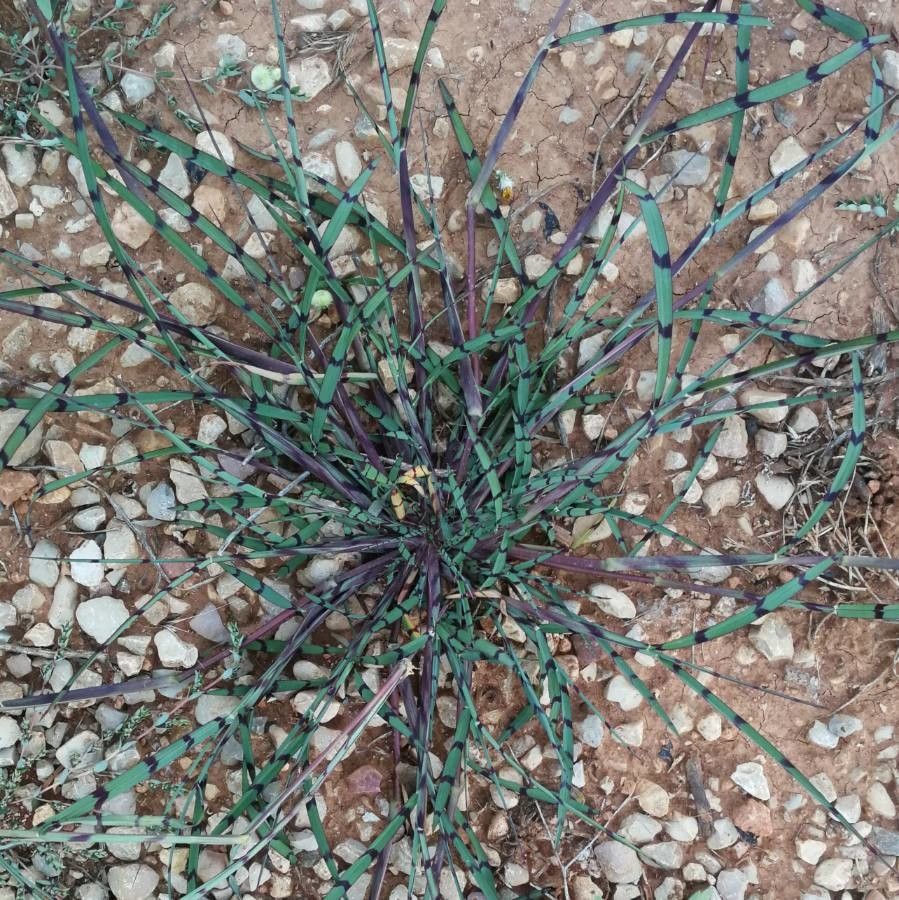
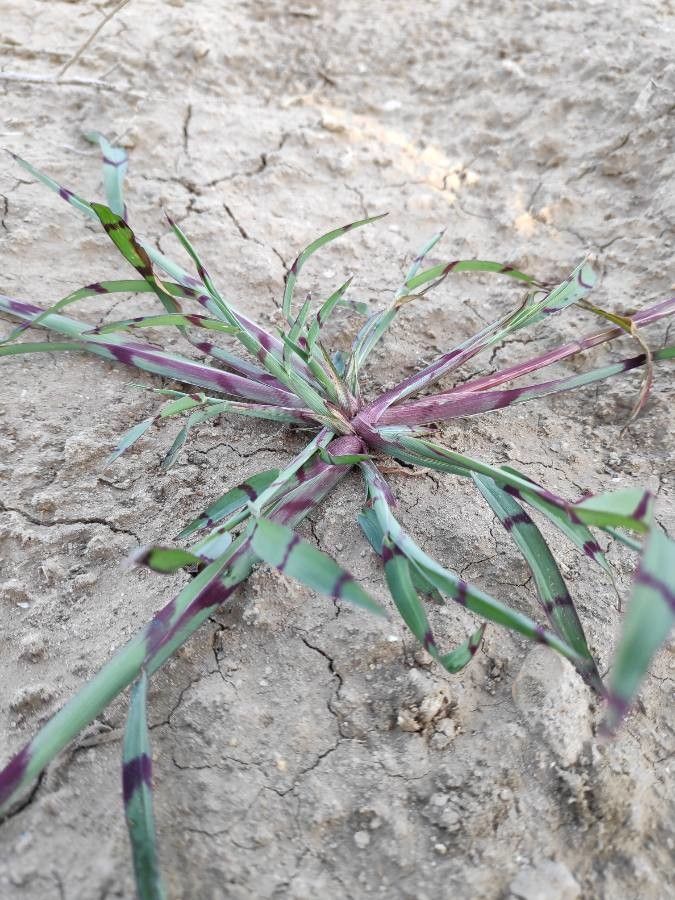
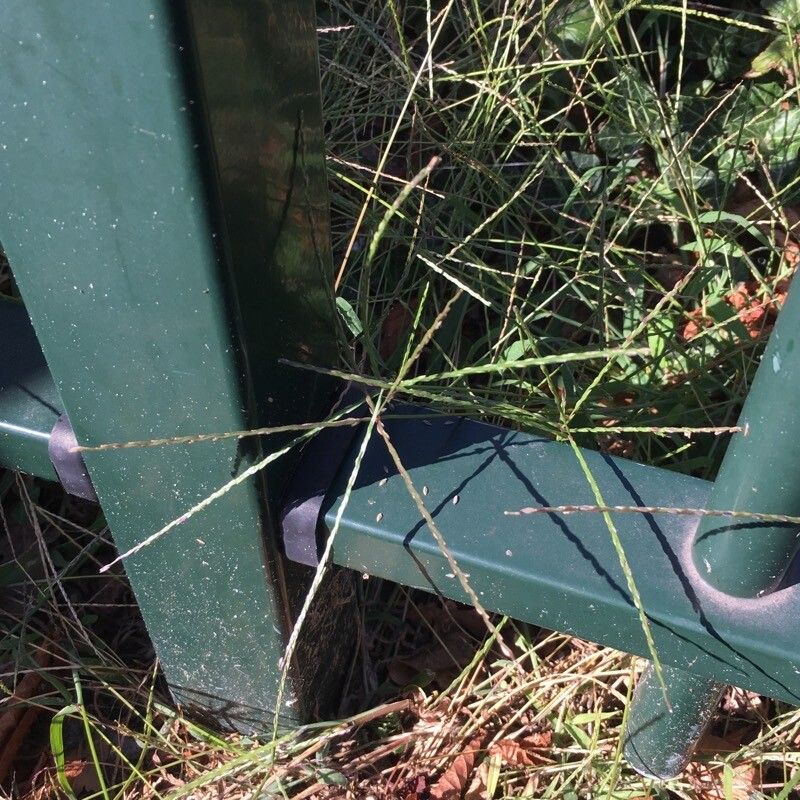
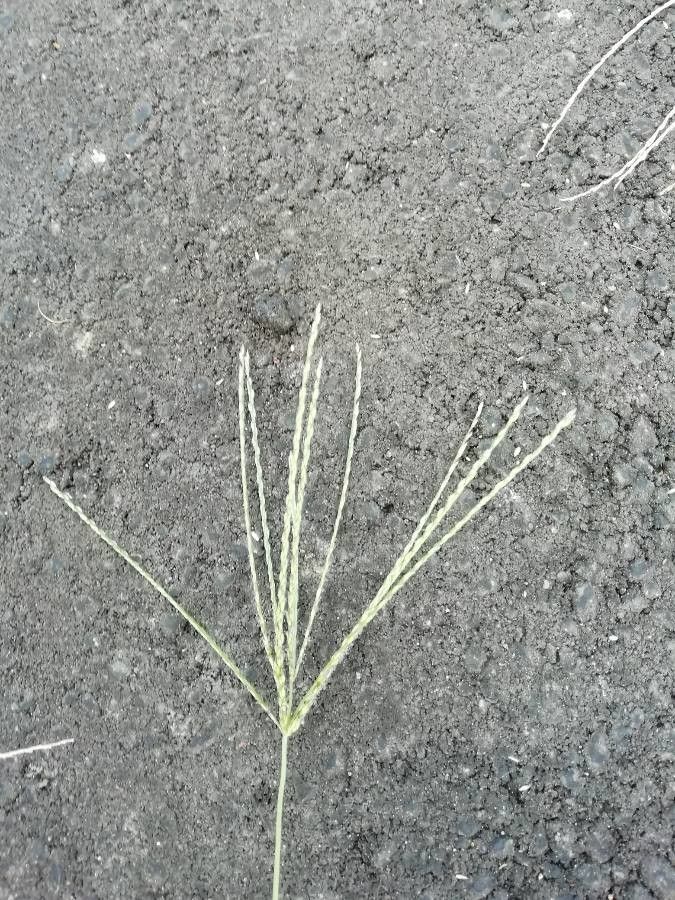
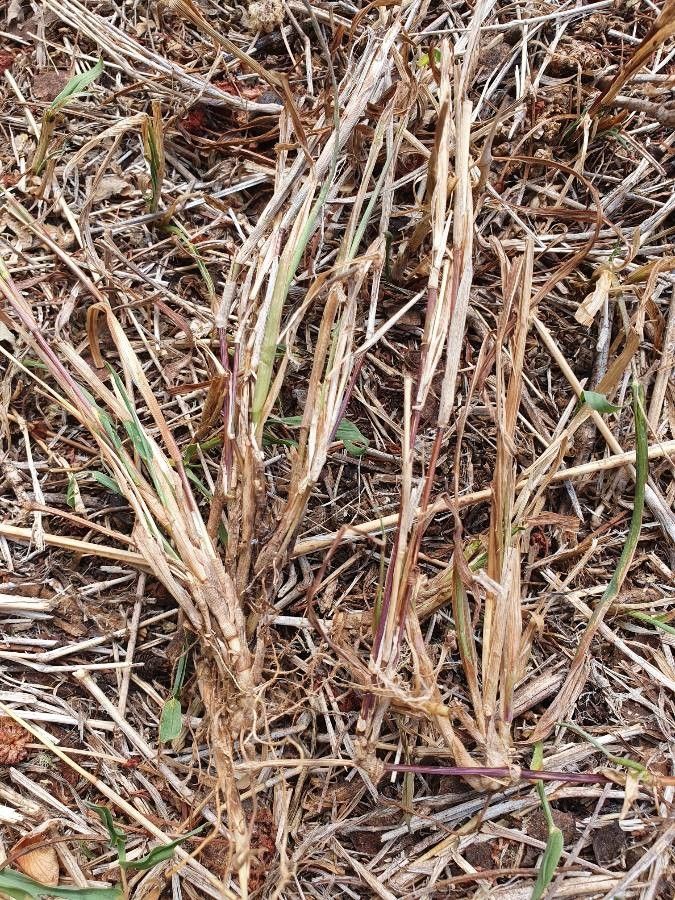
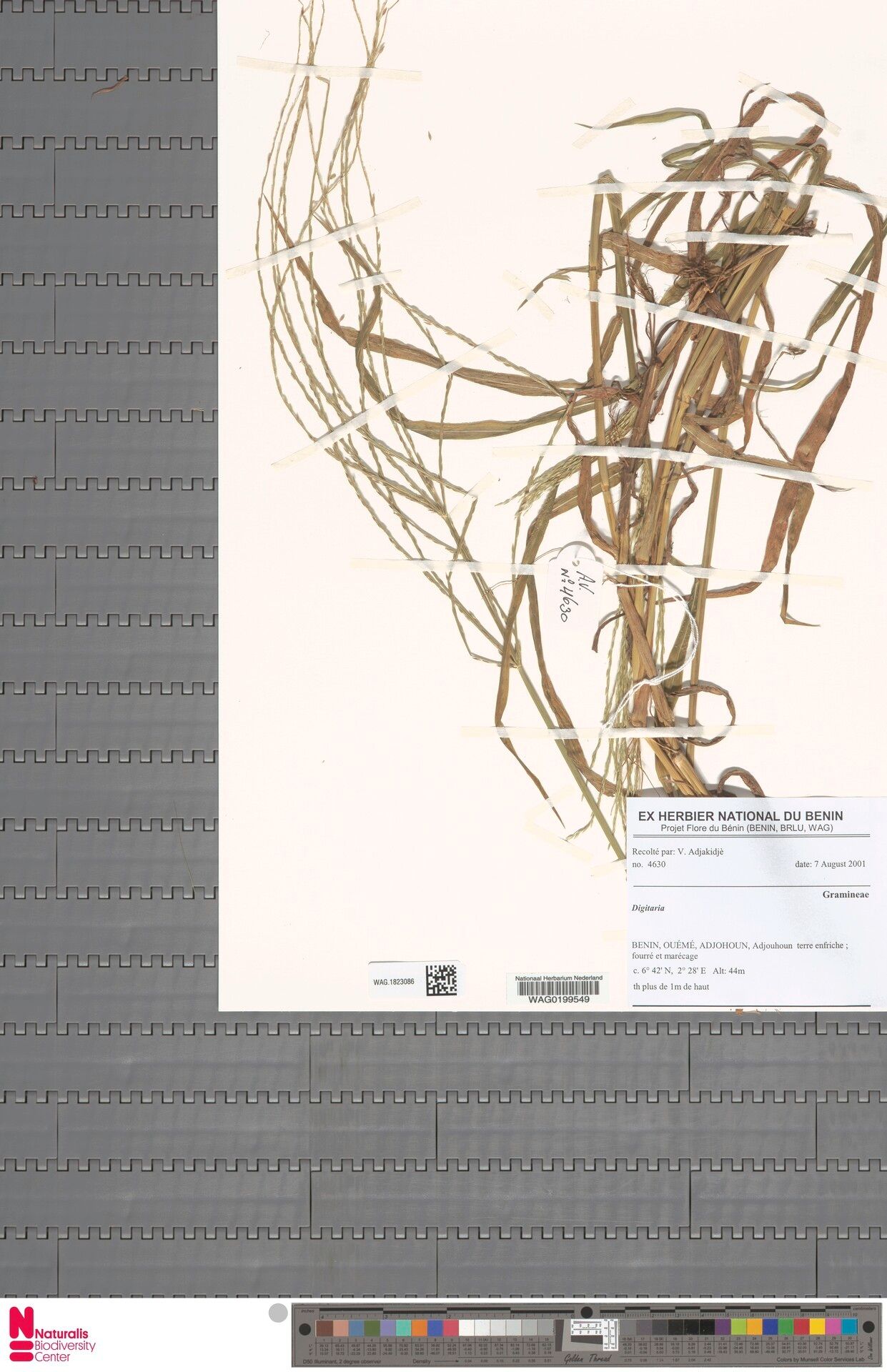
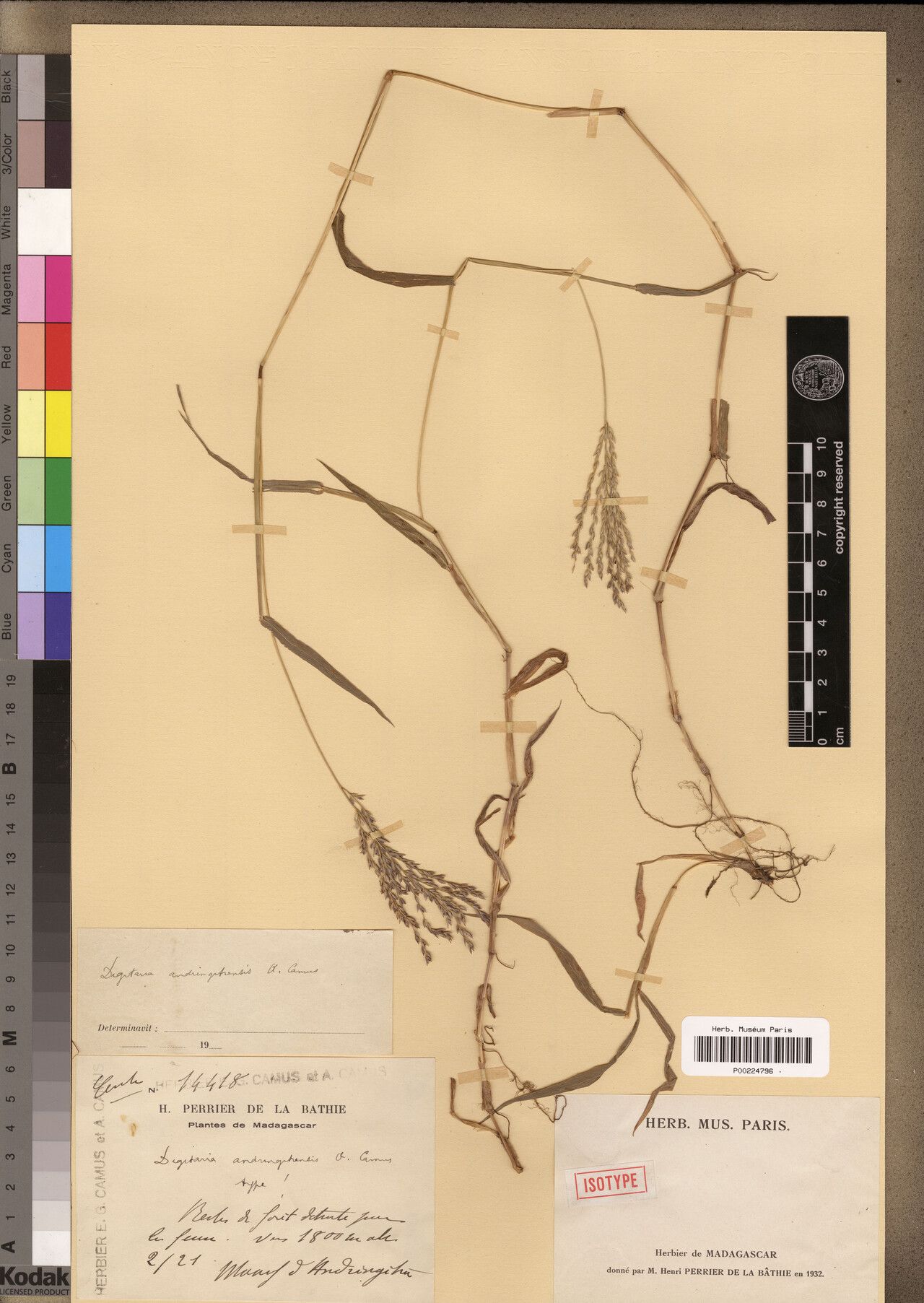
Digitaria ischaemum is a species of crabgrass known by the common names smooth crabgrass and small crabgrass. It is native to Europe and Asia, but it is known throughout much of the warm temperate world as an introduced species and often a common roadside and garden weed. It is an annual grass producing an inflorescence with two or more narrow branches lined with tiny spikelets. It is easily confused with other members in the genus, particularly southern crabgrass in California which differs by having spikelets of nearly twice the length. It may also be confused with Bermuda Grass, but differs in being a much taller plant with a much longer inflorescence. The leaves on this grass often form above the base of the plant, and it is usually singular, rarely forming large clumps.
Smooth crabgrass is resistant to diseases and, overall, is not easily affected by them. Regarding care, this plant is fairly low-maintenance. When grown outdoors it needs only minimal watering, and larger specimens typically do not need pruning. Smaller plants, however, should be pruned after they finish blooming. Smooth crabgrass is appropriate for anyone with outdoor space, such as a garden or a deck, and does not demand extensive care experience.
How to keep Digitaria Ischaemum.
Light
Smooth crabgrass performs best with plenty of sunlight but can tolerate partly shaded spots. Since it comes from sun-rich habitats, light is important for its healthy growth. Still, excessive sun can damage it, and too little light may prevent it from reaching optimal development.
Water
Smooth crabgrass flourishes in warm climates and prefers drier conditions, needing only moderate watering—about twice a week. During the growing season, rainwater boosts its resilience and helps it adapt to varying moisture levels.
Temperature
Smooth crabgrass originates in subtropical zones and does best in areas where temperatures are between 68 and 95 °F (20 to 35 ℃). It favors warm conditions, but when temperatures reach extreme levels, give it some shade for protection. Take seasonal temperature changes into account when cultivating.
Botanical profile.
- Plant Type
- Grass
- Life Cycle
- Annual, Biennial
- Genus
- Digitaria
- Family
- Poaceae
- Hardiness Zone
- 5-9
- Mature Height
- 15 cm to 46 cm
- Mature Spread
- 15 cm to 46 cm
- Leaf Color
- Green
- Leaf Type
- Deciduous
- Flower Color
- Green, Yellow, Purple, Brown
- Flower Size
- 2.54 cm
- Bloom Time
- Mid summer
- Planting Time
- Spring
- Harvest Time
- Mid summer, Late summer
- Native Area
- India, Turkey, Slovakia, Montenegro, Pakistan, Belarus, Uzbekistan, Russia, Germany, Romania, France, Portugal, Tajikistan, Czech Republic, Bulgaria, Armenia, Greece, Ukraine, Serbia, China, Kyrgyzstan, Kazakhstan, Italy, Spain, Myanmar, Japan, Bhutan, Iran, Albania, Azerbaijan, Hungary, Turkmenistan
Other names.
Reader questions.
What are the sunlight requirements for smooth crabgrass?
Smooth crabgrass requires full sun, meaning it needs more than 6 hours of sunlight a day, but it can also grow in partial sun, which is about 3-6 hours of sunlight. It's essential to observe how sunlight moves through your garden to find spots that offer the right balance of light and shade for the plants. The natural environment of smooth crabgrass provides it with ample sun exposure, crucial for its healthy growth. However, exposure to too much sun can be damaging, while inadequate light might hinder its growth.
What is the native climate for Smooth crabgrass?
Smooth crabgrass, scientifically known as Digitaria ischaemum, is native to subtropical climate zones. It thrives in conditions where temperatures range between 68 to 95 °F (20 to 35 °C). The plant favors warm weather but requires some shade when temperatures reach extremes. It's important to consider seasonal temperature fluctuations when growing Smooth crabgrass, as this can affect its health and growth.
How can artificial lighting be used for indoor plants?
Indoor plants, including smooth crabgrass, require adequate lighting for optimal growth, especially when natural sunlight is insufficient. Artificial lights, such as LEDs, are valuable for their growth, promoting faster and healthier development. For full sun plants, 30-50W/sq ft of light is needed, partial sun plants require 20-30W/sq ft, and full shade plants need 10-20W/sq ft. The light source should be placed 12-36 inches above the plant, mimicking natural sunlight as closely as possible. Most plants will thrive with 8-12 hours of artificial light per day.
Does Smooth crabgrass require special cold protection measures?
Smooth crabgrass has a strong resistance to cold and does not usually require special frost protection measures during winter. However, if winter temperatures are expected to fall below -25°C, it is important to provide the plant with protection against the cold. This can be achieved by covering the plant with soil or straw. Additionally, watering the plant abundantly before the first freeze in autumn helps to ensure the soil remains moist and enters a frozen state. This preparation can aid in preventing drought and water scarcity for the plant during the colder months.
What are the symptoms of light deficiency in smooth crabgrass?
When smooth crabgrass is grown indoors with inadequate light, it may show several symptoms of light deficiency. These include smaller new leaves compared to older ones, leggy or sparse growth, faster leaf drop, slower or no new growth, and lighter-colored new leaves. Additionally, the plant can suffer from chlorosis, where leaves lose their green color, sunscald from excessive light exposure causing damage to leaves or stems, leaf curling as a means to reduce water loss, wilting due to loss of turgor pressure, and leaf scorching characterized by brown, dry edges on leaves.
What should be done if Smooth crabgrass experiences temperatures below -25°C?
If temperatures fall below -25°C, Smooth crabgrass may not show noticeable changes during the winter, but there may be a decrease in sprouting or even a complete lack of sprouting in spring. To mitigate this, in spring, it's advised to remove any parts of the plant that have failed to sprout. This helps in the maintenance and potential rejuvenation of the plant for the new growth season.
What are the solutions for lighting issues in smooth crabgrass?
To address lighting issues in smooth crabgrass, for indoor environments, gradually moving the plants to a sunnier location each week until they receive at least 6 hours of direct sunlight daily is advised. Using a south-facing window helps maximize sunlight exposure. If relocation isn't feasible due to the plant's size, consider using artificial light sources, like desk or ceiling lamps for at least 8 hours daily or professional plant grow lights. For outdoor plants, a gradual relocation to sunnier spots is recommended to avoid sunburn, remembering that parts of the plant that suffered from insufficient light may not recover, but new growth will be healthy. Reducing obstructions like tree branches can increase sunlight exposure, and for smaller plants, transplanting during their dormant period to a sunny location with good drainage can be beneficial.
How should Smooth crabgrass be cared for in high temperatures?
During the summer, it's crucial to ensure that Smooth crabgrass does not endure temperatures above 35°C. Exceeding this temperature limit may result in the leaves becoming lighter in color, curling, and becoming prone to sunburn, with severe cases leading to the wilting and drying out of the entire plant. To care for Smooth crabgrass in such conditions, trim away sunburned and dried-up parts, move the plant to a shady location or use a shade cloth to protect it from the midday and afternoon sun, and water the plant in the morning and evening to maintain moist soil conditions.