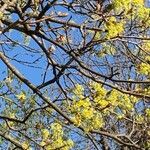
Dillenia pentagyna
Description
Source: leafsnapA small tree with tortuous twigs, Dillenia pentagyna is a member of the family Dilleniaceae, and is found from Sulawesi to South-Central China to India and Sri Lanka. Material from the tree has some minor uses.
Care Guide
💧 Water
Dog teak flourishes in moist, subtropical environments. It prefers consistent moisture and has moderate drought tolerance. For optimal hydration, water the plant weekly, especially during its growing season. For best results, cultivate it outdoors where it can benefit from natural rainfall, which enhances foliage production.
☀️ Light Full sun
Dog teak is native to open habitats such as sunny meadows and forest edges that offer abundant light. It prefers full sun but can tolerate partial sun, showing good adaptability to a range of light conditions.
What are the sunlight requirements for Dog teak (Dillenia pentagyna)?
Dog teak (Dillenia pentagyna) thrives in environments based on the amount of sunlight received. For optimal growth, it requires full sun, which means it needs above 6 hours of sunlight each day. Alternatively, it can also grow in partial sun, with about 3-6 hours of sunlight. When planning where to plant your Dog teak, it's important to observe the patterns of sunlight in your garden. Finding the right spots that offer a mix of light and shade throughout the day will ensure your plants grow healthy and strong.
🌡️ Temperature 20–37.8°C
Dog teak comes from tropical areas where the climate is usually warm and humid. Consequently, it is well suited to high heat and moisture. It does not tolerate sudden temperature shifts and prefers a consistent thermal environment, so avoiding indoor temperature fluctuations is important. It generally cannot endure cold and needs elevated temperatures to grow. If the surrounding temperature falls too low, the plant may stop growing or even die.
💨 Humidity
🪴 Soil 5-6
🌱 Fertilizer
The best time to fertilize a Dog teak is in early spring, as it breaks dormancy. This encourages overall growth and flower development. Fertilizing improves the foliage, stems, and branches, and supports large, vibrant, long-lasting flowers. It helps transfer nutrients from the roots to the flowers and boosts the plant’s health and resistance to disease.
🪴 Pot & Repot
✂️ Pruning
The dog teak plant thrives when it is pruned annually during its dormant phase, from early to late winter. This plant is known for its large, glossy leaves and vibrant flowers. To ensure healthy growth, focus on removing unhealthy branches and shaping the plant for balance. This helps improve air circulation and light access. Always use clean, sterilized tools when making cuts to prevent infection.
🌿 Propagating
🐛 Diseases & pets
☠️ Toxicity
Characteristics
- Plant Type
- Tree
- Life Cycle
- Perennial
- Genus
- Dillenia
- Family
- Dilleniaceae
- Hardiness Zone
- 10-12
- Mature Height
- 6.1 m to 14.94 m
- Mature Spread
- 7.92 m to 11.89 m
- Leaf Color
- Green
- Leaf Type
- Evergreen
- Flower Color
- Yellow
- Flower Size
- 2.03 cm to 3.05 cm
- Bloom Time
- Late winter, Early spring, Mid spring
- Planting Time
- Spring, Summer
- Harvest Time
- Late spring, Early summer, Mid summer
- Native Area
- Nepal, India, Indonesia, Cambodia, Vietnam, Myanmar, Bhutan, Bangladesh, Laos, Thailand, China