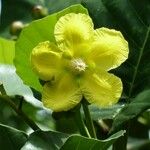
Dillenia suffruticosa
Shrubby dillenia · Malayan dillenia · Wormia
Description
Source: leafsnapDillenia suffruticosa, commonly known as Simpoh air or Singapore rhododendron, is a flowering plant species native to Southeast Asia. This small to medium-sized shrub can grow up to 3 meters tall. It features glossy green, oval-shaped leaves that can reach up to 20 cm in length and 10 cm in width. The flowers of Dillenia suffruticosa are large and showy, consisting of five bright yellow petals. They bloom in clusters at the ends of branches from May to August. After flowering, the plant produces large fruit capsules that contain numerous seeds. Dillenia suffruticosa is commonly found in lowland forests and along riverbanks throughout Southeast Asia, including Malaysia, Indonesia, Thailand, Singapore, and Brunei. Traditionally, indigenous communities have used this plant for medicinal purposes, treating various ailments such as fever and diarrhea. The plant is also popular for ornamental purposes due to its attractive foliage and striking flowers. It prefers well-drained soil with partial shade or full sun exposure but can tolerate a wide range of soil types. Overall, Dillenia suffruticosa is an important species both ecologically and culturally. Its medicinal properties, along with its ornamental value, contribute to its significance in Southeast Asian flora and biodiversity conservation efforts.
Care Guide
💧 Water Every 7 days
Simpoh ayer flourishes in humid environments and requires balanced watering every 2 to 3 weeks. Typically grown outdoors, it benefits from natural rainfall. As an evergreen plant, simpoh ayer stays lush throughout the year and demonstrates resilience during dry periods.
How should I water my Simpoh ayer plant?
Your Simpoh ayer plant does not have specific requirements for watering, so you can use any common watering tool to moisten its soil. Whether you choose to use a watering can, hose, or even a cup, they will all work effectively. No matter which tool you choose, it is important to water directly onto the soil and ensure that all areas of the soil are evenly moistened. Using filtered water is ideal, as tap water may contain harmful particles. Additionally, it is best to use water that is at or slightly above room temperature, as extremely cold or hot water can be a bit shocking for the Simpoh ayer plant. However, the Simpoh ayer plant generally responds well to any type of water it receives.
What should I do if I give my Simpoh ayer plant too much or too little water?
Outdoor plants, especially newly planted ones or seedlings, are prone to lack of watering. It's important to water them consistently for the first few months, even if they're small or just planted. Once the roots are established, Simpoh ayer plants can rely on rain most of the time. When Simpoh ayer plants are in pots, overwatering is a common issue. If you accidentally overwater your plant, deal with the situation immediately. First, stop watering the plant to minimize the impact of overwatering. Then, take the plant out of its pot to check the roots. If there's no root rot, you can return the plant to the container. But, if you see signs of root rot, trim the affected roots and consider using a fungicide to prevent further damage. Finally, repot the plant in well-draining soil. On the other hand, if your Simpoh ayer plant is underwatered, simply water it more frequently. Underwatering is often easy to fix. When a plant is underwatered, its leaves may droop, dry out, and fall off. However, with sufficient watering, the leaves will regain their fullness quickly. So, adjust your watering frequency promptly if underwatering occurs.
How much water does my Simpoh ayer need and how often should I give it water?
Most plants can grow naturally outdoors with rainfall, but if your area lacks rainfall, you'll need to water your plants every 2 weeks in the spring and fall. In the summer, you'll need to water more frequently. In the winter, when growth slows down, you can water less often or not at all. If your Simpoh ayer is young or newly planted, water more frequently to help it establish and grow. For potted plants, there are two ways to determine watering frequency. The first is to follow a set schedule, such as once a week or every other week. However, this may not work for all conditions. Another option is to check the soil moisture. Wait until the top two to four inches of soil have dried out before watering again.
How much water does my Simpoh ayer plant need?
Watering your Simpoh ayer may not require a large amount of water. If only a few inches of soil have dried since your last watering, giving it about five to ten ounces of water each time can promote healthy growth. You can determine the amount of water based on the soil moisture. Take note of how many inches of soil have dried between waterings. To ensure your Simpoh ayer receives adequate moisture, water enough to moisten all the dry soil layers since the last watering. If over half of the soil has dried out, consider giving more water than usual. Keep adding water until excess water drains from the pot's drainage holes. In outdoor areas with sufficient rain, your Simpoh ayer may not need additional watering. When it's young or still establishing, provide 1-2 inches of rain per week. As it continues to grow, it can rely solely on rainwater for survival. Only during hot weather with no rainfall for 2-3 weeks should you consider giving it a full watering to prevent stress.
How do I know if I'm giving enough water to my Simpoh ayer?
Overwatering is a common issue for the Simpoh ayer plant. There are clear signs to watch out for when this happens. Typically, the leaves of an overwatered Simpoh ayer will turn yellow and some may even fall off. Overwatering can also cause the overall structure of the plant to shrink and could lead to root rot. On the other hand, an underwatered Simpoh ayer will also start to droop. Its leaves may become brown or brittle to the touch. Whether you observe signs of overwatering or underwatering, it's important to take action and restore the plant's health.
☀️ Light Full sun
Simpoh ayer comes from open habitats, such as sunny meadows and forest margins, which provide abundant light. It performs best in full sun but can also tolerate partial sun, adjusting well to a range of sunlight conditions.
What are the sunlight requirements for Simpoh Ayer?
Simpoh Ayer, scientifically known as Dillenia suffruticosa, thrives in conditions that mimic its natural habitat, which consists of sunny meadows and forest edges. It requires full sunlight for more than 6 hours daily to flourish but can also adapt to partial sun conditions, receiving about 3-6 hours of sunlight. It’s vital to observe the movement of sunlight through your garden to find the optimal spot that ensures a perfect balance of light and shade, promoting the plant's health and wellbeing.
How can artificial lighting be used for Simpoh Ayer?
Artificial lighting is crucial for the growth of Simpoh Ayer, especially when natural sunlight is insufficient, like during winter or in less sunny indoor spaces. LED lights are recommended due to their ability to provide specific wavelengths needed for plant growth. For full sun plants, 30-50W per square foot is advised, 20-30W per square foot for partial sun plants, and 10-20W per square foot for full shade plants. The artificial light source should be placed 12-36 inches above the plant, simulating natural sunlight's distance. Additionally, simulating the natural daylight duration, most plants will require 8-12 hours of light per day.
What are the signs of insufficient light in Simpoh Ayer?
When Simpoh Ayer does not receive adequate sunlight, certain symptoms manifest, indicating light deficiency. These include the development of smaller leaves than those previously matured, leggy or sparse growth characterized by elongated spaces between leaves or stems, leading to a thin appearance. The plant may experience faster leaf drop as it sheds older leaves early to conserve resources, resulting in delayed or halted new growth. Leaves may appear lighter in color or exhibit chlorosis, turning yellow due to a lack of chlorophyll. Sunscald and leaf scorching can occur from excessive sunlight, whereas leaf curling and wilting are defenses against intense light, indicating both insufficient and excessive light exposure challenges.
What solutions are available to address light-related issues in Simpoh Ayer?
To address light-related issues in Simpoh Ayer, adapting both indoor and outdoor plants to more suitable light conditions gradually is crucial. For indoor plants, firstly, try to relocate them to a sunnier spot, ideally near a south-facing window, to ensure at least 6 hours of direct sunlight daily. If moving the plant is not feasible, consider supplemental artificial lighting, keeping lights on for a minimum of 8 hours a day. For outdoor plants, find the optimal sunlight spot and introduce them to brighter conditions weekly to prevent sunburn. In the case of ground-planted flora, remove obstructions like overhanging branches to enhance sunlight penetration or transplant smaller plants during their dormant period to locations with better light and drainage. It's important to note that while affected parts of the plant might not recover, new growth will be healthy with improved light conditions.
🌡️ Temperature 20–35°C
Simpoh ayer comes from tropical regions, where the climate is typically warm and humid. As a result, it is well adapted to high temperatures and humidity. It does not tolerate sudden temperature changes and prefers a stable temperature environment, so avoiding indoor temperature fluctuations is important. It usually cannot withstand cold temperatures and requires higher temperatures for growth. If the environmental temperature drops too low, the plant may stop growing or even die.
What is Simpoh ayer?
Simpoh ayer, known botanically as Dillenia suffruticosa, is a plant species. Unfortunately, the provided information does not include details about the essentials of Simpoh ayer such as key characteristics or uses, nor does it cover symptoms related to the plant, such as those that might be experienced from contact or ingestion.
💨 Humidity
🪴 Soil 5-6
🌱 Fertilizer
The best time to fertilize a Simpoh ayer is in early spring as it comes out of dormancy. This encourages overall growth and flower development. Fertilizing improves the foliage, stems, and branches, and promotes flowers that are larger, more vibrant, and longer-lasting. It also helps move nutrients from the roots to the flowers and enhances the plant's health and resistance to disease.
🪴 Pot & Repot
✂️ Pruning
Simpoh ayer, known for its sturdy leaves and large flowers, needs careful pruning from early to late winter while it is dormant. Regularly removing dead branches improves air circulation and helps prevent disease. Thinning the inner branches maintains the plant’s natural form and encourages blooming, enhancing both its appearance and health.
🌿 Propagating
🐛 Diseases & pets
☠️ Toxicity
Characteristics
- Plant Type
- Tree
- Life Cycle
- Perennial
- Genus
- Dillenia
- Family
- Dilleniaceae
- Hardiness Zone
- 10
- Mature Height
- 6.1 m to 10.06 m
- Mature Spread
- 3.05 m
- Leaf Color
- Green
- Leaf Type
- Evergreen
- Flower Color
- Yellow
- Flower Size
- 10.16 cm to 12.70 cm
- Bloom Time
- All year round
- Planting Time
- Spring, Summer, Autumn
- Harvest Time
- All year round
- Native Area
- Malaysia, Indonesia, Cambodia, Singapore, Brunei, Thailand