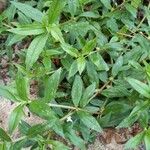
Diodia virginiana
Virginia buttonweed
Description
Source: leafsnapDiodia virginiana, commonly known as Virginia buttonweed, is a perennial herbaceous plant belonging to the Rubiaceae family. Native to the southeastern United States, it thrives in wetlands, meadows, and disturbed areas. The plant has a prostrate growth habit, with stems that can reach up to 2 feet in length. Its leaves are opposite, lance-shaped, and feature smooth margins. The small white flowers, each with four petals arranged in a cross shape, lend a delicate appearance. Virginia buttonweed is considered an invasive species due to its rapid spread through vegetative reproduction via stolons or rhizomes. It can form dense mats that outcompete native vegetation. Despite its invasive nature, Native Americans have historically used Virginia buttonweed for medicinal purposes, treating ailments such as fever and diarrhea. Control measures for this plant include manual removal or herbicide application targeted at the roots or foliage. Preventing its spread through proper management practices, such as avoiding disturbance of wetland areas where it grows, is also recommended.
🌳 Although not widely known for notable uses, virginia buttonweed is valued in native plant landscaping for its toughness and low maintenance. By providing habitat and food for a variety of insects, possibly including rare or specialized species, it contributes ecological value beyond its appearance.
Care Guide
💧 Water Every 7 days
Virginia buttonweed flourishes in moist environments, relying on consistent hydration and having moderate drought resistance. To replicate its natural conditions, it's important to water it weekly. When outdoors, Virginia buttonweed benefits from rainwater, which naturally irrigates and supplies essential nutrients for its growth.
How should I water my Virginia buttonweed?
To properly water the Virginia buttonweed, it is recommended to use filtered water at room temperature or slightly warmer. Tap water may contain harmful particles, so filtered water is preferred. This plant is accustomed to a warm environment, so cold water may cause stress. It is best to avoid overhead watering, as it can lead to issues with the foliage. Instead, you should apply the filtered room temperature water directly to the soil until it is completely soaked. This method benefits the plant by moistening the roots and aiding in the spread and absorption of necessary nutrients.
What do I do if I give my Virginia buttonweed too much or too little water?
Overwatering and underwatering can harm your Virginia buttonweed, but overwatering is more common. When the plant gets too much water, the stems and leaves may wilt and turn yellow. Overwatering for a long time can also cause root rot, mold, and mildew, which can kill the plant. Underwatering is less likely because the Virginia buttonweed can tolerate drought. However, it can still happen, and you may notice brittle, brown leaves. To take care of your Virginia buttonweed, it's important to recognize signs of overwatering early. Some diseases from overwatering, like root rot, may be irreversible if not addressed promptly. To prevent overwatering, reduce your watering schedule and check the soil quality. If it doesn't drain well, replace it with a loose, well-draining potting mix. On the other hand, if you notice signs of underwatering, increase watering until the plant recovers.
How frequently should I water my Virginia buttonweed?
If your Virginia buttonweed is in a pot, the best way to determine if it needs water is to check the soil moisture. Stick your finger into the soil and if the top two to three inches feel dry, it is time to water. The same method can be applied if you are growing Virginia buttonweed outdoors in the ground. Once again, if the first few inches of soil feel dry, it is time to water. Typically, during spring and early fall, watering once a week is sufficient. However, in extremely hot weather, you may need to water twice or more per week. It is worth noting that mature, well-established Virginia buttonweed is quite resistant to drought.
How much water does my Virginia buttonweed require?
To properly water your Virginia buttonweed, you need to be generous with the amount of water you use. Make sure the top two to three inches of soil are dry before watering. It's important to give the plant a deep watering so the soil gets completely saturated. You should add enough water that it flows out of the drainage holes at the bottom of the pot. If you don't see any excess water draining, it means you haven't given enough water. However, be careful not to let water accumulate in the soil because that can harm the plant. If there's no water draining through the pot, it could be a sign of poorly draining soil, which is bad for the plant's health. If you have the plant outside, it will only need about 1 inch of rain per week.
How do I water my Virginia buttonweed as it grows?
The water requirements of the Virginia buttonweed vary depending on its growth stages. In the early years or after transplanting, it is essential to provide more water than usual. This is because during this time, the plant puts a lot of energy into developing new roots that will support future growth. These roots require extra moisture to perform optimally. As the plant matures over a few seasons, it will need less water. Additionally, during the bloom period, when the plant is developing flowers, it will benefit from increased water intake. Therefore, giving the Virginia buttonweed more water during this phase may be necessary.
☀️ Light Full sun
Virginia buttonweed does best with abundant sunlight, although it tolerates moderate sun. Native to areas with plentiful sun, the plant’s growth is noticeably improved by those conditions. Too little light can cause stunted growth, while too much exposure may potentially be harmful.
What are the sunlight requirements for Virginia buttonweed?
Virginia buttonweed requires full sun, which means it needs above 6 hours of sunlight daily to thrive optimally. However, it can also tolerate partial sun, needing about 3-6 hours of sunlight per day. It's crucial to observe how sunlight moves through your garden throughout the day to find spots that provide a perfect balance of light and shade, ensuring the plants receive the right amount of sunlight for their health, growth, and happiness.
What are the essentials for growing Virginia buttonweed successfully?
To grow Virginia buttonweed successfully, it's essential to provide ample exposure to sunlight, as the plant thrives under full sunlight conditions but can withstand moderate sun settings as well. Originating from environments with abundant solar exposure, Virginia buttonweed's growth benefits notably from such conditions. Insufficient light may lead to stunted growth, while excessive exposure could potentially cause harm. In scenarios where natural sunlight is insufficient, particularly during winter or in less sunny spaces, artificial lighting becomes a viable solution. It's recommended to choose the right type of artificial light, such as LED lights, which can be customized to provide specific wavelengths needed by the plant. The amount of artificial light required varies: full sun plants need 30-50W/sq ft, partial sun plants need 20-30W/sq ft, and full shade plants need 10-20W/sq ft. Additionally, the light source should be placed 12-36 inches above the plant, mimicking natural sunlight as closely as possible. Most plants will need 8-12 hours of light per day to mimic natural daylight hours effectively.
What are the symptoms of light deficiency in Virginia buttonweed?
Symptoms of light deficiency in Virginia buttonweed include smaller new leaves compared to mature ones, leggy or sparse growth with extended spaces between leaves or stems, faster leaf drop as the plant conserves resources, slower or no new growth as the plant enters survival mode, and lighter-colored new leaves indicating a lack of chlorophyll. In addition to light deficiency symptoms, overexposure symptoms such as chlorosis, sunscald, leaf curling, wilting, and leaf scorching can also affect Virginia buttonweed. Chlorosis, for example, leads to leaves losing their color and turning yellow due to the breakdown of chlorophyll under excessive sunlight.
How can I address light-related issues with my Virginia buttonweed, both indoors and outdoors?
To address light-related issues with Virginia buttonweed, consider gradually moving your plants to a sunnier location each week until they get at least 6 hours of direct sunlight daily for those indoors. Maximizing sunlight exposure through a south-facing window and keeping curtains open during daytime are practical steps. If the plant is large or not easily movable, using artificial light like a desk or ceiling lamp for at least 8 hours daily or investing in professional plant grow lights can provide additonal light. For outdoor plants, gradual adaption to sunnier spots helps prevent sunburn from sudden light intensity changes. If sunlight is obstructed, pruning trees or transplanting to sunnier locations with good drainage can significantly improve light exposure. Remember, parts of the plant that have suffered from insufficient sunlight may not fully recover, but new growth should be healthy with improved light conditions.
🌡️ Temperature 10–35°C
Virginia buttonweed is native to areas with mild to warm temperatures, generally flourishing between 68 and 95°F (20 to 35℃). In colder months, provide some extra warmth to help maintain optimal growth.
What are the ideal temperature conditions for growing Virginia Buttonweed?
Virginia Buttonweed flourishes in moderate to warm climates, optimally growing within a temperature range of 68 to 95°F (20 to 35°C). Despite its strong cold resistance, it is advisable to provide some warmth during colder seasons to maintain its growth. Special measures for frost protection are typically not required during winter. Nonetheless, if temperatures are anticipated to drop below -25°C, it's important to protect the plant by covering it with soil or straw. To help the plant through winter and early spring, water it abundantly before the first freeze in autumn to ensure the soil remains moist and enters a frozen state.
How does Virginia Buttonweed respond to low temperatures, and what measures should be taken?
Virginia Buttonweed is cold-tolerant and thrives best when temperatures are kept above 20°C. During winter, it's important to ensure the temperature stays above 0°C. When temperatures fall below -25°C, the plant might not show noticeable changes during winter, but there could be a decrease in sprouting or even complete lack of sprouting in the spring. In such cases, removing parts that have failed to sprout in the spring is recommended.
How does high temperature affect Virginia Buttonweed, and what are the remedies?
During the summer months, it's crucial to keep Virginia Buttonweed below 35°C to avoid stress from high temperatures. Exceeding 38°C can cause the plant's leaves to lighten in color, become prone to curling, susceptible to sunburn, and in severe cases, lead to the wilting and drying up of the entire plant. To mitigate these issues, trim away sunburned and dried parts of the plant, relocate it to a shaded area, particularly during the midday and afternoon sun, or use a shade cloth. Additionally, watering the plant in the morning and evening can help keep the soil moist and ensure the well-being of the plant.
💨 Humidity
🪴 Soil 6-7
🌱 Fertilizer
A single spring application of fertilizer is generally enough for Virginia buttonweed, but multiple feedings can maximize growth. Apply fertilizer once every month to a month and a half. Fertilization improves leaf appearance and function, encouraging even color and a healthy texture. It also promotes root development and better nutrient absorption for long-term plant health.
🪴 Pot & Repot
✂️ Pruning
🌿 Propagating
🐛 Diseases & pets
☠️ Toxicity
Characteristics
- Plant Type
- Herb
- Life Cycle
- Perennial, Annual
- Genus
- Diodia
- Family
- Rubiaceae
- Hardiness Zone
- 6-9
- Mature Height
- 30 cm to 91 cm
- Mature Spread
- 15 cm to 46 cm
- Leaf Color
- Green
- Leaf Type
- Evergreen, Semi-evergreen
- Flower Color
- White
- Flower Size
- 2.54 cm
- Bloom Time
- Early summer, Mid summer
- Planting Time
- Spring
- Harvest Time
- Mid summer, Late summer
- Native Area
- Nicaragua, Mexico, Cuba