Dioscorea bulbifera
Air-potato · Bitter yam · Cheeky yam · Aerial yam · Potato yam
Description
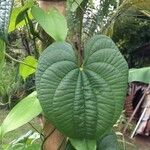
Source: leafsnapDioscorea bulbifera, commonly known as air potato or potato yam, is a perennial vine in the Dioscoreaceae family. Native to Africa and Asia, it has been introduced and naturalized in several regions worldwide, including North America. The plant features a tuberous root system that produces aerial bulbils, or "potatoes," which can grow up to 10 cm in diameter. The leaves of Dioscorea bulbifera are heart-shaped and can reach up to 20 cm in length. The vine itself can grow as long as 15 meters, climbing with the help of tendrils. It produces small, greenish-yellow flowers that are not particularly showy. In many areas, the plant is considered invasive due to its ability to spread rapidly through its aerial bulbils, which detach from the vine, take root, and form new plants. This rapid growth allows it to outcompete native vegetation for resources such as light, water, and nutrients. For centuries, Dioscorea bulbifera has been used medicinally to treat various ailments, including fever, coughs, asthma, and arthritis pain. However, it should be used with caution, as it is toxic when consumed raw. Overall, Dioscorea bulbifera is an intriguing plant with both beneficial medicinal properties and detrimental ecological impacts. When introduced into non-native areas, it can outcompete local vegetation, leading to a loss of biodiversity.
🎭 Magic of images, Healing
Care Guide
💧 Water Every 7 days
The air potato flourishes in tropical environments that receive regular rainfall and have high humidity. To support its growth, water the plant weekly to ensure the soil remains consistently moist. Applying mulch outdoors is also beneficial, as it helps retain moisture during hot periods, which is essential for vigorous growth and the development of tubers.
How should I water my Air potato plant?
To properly water the Air potato, it is recommended to use filtered water at room temperature. This is because tap water may contain harmful particles for the plant. It is important to note that the water must be at room temperature or slightly warmer, as the Air potato is accustomed to warm environments and cold water can be a shock to its system. Additionally, it is best to refrain from overhead watering as it can lead to foliage complications. Instead, it is advised to gently apply the filtered room temperature water to the soil until the soil is completely soaked. This method of soaking the soil is beneficial as it moisturizes the roots and supports their spread through the soil, aiding in nutrient absorption.
What do I do if I give my Air potato too much or too little water?
Overwatering is a common issue that can harm your Air potato. When the plant gets too much water, its stems and leaves may wilt and turn yellow. Over time, this can lead to diseases like root rot, mold, and mildew that can be fatal. Underwatering is less common for the Air potato because it can tolerate drought. However, it can still happen and cause the leaves to become brittle and brown. It's important to notice signs of overwatering early on. Some diseases, like root rot, may not be fixable if you wait too long. If you see early signs, reduce your watering schedule and check the soil. If the soil doesn't drain well, replace it with a loose, well-draining mix. If signs point to underwatering, simply increase your watering until the signs improve.
How frequently should I water my Air potato?
If your Air potato plant is in a pot, the most precise way to determine if it needs water is by checking the soil. Simply stick your finger into the soil and if you find that the top two to three inches have become dry, it's time to water. If you have an Air potato plant growing outdoors in the ground, you can use a similar method to test the soil. Again, if the first few inches of soil are dry, it's time to water. During the spring and early fall, this typically means watering once a week. When it gets very hot, you may need to increase watering to twice a week or more. However, it's worth noting that mature, well-established Air potato plants can actually handle drought quite well.
How much water does my Air potato plant require?
When watering your Air potato, don't be afraid to give it a generous amount of water. Make sure the top two to three inches of soil are dry before watering thoroughly. This means watering until the soil is completely soaked and excess water flows out of the drainage holes at the bottom of the pot. If you don't see any excess water draining, it means you haven't watered enough. However, be careful not to let water accumulate in the soil as it could harm the plant. On the other hand, if water isn't draining through the pot, it could be a sign of poorly draining soil, which is not good for the plant's health. If the plant is outdoors, about 1 inch of rain per week will be enough water.
How should I water my Air potato as it grows?
The water requirements of the Air potato can vary depending on its growth stages. In the first few years of its life or when it is recently transplanted, you will need to provide more water than usual. During these stages, the Air potato directs a lot of energy towards sprouting new roots, which are crucial for future growth. To ensure optimal performance, these roots need slightly more moisture compared to a more mature phase. As the plant grows, it will require less water. Additionally, the bloom period is another stage where the Air potato may need more water. Flower development relies on a significant amount of moisture, prompting the need for increased watering during this time.
☀️ Light Full sun
Air potato grows best with plentiful sunlight and tolerates well-lit spots. Native to sun-exposed environments, it favors abundant light for vigorous growth. Both excessive and insufficient light can harm its health.
What kind of sunlight does Air potato need?
Air potato plants require a minimum of six hours of sunlight daily to maintain their overall health. This is a common requirement for most perennials, although there are some exceptions like the Orange Daylily or Giant Coreopsis. These plants can survive with just three hours of sunlight each day, but they will not flourish as much as they would in sunnier conditions.
Can the sun harm Air potato? How can I shield Air potato from sun and heat harm?
In warm climates, some Perennial Flowering Plants may struggle with excessive heat and suffer from sun damage. They can wilt, dry out, or even experience growth problems if they are consistently exposed to the intense afternoon sun. However, not all plants require protection from the light afternoon sun. For those that are harmed by intense afternoon exposure, it is recommended to provide them with some shade in warmer climates. Gardeners can achieve this by planting these plants in areas that do not receive direct heat during the afternoon, such as under trees or behind bushes.
Should I keep the Air potato away from the sun?
Certain perennial plants require ample sunlight to reach their maximum bloom. However, in warmer climates, some of these plants actually benefit from less sun. For instance, individuals residing in hotter regions might find it beneficial to shade their flowering perennials during the intense afternoon sun, especially during summer months. Although many perennial flowering plants prefer partial shade in the hottest climates, there are exceptions. Take the Giant Coreopsis, for example, as it is not bothered by excessive sun exposure. These plants can flourish even when placed in the full sun during scorching weather.
What will happen if the Air potato doesn't get enough sunlight?
If your Air potato plants are not receiving enough sunlight, they will exhibit signs of insufficient requirements. In particular, they will produce fewer blooms compared to if they were provided with full sun exposure. While some plants may develop dry spots on their leaves, most of them will still manage to bloom even under inadequate sunlight. However, the resulting flowers will be smaller and less full in comparison.
Does the Air potato plant require specific sunlight treatment at different stages of growth?
Air potato is a great flower for gardens, but in order to achieve the best blooming, it needs a minimum of six hours of sunlight each day. However, in extremely hot conditions, it may be beneficial to provide some shade during the hottest parts of the day to help the flowers stay fresh longer. When the Air potato plant is young, it's important to ensure it receives ample sunlight while also protecting it from intense afternoon heat. If you have a fully mature plant, make sure to provide it with plenty of sun to support its growth.
🌡️ Temperature 15–37.8°C
Air potato is native to tropical regions and can withstand a wide range of temperatures. It can tolerate a minimum temperature of 15 ℃ (59 ℉) and a maximum temperature of 38 ℃ (100.4 ℉). To accommodate seasonal changes, it is recommended to keep temperatures between 21 and 27 ℃ (69.8 to 80.6 ℉) in summer and between 16 and 20 ℃ (60.8 to 68 ℉) in winter.
What are the temperature tolerances for the Air potato plant?
The Air potato, botanically known as Dioscorea bulbifera, thrives in tropical regions and is quite adaptable to various temperatures. It can endure minimum temperatures of 15°C (59°F) and can thrive up to a maximum of 38°C (100.4°F). For optimal growth, during summer, it's best to maintain a temperature range between 21 to 27°C (69.8 to 80.6°F), and in the winter, keeping the temperature between 16 to 20°C (60.8 to 68°F) is recommended. Air potato possesses a certain level of cold tolerance and typically doesn't need extra protection if temperatures are above its minimum tolerance threshold. Nevertheless, should temperatures fall below its cold tolerance limit, protective measures like wrapping the plant in plastic, fabric, or using other suitable materials should be considered. Once temperatures stabilize, these protections ought to be removed promptly.
How do you care for Air potato plants in low temperatures?
Air potato plants have a moderate tolerance to low temperatures but flourish best when kept above their minimum temperature threshold. During colder winter months, it's crucial to ensure the temperature doesn't drop below this limit, as this can cause the leaves to droop. With mild temperature drops, the plant can recover, but severe cold can lead to wilting and leaf drop. The recommended course of action in preparing for low temperatures includes trimming off frost-damaged parts, wrapping the plant with non-woven fabric, cloth, or similar materials, and possibly constructing a wind barrier to protect the plant from cold winds.
What should you do if your Air potato plant experiences high temperatures?
When the Air potato plant is exposed to temperatures above its tolerance during the summer, it can experience stress, manifesting as lighter leaf color, dry and withered leaf tips, curling leaves, and an increased susceptibility to sunburn. To mitigate these effects, trim away any sunburned or dried parts of the plant. Consider relocating the plant to a shaded area or use a shade cloth to protect it from the midday and afternoon sun. It's also beneficial to water the plant during the cooler morning and evening hours to maintain soil moisture, helping the plant cope with high temperatures.
💨 Humidity normal (40-60%)
This plant will thrive in moderate humidity, which is probably the level in your home. However, misting it a few times a week can be very beneficial. Make sure the room has good ventilation.
🪴 Soil 5-6
🌱 Fertilizer
One fertilizer application in spring is generally enough for Air potato, although additional feedings can maximize growth. Fertilize once every month to a month and a half. Feeding improves the leaves' appearance and function, encouraging consistent color and a healthy texture. It also promotes root development and nutrient uptake for the plant's long-term health.
Why should I add fertilizer to my Air potato plant?
The Air potato relies heavily on its leaves for structure, and fertilization plays a crucial role in maintaining their appearance and function. By properly fertilizing, you can ensure that your Air potato retains consistent leaf color and a healthy texture. Fertilization also benefits the roots, both by encouraging the growth of new ones and by sustaining the existing root system. This not only keeps the plant healthy in the present, but also improves its ability to absorb essential nutrients from the soil in the future.
When should I put fertilizer on my Air potato for the best results?
If you grow your Air potato outdoors each year, it will send out new growth in early spring. This is the time to start fertilizing. Usually, one application of fertilizer is enough, but if you want to promote maximum growth, you can fertilize multiple times during spring and early summer. In this case, you can feed your Air potato every month to a month and a half.
When is it not a good idea to fertilize my Air potato plant?
During the late fall and winter, your Air potato goes into a dormant phase and stops growing. It's best not to fertilize it during this time. When spring and summer come, if you choose to fertilize, start reducing the amount as summer approaches because the growth rate of your Air potato will also slow down. It's not a good idea to fertilize when it's really hot or when the soil is very dry, as this can stress your Air potato and make it die sooner.
Which fertilizer should I use for my Air potato plant?
Choosing the best fertilizer for an Air potato is fortunately a straightforward task. These plants thrive on a general-purpose garden fertilizer that contains equal amounts of nitrogen, phosphorus, and potassium, preferably in a ratio of 10-10-10 or similar. It is important to steer clear of fertilizers with high nitrogen content when in doubt. Granular fertilizers that are slow-release are generally the most effective for Air potatoes. They are also easy to apply to the soil. Additionally, nourishing your Air potato with organic soil amendments like compost can be beneficial.
How can I help you fertilize your Air potato plant?
To ensure optimal growth of your Air potato, wait until early spring when the first leaves begin to emerge from the soil. This is the perfect time to apply a granular slow-release fertilizer with a balanced formula around the base of the plant. If desired, you can repeat this process later in the season. Remember to apply the fertilizer to the soil at the base of the plant and not directly onto the leaves. In some cases, you may need to move the leaves aside to access the soil above the roots. Additionally, watering your Air potato before and after feeding it is often recommended.
🪴 Pot & Repot Every 12 months
✂️ Pruning
The air potato plant grows quickly and can become invasive, but it can be managed with strategic pruning. Effective techniques include cutting the vining stems and removing aerial tubers, ideally from early to late spring. Regular pruning promotes healthier growth, and it is crucial to monitor for any re-sprouts to maintain long-term control.
🌿 Propagating
🐛 Diseases & pets
☠️ Toxicity
Characteristics
- Plant Type
- Vine, Herb
- Life Cycle
- Perennial
- Genus
- Dioscorea
- Family
- Dioscoreaceae
- Hardiness Zone
- 8-11
- Mature Height
- 10.06 m
- Mature Spread
- 49 cm
- Leaf Color
- Green, Blue, Yellow
- Leaf Type
- Deciduous
- Flower Color
- White, Yellow, Pink
- Flower Size
- 0.25 cm to 0.51 cm
- Bloom Time
- Early summer, Mid summer
- Planting Time
- Winter, Spring
- Harvest Time
- Mid summer, Late summer
- Native Area
- Sri Lanka, Burkina Faso, India, Malaysia, Angola, Madagascar, Rwanda, Pakistan, Eritrea, Nigeria, Kenya, Uganda, Tanzania, Zimbabwe, Guinea-Bissau, Mali, Benin, Sierra Leone, Indonesia, Cambodia, Equatorial Guinea, Liberia, Mozambique, Cameroon, Burundi, Koppen, Ghana, Ethiopia, South Korea, Congo, Nepal, Malawi, Central African Republic, Philippines, Zambia, Sudan, Bangladesh, Laos, Guinea, Chad, China, Solomon Islands, Vietnam, Myanmar, Japan, Togo, Papua New Guinea, Senegal, Côte d'Ivoire, Bhutan, Gambia, Congo (DRC), Thailand, Gabon