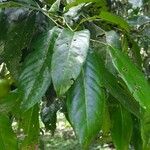
Diospyros digyna
Black sapote · Black persimmon · Chocolate pudding fruit · Black soapapple · Black apple
Description
Source: leafsnapDiospyros nigra, the black sapote, is a species of persimmon. Common names include chocolate pudding fruit, black soapapple and (in Spanish) zapote prieto. The tropical fruit tree is native to Mexico, Central America, and Colombia. The common name sapote refers to any soft, edible fruit. Black sapote is not related to white sapote nor mamey sapote.
🌳 The common persimmon's sweet fruit can be eaten directly, while its seeds can be crushed to brew a caffeinated beverage similar to coffee—an alternative widely used during the American Civil War when coffee was scarce. The plant's heartwood is valued for its durability and is made into various sporting goods and tools. Its sap was also used by Native Americans as an adhesive.
🎭 Things (will) proceed smoothly, good fortune, harmony, family joy
Care Guide
💧 Water
☀️ Light Full sun
The common persimmon flourishes effectively under generous sunlight exposure, although it can tolerate brief periods of shading. Its natural environment, known for abundant sunlight, plays a significant role in promoting its healthy growth. If the sun exposure is not optimal, it might interfere with its growth, while too much light could possibly be detrimental.
🌡️ Temperature 15–35°C
Common persimmon flourishes best in its native habitat where temperatures oscillate between 0 and 100 ℉ (-18 to 37 ℃), and most favorably thrives within a temperature span of 59 to 95 ℉ (15 to 35℃). During the hot summer months, the plant appreciates shade in the afternoon and additional watering to manage the heat. When it's winter, a layer of mulch around the base of the plant serves to protect it from the chill of freezing temperatures.
💨 Humidity
🪴 Soil 6-7
🌱 Fertilizer
For the Common persimmon plant to yield the best fruit, it needs an adequate supply of nutrients. To encourage new growth and the formation of blooms, fertilize the plant at the onset of spring. Consistent fertilization aids in keeping the plant in good health, growing tastier fruit, and avoiding problems associated with nutrient deficiency such as yellow leaves and subpar fruit yield.
🪴 Pot & Repot 2-3 years
For repotting Common persimmon, opt for a pot that is 1-2 inches bigger and has plenty of drainage. Make use of a potting mix that drains well. Carry out the repotting process in the spring or fall season, making certain that the root ball stands a bit below the border of the flower pot. After the repotting is done, ensure that it's adequately watered and positioned in a warm location with soft sunlight.
✂️ Pruning
🌿 Propagating
🐛 Diseases & pets
☠️ Toxicity
Characteristics
- Plant Type
- Tree
- Life Cycle
- Perennial
- Genus
- Diospyros
- Family
- Ebenaceae
- Hardiness Zone
- 7-10
- Mature Height
- 10.06 m to 17.98 m
- Mature Spread
- 7.01 m to 7.92 m
- Leaf Color
- Green, Yellow
- Leaf Type
- Deciduous
- Flower Color
- Yellow, White, Green
- Flower Size
- 1.02 cm to 2.03 cm
- Bloom Time
- Late spring, Early summer
- Planting Time
- Spring, Autumn
- Harvest Time
- Mid summer, Late summer, Early fall