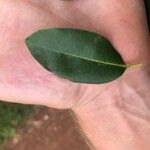
Diospyros mespiliformis
Ebony diospyros · Kalum · West African Ebony · African Ebony · Bush Matome
Description
Source: leafsnapDiospyros mespiliformis, commonly known as the African ebony or jackalberry tree, is a species native to sub-Saharan Africa. Belonging to the Ebenaceae family, this tree can grow up to 20 meters tall. The bark is dark and rough, while its glossy green, oval-shaped leaves add to its striking appearance. During the spring, the African ebony tree produces small, white flowers that bloom in clusters. These flowers are followed by round or oval-shaped fruits that ripen from green to yellow. The fruit is sweet and often used in traditional medicine for its beneficial properties. The wood of Diospyros mespiliformis is highly prized for its durability, strength, and dark coloration. For centuries, it has been used in Africa to craft furniture, carvings, and musical instruments such as drums and xylophones. Beyond its practical applications, the African ebony holds cultural importance among many indigenous communities in sub-Saharan Africa, where it plays a role in traditional rituals. However, due to overexploitation, the population of Diospyros mespiliformis has significantly declined in recent years. As a result, it is now considered an endangered species, requiring conservation efforts from governments and organizations worldwide.
Care Guide
💧 Water Every 7 days
The monkey guava is well-suited to its native savanna habitat, demonstrating excellent drought tolerance. It thrives in dry conditions with minimal watering, typically needing water only every 2-3 weeks. This makes the monkey guava an ideal choice for xeriscaping, as it naturally conserves water. It is particularly suitable for warmer regions and areas where moisture is scarce.
What is the best way to water my Monkey guava plant?
To promote excellent root development, it's best to place a garden hose at the base of the plant. Avoid directly spraying the leaves, as they can require more watering if they are exposed to direct sunlight outdoors. For moistening the roots, you can use bubblers on each plant or use soaker hoses that cover the entire garden or bed. When adding or removing plants, this can help push the roots deeply. Make sure to drain any excess water and allow the soil to dry before watering again. To prevent diseases, water at ground level instead of spraying the leaves. On a sunny day, it may be beneficial to spray the entire bush with water. Whether the plant is in a pot or in the ground, remember that Monkey guava prefers deep watering rather than light sprinkling.
What should I do if I give too much or too little water to Monkey guava?
An overwatered Monkey guava can show signs of yellowing, dropping leaves, and wilting, which can make the plant appear dull and unhealthy. Mushy stems may also be observed. If these signs are present, it's best to adjust your watering schedule. Wilting can also indicate under watering, where leaves become crispy and dry. In such cases, check the soil for dryness and provide a thorough watering if necessary. Although sufficient water will help the Monkey guava recover, the damaged root system may cause the plant to remain dry with yellow leaves for a few days. Once it returns to normal, the yellowing of leaves will stop. When growing the Monkey guava indoors, always check the moisture levels in the pot and avoid overwatering. Look out for black spots, which may indicate the need to let the soil dry out for a few days. Overwatering can lead to root rot, so transfer the plant to a different pot if discolored and slimy roots are observed. Preventing root rot is important, so never let the soil become too soggy. When planting the Monkey guava outdoors, make sure to dig deeper and check the soil's moisture level. If it feels too dry, it may indicate under watering, and adequate watering is necessary for plant recovery.
How often should I water my Monkey guava plant?
The Monkey guava prefers deep and infrequent watering. When planted in pots, it's important to soak them with a gallon of water each time, as the soil in pots dries out quickly. In colder regions, water the plant every 3 to 5 days, preferably in the morning when the soil is dry. You can check if watering is needed by examining the top 2-3 inches of soil - if it's dry, give the plant a full watering. During hot days, monitor the moisture daily as the heat can rapidly dry out the soil in pots. If you have a garden, irrigation of the soil is also necessary. In hot climates, water once a week when the top 2-3 inches of soil become too dry. Be mindful of rainfall and avoid overwatering to prevent root rot. Monkey guava typically grows in spring and fall, so adding mulch 3 to 4 inches deep can help conserve water when the plant is outdoors. Sandy soil requires more frequent watering due to faster drainage, while clay soil requires less frequent watering to avoid root rot. Mark the watering dates on a calendar and keep an eye on drooping leaves, as this may indicate a need for water.
How much water does my Monkey guava need?
The Monkey guava generally needs about a gallon of water on a regular basis. For potted plants, water them deeply until water drips out of the bottom of the pot. Wait for the soil to dry before watering again. You can use a water calculator or moisture meter to track how much water you give the plant each week. Give plenty of water during the flowering period, but allow the moisture to evaporate afterwards to avoid root rot. If the Monkey guava is planted outdoors and receives sufficient rainfall, it may not need extra watering. When the plant is young or newly planted, ensure it gets 1-2 inches of rain per week. As the Monkey guava grows, it can rely solely on rainfall. Only water it fully during cooler times of the day when the weather is too hot or there has been no rain for 2-3 weeks to prevent heat damage. Additional watering is necessary during prolonged periods of dryness.
Should I water my Monkey guava more or less depending on the time of year or the weather?
The Monkey guava needs to be outdoors and can usually rely on rainfall for watering. During the spring and fall, keep the soil moist but not soggy to help the Monkey guava grow well. In the summer, hot weather can cause water to evaporate quickly, so you may need to water more frequently to keep the soil moist. In the winter, the Monkey guava needs less water as it drops its leaves and goes dormant. Use a well-draining soil mixture like terracotta to help water evaporate. Once the Monkey guava begins to leaf out in the spring, you can skip watering and rely on fall and winter rains. Good drainage is important, especially in the winter. If the Monkey guava is in a pot, keep it well-watered, especially in the summer. Avoid shallow sprinkles that reach the leaves, as this encourages fungi growth and doesn't reach the roots. Don't let the Monkey guava dry out completely in the fall or winter, even if it's dormant. Avoid overwatering to prevent plant death. Apply mulch for water conservation and healthy blooms.
☀️ Light Full sun
Monkey guava comes from open habitats, like sunny meadows and forest margins, which offer abundant light. It does best in Full Sun but will also tolerate Partial Sun, adjusting well to differing sunlight conditions.
What are the sunlight requirements for Monkey Guava?
Monkey guava (Diospyros mespiliformis) requires full sun, meaning it needs above 6 hours of sunlight, but it can also tolerate partial sun, which is about 3-6 hours of sunlight daily. It's important to observe the movement of sunlight in your garden to find a spot that provides the ideal balance of light and shade, ensuring optimal growth and happiness of the plant.
What are the essentials for growing Monkey Guava?
Monkey guava originates from open environments like sunny meadows and forest edges, thriving in full sun but also adapting well to partial sun. In cases where natural sunlight is insufficient, especially during winter or in less sunny spaces, artificial lighting serves as an essential solution. Indoor plants benefit from LED lights which can be customized to provide specific wavelengths needed for growth, with different requirements based on sunlight needs: 30-50W/sq ft for full sun, 20-30W/sq ft for partial sun, and 10-20W/sq ft for full shade plants. The correct positioning of the light source (12-36 inches above the plant) and the duration of light exposure (mimic natural daylight hours, typically 8-12 hours per day) are crucial for healthy plant development.
What are the symptoms of sunlight deficiency or overexposure in Monkey Guava?
Monkey guava may show symptoms of sunlight deficiency, such as smaller new leaves, leggy growth, faster leaf drop, slower or no new growth, lighter-colored new leaves, and conditions like chlorosis, sunscald, leaf curling, wilting, and leaf scorching. These symptoms indicate either insufficient sunlight or excessive exposure. The plant's sensitivity to heat and light conditions requires careful monitoring to ensure it receives the optimal amount of sunlight.
How can I address sunlight-related issues for Monkey Guava?
To address sunlight deficiencies for Monkey Guava, gradually move the plants to a sunnier location, aiming for at least 6 hours of direct sunlight daily. Use south-facing windows to increase sunlight exposure and consider using artificial light for additional support. For outdoor plants, ensure they're moved gradually to avoid sunburn. To address sunlight obstructions, identify and reduce barriers such as trees by pruning. For smaller plants, transplanting during their dormant period to a location with ample sunlight and good drainage can also help. Note that parts of the plant affected by insufficient sunlight may not recover, but new growth should be healthy with the correct adjustments.
🌡️ Temperature 20–37.8°C
Monkey guava comes from tropical areas, where the climate is generally warm and humid. Consequently, it is well suited to high heat and humidity. It is sensitive to abrupt temperature changes and favors a stable thermal environment, so avoiding indoor temperature swings is important. It typically cannot tolerate cold and needs warmer conditions to grow. If the surrounding temperature falls too low, growth may stop or the plant can die.
What is Monkey guava?
Monkey guava, scientifically known as Diospyros mespiliformis, is a plant species without specific essential characteristics or symptoms provided. There is no additional information regarding its uses, cultivation, or benefits at this time.
💨 Humidity
🪴 Soil 6-7
🌱 Fertilizer
Use organic fertilizers (e.g., fish emulsion, compost) rather than chemical fertilizers for Monkey guava. Provide higher nitrogen and phosphorus to young plants in spring. Incorporate compost or fertilizer before or after planting. For mature plants, supplement in spring with a balanced fertilizer or one aimed at correcting specific deficiencies. Nutrient deficiency causes small leaves, short branches, yellow or bronze leaves, acidic fruits, premature fruit fall, and splitting.
🪴 Pot & Repot
✂️ Pruning
Monkey guava is known for its glossy leaves and edible, though astringent, fruit. To promote healthy growth, it's important to prune the plant regularly in early spring. This involves removing dead branches, thinning out crowded areas, and allowing more sunlight to reach the plant. Proper pruning not only enhances growth but also improves air circulation. Be sure to use sharp, clean tools to prevent infections and damage to the plant.
🌿 Propagating
🐛 Diseases & pets
☠️ Toxicity
Characteristics
- Plant Type
- Tree
- Life Cycle
- Perennial
- Genus
- Diospyros
- Family
- Ebenaceae
- Hardiness Zone
- 10-12
- Mature Height
- 3.96 m to 6.1 m
- Mature Spread
- 20.12 m
- Leaf Color
- Green
- Leaf Type
- Deciduous
- Flower Color
- Cream
- Flower Size
- 0.51 cm to 0.51 cm
- Bloom Time
- Late spring, Early summer
- Planting Time
- Spring, Summer, Autumn
- Harvest Time
- Late summer, Early fall, Mid fall
- Native Area
- Burkina Faso, Angola, Namibia, Eritrea, Nigeria, Yemen, Kenya, Niger, Uganda, Tanzania, Zimbabwe, Mali, Benin, Cameroon, Burundi, Mozambique, Ghana, Ethiopia, Botswana, Central African Republic, Malawi, South Africa, Zambia, Sudan, Mauritania, Guinea, Chad, Togo, Senegal, Eswatini, Côte d'Ivoire, Gambia