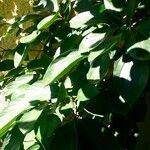
Diospyros virginiana
خرمالوی آمریکایی · Persimmon · American persimmon · Eastern Persimmon · Common persimmon
Description
Source: leafsnapDiospyros virginiana is a persimmon species commonly called the American persimmon, common persimmon, eastern persimmon, simmon, possumwood, possum apples, or sugar plum. It ranges from southern Connecticut to Florida, and west to Texas, Louisiana, Oklahoma, Kansas, and Iowa. The tree grows wild but has been cultivated for its fruit and wood since prehistoric times by Native Americans. Diospyros virginiana grows to 20 m (66 ft), in well-drained soil. The tree is typically dioecious, so one must have both male and female plants to obtain fruit. Most cultivars are parthenocarpic (setting seedless fruit without pollination). The fragrant flowers are pollinated by insects and wind. Fruiting typically begins when the tree is about 6 years old. The fruit is round or oval and usually orange-yellow, sometimes bluish, and from 2 to 6 cm (3⁄4 to 2+1⁄4 in) in diameter. Both the tree and the fruit are referred to as persimmons, with the latter appearing in desserts and cuisine in the U.S. South and Midwest. Commercial varieties include the very productive Early Golden, the productive John Rick, Miller, Woolbright and the Ennis, a seedless variety. Another nickname of the American persimmon, 'date-plum' also refers to a persimmon species found in South Asia, Diospyros lotus.
🌳 The common persimmon's sweet fruit can be eaten directly, while its seeds can be crushed to brew a caffeinated beverage similar to coffee—an alternative widely used during the American Civil War when coffee was scarce. The plant's heartwood is valued for its durability and is made into various sporting goods and tools. Its sap was also used by Native Americans as an adhesive.
🎭 Things (will) proceed smoothly, good fortune, harmony, family joy
Care Guide
💧 Water Every 1-2 weeks
The common persimmon tree thrives in environments with moderate moisture, needing to be watered every 1-2 weeks. While it can tolerate short periods of dryness, it cannot withstand prolonged droughts. During its winter dormancy, the tree reduces its water intake to conserve energy. By understanding these characteristics, you can ensure the tree grows healthily and adapts well to different seasonal conditions.
When should I water my common Persimmon?
Determining the right time to water common Persimmon involves observing several signs. Check the soil moisture by inserting a finger into the soil up to a depth of 2-3 inches; if it feels dry, it's time to water. Leaves that begin to droop, wilt, or appear limp, drastic changes in leaf color such as yellowing or browning, dry and cracked soil surface, leaf drooping during hot weather persisting into cooler parts of the day, and flower bud drop are all indicators that common Persimmon needs water. Additionally, checking the moisture level at the root zone with a moisture meter helps ensure accurate watering. Be aware of the risks of both early and late watering which include root rot from over-watering and stunted growth or plant death from under-watering.
How should I water my common Persimmon?
Watering common Persimmon effectively involves the 'soak and dry' method: slowly applying water to the base of the tree until the soil is saturated, then waiting until the soil has partially dried out before the next watering. Use a watering can with a long spout for precision, avoiding foliage to prevent disease and pest risks. Focus on watering the base of the plant, ensuring water reaches beyond the drip line to support the extended surface roots but avoid excessive watering that leads to waterlogging. A moisture meter can be very useful in determining when the next watering should occur.
How much water does common Persimmon really need?
The water needs of common Persimmon vary based on several factors including pot size, root depth, and plant size. A mature plant in a medium-sized pot may require about 1 liter of water per session. Signs of proper hydration include healthy, green leaves, with wilting, yellowing, or excessive leaf drop indicating possible over or underwatering issues. To maintain proper hydration, well-draining soil is important, and the soil should be allowed to dry out slightly top inch before re-watering. Regular checking of soil moisture and adjusting watering based on the plant’s specific needs are key.
What kind of water is best for common Persimmon?
Common Persimmon thrives best with rainwater due to its natural, chemical-free nature and balanced pH level. Distilled water serves as a good alternative if rainwater isn't available. Tap water can be used in the absence of other options but may contain chlorine, fluoride, and other minerals that could potentially harm the plant. Letting tap water sit for 24 hours before use allows chlorine to evaporate, reducing the risk to the plant. Common Persimmon has moderate sensitivity to chlorine and fluoride, and prefers neutral to slightly acidic water, with a pH range of 6.0-7.0. Water temperature should be moderate, ideally around 68-72°F (20-22°C).
☀️ Light Full sun
The common persimmon flourishes effectively under generous sunlight exposure, although it can tolerate brief periods of shading. Its natural environment, known for abundant sunlight, plays a significant role in promoting its healthy growth. If the sun exposure is not optimal, it might interfere with its growth, while too much light could possibly be detrimental.
What are the sunlight requirements for Common Persimmon?
Common Persimmon requires full sun exposure, which means it needs more than 6 hours of sunlight daily to thrive optimally. However, it can also cope with partial sun situations, where it would receive about 3-6 hours of sunlight. Ensuring the right balance of light and shade is vital for the plant's health and happiness. Common Persimmon's native habitat, which provides ample solar exposure, plays a significant role in its development. Insufficient sunlight may inhibit its growth, while too much direct light could potentially cause harm.
How can artificial lighting benefit indoor Common Persimmon plants?
Artificial lighting is crucial for indoor Common Persimmon plants, especially when natural sunlight is insufficient, such as during winter or in less sunny spaces. It promotes faster, healthier plant growth. LED lights are recommended because they can provide specific wavelengths of light needed by the plants. For full sun plants, 30-50W/sq ft of artificial light is needed, partial sun plants require 20-30W/sq ft, and full shade plants need 10-20W/sq ft. The light source should be placed 12-36 inches above the plant to mimic natural sunlight, with most plants needing 8-12 hours of light per day.
What are the symptoms of insufficient or excessive sunlight in Common Persimmon?
Common Persimmon may exhibit several symptoms due to insufficient or excessive sunlight. Insufficient light can lead to smaller new leaves, leggy or sparse growth, faster leaf drop, slower or no new growth, and lighter-colored new leaves. Excessive sunlight can cause chlorosis, sunscald, leaf curling, wilting, and leaf scorching. These symptoms vary but fundamentally indicate the plant's struggle with its light environment.
What solutions exist for Common Persimmon experiencing light-related issues?
For indoor Common Persimmons with insufficient light, gradually moving the plant to a sunnier spot or using artificial lighting can help. It can be beneficial to move the plant closer to a south-facing window or use professional grow lights. For outdoor plants, shifting them to better-lit areas gradually is key to avoiding sunburn. Pruning obstructive tree branches and considering transplanting to more favorable locations can also enhance sunlight accessibility. Note, once subjected to adverse light conditions, parts of the plant may not recover fully. However, new growth post-adjustment should be healthier.
🌡️ Temperature 15–35°C
Common persimmon flourishes best in its native habitat where temperatures oscillate between 0 and 100 ℉ (-18 to 37 ℃), and most favorably thrives within a temperature span of 59 to 95 ℉ (15 to 35℃). During the hot summer months, the plant appreciates shade in the afternoon and additional watering to manage the heat. When it's winter, a layer of mulch around the base of the plant serves to protect it from the chill of freezing temperatures.
What are the ideal growing conditions for Common Persimmon?
Common Persimmon thrives in temperatures ranging from 0 to 100°F (-18 to 37°C), with a preferred temperature range of 59 to 95°F (15 to 35°C). It benefits from afternoon shade and supplemental watering during hot summer days to cope with high temperatures. In the winter, mulching around the base can help insulate it against the cold. Although it has strong cold resistance, if temperatures are expected to drop below its tolerance limit, it's important to protect the plant by wrapping its trunk and branches with insulating materials. Additionally, watering the plant abundantly before the first freeze helps keep the soil moist through the winter and early spring, preventing drought and water scarcity.
How does low temperature affect Common Persimmon, and what are the solutions?
Common Persimmon is cold-tolerant, preferring temperatures to stay above a certain minimum threshold during winter. If temperatures fall below this threshold, the plant may not show immediate damage in winter but can exhibit brittle and dry branches in spring, with no new shoots emerging. To mitigate this, it's advised to prune away any dead branches that have failed to produce new leaves come spring.
What should be done if Common Persimmon experiences high temperatures?
During the summer, it's important to ensure that Common Persimmon's temperature does not exceed its maximum tolerance level. Excess heat can cause leaves to lighten in color, tips to become dry and withered, and increase susceptibility to sunburn. To combat this, affected parts should be trimmed away. The plant should be moved to a shadier location or shaded with a cloth during the midday and afternoon sun. It's also beneficial to water the plant in the morning and evening to maintain soil moisture.
💨 Humidity normal (40-60%)
This plant will thrive in moderate humidity, which is probably the level in your home. However, misting it a few times a week can be very beneficial. Make sure the room has good ventilation.
🪴 Soil 6-7
🌱 Fertilizer Every 100 days
For the Common persimmon plant to yield the best fruit, it needs an adequate supply of nutrients. To encourage new growth and the formation of blooms, fertilize the plant at the onset of spring. Consistent fertilization aids in keeping the plant in good health, growing tastier fruit, and avoiding problems associated with nutrient deficiency such as yellow leaves and subpar fruit yield.
Why is it important to fertilize my Common Persimmon?
Plants, especially fast-growing ones, continue to deplete the soil of nutrients, which can cause various problems. Therefore, it is important to regularly fertilize plants like the Common Persimmon to provide them with the necessary nutrients. By doing so, not only will the plant stay healthy, but it will also yield more delicious fruit. If plants are not fertilized for a long time, they may experience a range of issues. Nutrient deficiency can lead to yellow leaves, reddish coloration, distorted shapes, withered tips, or significant decline in plant health. Some nutrient deficiencies can even result in problems with the bark, slow growth, weak shoot development, and a lack of fruit production.
When should I fertilize my Common Persimmon tree?
The best time to fertilize Common Persimmon is in the early spring, before the buds appear. During this time, the tree uses the stored-up reserves from winter to grow new branches and leaves. To support the development of blooms, it is recommended to fertilize about 2 to 4 weeks before the expected bloom time. This allows enough time for the nutrients to soak into the soil and be absorbed by the tree. It is also important to avoid fertilizing in the autumn as this can cause excessive foliage growth late in the season, making the leaves vulnerable to damage during winter.
When is it a bad idea to put fertilizer on my Common Persimmon?
Here are some tips for fertilizing Common Persimmon: - Avoid fertilizing in the first year of growth. If fertilization is necessary, be cautious about providing it. - If you pruned 20% or more of the plant the previous year, do not fertilize. - Do not fertilize diseased or damaged plants, as it can do more harm than good. - Remember that fertilizer is not a cure-all, so address the root cause of any issues before considering fertilization. - Avoid fertilizing after the peak of summer, as this can lead to excessive growth before winter. - Common Persimmon should not be fertilized during hot and dry times of the year, as dry soil does not effectively deliver fertilizer and the plant may not have enough water to support growth. - Fertilize earlier in the season when temperatures are cooler. - Be cautious about inadvertently giving nearby plants a double-dose of fertilizer, as Common Persimmon can absorb fertilizer applied to other plants or lawns.
What kind of plant food does my Common Persimmon tree require?
Using fertilizer that contains a balance of nitrogen, phosphorus, and potassium can bring many benefits to plants. Nitrogen is important for leaf growth and chlorophyll production. Phosphorus helps support the root system and promotes the development of blossoms, fruits, and seeds. Potassium plays a role in photosynthesis and the movement of water and nutrients throughout the plant. When choosing a fertilizer, you can opt for a commercial one that is specifically designed for a particular type of tree. Alternatively, you can use organic sources of nitrogen such as manure, feather meal, or blood meal. To ensure you apply fertilizer accurately, conducting a soil test can give you a better understanding of the condition of your soil. For commercial fertilizers, if your soil lacks sufficient phosphorus and potassium according to the soil test, you can use a balanced granular fertilizer with a ratio of 10-10-10 or similar. In most cases, nitrogen in the soil is continuously depleted with rainfall. If your soil already has enough phosphorus and potassium, it would be more appropriate to use a high-nitrogen fertilizer with a ratio of 6-2-1 or 10-2-2.
How should I fertilize my Common Persimmon?
To properly fertilize your Common Persimmon, it is essential to follow specific instructions for the type of fertilizer you are using. Over-fertilizing can be detrimental, so determining the correct amount is crucial, particularly for fruit trees. A general guideline is to use the tree's age or trunk diameter to determine the amount of fertilizer needed. Typically, you can estimate using one-tenth of a pound of fertilizer per year or per inch of trunk, with a maximum of one pound. Keep in mind that Common Persimmons should not be fertilized during the first few years. When using granular or organic fertilizers like blood meal, sprinkle the substance around the base of the tree, extending all the way to the drip line (the area beneath the farthest-reaching branches). Make sure the fertilizer does not come into contact with the trunk. Over time, the granules will break down and seep into the soil, allowing the roots to absorb them. After fertilizing, spread a one-inch layer of compost around the base of the tree and give it a thorough watering.
🪴 Pot & Repot 2-3 years
For repotting Common persimmon, opt for a pot that is 1-2 inches bigger and has plenty of drainage. Make use of a potting mix that drains well. Carry out the repotting process in the spring or fall season, making certain that the root ball stands a bit below the border of the flower pot. After the repotting is done, ensure that it's adequately watered and positioned in a warm location with soft sunlight.
✂️ Pruning
Late winter is the ideal time to prune Common Persimmon trees. Focus on removing dead or diseased branches to improve air circulation and light penetration. By thinning the canopy and controlling growth, you can enhance the tree's overall health, improve fruit quality, and reduce the risk of disease. Pruning during this time also minimizes stress on the tree, supporting vigorous growth in the spring.
🌿 Propagating
🐛 Diseases & pets
☠️ Toxicity
Characteristics
- Plant Type
- Tree
- Life Cycle
- Perennial
- Genus
- Diospyros
- Family
- Ebenaceae
- Hardiness Zone
- 7-10
- Mature Height
- 10.06 m to 17.98 m
- Mature Spread
- 7.01 m to 7.92 m
- Leaf Color
- Green, Yellow
- Leaf Type
- Deciduous
- Flower Color
- Yellow, White, Green
- Flower Size
- 1.02 cm to 2.03 cm
- Bloom Time
- Late spring, Early summer
- Planting Time
- Spring, Autumn
- Harvest Time
- Mid summer, Late summer, Early fall
- Native Area
- East Coast of US, to Midwest and Texas; originally from Japan, China, Korea