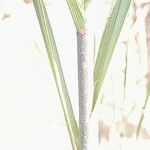
Diplachne fusca
Brown Beetle Grass · Bearded Sprangletop · Mexican Sprangletop · Beetlegrass · Brown silvertop grass
Description
Source: leafsnapDiplachne fusca, called bearded sprangletop, is a widespread species of grass in the genus Diplachne, native to North America, the Caribbean, South America, Africa, Asia, and Australia, and introduced in Europe, New Zealand and Hawaii, among other places. It prefers to live in salty, wet conditions, such as in salt marshes and shallow depressions.
Care Guide
💧 Water
Brown beetle-grass thrives in moist environments and benefits from consistent watering, ideally once a week. Although it can tolerate moderate drought, maintaining stable moisture is essential, especially during the growing season when its need for water increases. When grown outdoors, natural rainfall can help meet its irrigation requirements.
☀️ Light Full sun
Brown beetle-grass is a perennial herbaceous species that prefers sunny sites and is native to open habitats, frequently found in meadows and grasslands. It favors full sun but can tolerate partial sun.
What are the sunlight requirements for Brown beetle-grass?
Brown beetle-grass (Diplachne fusca) is a sun-loving perennial herb that thrives in full sun, requiring more than 6 hours of sunlight daily, but it can also tolerate partial sun conditions, which means it can grow with about 3-6 hours of sunlight. It's important to observe the movement of sunlight through your garden to find an optimal location that ensures the plant receives the necessary light for its growth while also being protected against too much direct sunlight, which can harm the plant.
How can artificial lighting be used for Brown beetle-grass?
Artificial lighting can be significant for the growth of Brown beetle-grass, especially in conditions where natural sunlight is insufficient, like during winter or in less sunny indoor spaces. LED lights are recommended due to their ability to provide specific wavelengths needed by plants. The right amount of artificial light varies depending on the plant's sunlight needs: full sun plants require 30-50W/sq ft, partial sun plants need 20-30W/sq ft, and for optimal growth, the lights should be placed 12-36 inches above the plant and kept on for 8-12 hours per day to mimic natural daylight conditions.
What are the symptoms of inadequate lighting in Brown beetle-grass?
When Brown beetle-grass is exposed to inadequate lighting, several symptoms may appear, including smaller new leaves compared to mature ones, a leggy or sparse growth pattern, increased leaf drop, slowed or halted growth, and new leaves that are lighter in color or show signs of chlorosis (turning yellow due to a lack of chlorophyll). Excessive sunlight can also cause problems such as sunscald, leaf curling, wilting, and leaf scorching, indicating that the plant needs a better balance of sunlight.
How can you address light-related issues in Brown beetle-grass?
To address light-related issues in Brown beetle-grass, gradually adjust the plant's exposure to sunlight by moving it to a sunnier spot each week until it receives the recommended amount of direct sunlight, at least 6 hours a day. Use a south-facing window to maximize sunlight exposure. For plants that can't be moved or require additional light, use artificial lighting like desk lamps or professional plant grow lights for at least 8 hours daily. If your plant is outdoors and sunlight is blocked, consider pruning nearby trees or transplanting the plant to a location with more sunlight and good drainage to ensure optimal growth. Remember, while some parts of the plant damaged by inadequate light might not recover, new growth should be healthy following these adjustments.
🌡️ Temperature 15–37.8°C
Brown beetle-grass comes from tropical areas, where the climate is usually warm and humid. Consequently, it is well suited to high temperatures and humidity. It does not tolerate abrupt temperature changes and prefers a steady thermal environment, so avoiding temperature fluctuations indoors is important. It generally cannot stand cold and needs warmer conditions to grow. If the surrounding temperature falls too low, the plant may stop growing or even die.
💨 Humidity
🪴 Soil 6-7
🌱 Fertilizer
Brown beetle-grass needs extra nutrients to encourage healthy new growth. In spring, applying compost around the base of the plant can effectively supply the nutrition it requires. Fertilizing supports vigorous growth and helps the plant fend off diseases and pests.
🪴 Pot & Repot
✂️ Pruning
Brown beetle-grass flourishes in wetlands and benefits from trimming in early spring. To promote new growth, cut back the dead stems, being careful to avoid heavy pruning. Light shearing helps to control the plant's height, improve air circulation, and reduce the risk of disease. This approach ensures the grass performs well and lasts longer in your garden.
🌿 Propagating
🐛 Diseases & pets
☠️ Toxicity
Characteristics
- Plant Type
- Grass
- Life Cycle
- Perennial, Annual
- Genus
- Diplachne
- Family
- Poaceae
- Hardiness Zone
- 8-11
- Mature Height
- 0.1 m to 1.07 m
- Mature Spread
- 20 cm to 40 cm
- Leaf Color
- Light Green
- Leaf Type
- Semi-evergreen
- Flower Color
- Yellow, Green, Brown
- Flower Size
- 15.24 cm to 25.40 cm
- Bloom Time
- Summer, Early fall
- Planting Time
- Spring, Summer, Autumn
- Harvest Time
- Late summer, Fall