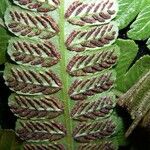
Images by part: leaf (5) · flower (0) · fruit (0) · bark (2) · habit (2) · other (5)
Diplazium striatum
Striped Twinsorus Fern
Tier 2 Difficulty: hard Water: high Light: full_shade
Temperature
20–37 °C
Soil pH
6–7
Hardiness
Zone 9–11
Click count
1
Observations
1
Care Guide
💧 Water
☀️ Light Full shade
Diplazium proliferum occurs in habitats such as forest understories or rocky areas that provide natural shade. It prefers Full Shade but can tolerate Partial Sun.
Ideal: Full shade
🌡️ Temperature 20–37.8°C
Diplazium proliferum comes from tropical areas, where the climate is characteristically warm and humid. Consequently, it is well suited to high temperatures and humidity. It does not tolerate sudden temperature changes and prefers a stable thermal environment, so avoiding temperature fluctuations indoors is important. It generally cannot withstand cold and needs higher temperatures to grow. If the temperature falls too low, the plant may stop growing or even die.
Ideal temperature: 20–37.8°C
💨 Humidity
Humidity:
🪴 Soil 6-7
Soil pH: 6-7
🌱 Fertilizer
🪴 Pot & Repot
✂️ Pruning
🌿 Propagating
🐛 Diseases & pets
☠️ Toxicity
Characteristics
- Plant Type
- Fern
- Life Cycle
- Perennial
- Genus
- Diplazium
- Family
- Aspleniaceae
- Hardiness Zone
- 9-11
- Mature Height
- 0.61 m to 1.22 m
- Mature Spread
- 49 cm to 91 cm
- Leaf Color
- Forest Green, Dark Green
- Leaf Type
- Evergreen
- Planting Time
- Summer, Autumn
- Native Area
- Angola, Malaysia, Vanuatu, Philippines, Sudan, Madagascar, Nigeria, Guinea, Fiji, Uganda, Tanzania, Central African Republic, China, Gabon, Sierra Leone, Indonesia, Cameroon, Liberia, Togo, Ghana, Côte d'Ivoire, Congo (DRC), Thailand, Congo
Tags (5)
Common Names (1)
en Striped Twinsorus Fern