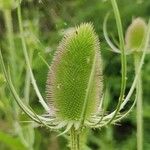
Dipsacus laciniatus
Cut-leaf teasel · Venus's-bath · Cutleaf teasel · Cut-leaved Teasel · Laciniate Teasel
Description
Source: leafsnapDipsacus laciniatus, commonly known as the Cut-leaved Teasel, is a biennial plant belonging to the family Dipsacaceae. Native to Europe and western Asia, it has also been introduced to North America. This robust plant can grow up to 2 meters tall, featuring a stout stem and deeply lobed, prickly leaves. The Cut-leaved Teasel produces large, cone-shaped flower heads surrounded by spiny bracts. Blooming from July through September, these flowers attract bees, butterflies, and other pollinators. Due to its unique appearance, the Cut-leaved Teasel is often used for ornamental purposes in gardens. It also possesses medicinal properties, containing compounds such as iridoids known for their anti-inflammatory effects. Ecologically, the Cut-leaved Teasel is significant as it provides food for birds like goldfinches, who feed on its seeds during the winter months. However, in some regions, it is considered an invasive species due to its rapid spread through self-seeding. Thus, it requires careful monitoring when planted in gardens or natural areas to prevent it from becoming problematic. Overall, Dipsacus laciniatus is a fascinating biennial plant with unique features that make it both aesthetically pleasing and ecologically important.
Care Guide
💧 Water Every 7 days
Cutleaf teasel, native to temperate regions, thrives in moderate moisture and can tolerate short periods of drought. Watering it weekly provides sufficient hydration without over-saturating the soil. Typically cultivated outdoors, cutleaf teasel's growth cycle aligns with seasonal rainfall, ensuring it receives the necessary water for healthy development.
How should I water my Cutleaf teasel plant?
To properly care for the Cutleaf teasel, follow these guidelines for watering: - Use filtered water that is at room temperature, as tap water may contain harmful particles. - The Cutleaf teasel prefers warm water as it is native to a warm environment, so avoid using cold water. - Do not water the plant from above, as this can lead to foliage complications. - Instead, deeply water the soil with filtered room temperature water until it is completely soaked. - This helps to moisten the roots and facilitate their spreading in the soil, enabling the plant to collect the necessary nutrients.
What do I do if I give my Cutleaf teasel too much or too little water?
Overwatering is a common problem for Cutleaf teasel and can cause wilting, yellowing leaves, and potentially lead to diseases like root rot, mold, and mildew. Underwatering is less common, but can result in brittle, brown leaves. It is important to recognize the signs of overwatering early and reduce watering immediately. If the soil drains poorly, replace it with a well-draining potting mix. If signs of underwatering are present, increase watering until the signs subside.
How frequently should I water my Cutleaf teasel?
If your Cutleaf teasel plant is in a pot, the most precise way to determine if it needs water is by checking the soil moisture. Simply insert your finger into the soil to a depth of two to three inches. If the soil at that depth feels dry, then it's time to water the plant. If you are growing the Cutleaf teasel outdoors in the ground, you can use a similar method to test the soil moisture. Once again, check if the first few inches of soil have dried out. If they have, it's a sign that the plant needs watering. Typically, during the spring and early fall seasons, you will need to water this plant about once a week using this method. However, in extremely hot weather, you may need to water it more frequently, possibly twice or even more times per week. It's worth noting that mature, well-established Cutleaf teasel plants have a remarkable ability to tolerate drought conditions.
How much water does my Cutleaf teasel plant require?
When watering your Cutleaf teasel, make sure not to hold back on the amount of water you give. Wait until the first two to three inches of soil are dry, and then give the plant a good, thorough watering. Make sure to soak the soil entirely, and add enough water so that it flows out of the drainage holes at the bottom of the pot. If you don't see excess water draining, it means you haven't watered enough. However, be careful not to let water build up inside the soil, as this can be harmful to the plant. On the other hand, if water doesn't drain through the pot, it could mean the soil doesn't drain well, which is not good for the plant's health. If the plant is outside, receiving 1 inch of rain per week should be enough.
How do I water my Cutleaf teasel as it grows?
The water requirements of the Cutleaf teasel can vary depending on its growth stages. In the first few years of its life or after being transplanted, it will require more water than usual. This is because during these stages, the plant focuses on growing new roots that support future growth, and these roots need extra moisture to perform well. However, after a few seasons, the Cutleaf teasel will need less water. Another stage that requires increased water is during the bloom period, as flower development requires a significant amount of moisture. Therefore, you may need to provide more water to your Cutleaf teasel at this time.
☀️ Light Full sun
Cutleaf teasel performs best with plenty of sunlight but can also grow in locations with moderate light. Originating from environments that receive abundant sun, it is adapted to those light levels. Although it can tolerate reduced light, a lack of strong sun may impair its vigorous growth and overall health.
What are the sunlight requirements for plants?
Plants have varying requirements for sunlight to thrive. Full sun plants need more than 6 hours of sunlight daily, while partial sun plants do well with about 3-6 hours of sunlight. To ensure your plants are happy and healthy, it's important to observe the movement of sunlight through your garden and choose spots that offer the right balance of light and shade.
How does the cutleaf teasel respond to sunlight?
The cutleaf teasel thrives best when it receives ample sunlight, as it originates from environments with plenty of sun. However, it can still grow under moderate sunlight conditions. Lack of substantial sunlight exposure could hinder its growth and overall health. For indoor plants unable to receive natural light, artificial lighting is a vital alternative to promote healthy growth. LED lights are recommended because they can mimic the specific wavelengths needed by your plants, with requirements varying based on the plant's sunlight needs.
What are the signs of insufficient sunlight in cutleaf teasel?
When the cutleaf teasel is grown indoors or in conditions where it doesn't receive enough light, it may show symptoms such as smaller leaves, leggy or sparse growth, faster leaf drop, slowed or halted growth, lighter-colored new leaves, chlorosis (leaves turning yellow), sunscald, leaf curling, wilting, and leaf scorching. These symptoms indicate a plant struggling due to inadequate sunlight exposure.
How can you address sunlight-related issues for cutleaf teasel?
To ensure your cutleaf teasel receives adequate light, gradually move it to sunnier spots, aiming for at least 6 hours of direct sunlight daily. For indoor plants that are large or not easily movable, consider supplementing with artificial light, keeping a desk or ceiling lamp on for at least 8 hours daily. If outdoor plants are adjusting to new light conditions, it's crucial to avoid drastic changes to prevent sunburn. For plants with obstructed light, consider pruning nearby trees or transplanting to a better-lit area. Note that parts of the plant damaged by insufficient light may not recover, but new growth should be healthy with improved lighting conditions.
🌡️ Temperature 5–32.2°C
Cutleaf teasel originates from regions with a temperate climate and prefers temperatures of approximately 68 to 95 °F (20 to 35 ℃). It thrives in these warmer conditions, so it's important to provide an environment that mimics them during seasonal changes.
What is the native climate for Cutleaf teasel?
Cutleaf teasel is native to regions that experience a moderate climate, thriving best in temperatures ranging from 68 to 95 °F (20 to 35 °C). This preference for warmer temperatures makes it essential to replicate such an environment during seasonal changes to ensure the plant's well-being.
Does Cutleaf teasel require frost protection in winter?
Cutleaf teasel exhibits strong cold resistance, generally eliminating the need for special frost protection measures during the winter months. However, if temperatures are anticipated to fall below -25°C, it's important to take steps to protect the plant. This can involve covering the teasel with insulating materials such as soil or straw. Additionally, watering the plant abundantly before the first freeze to maintain soil moisture can help protect it during colder periods.
How does Cutleaf teasel react to low temperatures?
Cutleaf teasel is notably cold-tolerant and ideally should not be exposed to temperatures below 0°C. While it copes well with cold and can survive without noticeable changes through winter, temperatures dropping below -25°C can hinder spring sprouting, leading to decreased sprouting or no sprouting at all. To manage these effects, it's advised to remove parts of the plant that fail to sprout in spring.
What should be done if Cutleaf teasel experiences high temperatures?
During the summer, it's crucial to keep Cutleaf teasel's temperature below 35°C, as overheating above 38°C can cause the leaves to lighten, curl, become prone to sunburn, and in extreme cases, result in the wilting and drying of the plant. To mitigate these issues, trim away any sunburned or dried parts, move the plant to a shaded area during the peak sunlight hours, or use a shade cloth. Ensuring the soil remains moist with morning and evening watering sessions can also help protect the plant from high temperatures.
💨 Humidity
🪴 Soil 6-7
🌱 Fertilizer
Cutleaf teasel are regarded as heavy feeders with respect to nutrients. They require frequent, low doses of nitrogen and potassium fertilizers and periodic applications of phosphorus, micronutrients, sulfur, and magnesium to maintain good growth and bright coloration. Continuous fertilization throughout the growing season helps prevent deficiency symptoms and maintain optimal growth.
Why should I add fertilizer to my Cutleaf teasel?
To support the rapid growth of leafy foliage and root development in Cutleaf teasel plants, it is important to provide them with nitrogen and potassium. These nutrients not only fuel the growth of colorful leaves, but also help anchor the plants into the soil. Additionally, the presence of nitrogen encourages taller and fuller plant growth.
When should I fertilize my Cutleaf teasel?
Cutleaf teasel plants have a high nutrient requirement due to their rapid growth, large leaves, and high water content. To support their needs, fertilizer should be applied regularly from the moment they start germinating until they reach maturity. Failure to provide enough nutrients can lead to deficiency symptoms and hinder the plant's growth. In the past, it was believed that the nutrient requirements of Cutleaf teasel declined significantly once they started changing colors in the fall. Consequently, it was assumed that fertilizer applications could be reduced or stopped. However, recent research has shown that providing small amounts of nitrogen fertilizer even after maturity can have benefits. This practice won't significantly affect the coloration of the plant but will prevent the lower leaves from turning yellow and falling off.
When is the best time to not use fertilizer on my Cutleaf teasel?
Fertilizer can sometimes harm Cutleaf teasel instead of helping it, especially when the plant is already stressed. If the tea plant is struggling with diseases or insect problems, like leaf spot or aphids, it's better to avoid fertilizing. Adding fertilizer in these situations weakens the plant's natural defenses, making it even more susceptible to other pests or diseases. Additionally, it's best to avoid fertilizing when the soil surface is hardened or dry, as this increases the risk of fertilizer burn on the roots. In these cases, it's recommended to water the potting soil to moisten it slightly before applying fertilizer.
What kind of fertilizer should I use for my Cutleaf teasel plant?
Fertilizers are important for promoting growth in Cutleaf teasel because they contain key nutrients like nitrogen, potassium, phosphorus, iron, manganese, and zinc. For optimal results, a balanced fertilizer like an all-purpose one with a 10-10-10 NPK ratio works well. Natural options such as blood meal or worm castings can also be used. If you specifically want to encourage leaf growth in Cutleaf teasel, choosing a fertilizer with a higher nitrogen content, like fish fertilizer, is a good idea. However, if your main goal is not to focus on flowers or seeds, there is no need to provide excessive supplements for those aspects of the plant.
How can I feed my Cutleaf teasel plant to help it grow better?
If you are growing container plants with potting soil that has slow-release fertilizer, you don't need to fertilize the seeds when planting. The initial fertilizer and nutrient reserves in the seed's endosperm provide enough nutrients for the first couple of weeks. However, if your potting soil doesn't have fertilizer, mix a small amount of a slow-release starter fertilizer into the potting mix before filling containers. Once the plants are about four weeks old, start fertilizing them every two weeks at one-third to one-half the recommended rate stated on the fertilizer product label. Keep up this schedule until the Cutleaf teasel reaches full maturity. Once it reaches this point, you can reduce fertilization to once every three to four weeks at the same diluted strength or choose to fertilize at one-quarter of the recommended rate every two weeks.
🪴 Pot & Repot
✂️ Pruning
The cutleaf teasel is a tall biennial plant with prickly stems and lobed leaves. For best results, prune the plant in early spring to encourage growth and control its height. Pruning in late spring helps with shaping the plant. Be sure to wear gloves during pruning to protect yourself from injury. It's important to follow specific horticultural guidelines for optimal care.
🌿 Propagating
🐛 Diseases & pets
☠️ Toxicity
Characteristics
- Plant Type
- Herb
- Life Cycle
- Biennial, Perennial
- Genus
- Dipsacus
- Family
- Caprifoliaceae
- Hardiness Zone
- 5-8
- Mature Height
- 0.61 m to 2.13 m
- Mature Spread
- 61 cm
- Leaf Color
- Green
- Leaf Type
- Deciduous
- Flower Color
- White
- Flower Size
- 5.08 cm to 10.16 cm
- Bloom Time
- Mid summer
- Planting Time
- Spring, Summer, Autumn, Winter
- Harvest Time
- Mid summer, Late summer
- Native Area
- Turkey, Austria, Slovakia, Montenegro, Croatia, Slovenia, Uzbekistan, Russia, Iraq, Germany, Romania, France, Tajikistan, Czech Republic, Bulgaria, Armenia, Poland, Greece, Ukraine, Serbia, Lebanon, Afghanistan, Kyrgyzstan, Kazakhstan, Italy, Switzerland, Iran, Albania, Azerbaijan, Hungary, Turkmenistan