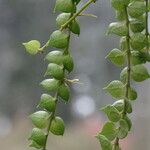
Dischidia ruscifolia
Million hearts
Description
Source: leafsnapDischidia ruscifolia, commonly known as the Million Hearts plant, is a tropical epiphytic species within the Apocynaceae family. Native to Southeast Asia's rainforests, this plant is renowned for its small, heart-shaped leaves that cluster along its trailing stems, often attaching itself to trees and other vegetation. The leaves of Dischidia ruscifolia are thick, succulent, and boast a glossy green hue. Its thin and wiry stems enable the plant to climb or trail effortlessly along various surfaces. Throughout the year, it sporadically produces small white or pink flowers. As a houseplant, Dischidia ruscifolia is easy to care for, thriving in bright but indirect light. It prefers well-draining soil and moderate watering, allowing the soil to dry out slightly between waterings. This unique houseplant has surged in popularity due to its low-maintenance care and appealing appearance, particularly when grown in hanging baskets or trained on trellises or moss poles. Its trailing habit makes it an excellent choice for adding greenery to small spaces like apartments or offices, while also offering air-purifying benefits that enhance indoor air quality.
Care Guide
💧 Water Every 7 days
The Million Hearts plant thrives in humid environments and needs weekly watering in well-draining soil. Although it is drought-tolerant, it benefits from stable indoor conditions that mimic its rainforest origins. As an epiphyte, it excels at absorbing moisture from the air while maintaining a balance with the surrounding humidity.
How should I water my Million hearts plant?
To properly water the Million hearts plant, it's best to use filtered water at room temperature. Tap water may contain harmful particles, so filtered water is preferred. It's important to use room temperature or slightly warm water because the plant is accustomed to a warm environment and cold water may shock it. Instead of watering the plant from above, it's recommended to directly apply the filtered room temperature water to the soil until it is fully soaked. This method helps to moisturize the roots, allowing them to spread and absorb necessary nutrients from the soil.
What should I do if I give my Million hearts plant too much or too little water?
Overwatering and underwatering can both harm your Million hearts plant, but overwatering is a more common problem. When you give the plant too much water, its stems and leaves may wilt and turn yellow. Overwatering for a long time can also cause diseases like root rot, mold, and mildew, which can be deadly to the plant. Underwatering is less likely to happen because the Million hearts plant can handle drought to some extent. However, it's still possible, and when it occurs, you will notice that the leaves become brittle and brown. It's important to recognize the signs of overwatering early when taking care of your Million hearts plant. Some of the diseases caused by overwatering, such as root rot, can't be fixed if you wait too long. If you see early signs of overwatering, reduce your watering immediately. You should also check the quality of the soil the plant is growing in. If it doesn't drain well, replace it with a loose, well-draining potting mix. On the other hand, if you notice signs of underwatering, simply increase your watering frequency until the signs improve.
How often should I water my Million hearts plant?
If your Million hearts plant is in a pot, you can determine if it needs water by checking the soil. If the top two to three inches of soil are dry, it's time to water it. The same method can be used if you grow your Million hearts outdoors in the ground. When the first few inches of soil are dry, it's time to water. Typically, during spring and early fall, watering once a week is sufficient. In very hot weather, watering may need to be increased to twice or more per week. However, mature and well-established Million hearts plants are quite resilient and can tolerate dry conditions.
How much water does my plant need?
To ensure your Million hearts plant gets enough water, don't hold back when watering. Wait until the top few inches of soil are dry, then give it a good, deep watering. Make sure the water soaks the entire soil. You'll know you've added enough water when you see excess water draining out of the pot's drainage holes. If you don't see any excess water draining, you probably haven't given enough water. Be careful not to let the soil become waterlogged, as this can harm the plant. On the other hand, if no water is draining from the pot, it may indicate poor soil drainage, which is not good for the plant. If the plant is outside, it should be fine with 1 inch of rain per week.
How do I water my Million hearts at different stages of growth?
The water needs of Million hearts can vary depending on its growth stages. When your Million hearts is in the early years of its life or if it has recently been transplanted, it will require more water than usual. During these stages, the plant focuses on developing new roots to support future growth, and these roots need slightly more moisture. As the plant matures, it will require less water. Additionally, during the bloom period, the plant will need extra water as flower development consumes a significant amount of moisture.
☀️ Light Full shade
Million hearts is a species that does well in low light and prefers to avoid strong rays. Its native habitat provided limited illumination, which supported healthy growth. It does not require different sunlight exposure at different stages of development. Excessive sun can damage the plant, while insufficient light typically does not seriously affect it.
How much sunlight does Million hearts require daily?
Although Million hearts, a full shade plant, doesn't require a full eight hours of sunlight each day, it does need at least six hours of indirect sunlight to properly photosynthesize and grow at a healthy rate. While this plant doesn't prefer excessive light, it still depends on some light throughout the day for its growth.
What kind of sunlight does Million hearts need to grow well?
Million hearts is a shade-loving plant that thrives in shady environments. It should be shielded from direct sunlight during the hottest parts of the day, but it can handle partial sun at other times. Ideally, it prefers morning sun, but it can handle some afternoon sun as long as it is not overly hot and the exposure is not continuous throughout the afternoon and evening.
How can I keep Million hearts safe from sun damage and too much sun exposure?
To prevent the need for extra measures to protect Million hearts from direct sun, there are a few tricks you can try. One option is strategic shade planting, where you use buildings or trees to plan where to plant. Another option is layering with taller plants that can handle bright, direct light all day. Alternatively, you can use shade cloth to create a sunshade over your Million hearts that faces the sun during the hottest parts of the day.
What happens if Million hearts doesn't get enough sunlight?
Although this plant thrives in shade, it can still suffer from insufficient sunlight. Signs of this include leaves stretching towards brighter areas, smaller leaf growth, and overall stunted growth. If your Million hearts is in a pot, try relocating it. Additionally, you can clear away other foliage to allow some sunlight to reach the plant.
What happens if Million hearts gets exposed to too much sunlight?
Million hearts can easily be damaged by overexposure to sunlight. If the leaves are constantly exposed to bright, direct sunlight for several hours each day, you might notice yellowing or brown discoloration at the leaf tips. Additionally, the leaves in heavily burned areas may curl under or inward. These signs indicate that your Million hearts is being cooked in the sun and would benefit from a bit more shade to thrive.
🌡️ Temperature 20–37.8°C
Million hearts comes from tropical areas, where the climate is usually warm and humid. Consequently, it is adapted to high temperatures and humidity. It does not tolerate sudden temperature changes and prefers a steady temperature, so avoiding indoor temperature fluctuations is important. It generally cannot endure cold and needs warmer conditions to grow. If the surrounding temperature becomes too low, the plant may stop growing or even perish.
💨 Humidity normal (40-60%)
This plant will thrive in moderate humidity, which is probably the level in your home. However, misting it a few times a week can be very beneficial. Make sure the room has good ventilation.
🪴 Soil 5-7
🌱 Fertilizer
Proper fertilization is essential for the health and appearance of Million hearts. Fertilize Million hearts in summer, repeating the application monthly throughout the season. Nutrients fuel growth and maintain the plant's structures. Fertilization improves Million hearts' flower display, ensuring the best blooms.
Why should I feed my Million hearts plant?
Fertilizing your Million hearts is essential for maintaining their appearance and function. The leaves are a vital part of the plant's structure, so proper fertilization ensures they remain consistent in color and maintain a healthy texture. Fertilization also benefits the roots, helping generate new ones and maintaining the existing root system. By fertilizing, you not only keep your plant healthy in the present but also improve its ability to absorb nutrients from the soil in the future.
When should I fertilize my Million hearts?
If you choose to grow your Million hearts outdoors, the plant will start producing new growth in early spring. This is when you should start fertilizing. Generally, a single application of fertilizer is sufficient for the plant. However, if you want to maximize growth, you can fertilize multiple times during spring and early summer. In this case, feed your Million hearts about once every month to a month and a half.
When is it not a good idea to fertilize my Million hearts plant?
During the late fall and winter, your Million hearts will go into a dormant phase, meaning it won't grow anymore. So, don't fertilize it during this time. If you decide to fertilize your Million hearts during the spring and summer, start reducing the amount as summer approaches because its growth rate slows down. In general, it's not a good idea to fertilize your Million hearts when it's unusually hot or the soil is extremely dry. Doing so can stress your plant and make it die earlier.
What kind of fertilizer does my Million hearts plant need?
Luckily, selecting the right fertilizer for Million hearts plants is simple. These plants thrive with a general-purpose garden fertilizer that contains equal amounts of nitrogen, phosphorus, and potassium. A fertilizer with a 10-10-10 ratio or something similar works well. To be safe, avoid fertilizers with excessive nitrogen. Granular fertilizers are commonly recommended for Million hearts and should be slow-release for ease of application. Additionally, using an organic soil amendment like compost can be beneficial.
How can I give nutrients to my Million hearts plant?
To ensure the best growth for your Million hearts, wait until its first leaves emerge in early spring. Then, apply a slow-release fertilizer with a balanced formula to the soil around the base of the plant. If desired, you can repeat this process later in the season. Remember to apply the fertilizer to the soil at the base of the plant, not directly onto the plant itself. Sometimes, you may need to move some leaves aside to access the soil above the roots. Additionally, it is recommended to water your Million hearts both before and after fertilizing. This will help ensure healthy growth.
🪴 Pot & Repot 2-3 years
Repot Million hearts in early spring, selecting a pot only slightly larger than the current one that provides adequate drainage. Use a well-draining potting mix and position the root ball at the same level as before. Gently loosen any root-bound roots. After repotting, water thoroughly and place the plant in a warm, shady spot. Regular pruning helps keep size in check and encourages new growth.
✂️ Pruning
Pruning millions of hearts in early to late spring encourages bushier growth by cutting back long, thin stems just above the leaf nodes and removing any unhealthy parts. This essential practice helps maintain the plant's size, shape, and overall health, ensuring a vigorous and attractive appearance for gardeners.
🌿 Propagating
🐛 Diseases & pets
☠️ Toxicity
The sap contained inside the leaves of the million hearts plant is harmful to people and pets. When the sap is touched or consumed, it most often causes toxicity. The same is true for the flowers. Although the response may not be as severe, it is advisable to avoid drinking these as well.
Characteristics
- Plant Type
- Herb
- Life Cycle
- Perennial
- Genus
- Dischidia
- Family
- Apocynaceae
- Hardiness Zone
- 10-12
- Mature Height
- 15 cm
- Mature Spread
- 1.22 m to 1.83 m
- Leaf Color
- Dark Green
- Leaf Type
- Evergreen
- Flower Color
- White
- Flower Size
- 0.25 cm to 0.51 cm
- Bloom Time
- All year round
- Planting Time
- Summer
- Harvest Time
- All year round
- Native Area
- Philippines