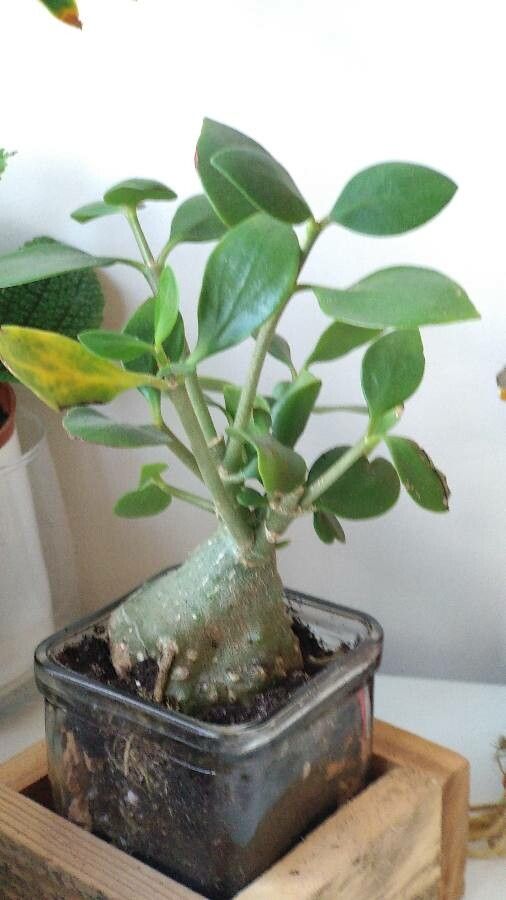
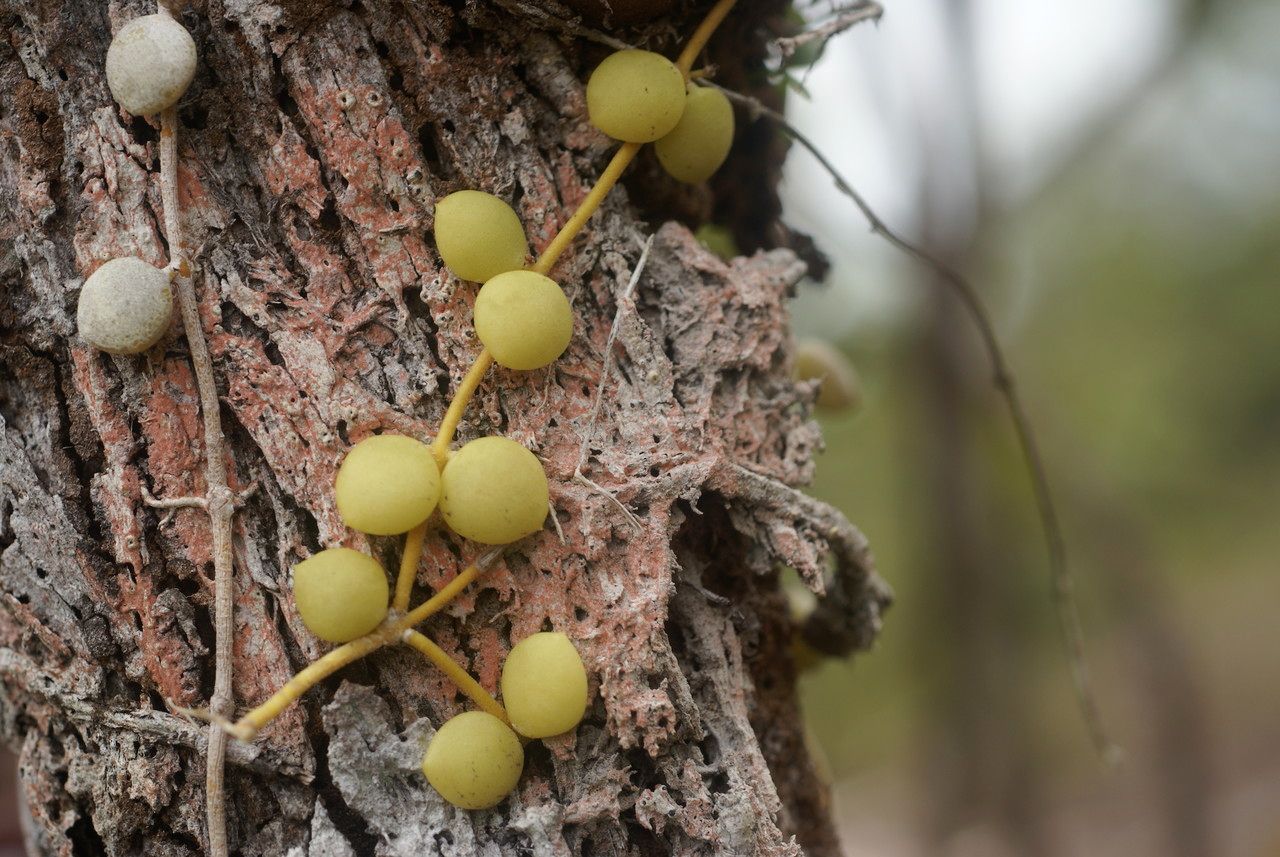
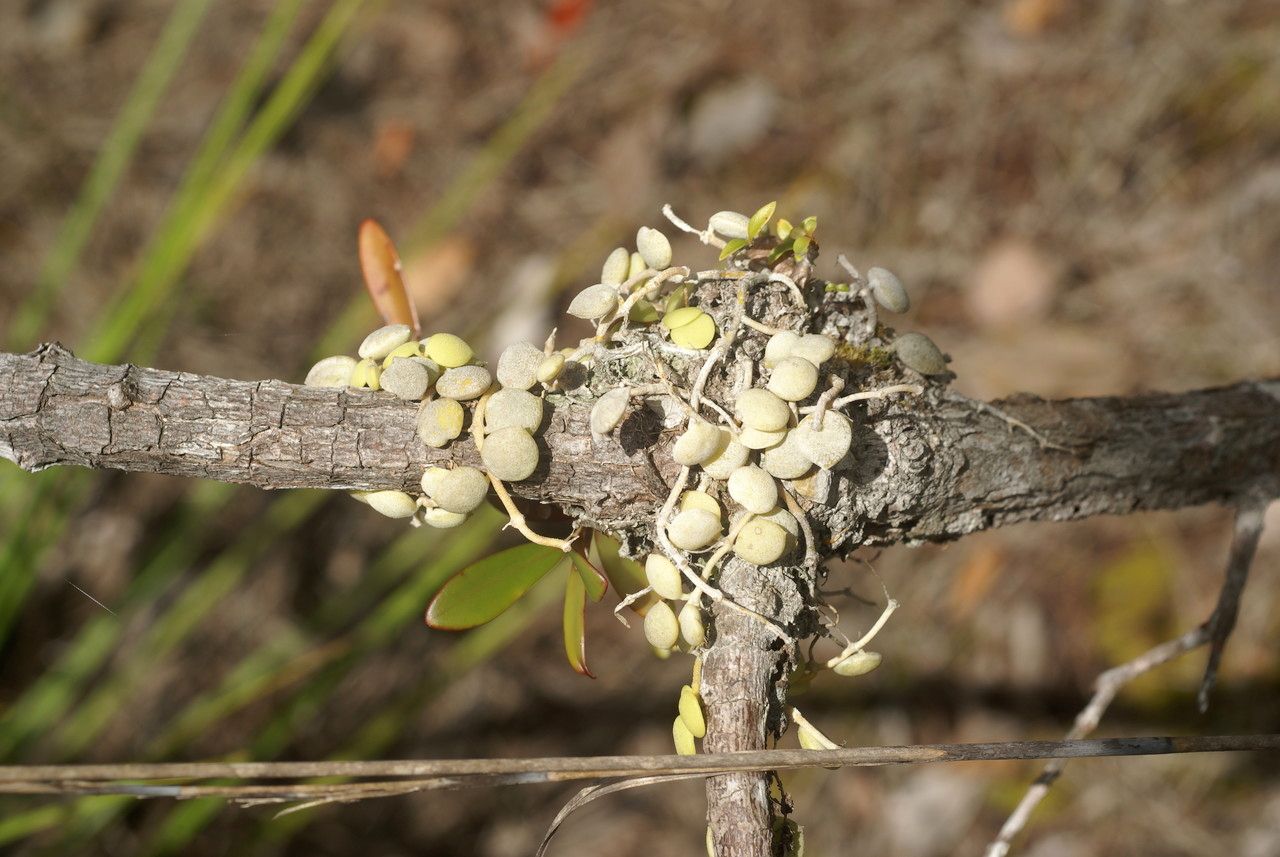
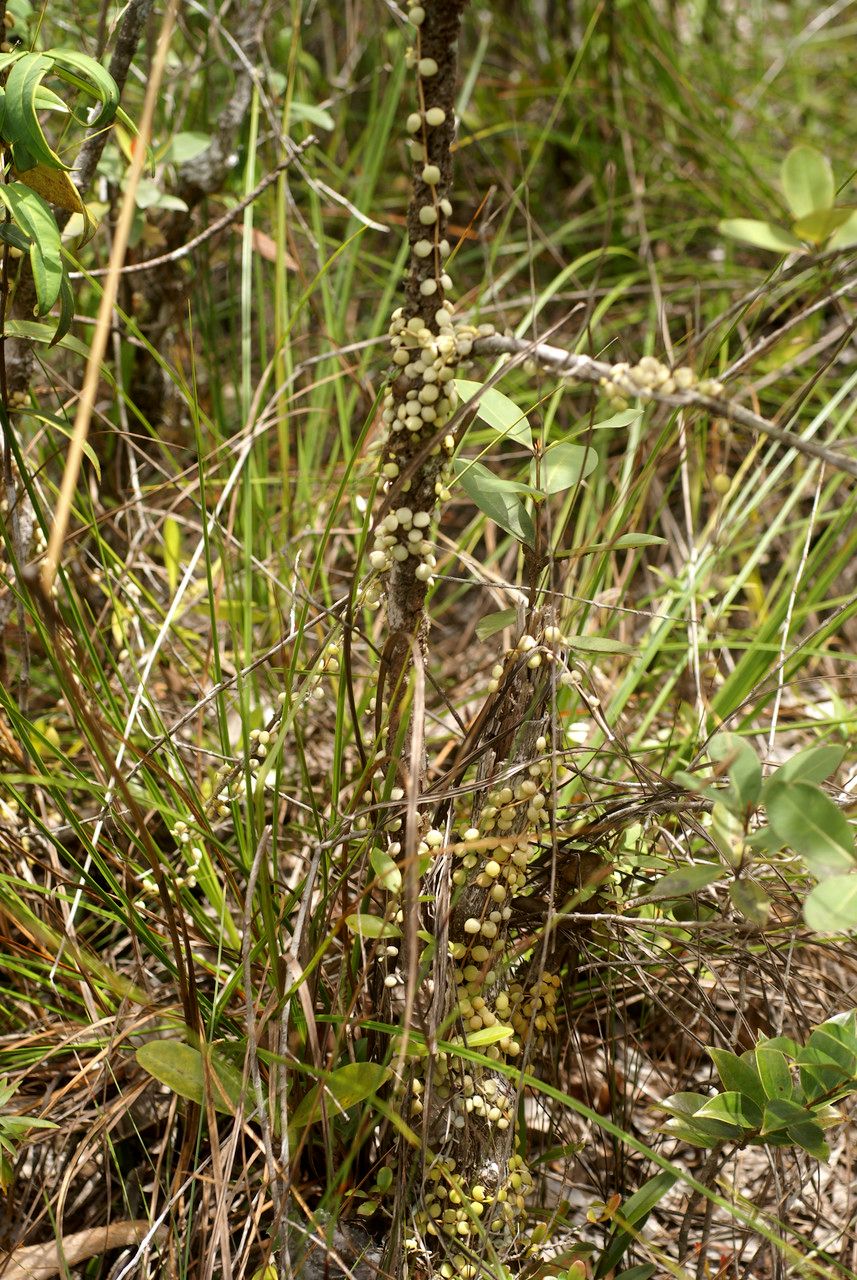
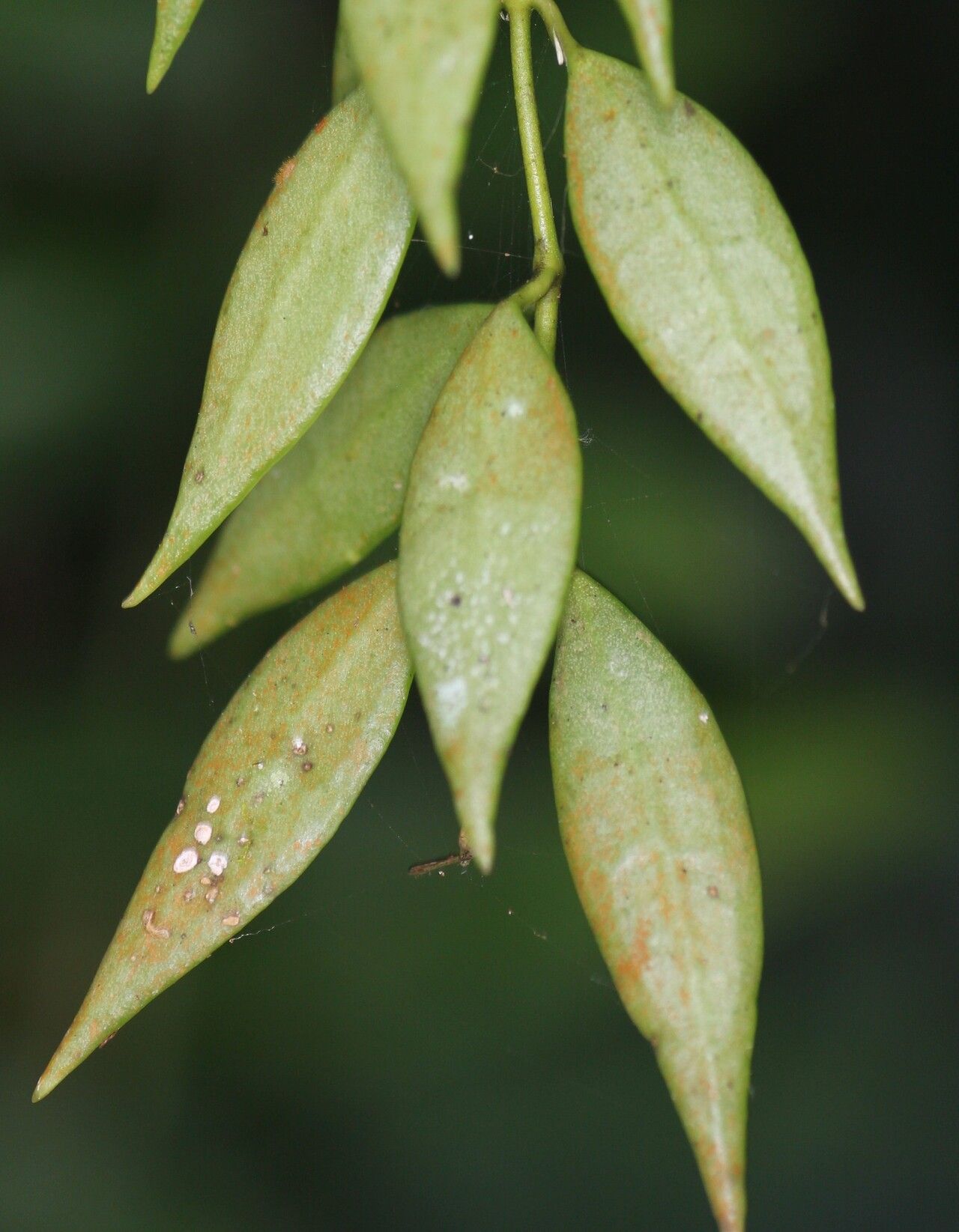
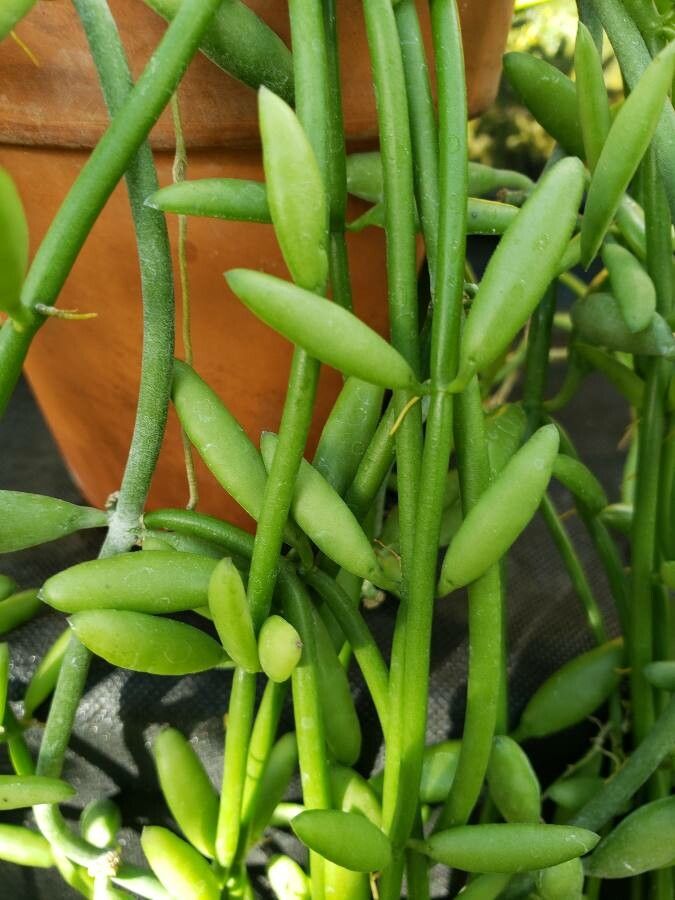
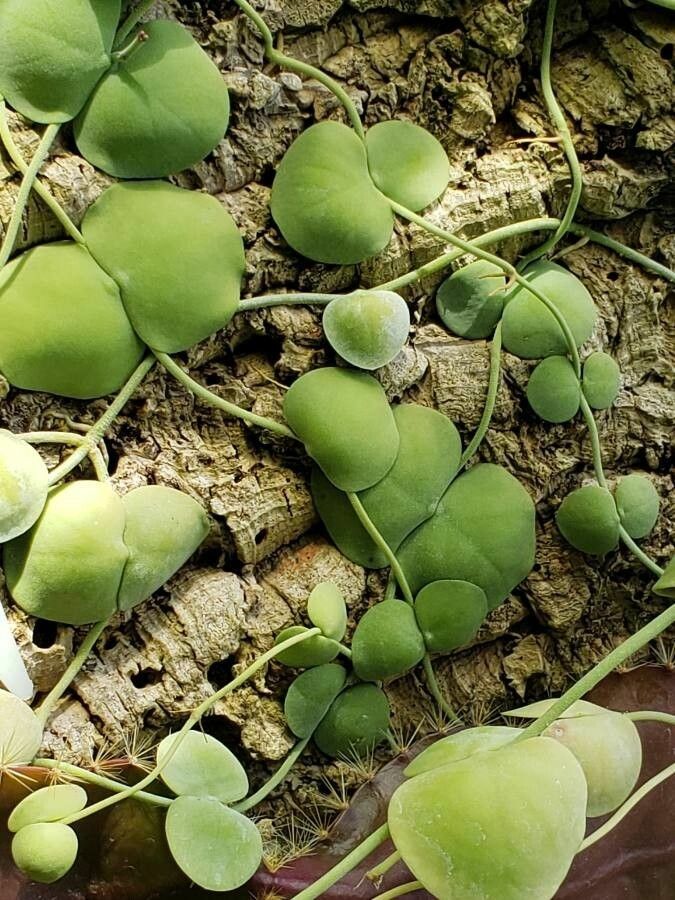
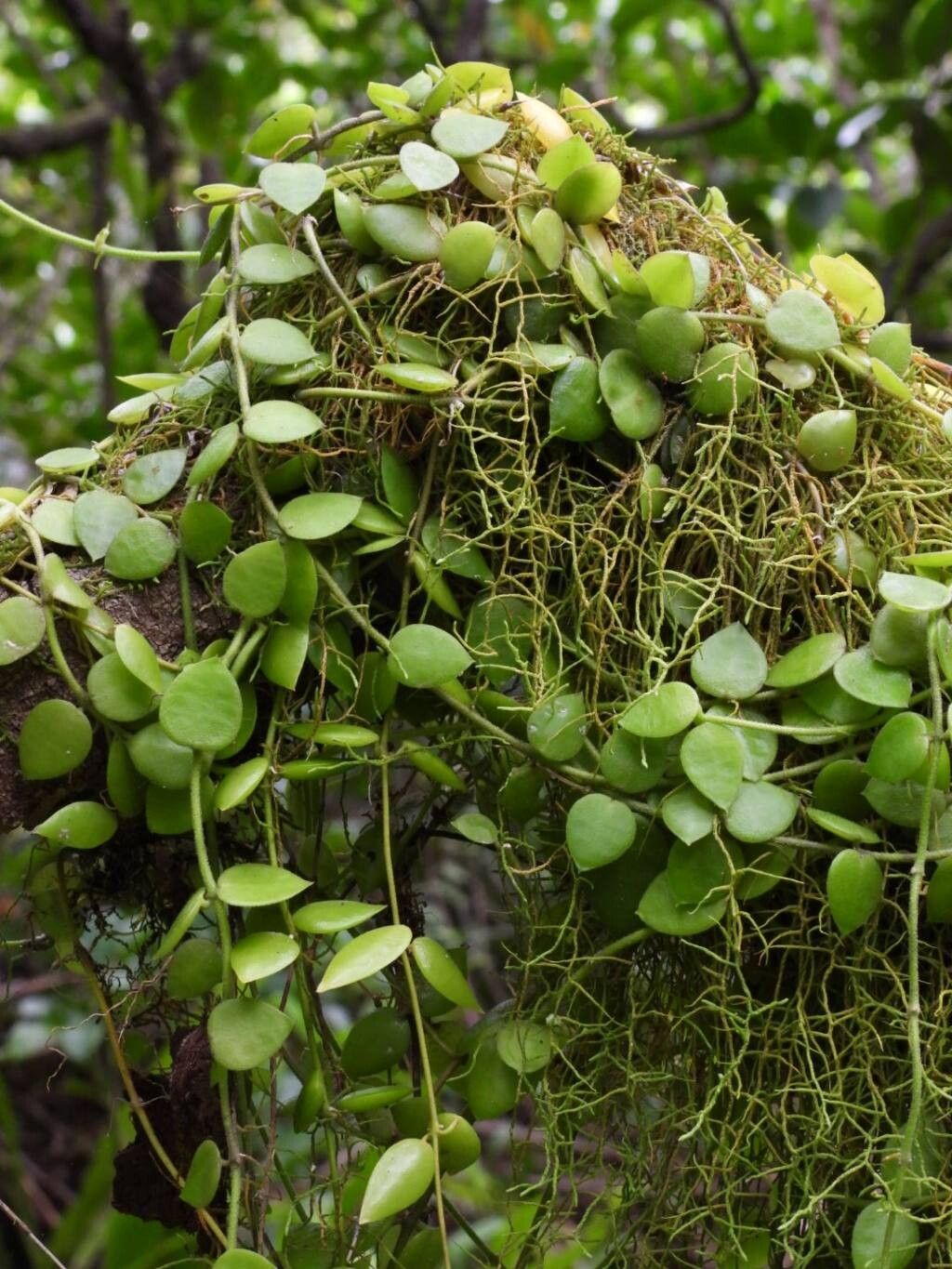
Dischidia vidalii, commonly known as an "ant plant" or "kangaroo pouch", is a plant in the genus Dischidia native to the Philippines. D. vidalii is an epiphytic climbing plant with clusters of pink or magenta flowers. Like some others in its genus like Dischidia major and in the related genus Hoya, this species has evolved a symbiotic relationship with ants. In addition to small, oval leaves the plant develops significantly larger, hollow leaves where additional roots grow and there is habitat for ants where water and debris collect that nourish the roots.
Dischidia vidalii has a good level of disease resistance and is generally not prone to illnesses. However, if it is kept in poor conditions it can become more vulnerable to disease. The plant also has few insect pests. For care, its needs are moderate. Providing plenty of sunlight is important, since insufficient light can make it more susceptible to disease and cause thin growth. Because it is often kept indoors, it may need to be moved to a well-lit spot regularly. It does not require frequent watering. Overall, Dischidia vidalii is suitable for most people, though it is best for those who can give it good light conditions.
How to keep Dischidia Vidalii.
Light
Dischidia vidalii is native to the understory of tropical forests, flourishing in full shade with occasional dappled sunlight and able to adapt to environments with very little direct sun.
Water
Dischidia vidalii is well-suited to both rainy and dry conditions, demonstrating moderate drought tolerance. It's best to water this plant sparingly, about every three weeks. Although it is typically grown indoors, maintaining consistent humidity levels is crucial, especially during its active growing season, to help retain moisture.
Temperature
Dischidia vidalii comes from tropical areas, where the climate is generally warm and humid. Therefore, it is adapted to high temperatures and humidity. It does not tolerate abrupt temperature changes and prefers a steady thermal environment, so avoiding temperature fluctuations indoors is important. It usually cannot withstand cold and needs warmer conditions to grow. If the surrounding temperature becomes too low, the plant may stop growing or even die.
Fertilizer
The best time to fertilize a Dischidia vidalii is in early spring, when it breaks dormancy. Doing so encourages overall growth and flower development. Fertilizing improves the leaves, stems, and branches, and supports the production of large, vibrant, long-lasting blooms. It also helps move nutrients from the roots to the flowers and enhances the plant’s health and resistance to disease.
Pot & Repot
Repot Dischidia vidalii in early spring, selecting a pot only slightly larger than the current one with adequate drainage. Use a well-draining potting mix and position the root ball at the same level as before. Gently loosen any roots that are root-bound. After repotting, water thoroughly and place the plant in a warm, shady spot. Regular pruning helps keep its size in check and encourages new growth.
Botanical profile.
- Plant Type
- Vine
- Life Cycle
- Perennial
- Genus
- Dischidia
- Family
- Apocynaceae
- Hardiness Zone
- 11
- Mature Height
- 61 cm
- Mature Spread
- 20 cm to 40 cm
- Leaf Color
- Green
- Leaf Type
- Evergreen
- Flower Color
- White
- Flower Size
- 0.25 cm to 0.51 cm
- Bloom Time
- Late spring, Summer, Early fall, Mid fall
- Planting Time
- Spring, Summer, Autumn
- Harvest Time
- Late summer, Fall, Early winter, Mid winter
- Native Area
- Philippines
Other names.