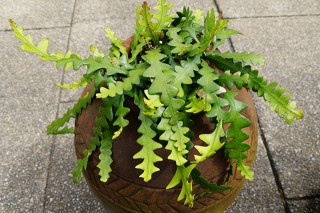
Disocactus anguliger
Fishbone-cactus · Ric Rac Cactus
Description
Source: leafsnapA unique variety of cactus is the fishbone cactus (Disocactus anguliger). Native to Mexico, this epiphytic, tropical cactus is ideal for those who enjoy growing cacti but lack the proper conditions to do so. It is also a great alternative to the more common desert cacti. In humid environments, it does well even without direct sunlight. The fishbone cactus, also known as the zig-zag cactus, ric rac cactus, and the orchid cactus, is a type of cactus grown for its unusual, angular toothed stems. For the best chance of completely admiring your fishbone cactus' gorgeous leaves, place it in a hanging pot or planter.
Care Guide
💧 Water Every 1-2 weeks
☀️ Light Partial sun
The Fishbone Cactus is native to places with dappled light—such as the forest understory or rocky sites that offer natural shade. It favors partial sun but can also tolerate full sun.
🌡️ Temperature 20–37.8°C
Fishbone Cactus prefers warm conditions and requires higher temperatures during the growing season to encourage growth and metabolic activity. It benefits from abundant sunlight, appropriate moisture levels, and good ventilation. However, it is vulnerable to harm from excessively low temperatures and from overwatering. It's important to maintain balance and avoid both excessively high temperatures and overly dry conditions.
💨 Humidity
🪴 Soil 6-7
🌱 Fertilizer
For Fishbone Cactus, small amounts of fertilizer once or twice a year during the growing season are enough. Do not fertilize in winter and summer when it's dormant. Use less fertilizer on recently repotted plants and wait a couple of months after repotting before feeding. Fertilizing helps maintain healthy growth and promotes blooming.
🪴 Pot & Repot 2-3 years
Repot Fishbone Cactus in spring or summer, using a pot that is only slightly larger than the current one and has good drainage. Use a well-draining, sandy or gritty cactus mix. Handle the plant carefully to avoid its spines. Let the cactus dry out before repotting to help prevent root rot. After repotting, wait a week before watering so the roots can heal.
✂️ Pruning
Recall those roots that occasionally emerge from the underside of the flattened leaves? They enable incredibly easy fishbone cactus propagation. Simply cut a bit of the leaf with scissors and place it anywhere you'd want to create a stem cutting. Insert the cut end of the cutting into a container of soil. There is no need to fret over it or add rooting hormone. In a few weeks, roots will start to grow if you maintain the potting soil constantly moist.
🌿 Propagating
🐛 Diseases & pets
☠️ Toxicity
The fishbone cactus is not poisonous to people or animals in spite of its thorns. Still, it's a good idea to keep this plant out of the reach of curious animals and kids so they won't get stabbed! The fishbone cactus thrives on a high shelf or suspended from the ceiling; this way, you can still enjoy the full effect of the thornless fronds without the spiky sections.
Characteristics
- Plant Type
- Succulent
- Life Cycle
- Perennial
- Genus
- Disocactus
- Family
- Cactaceae
- Hardiness Zone
- 10-11
- Mature Height
- 30 cm to 61 cm
- Mature Spread
- 49 cm to 91 cm
- Leaf Color
- Green
- Leaf Type
- Evergreen
- Flower Color
- White, Cream
- Flower Size
- 15.24 cm to 20.32 cm
- Bloom Time
- Mid fall, Late fall, Early winter
- Planting Time
- Spring, Summer
- Harvest Time
- Winter
- Native Area
- Mexico