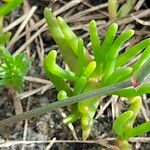
Disphyma crassifolium
Purple Dewplant · Dewplant · Round-leaf pigface · Purple Dew-Plant · Pigface
Description
Source: leafsnapDisphyma crassifolium, commonly known as round-leaved pigface, is a species of flowering plant in the family Aizoaceae and is native to Australia and the Cape Provinces of South Africa. It is a prostrate, succulent annual shrub or short-lived Perennial plant with stems up to 2 m (6 ft 7 in) long, leaves that are three-sided in cross-section with a rounded lower angle, and purple daisy-like flowers with staminodes up to 30 mm (1.2 in) long.
Care Guide
💧 Water
The purple dew-plant flourishes in coastal and rocky habitats, needing only occasional watering about every three weeks. This drought-tolerant succulent stores moisture in its thick leaves and favors well-drained soil to avoid root rot. It also benefits from coastal mists, which increase its resilience in temperate climates.
How should I water my Purple dew-plant in the best way?
To promote excellent root development, consider placing a garden hose at the base of the plant. Be cautious not to directly spray the leaves, especially if the plant is outdoors and exposed to direct sunlight. Moistening the roots can be achieved by using bubblers for each plant or soaker hoses that cover the entire garden or bed. When adding or removing plants, these methods can help push the roots deeply into the soil. Make sure to drain any excess water and allow the soil to dry before watering again. To prevent diseases, water at ground level instead of overhead. On a sunny day, it may be beneficial to spray the entire bush with water. Keep in mind that whether the plant is potted or in-ground, the Purple dew-plant prefers deep watering rather than light sprinkling.
What should I do if I give the Purple dew-plant too much or too little water?
If a Purple dew-plant is overwatered, it may show signs such as yellowing, dropping leaves, and wilting. The plant may also appear unhealthy with mushy stems. In such cases, it is best to adjust your watering schedule as needed. Wilting can also be a sign of underwatering, characterized by crispy and dry leaves. In this case, check the soil and if dry, provide a thorough watering. However, excessive watering can damage the root system, leading to the plant appearing dry with yellow leaves even after recovery. Once the plant returns to normal, the yellowing of leaves will stop. When growing a Purple dew-plant indoors, always check the moisture levels and avoid overwatering. Look out for black spots on the plant, and if present, allow the soil to dry for a few days before watering again. Overwatering can lead to root rot, which requires transferring the plant to a different pot if discolored and slimy roots are observed. Preventing root rot by avoiding soggy soil is crucial. If planting a Purple dew-plant outdoors, ensure the soil is adequately watered if it feels too dry.
How often do I need to water my Purple dew-plant?
The Purple dew-plant prefers deep watering but not too often. If you have them in pots, soak them in a gallon of water each time to account for the limited water storage. When living in a cold region, water every 3 to 5 days. Water in the morning when the soil is dry, both indoors and outdoors. Check the soil inside to determine if watering is needed - if the top 2-3 inches are dry, it's time to water. On hot days, check the moisture daily as the soil in pots can dry out quickly. In a garden, irrigation is necessary. In a hot climate, water once a week when about 2 to 3 inches of soil are too dry. Take into account rainfall and avoid adding extra water to prevent root rot. Purple dew-plants grow in spring and fall. Apply 3 to 4 inches deep mulch when planted outdoors to conserve water. Sandy soil requires more frequent watering, while clay soil can go 2-3 days without watering. Keep track of watering dates on a calendar and watch for drooping leaves as a sign that you may need to water sooner.
How much water should I give my Purple dew-plant?
The Purple dew-plant has different watering needs depending on whether it is potted or planted outdoors. For potted plants, water them deeply until the water drips from the bottom of the pot, and then wait for the soil to dry before watering again. Use a water calculator or moisture meter to determine how much water you have given the plant in a week. During the flowering period, provide plenty of water but let the moisture evaporate to prevent root rot. If the Purple dew-plant is planted outdoors and receives adequate rainfall, it may not need additional watering. However, when the plant is young or newly planted, make sure it gets 1-2 inches of rain per week. As the plant grows, it can survive solely on rainfall, except in very hot weather or during extended dry periods. In these cases, consider giving the plant a full watering during cooler parts of the day to prevent heat damage. Additional watering will also be necessary during persistent dry spells.
Should I change how often I water my Purple dew-plant depending on the time of year or the weather?
The Purple dew-plant thrives in outdoor conditions, particularly when it receives rain. However, if the weather is persistently dry, it will need to be watered. During the spring and fall seasons, it's important to keep the soil moist but not soggy. Alternating between dry and moist soil conditions will promote healthy growth. In the summer, hot weather can cause water to evaporate quickly, and if there is a lack of rainfall, more frequent watering will be necessary to keep the plant moist. Typically, the Purple dew-plant requires less water during the winter when it goes dormant and sheds its leaves. Using a well-draining soil mixture like terracotta can help evaporate excess water. Once the plant begins to leaf out and go dormant, watering can be skipped as it can rely on fall and winter rains to survive. It's crucial to ensure good drainage at all times to avoid ponding or drought. When growing in pots, the limited root growth requires frequent watering, especially during the summer. Avoid cold and wet roots by providing adequate drainage. Deeply soak the plant's entire root system once or twice a week, depending on the weather, and avoid shallow sprinkles that only reach the leaves. Even during dormancy in the fall or winter, don't let the plant dry out completely. Though they dislike sitting in water, drowning them should also be avoided, as poor drainage can lead to winter fatalities. Applying mulch can help alleviate stress, conserve water, and promote healthy blooming.
☀️ Light Full sun
Native to arid regions, the Purple dew-plant does best in full sun, as its native habitat features intense sunlight and very little shade. It will also tolerate partial sun, providing some flexibility in how it grows.
🌡️ Temperature 20–37.8°C
The purple dew-plant performs best in warm conditions and requires higher temperatures during the growing season to stimulate growth and metabolic activity. It prefers plenty of sunlight, suitable moisture, and good airflow. However, it can be damaged by excessively low temperatures and by overwatering. It's important to maintain a balance and avoid both excessively high temperatures and overly dry conditions.
What is the botanical name of the Purple dew-plant?
The botanical name of the Purple dew-plant is Disphyma crassifolium.
💨 Humidity
🪴 Soil 6-7
🌱 Fertilizer
For the Purple dew-plant, light fertilizer applications once or twice a year during the active growing season are enough. Do not fertilize in winter or during its summer dormancy. Cut back on fertilizer for plants that have been repotted, and wait a couple of months after repotting before you resume feeding. Fertilizing helps maintain healthy growth and promotes blooms.
🪴 Pot & Repot
✂️ Pruning
The purple dew-plant is known for its vibrant purple flowers and succulent leaves. To encourage denser growth and blooming, prune the plant from early to late spring. Trim away dead stems and overgrown branches to improve air circulation, reduce the risk of disease, and promote fresh growth. This will help ensure a healthy and vibrant display.
🌿 Propagating
🐛 Diseases & pets
☠️ Toxicity
Characteristics
- Plant Type
- Herb
- Life Cycle
- Perennial
- Genus
- Disphyma
- Family
- Aizoaceae
- Hardiness Zone
- 10-11
- Mature Height
- 10 cm to 30 cm
- Mature Spread
- 30 cm to 91 cm
- Leaf Color
- Light Green, Pale Green
- Leaf Type
- Evergreen
- Flower Color
- Pink
- Flower Size
- 2.03 cm to 4.06 cm
- Bloom Time
- Mid spring, Late spring, Early summer, Mid summer
- Planting Time
- Spring, Summer, Autumn
- Harvest Time
- Summer, Early fall
- Native Area
- South Africa