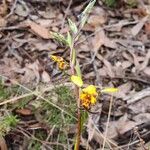
Diuris pardina
Leopard orchid
Description
Source: leafsnapDiuris pardina, commonly known as the leopard orchid or leopard doubletail is a species of orchid which is endemic to south-eastern Australia. It has two or three grass-like leaves and up to ten yellow flowers with reddish-brown marks and blotches.
Care Guide
💧 Water
Originating from grasslands, the leopard orchid thrives with consistent moisture but can tolerate short periods of dryness. It benefits from weekly watering and high humidity, so regular misting is helpful. Known for its ornamental appeal, the leopard orchid is often grown indoors due to its manageable size.
☀️ Light Full sun
The leopard orchid is a sun‑loving, herbaceous perennial that comes from open habitats and is often found in meadows and grasslands. It prefers full sun but can also tolerate partial sun.
What are the sunlight requirements for Leopard orchid (Diuris pardina)?
Leopard orchid (Diuris pardina) thrives in conditions where it can receive specific amounts of sunlight. It requires full sun, meaning it needs above 6 hours of sunlight daily, or partial sun, which amounts to about 3-6 hours of sunlight each day. It's important to observe the way sunlight moves through your garden, to ensure you're positioning your Leopard orchid in spots that offer an ideal balance of light and shade. This careful placement is crucial for the plant's health and happiness.
🌡️ Temperature 20–37.8°C
The Leopard orchid can tolerate a wide range of temperatures, but its distribution may still be restricted by certain combinations of moisture and heat. It does best in warm summer conditions with sufficient rainfall or watering. Extended periods of cloudy, rainy weather or prolonged high temperatures can raise the chance of the Leopard orchid dying. In winter, adequate protection from cold can increase the plant's survival rate.
What is the Leopard Orchid?
The Leopard Orchid, known botanically as Diuris pardina, is a unique flowering plant species. However, there is no detailed information provided on its essentials or symptoms related to its care or environment.
💨 Humidity
🪴 Soil 6-7
🌱 Fertilizer
For the Leopard orchid, the main time to apply fertilizer is in early spring when the flowers are forming. The proper fertilizer promotes better blooms and helps the Leopard orchid produce attractive flowers. Fertilizing in early spring ensures excellent flowering during the season and supplies energy for dormant growth phases.
🪴 Pot & Repot
✂️ Pruning
The leopard orchid boasts distinctive spotted flowers and needs only minimal pruning. The ideal time for pruning is from early to late spring. During this period, focus on removing spent flowers and dead leaves to promote the plant's health and enhance blooming, while helping it conserve energy for the roots. Pruning also improves air circulation and reduces the risk of disease.
🌿 Propagating
🐛 Diseases & pets
☠️ Toxicity
Characteristics
- Plant Type
- Herb
- Life Cycle
- Perennial
- Genus
- Diuris
- Family
- Orchidaceae
- Hardiness Zone
- 9-11
- Mature Height
- 15 cm to 40 cm
- Mature Spread
- 10 cm to 20 cm
- Leaf Color
- Green
- Leaf Type
- Semi-evergreen
- Flower Color
- Yellow, Brown
- Flower Size
- 2.03 cm to 3.56 cm
- Bloom Time
- Late fall, Early winter
- Planting Time
- Spring, Summer, Autumn
- Harvest Time
- Early winter, Mid winter