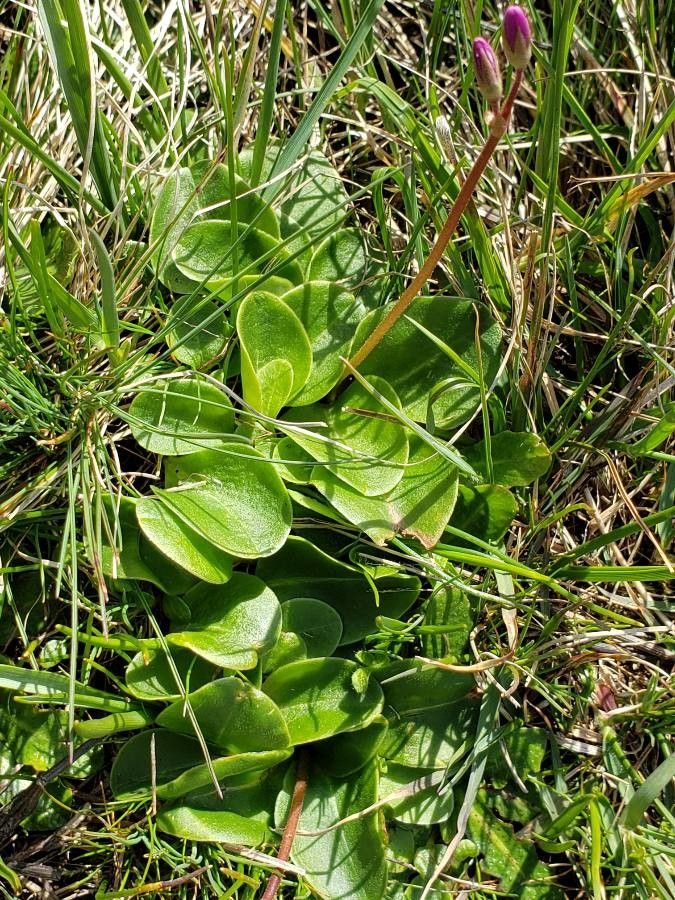
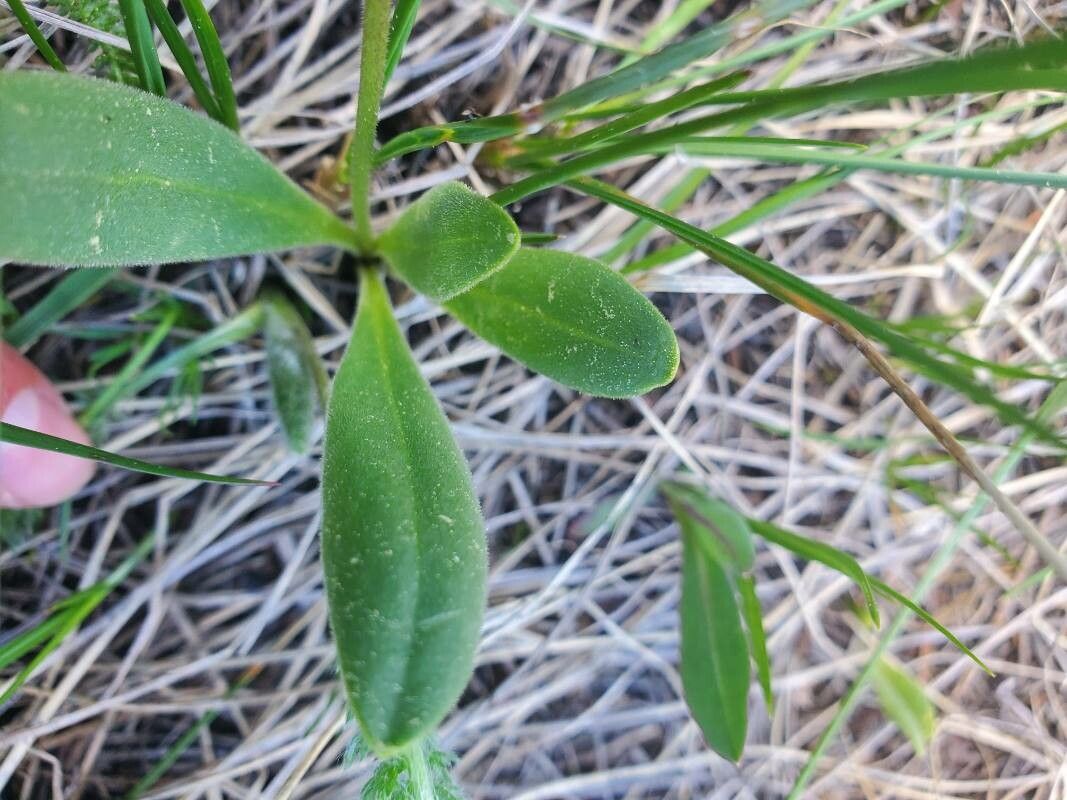
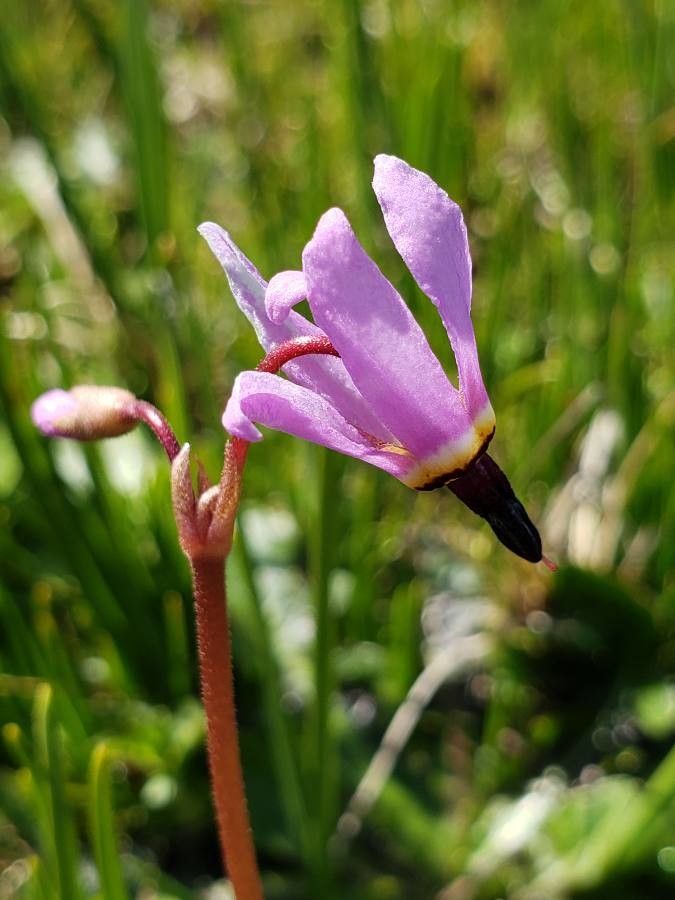
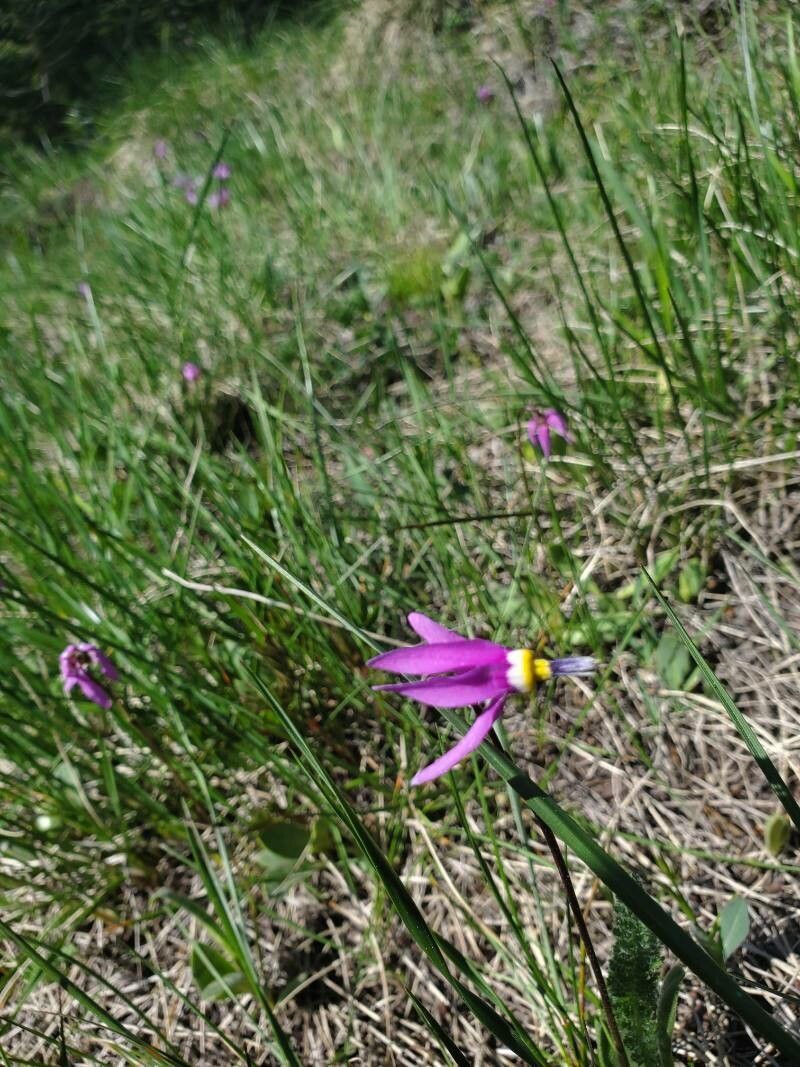
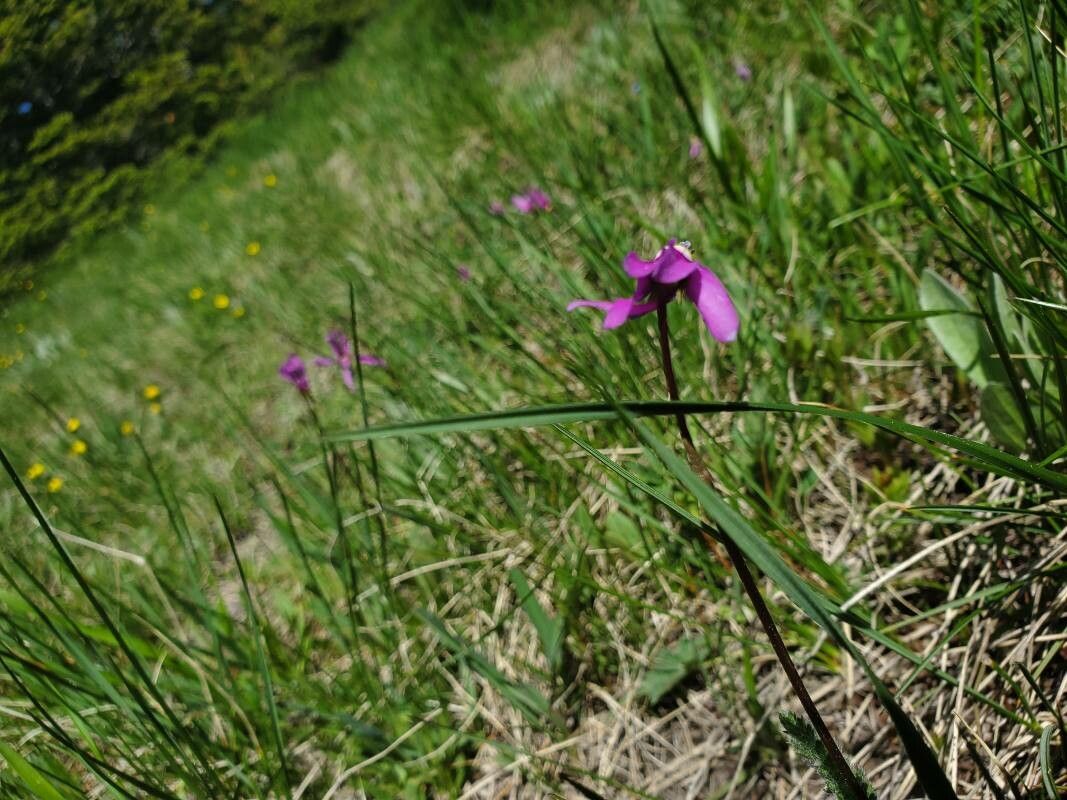
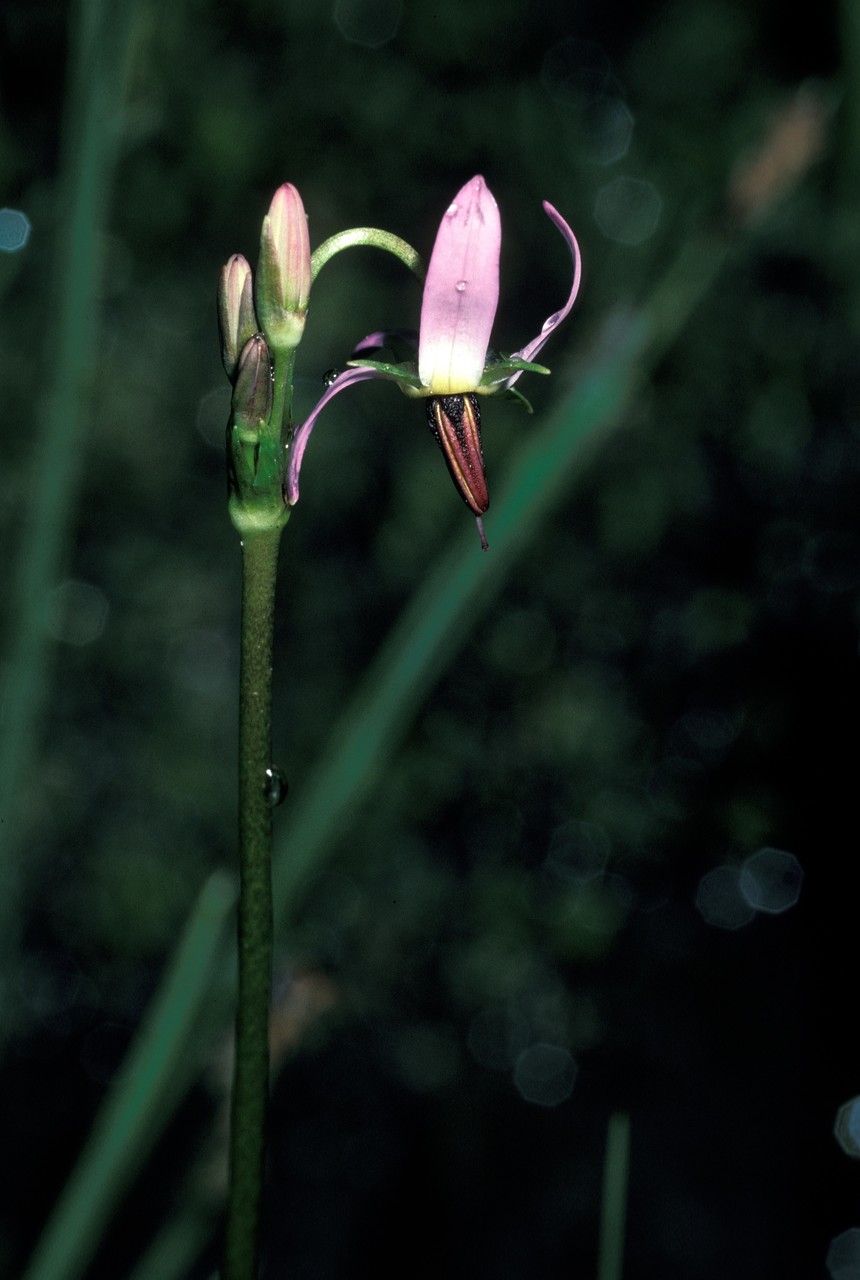
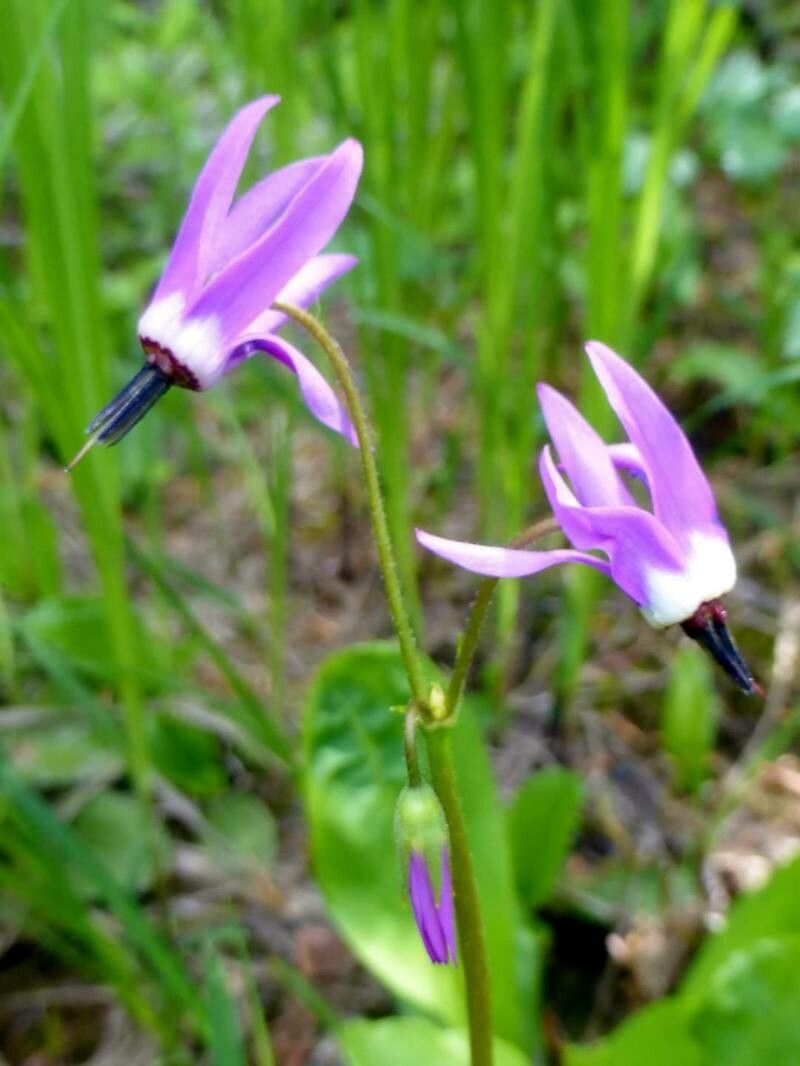
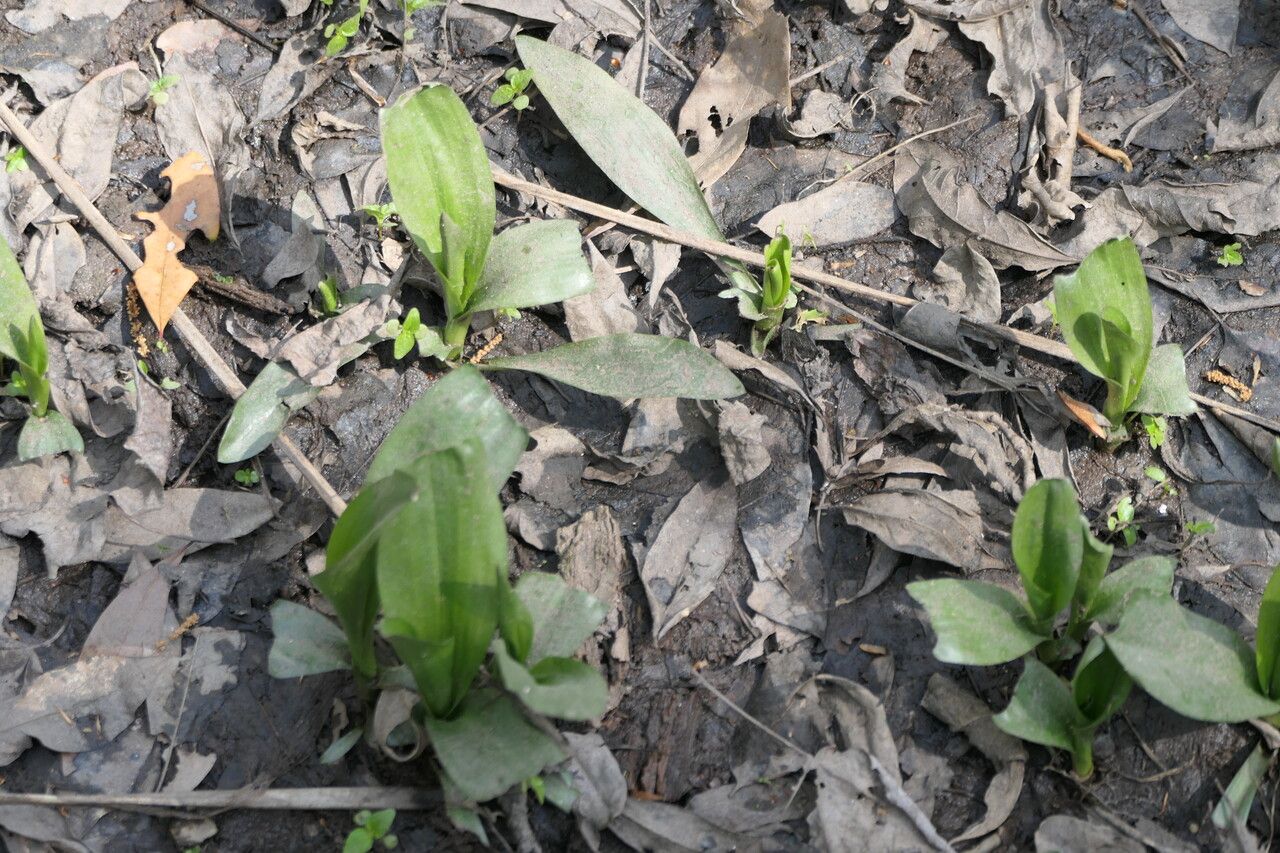
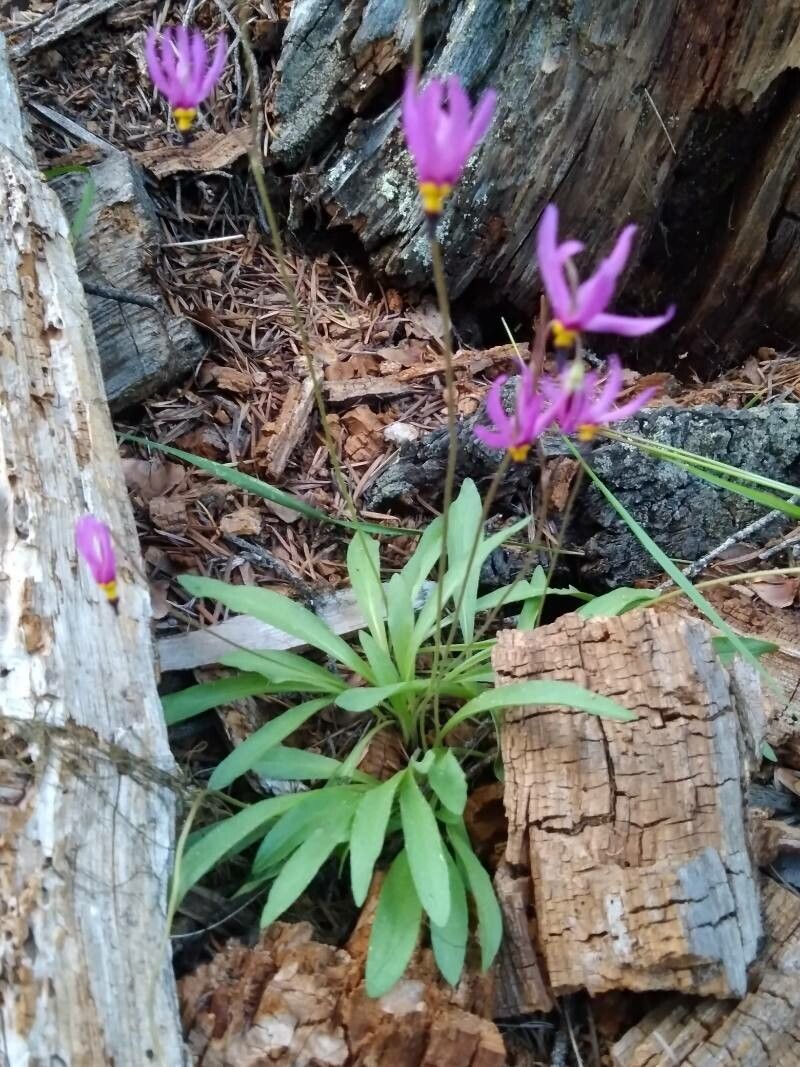
Dodecatheon hendersonii, commonly known as Henderson's shooting star, is a perennial herbaceous plant native to western North America. It belongs to the Primulaceae family and typically grows to a height of 10-30 cm. The plant features basal rosettes of leaves and erect stems that showcase clusters of striking pink or magenta flowers with yellow centers. These flowers bloom in the spring and are pollinated by bees and butterflies.
Henderson's shooting star thrives in moist soils found in open meadows or woodland habitats, at elevations ranging from 500 to 3,000 meters. It is commonly found in regions such as California, Oregon, Washington, Idaho, Montana, Nevada, and British Columbia.
Native American tribes have historically utilized this plant for medicinal purposes, such as treating headaches and stomach ailments. However, it should be noted that the plant can be toxic if ingested.
Due to its attractive flowers, Dodecatheon hendersonii is a popular ornamental plant. Additionally, it plays a crucial role in supporting pollinators like bees, which are essential for maintaining healthy ecosystems.
Mosquito bills is fairly resistant to diseases and generally does not tend to get sick. However, it can be vulnerable to pests and illnesses present in its surroundings. These problems are typically mild. Regarding care, this plant needs moderate maintenance. Regular pruning is necessary to maintain a good appearance and healthy growth. Fertilizing can also help encourage flowering. Mosquito bills is suitable for anyone with an outdoor area, such as a garden or patio, and does not require extensive care experience. It may need more attention when grown indoors.
How to keep Dodecatheon Hendersonii.
Light
Mosquito bills naturally inhabit areas like forest understories or rocky terrains where they are naturally shaded. While it favors semi-sunlit locations, it can adjust to both completely sunny and completely shaded environments, reflecting its adaptable and resilient characteristics.
Water
Mosquito bills thrive in moist environments and need regular watering each week to maintain their lush growth. As perennials, they can endure brief dry periods, but they rely on sufficient soil moisture during their active growing season. Their unique umbrella-like blooms make them a distinctive presence in a garden. For the best results, mosquito bills are typically grown outdoors, where they can benefit from optimal conditions.
Temperature
The Mosquito bills plant can handle a variety of temperature conditions, yet its prevalence may be constrained by certain combinations of water and heat conditions. It flourishes optimally in hot climates during summer given enough rainfall or watering. Extended phases of cloudy or rainy weather, or prolonged high temperatures, may intensify the chances of Mosquito bills deaths. During the winter, appropriate protection from the cold will enhance the plant's chances of survival.
Fertilizer
The primary period to fertilize Mosquito bills is in the early spring when the flowers start to form. Proper fertilization fosters enhanced blossoming and enables Mosquito bills to generate beautiful blooms. Early spring fertilization guarantees superb flowers throughout the season and supplies energy for inactive growth stages.
Pruning
Mosquito bills thrive with minimal pruning, which is ideally done in early to late spring after flowering. Remove dead foliage to encourage new growth, but avoid heavy pruning as it can cause stress. Light pruning enhances air circulation and keeps the plants tidy, promoting flowering and reducing the risk of disease.
Botanical profile.
- Plant Type
- Herb
- Life Cycle
- Perennial
- Genus
- Dodecatheon
- Family
- Primulaceae
- Hardiness Zone
- 4-8
- Mature Height
- 13 cm to 40 cm
- Mature Spread
- 15 cm to 25 cm
- Leaf Color
- Green
- Leaf Type
- Deciduous
- Flower Color
- Yellow, Pink
- Flower Size
- 2.03 cm to 3.05 cm
- Bloom Time
- Early spring, Mid spring
- Planting Time
- Spring, Autumn
- Harvest Time
- Late spring, Early summer
Other names.
Reader questions.
What are the sunlight requirements for Mosquito bills (Dodecatheon hendersonii)?
Mosquito bills is a versatile plant that thrives in both partial and full sun conditions. It requires about 3-6 hours of sunlight daily for partial sun, and above 6 hours for full sun. It's native to environments like forest understories or rocky areas, which naturally provide shade. Thus, while it prefers partial sun, it can also tolerate full shade, making it a flexible option for various garden spots. Remember to watch how sunlight moves through your garden to choose the best spots for your plants, ensuring a balance of light and shade for their optimal growth.
How can artificial lighting be used for indoor Mosquito bills plants?
Indoor Mosquito bills plants require adequate lighting for optimal growth, especially when natural sunlight is insufficient. Artificial lights, such as LED lights, are beneficial as they can be customized to provide specific wavelengths of light needed for plant growth. For full sun plants, artificial light of 30-50W/sq ft is needed, while partial sun plants require 20-30W/sq ft, and full shade plants need 10-20W/sq ft. The light source should be placed 12-36 inches above the plant to mimic natural sunlight and be left on for 8-12 hours per day to replicate natural daylight hours. This promotes faster, healthier growth in less sunny spaces or during winter.
What are symptoms of insufficient light in Mosquito bills?
When Mosquito bills are grown with insufficient light, they may exhibit several symptoms indicating light deficiency. These include smaller new leaves, leggy or sparse growth, faster leaf drop, slower or no new growth, lighter-colored new leaves, chlorosis (leaves turning yellow due to the breakdown of chlorophyll from excessive light), sunscald (damage from intense sunlight exposure), leaf curling (a defense mechanism against extreme sunlight), wilting (loss of turgor pressure), and leaf scorching (brown, dry, and crispy leaf edges). These symptoms highlight the plant's need for adequate sunlight for healthy growth and development.
How can I address the sunlight needs of my Mosquito bills plant?
To meet your Mosquito bills plant's sunlight needs, consider several approaches depending on whether your plant is indoors, outdoors, or in the ground. For indoor plants, gradually shift them to sunnier spots each week until they receive 3-6 hours of direct sunlight daily, or use artificial light if moving the plant isn't feasible. For outdoor plants, also move them to sunnier locations gradually to avoid sunburn. If your plants are in the ground and blocked by obstructions such as trees, prune to allow more sunlight through or consider transplanting to a sunnier spot during the plant's dormant period. It's important to note that parts of the plant affected by insufficient sunlight may not recover, but new growth should be healthy after adjusting light exposure.