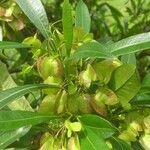
Dodonaea viscosa
Florida hopbush · Sticky hopbush · Giant hopbush · Hopshrub · Broadleaf hopbush
Description
Source: leafsnapDodonaea viscosa, commonly known as the Hop Bush or Sticky Hop Bush, is a shrub or small tree native to Australia and New Zealand. Belonging to the family Sapindaceae, it can grow up to 6 meters in height. The plant has a distinctive appearance, featuring glossy green leaves that are sticky to the touch and reddish-brown bark. In spring and summer, the Hop Bush produces small greenish-yellow flowers, which are followed by papery capsules containing seeds. This plant is drought-tolerant and can thrive in various soil types, although it prefers well-drained soils. The leaves of Dodonaea viscosa have been traditionally used by indigenous Australians for medicinal purposes, such as treating skin infections, wounds, coughs, colds, fever, and rheumatism. The plant also holds cultural significance for some Aboriginal communities, who use it for ceremonial purposes. Beyond its medicinal properties, Dodonaea viscosa is valued for its ornamental appeal. Its attractive foliage makes it an excellent choice for hedges or screening plants in gardens and parks. Additionally, it attracts birds like honeyeaters, which feed on the nectar from its flowers. Overall, Dodonaea viscosa is a fascinating shrub with both cultural significance and practical uses, making it an important part of Australia's flora biodiversity.
🌳 Hopbush is more than a hardy ornamental plant; it has also become useful in eco-friendly landscaping because of its drought tolerance and soil-stabilizing qualities. Its capacity to grow in poor soils and to curb erosion makes hopbush a good option for restoring disturbed land and aiding biodiversity. In addition, hopbush's dense foliage can function as a windbreak, providing microhabitat shelter for various wildlife species.
Care Guide
💧 Water Every 7 days
Hopbush is well-suited to dry environments and exhibits a high tolerance for drought. To keep it healthy, water it every two weeks, taking into account the natural rainfall and changes in the season. Make sure that any extra watering corresponds with the hopbush's growth cycles to ensure its continued well-being.
How do I water my Hopbush plant in the best way?
Your Hopbush is not very specific about how you water it. You can use any common watering tool, such as watering cans, hoses, or even cups. It's important to water the plant directly on the soil, making sure to evenly moisten all areas to provide adequate water to the root system. Using filtered water is helpful, as tap water may contain harmful particles. It’s also a good idea to use water that is at or slightly above room temperature, as very hot or cold water can shock the Hopbush. However, the plant usually responds well to any type of water you give it.
What should I do if I give my Hopbush plant too much water or too little water?
Outdoor plants, especially newly planted ones or seedlings, are susceptible to lack of water. Remember to water them adequately for the first few months when they are small or recently planted. Once the roots are established, Hopbush plants can rely on rain most of the time. When Hopbush plants are in pots, overwatering is more likely to happen. If you accidentally overwater your Hopbush, take immediate action to fix the situation. First, stop watering the plant to minimize the impact of overwatering. Then, remove the Hopbush from its pot and inspect the roots. If there are no signs of root rot, you can put the plant back in the pot. However, if you find that the roots have been affected by root rot, trim away the affected roots and consider using a fungicide to prevent further damage. Finally, repot the Hopbush in well-draining soil. On the other hand, underwatering a Hopbush is easier to fix. If you underwater it, the leaves will droop, dry out, and fall off. Once you water it sufficiently, the leaves will regain their fullness quickly. Adjust your watering frequency as soon as you notice underwatering.
How often do I need to water my Hopbush?
Most naturally growing outdoor plants can rely on rainfall for their water needs. However, if your area doesn't receive sufficient rainfall, you should make sure to water your plants adequately every 2 weeks in the spring and fall. In the summer, you will need to water more frequently. During the slower growth period of winter, you can water less frequently or not at all. If you have a young or newly planted Hopbush, it is important to water it more often to help it establish and grow into a drought-tolerant plant. For potted plants, there are two main approaches to determine watering frequency for your Hopbush. The first is to follow a predetermined watering schedule, such as once a week or once every other week. However, this may not always be sufficient as it doesn't consider the specific growing conditions of your Hopbush. Watering frequency can also be adjusted based on soil moisture. It is generally recommended to wait until the top two to four inches of soil in the pots have completely dried out before watering again. This method takes into account the needs of the plant and the environment.
How much water does my Hopbush plant need?
When watering your Hopbush, you don't always need to give it a lot of water. If only a few inches of soil have dried out since your last watering, it's enough to give it about five to ten ounces of water. You can also determine the water volume by checking the soil moisture. Keep track of how many inches of soil have dried out between waterings. To ensure your Hopbush gets sufficient moisture, water enough to wet all the dry layers of soil since the last watering. If over half of the soil has dried out, you may need to give it more water than usual. In such cases, continue watering until you see excess water draining from the pot's drainage holes. If your Hopbush is planted outside in a rainy area, it may not need extra watering. When it is young or still establishing, make sure it receives 1-2 inches of rain per week. As it grows, it can rely solely on rainwater, but if there is a hot spell without rain for 2-3 weeks, consider giving it a full watering to avoid stress.
How do I know if I am watering my Hopbush plant enough?
Overwatering is a common problem for the Hopbush, and there are clear signs to look for when this happens. An overwatered Hopbush will have yellowing leaves and may lose some leaves. Additionally, overwatering can make the plant's structure shrink and encourage root rot. On the contrary, a Hopbush that is not getting enough water will also start to wilt and may have brown or brittle leaves. Whether you notice signs of overwatering or underwatering, you should be ready to take action and revive the health of your Hopbush.
☀️ Light Full sun
The hopbush grows best where it gets sunlight for most of the day. However, it is fairly resilient and can still develop satisfactorily with somewhat less light. Both insufficient and excessive light can lead to poor growth and damage to the plant.
What are the sunlight requirements for Hopbush?
Hopbush (Dodonaea viscosa) thrives best when it receives full sun, which is defined as more than 6 hours of sunlight per day. However, it can also grow adequately in partial sun, approximately 3-6 hours of sunlight daily. It's important to observe how sunlight navigates through your garden throughout the day to find spots that offer the right balance of light and shade, ensuring the plants' optimal growth and health.
How can artificial lighting benefit indoor Hopbush plants?
Indoor Hopbush plants benefit from adequate lighting, especially when natural sunlight is not sufficient, such as during winter or in less sunny locations. Artificial lighting can play a crucial role in promoting faster and healthier plant growth. LED lights are often recommended because they can be tailored to provide specific wavelengths needed by plants. The general guide suggests that full sun plants should receive 30-50W/sq ft of artificial light, partial sun plants require 20-30W/sq ft, and full shade plants need 10-20W/sq ft. The light source should be placed 12-36 inches above the plant, mimicking natural sunlight as closely as possible, and provided for 8-12 hours per day to match the length of natural daylight hours appropriate for the plant species.
What are common symptoms of light deficiency in Hopbush?
Common symptoms of light deficiency in Hopbush include the growth of smaller new leaves, leggy or sparse growth, faster leaf drop, slower or no new growth, and the appearance of lighter-colored new leaves. These symptoms indicate that the plant is receiving insufficient light, resulting in poor growth and reduced health. Chlorosis and sunscald are also potential symptoms, with chlorosis characterized by yellowing leaves due to chlorophyll breakdown and sunscald manifesting as pale, bleached areas on the plant from excessive sunlight exposure.
How can you manage sunlight exposure for indoor and outdoor Hopbush plants?
For indoor Hopbush plants requiring more sunlight, gradually moving the plant to a sunnier location each week until it achieves at least 6 hours of direct sunlight daily is recommended. Utilizing a south-facing window and keeping curtains open during the day maximizes natural light exposure. If moving the plant is not feasible, consider artificial lighting alternatives, like keeping a desk or ceiling lamp on for at least 8 hours daily or investing in professional plant grow lights. For outdoor plants, it's crucial to adapt them gradually to sunnier spots to prevent sunburn, avoiding sudden changes in light intensity. Additionally, removing obstructions such as overhanging branches can help increase sunlight exposure. For ground-planted smaller plants, transplanting them during their dormant period to a location with better sunlight and drainage is advisable. It’s crucial to note that parts of the plant that have suffered from insufficient light might not recover, but new growth after adjusting light exposure should be healthy.
🌡️ Temperature 20–37.8°C
Hopbush is a temperate woody species native to humid, tropical areas. It performs best at temperatures between 68 and 100 °F (20 and 38 °C). During cooler seasons it may benefit from protection or adjustments to its temperature to maintain optimal growth.
What is the ideal temperature range for growing Hopbush?
Hopbush, a temperate woody plant native to humid and tropical regions, thrives best in temperatures between 68 to 100°F (20 to 38°C). During cooler seasons, it's crucial to provide the plant with protection or adjust the temperature to maintain optimal growth conditions. Hopbush is particularly heat-loving, and exposure to cold temperatures can be harmful. To prevent cold damage, it's advisable to bring outdoor Hopbush plants indoors during autumn, placing them near a bright window but at a safe distance from heaters, ensuring that temperatures remain above the suitable growth minimum and well above the tolerable growing temperature minimum to support the plant's health.
How should I care for my Hopbush during low temperatures?
Hopbush is not tolerant of low temperatures and demonstrates optimal health when kept above a certain minimum suitable growth temperature. During winter, ensure the plant is maintained above the tolerable growing temperature minimum to avoid damage. Should the temperature drop below the limit growth temperature, you may notice the leaves lightening in color, which can lead to wilting, drooping, and, after frost damage, browning or blackening. To mitigate low-temperature effects, trim off frost-damaged parts and move the Hopbush indoors to a warm setting, placing it near a south-facing window for sunlight. Avoid placing the plant near heaters or air conditioning vents to prevent the air around it from becoming excessively dry.
What steps should I take if my Hopbush experiences high temperatures?
In high temperatures, especially during summer, it's crucial to keep Hopbush below the suitable growth temperature maximum. Exposure to temperatures above the tolerable growing maximum can cause the leaves to lighten and increase the plant's susceptibility to sunburn. To address high-temperature stress, trim away sunburned and dried parts of the plant. Relocate the Hopbush to a shaded area, especially from the midday and afternoon sun, and ensure to water the soil in the morning and evening to maintain moisture. This helps in preventing further stress and promotes healthier growth despite the high temperatures.
💨 Humidity
🪴 Soil 6-7
🌱 Fertilizer
Fertilizing is essential for the care of Hopbush. Regular applications during the growing season help maintain the energy needed for its showy leaves and support overall growth. Failing to fertilize can lead to unhealthy foliage, reduced ornamental value, and stunted or weak growth that is more susceptible to breaking.
Why should I put fertilizer on my Hopbush?
Hopbush requires regular fertilization primarily because its showy leaves require a significant amount of energy to maintain. This is a challenge for Hopbush because it needs to allocate enough energy not only to keep its leaves healthy, but also to support the growth of its stems, branches, roots, and other important structures. If you neglect fertilization, two likely outcomes may occur. First, the leaves of your Hopbush will lose their natural color and texture, resulting in an overall unhealthy appearance that significantly detracts from its ornamental appeal. Second, the overall growth of your Hopbush may slow down or it could produce weak growth that is susceptible to breakage.
When should I fertilize my Hopbush plant?
Hopbush plants do not require a set feeding schedule when planted because they benefit from occasional feedings. One easy way to fertilize them is to apply fertilizer while watering them from time to time. During the growing season, Hopbush plants need a good amount of water and can be fed once every two to three weeks. This feeding rate should be maintained throughout the plant's period of new growth.
When is it not a good idea to put fertilizer on my Hopbush plant?
For most of the year, you can fertilize your Hopbush regularly. This includes the active growing season of spring, summer, and early fall. However, during the winter, it's important not to fertilize the plant at all. This is because the Hopbush enters a dormant growth phase during winter, where it either doesn't grow at all or grows very little. Since the plant uses less energy during this time, there's no need for fertilization.
What kind of fertilizer does my Hopbush plant need?
When fertilizing a Hopbush, it is important to use a specific blend of nutrients in relatively low amounts. The ideal fertilizer should have an N-P-K ratio of 3-1-2. However, a general-purpose fertilizer with an even blend of nutrients can also work well in some cases. Regardless of the type of fertilizer used, the ratio number representing the volume of each nutrient should be 3 or lower. Two options for fertilizers are granular or liquid-based. If you choose to use a liquid-based fertilizer, it is recommended to dilute the strength by half. Granular fertilizer does not have many downsides, but using liquid fertilizer is often the most sensible option, especially when watering the Hopbush at the same time.
How can I fertilize my Hopbush?
One of the easiest ways to fertilize a Hopbush is to feed it whenever you water it. To do this, gather your fertilizer and a water container, like a watering can. Dilute the fertilizer by mixing it with water. Then, pour the water with the fertilizer onto the soil and let it soak down to the roots. Alternatively, you can use a granular fertilizer. Simply sprinkle the fertilizer on the soil where your Hopbush is planted. Granular fertilizers are slow-release, so you won't need to fertilize as often as you would with a liquid fertilizer. Remember to water your Hopbush while you fertilize it, regardless of the method you choose.
🪴 Pot & Repot 2-3 years
When repotting Hopbush, select a container 1-2 inches (2.5–5.1 cm) larger with good drainage. Use a well-draining potting mix. Repot in spring or fall, making sure the root ball is slightly lower than the pot rim. Water thoroughly after repotting and keep it in a warm spot with indirect sunlight.
✂️ Pruning
Hopbush does not need any pruning as it has a naturally attractive shape and size. You may prune the shrub to maintain your desired shape, so long as you do not cut old wood.
🌿 Propagating
🐛 Diseases & pets
☠️ Toxicity
Characteristics
- Plant Type
- Shrub
- Life Cycle
- Perennial
- Genus
- Dodonaea
- Family
- Sapindaceae
- Hardiness Zone
- 9-11
- Mature Height
- 2.44 m
- Mature Spread
- 2.44 m
- Leaf Color
- Green, Purple
- Leaf Type
- Evergreen
- Flower Color
- Green
- Flower Size
- 0.25 cm to 0.51 cm
- Bloom Time
- Late spring, Early summer, Mid summer
- Planting Time
- Spring, Autumn
- Harvest Time
- Mid summer