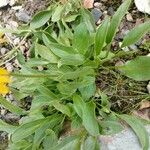
🍃leaf (5)
🌸flower (5)
🌿habit (5)
Doronicum clusii
Tufted leopardsbane · Clusius' Leopard's-bane
Tier 2 Difficulty: medium Water: low Light: partial_sun
Temperature
5–32 °C
Soil pH
6–7
Hardiness
Zone 4–8
Click count
7
Observations
161
Description
Source: wikipedia (CC BY-SA)Doronicum clusii is a species of flowering plant native to Europe.
Care Guide
💧 Water
☀️ Light Partial sun
Clusius' leopard's-bane is native to habitats such as forest understories and rocky areas, where it grows under natural shade. It prefers partial sun but can adapt to full sun or full shade, showing its hardy and versatile nature.
Ideal: Partial sun
🌡️ Temperature 5–32.2°C
Ideal temperature: 5–32.2°C
💨 Humidity
Humidity:
🪴 Soil 6-7
Soil pH: 6-7
🌱 Fertilizer
For Clusius' leopard's-bane, the primary time to apply fertilizer is in early spring while the flowers are forming. The appropriate fertilizer promotes better blooms and helps Clusius' leopard's-bane produce attractive flowers. Fertilizing in early spring ensures excellent flowers throughout the season and supplies energy for dormant growth phases.
🪴 Pot & Repot
✂️ Pruning
🌿 Propagating
🐛 Diseases & pets
☠️ Toxicity
Characteristics
- Plant Type
- Herb
- Life Cycle
- Perennial
- Genus
- Doronicum
- Family
- Asteraceae
- Hardiness Zone
- 4-8
- Mature Height
- 20 cm to 30 cm
- Mature Spread
- 15 cm to 25 cm
- Leaf Color
- Green, Dark Green
- Leaf Type
- Deciduous
- Flower Color
- Yellow
- Flower Size
- 4.06 cm to 6.35 cm
- Bloom Time
- Mid spring, Late spring
- Planting Time
- Spring, Summer, Autumn
- Harvest Time
- Early summer, Mid summer
- Native Area
- Austria, Italy, Switzerland, Slovakia, Poland, Romania, Ukraine, France
Tags (6)
Common Names (2)
en Tufted leopardsbane
en Clusius' Leopard's-bane