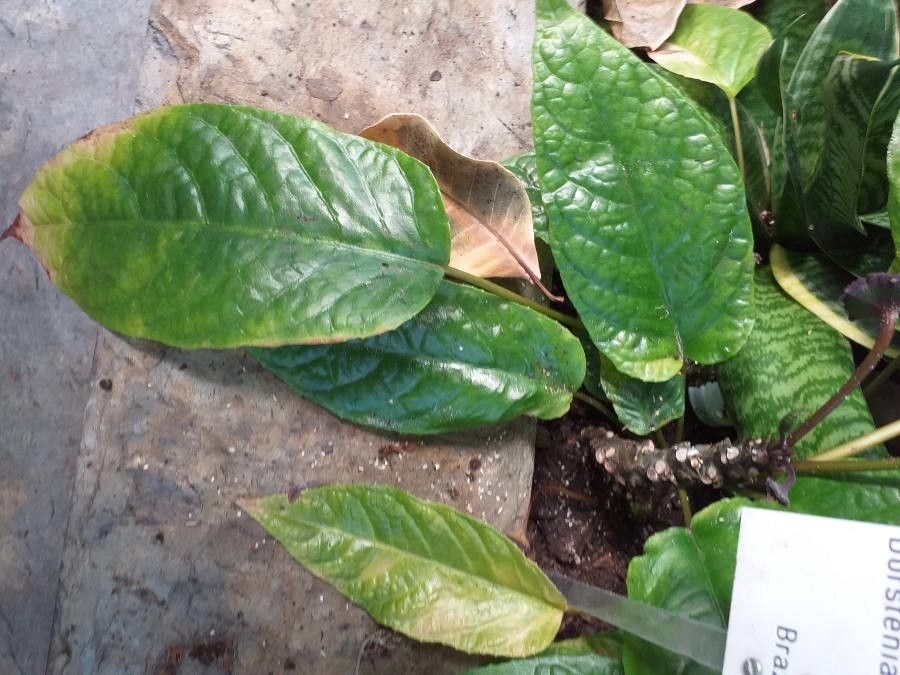
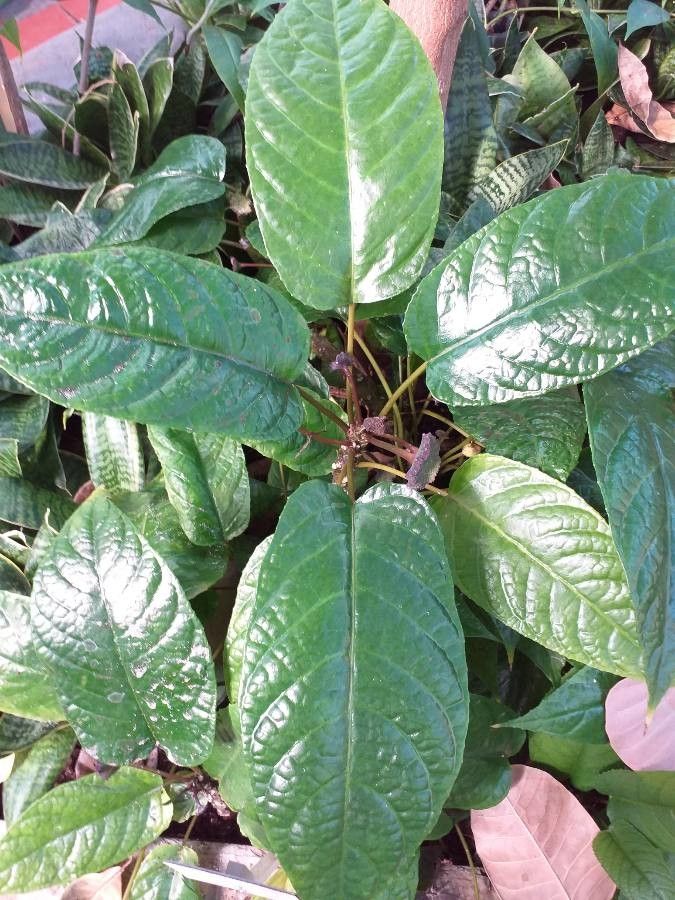
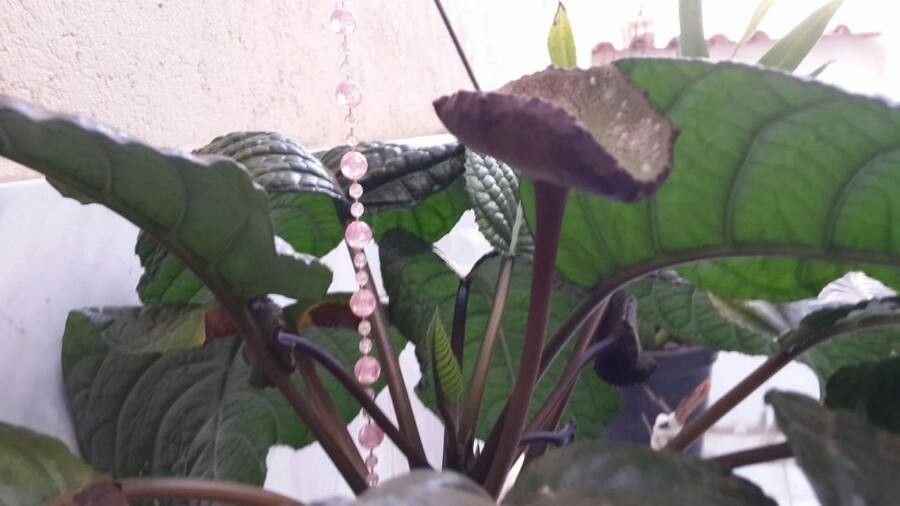
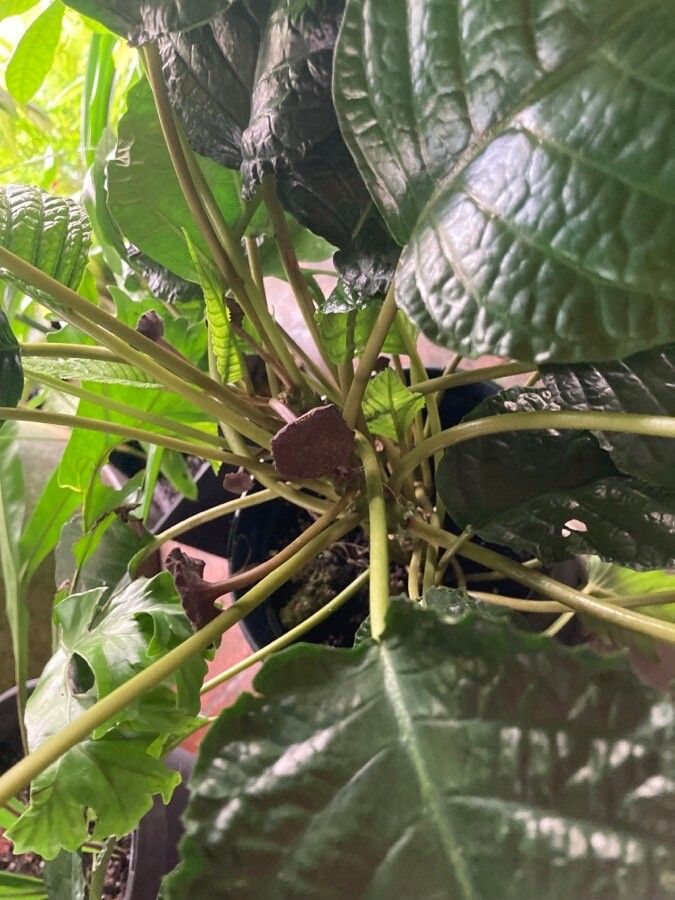
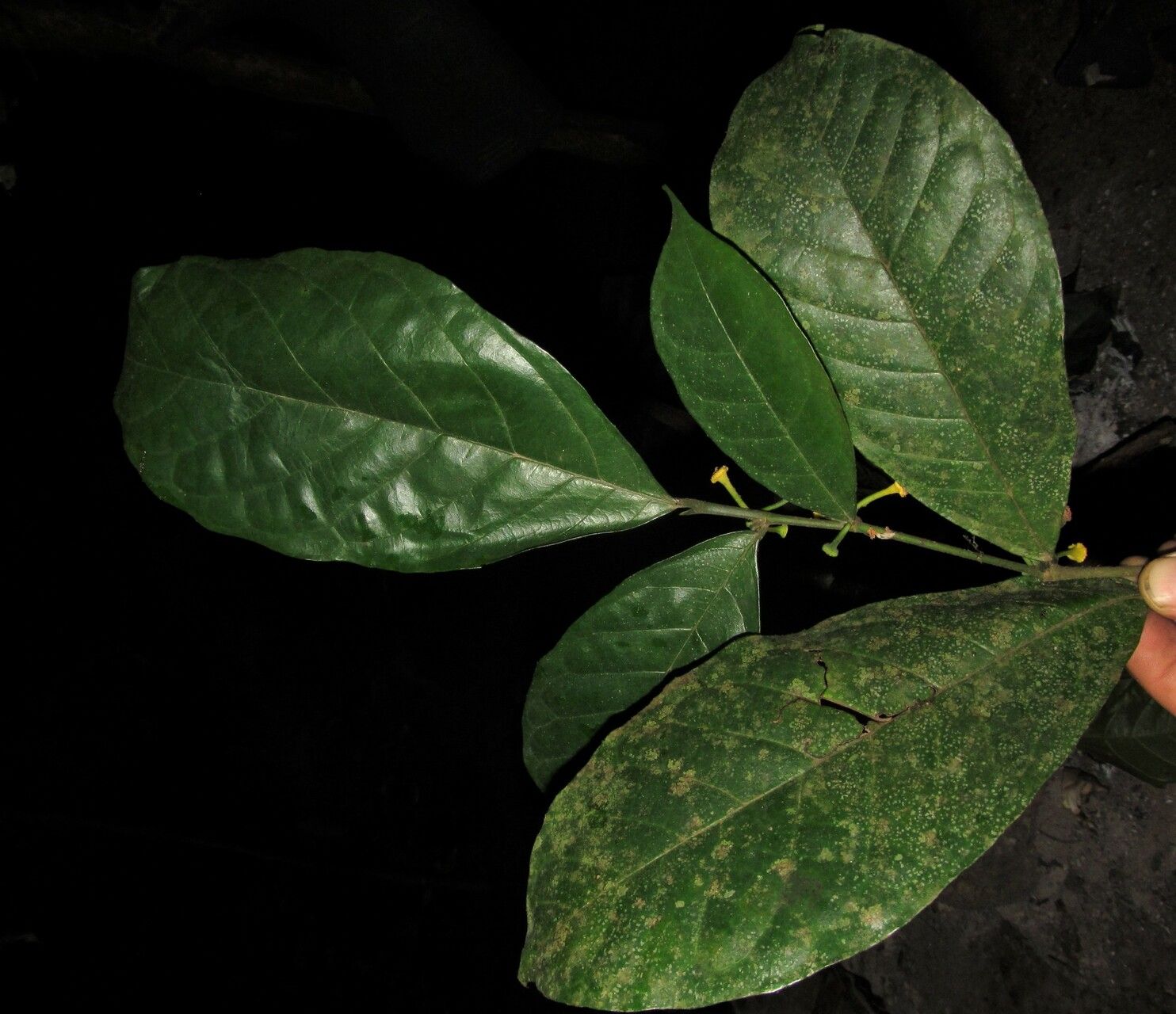
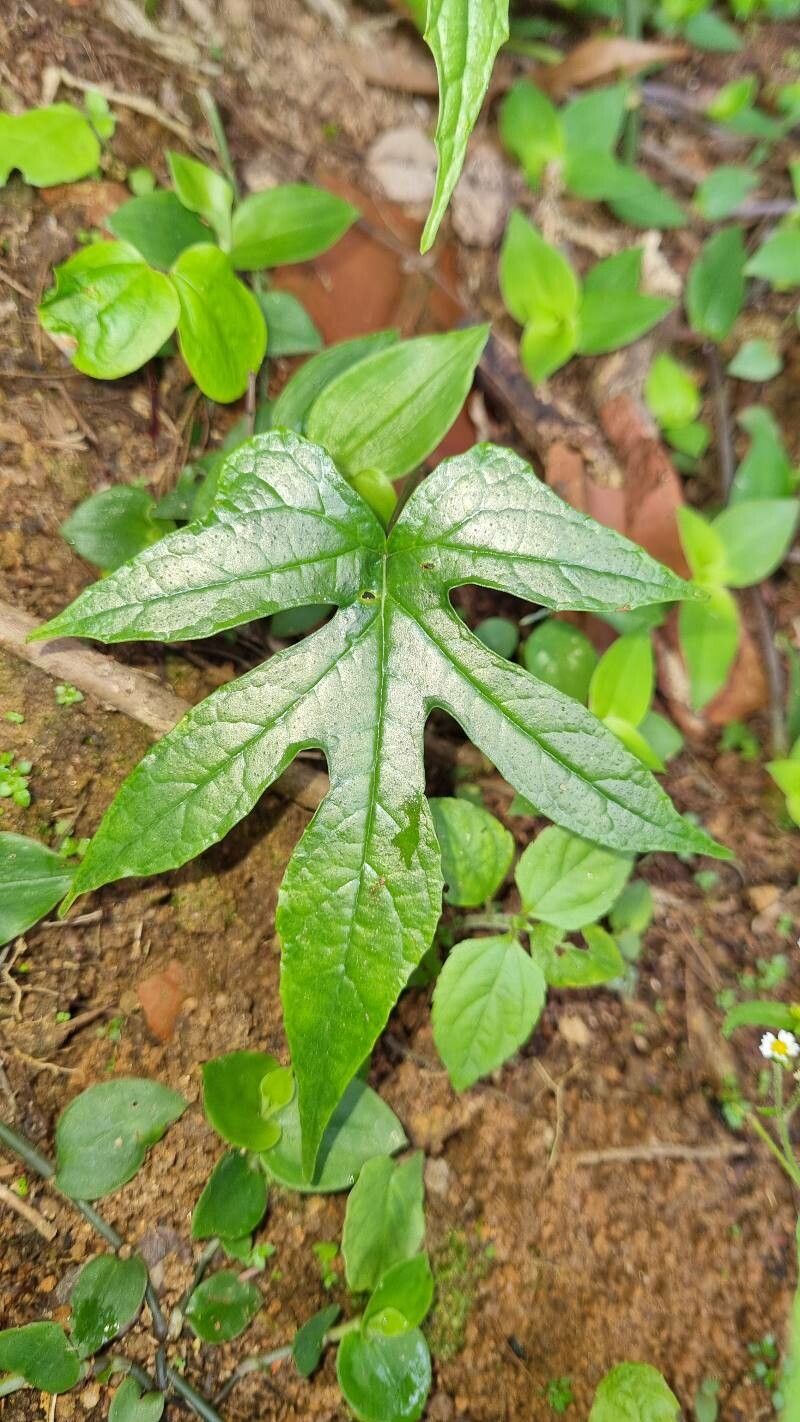
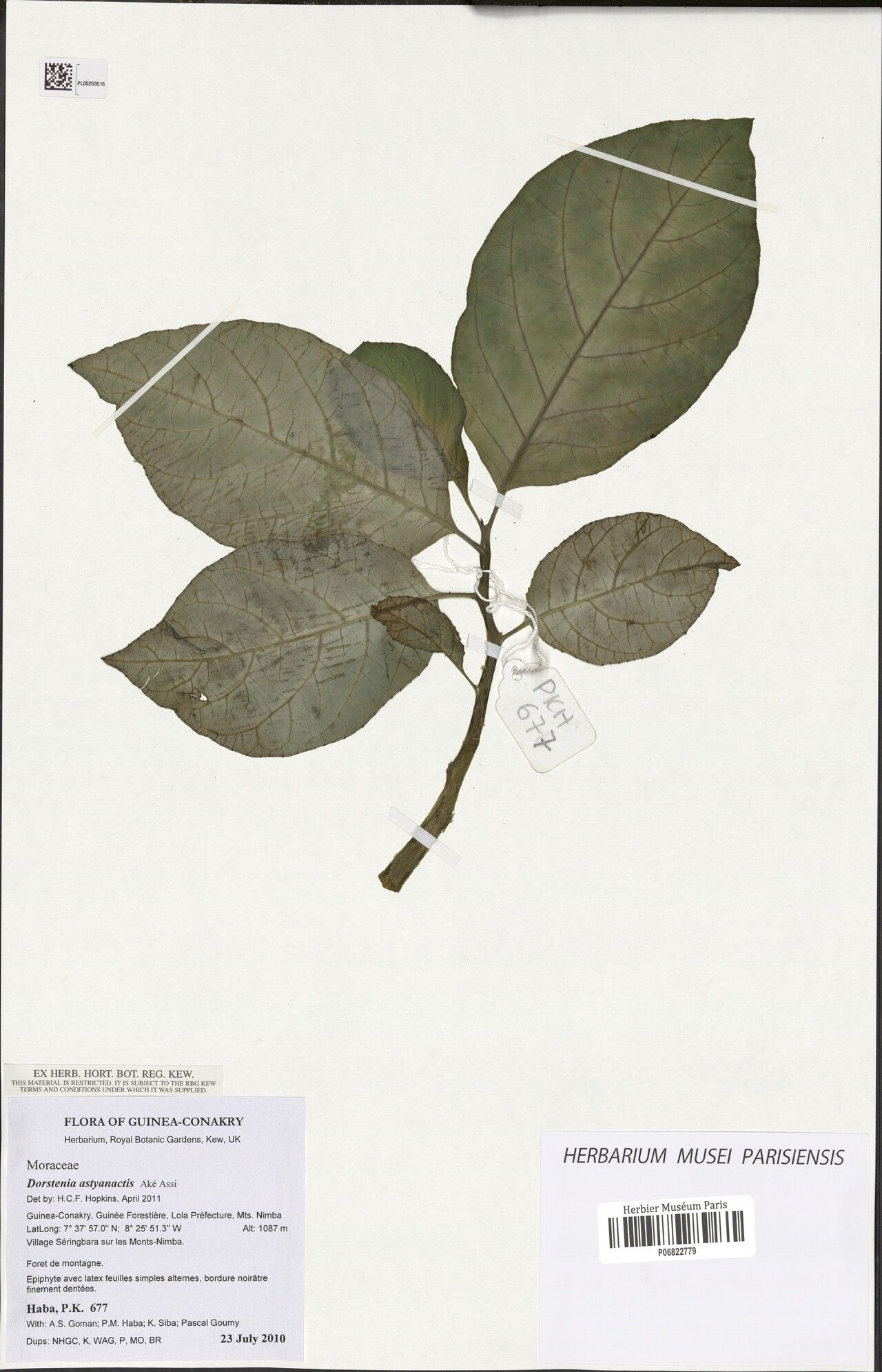
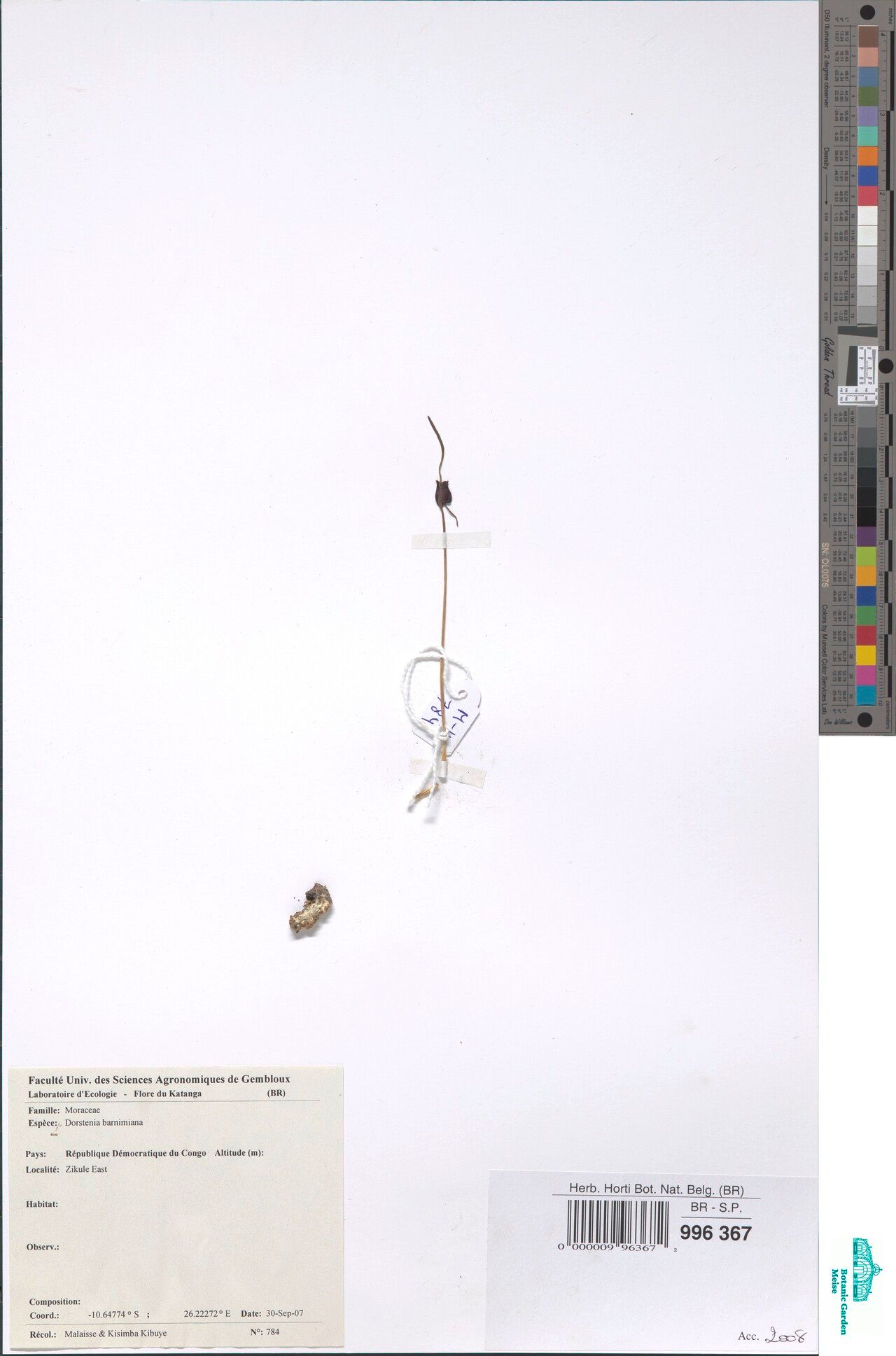
Dorstenia elata is an intriguing and unique plant belonging to the Moraceae family. Native to the tropical rainforests of West Africa, it typically grows as either an epiphyte on trees or a lithophyte on rocks. The plant's distinct appearance features a thick stem that resembles a mushroom cap, and long, thin roots that dangle from the stem.
The leaves of Dorstenia elata are small and unremarkable, with most photosynthesis occurring in specialized structures known as stipules. Although the flowers themselves are small and inconspicuous, they are accentuated by large bracts, which give them a striking look.
Often cultivated as an ornamental plant, Dorstenia elata's unique appearance makes it a popular choice. It thrives in bright but indirect light and well-draining soil. Propagation is possible through stem cuttings or by dividing mature plants.
In traditional African medicine, Dorstenia elata has been utilized for various medicinal purposes, such as treating skin diseases, healing wounds, and reducing fever, thanks to its anti-inflammatory properties.
Overall, Dorstenia elata is not only aesthetically pleasing but also holds significant medicinal value. It serves multiple purposes, from beautifying home or office spaces to aiding in traditional medicine practices for a variety of ailments.
The Congo fig has good resistance to disease and is generally not susceptible to illnesses. However, it can be vulnerable to pests and diseases present in its environment. These problems are usually mild. In terms of care, this plant needs moderate maintenance. Regular pruning is required to keep a neat appearance and encourage healthy growth. Fertilizing can also help stimulate flowering. The Congo fig is appropriate for anyone with outdoor space, such as a garden or patio, and does not demand extensive experience in plant care. It may need more attention when kept indoors.
How to keep Dorstenia Elata.
Light
The congo fig does best with a moderate amount of light. In its natural habitat it grows in locations with filtered sunlight. Excessive light can stress the plant, causing leaves to turn yellow and growth to slow, while too little light may lead to leggy growth and reduced vigor.
Water
The Congo fig, a plant native to the underbrush of tropical forests, thrives in environments with high humidity and can also withstand moderate drought. To care for it, water the plant weekly, ensuring the soil remains consistently moist without becoming waterlogged. Additionally, mist the plant regularly to imitate its natural habitat, which helps maintain its lush foliage throughout the year when grown indoors.
Temperature
The Congo fig naturally occurs in habitats with temperatures between 68 and 100.4°F (20 to 38℃). It fares best in warmer climates mirroring its native ecosystem, and seasonal changes may require simulated warmth during cooler periods.
Fertilizer
Proper fertilization is vital for the Congo fig's health and appearance. Fertilize the Congo fig in summer, repeating the application monthly throughout the season. Nutrients power growth and help maintain the plant's tissues. Fertilizing improves the Congo fig's flower display, ensuring the best blooms.
Pruning
The Congo fig flourishes with appropriate pruning, which helps maintain its shape and encourages growth. Key practices include removing damaged stems and thinning out excess foliage to improve airflow. This process is best performed from early to late spring, as it promotes vigor, enhances aesthetic appeal, and reduces the risk of disease. Always use clean, sharp tools for the best results.
Pot & Repot
To promote the growth of a Congo fig, repot it every 2-3 years during the warmer months. Choose a slightly larger container with good drainage to prevent root rot. After repotting, keep the soil consistently moist and avoid exposing the plant to direct sunlight. This will help minimize stress and allow the Congo fig to thrive in its new environment.
Botanical profile.
- Plant Type
- Herb
- Life Cycle
- Perennial
- Genus
- Dorstenia
- Family
- Moraceae
- Hardiness Zone
- 10-11
- Mature Height
- 30 cm to 46 cm
- Mature Spread
- 15 cm to 30 cm
- Leaf Color
- Green
- Leaf Type
- Evergreen
- Flower Color
- Purple, Brown
- Flower Size
- 2.54 cm
- Bloom Time
- All year round
- Planting Time
- Spring, Summer, Autumn, Winter
- Harvest Time
- All year round
- Native Area
- Brazil
Other names.
Reader questions.
How should I water my Congo fig tree?
To properly water the Congo fig, it is recommended to use filtered water at room temperature or slightly warmer. Tap water may contain harmful particles for this plant, so filtering it is preferable. Since the Congo fig is adapted to a warm environment, using cold water can be a shock to its system. It is also advised to avoid overhead watering as it can lead to issues with the foliage. Instead, apply the filtered room temperature water directly to the soil until it is thoroughly soaked. This method promotes root hydration and facilitates nutrient absorption, ultimately benefiting the plant's overall health.
Why should I put fertilizer on my Congo fig?
All plants, including the Congo fig, need soil nutrients for growth. However, there is no guarantee that the soil where your plants grow will have all the necessary nutrients. To address this, fertilization and soil amendments can be used to provide the basic and specific nutrients required by the plants in your garden. For the Congo fig, fertilization is important to support healthy root and stem development throughout the growing season. It also helps the plant produce beautiful foliage, which is a key ornamental characteristic of this plant.
What are the sunlight requirements for a Congo fig?
The Congo fig thrives in conditions where it can receive partial sun, approximately 3-6 hours of sunlight daily. It's important to observe how sunlight moves through your garden to pick spots that offer a balance of light and shade, ensuring the plant's well-being. In its natural habitat, the Congo fig prefers areas with filtered sunlight. Excessive light exposure can lead to yellow leaves and reduced growth, whereas inadequate light may cause leggy growth and diminished vigor.
What is the ideal temperature range for a Congo fig?
The Congo fig thrives in environments with temperatures ranging from 68 to 100.4°F (20 to 38°C), reflecting its native warm climates. It is extremely heat-loving, and exposure to cold temperatures can be harmful. To ensure its health, especially in the autumn and winter months, it is advised to simulate warmth for indoor plants and maintain temperatures above 20°C, as temperatures nearing 5°C can be detrimental.
What should I do if I give my Congo fig plant too much water or not enough water?
Overwatering and underwatering can both harm your Congo fig plant, but overwatering is more commonly problematic. When the plant receives excessive water, its stems and leaves may wilt and turn yellow. Overwatering can also result in diseases like root rot, mold, and mildew that can be fatal for the plant. Although underwatering is less common, the leaves of the Congo fig may become brittle and brown when it occurs. It is crucial to identify signs of overwatering early on as some of the associated diseases, such as root rot, may be irreversible if left untreated. If you notice early signs of overwatering, reduce your watering schedule immediately, and consider replacing poorly draining soil with a loose, well-draining potting mix. Conversely, if you observe signs of inadequate watering, simply increase the frequency of watering until the signs improve.
When should I fertilize my Congo fig tree?
A Congo fig requires the most fertilizer when it is in its active growth phase, which usually occurs during spring, summer, and early fall. After winter ends, you should feed your Congo fig every two to four weeks until fall comes. During fall, you can gradually reduce the amount of fertilizer you give until you stop feeding it completely in preparation for the winter, as the Congo fig will have minimal growth during that time.
How can artificial lighting benefit indoor Congo fig plants?
Artificial lighting is crucial for indoor Congo fig plants, especially when natural sunlight is scarce, like in winter or less sunny spaces. It promotes faster, healthier growth. LED lights are recommended due to their ability to provide specific light wavelengths needed by plants. For full sun plants, 30-50W/sq ft of artificial light is required, partial sun plants need 20-30W/sq ft, and full shade plants require 10-20W/sq ft. The light should be placed 12-36 inches above the plant and turned on for 8-12 hours per day to mimic natural daylight conditions.
How should I care for my Congo fig during colder months?
During the colder months, it's important to protect your Congo fig from low temperatures. If grown outdoors, bring it inside to prevent frost damage and place it near a bright window but keep it at a certain distance from heaters to avoid dry air damage. Maintaining indoor temperatures above 20°C during winter benefits the plant's growth, as Congo fig is particularly sensitive to temperatures approaching 5°C, which can cause cold harm.
How often should I give water to my Congo fig plant?
Determining if your Congo fig plant needs water depends on its location - in a pot or in the ground. For potted plants, check the moisture level by putting your finger in the soil. If the top few inches are dry, it's time to water. The same method applies to figs grown outdoors - if the top layer of soil is dry, it needs watering. In spring and early fall, watering once a week is usually sufficient, but during hot weather, increase watering to twice a week or more. However, mature Congo figs can withstand drought well.
When is the best time to not add fertilizer to my Congo fig plant?
For most of the year, which includes spring, summer, and most of fall, it is important to regularly feed your Congo fig. The exception to this is if you notice that your Congo fig has received too much fertilizer or if you have fertilized it incorrectly, leading to fertilizer burn or other issues. In winter, it is not necessary to fertilize your Congo fig, especially if it is grown indoors in a cold region. During this time, the plant enters a dormant phase and feeding it can be harmful, causing fertilizer burn.
What are some signs that a Congo fig isn't getting enough light?
Signs of insufficient light in Congo figs include smaller new leaves, leggy or sparse growth with longer spaces between leaves or stems, and faster leaf drop as the plant tries to conserve resources. Slower growth or a complete halt in new leaf production may occur, indicating the plant is in survival mode. New leaves might also appear lighter in color or with irregular patterns, suggesting a lack of chlorophyll and nutrients. Other symptoms include chlorosis, where leaves lose their green color, sunscald, leaf curling, wilting due to overexposure to sunlight, and leaf scorching with brown, dry edges.
What are the symptoms of temperature stress in Congo fig plants, and how can I address them?
Congo fig plants show specific symptoms when stressed by temperatures. For low temperatures, symptoms include lightening of leaves below 1°C, with leaves turning brown or black and wilting after frost damage. The solution is to trim frost-damaged parts and move the plant to a warmer environment indoors, ensuring it receives ample sunlight away from direct heat sources. For high temperatures, particularly above 43°C, leaves may lighten and become sunburned. Address this by trimming sunburned parts, moving the plant to a shaded location during peak sun, and keeping the soil moist with morning and evening watering.