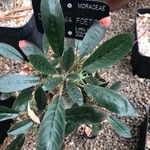
Dorstenia foetida
Foetid Dorstenia · Grendelion · Shield Flower · Congo fig · Mattress button plant
Description
Source: leafsnapDorstenia foetida, commonly known as the stinking dorstenia or fetid dorstenia, is a flowering plant in the Moraceae family. It is native to tropical regions of Africa, including Madagascar and the Comoros Islands. This plant typically thrives in rocky areas and can grow up to 1 meter in height. The stinking dorstenia has a distinctive appearance, featuring a thick stem that branches into several smaller stems, each bearing large, round, dark green leaves with a rough texture. The plant produces small, greenish-yellow flowers on long stalks that emerge from the base of the stem. While these flowers are not particularly striking, they have a unique structure, with tiny male flowers encircling a larger female flower. One notable characteristic of Dorstenia foetida is its unpleasant odor, which is the source of its common name, "stinking dorstenia." This smell attracts flies, which aid in the pollination of the plant's flowers. In traditional African medicine, various parts of Dorstenia foetida have been used to treat ailments such as skin infections and respiratory issues. However, it is important to note that there is limited scientific evidence supporting these medicinal uses. Overall, Dorstenia foetida is an interesting tropical plant known for its unique appearance and unpleasant odor. Despite its smell, it holds potential medicinal value according to traditional African practices.
Care Guide
💧 Water Every 7 days
Foetid Dorstenia is best suited for arid conditions and should be watered only once every three weeks. It thrives in dry soil with good drainage, which helps prevent root rot. Its drought-resistant nature makes it ideal for indoor cultivation, where humidity levels can be effectively controlled.
How should I water my Foetid dorstenia plant to keep it healthy?
Your Foetid dorstenia is not very particular about how you water it. You can use any common watering tool to dampen the soil, such as watering cans, hoses, or even cups. Regardless of the tool you choose, it's important to water the soil directly. Make sure to evenly moisten all areas of the soil so that every part of the root system gets the water it needs. Using filtered water is beneficial, as tap water may contain harmful particles for the plant. It's also helpful to use water at or slightly above room temperature, as extremely hot or cold water can be a bit shocking to the Foetid dorstenia. However, this plant generally responds well to any type of water you provide.
What should I do if I give too much or too little water to my Foetid dorstenia plant?
For outdoor plants, especially newly planted ones or seedlings, lack of watering can be a problem. Remember to water enough for a few months when the tree is small or just planted. Once the roots are established, Foetid dorstenia can rely on rain most of the time. When your Foetid dorstenia is in a pot, overwatering is more likely. If you accidentally overwater your plant, act quickly to fix the situation. Stop watering right away to minimize the effect of overwatering. Then, remove the plant from its pot to check its roots. If there is no root rot, you can put it back in the pot. But if you find signs of root rot, trim the affected roots and apply a fungicide to prevent further damage. Finally, repot the Foetid dorstenia in well-draining soil. In the case of underwatering, simply water the plant more frequently. Underwatering is usually an easy fix. When you underwater, the plant's leaves may droop, dry out, and fall off, but they will quickly regain fullness after sufficient watering. Correct your watering frequency as soon as you notice underwatering.
How frequently should I water my Foetid dorstenia plant?
To ensure healthy growth for most outdoor plants, they typically rely on rainfall. However, if your area lacks sufficient rainfall, you will need to provide regular watering. In the spring and fall, watering every 2 weeks should suffice, while the summer requires more frequent watering. During winter when plants grow slower and need less water, you can reduce watering. In fact, you may not need to water them at all. If you have a young or newly planted Foetid dorstenia, it is important to water more frequently initially to help it establish and eventually become more adaptable to drought conditions. For potted plants, there are two main approaches to determining watering frequency. One is to follow a set schedule, such as once a week or every other week. However, this method may not consider the specific growing conditions of your Foetid dorstenia. Alternatively, you can monitor the soil moisture to decide when to water. Typically, it is best to wait until the top two to four inches of soil have completely dried out before giving more water. This method allows for adjustments based on the season, as the plant's water needs are highest during summer.
How much water does my Foetid dorstenia require?
When watering your Foetid dorstenia, you might be surprised to learn that it doesn't always require a lot of water. If only a few inches of soil have dried since the last watering, giving the plant around five to ten ounces of water each time will support its healthy growth. You can also determine the amount of water based on the moisture of the soil. Take note of how many inches of soil have dried out between waterings. To ensure your Foetid dorstenia receives enough moisture, water all the soil layers that have become dry since the previous watering. If more than half of the soil has dried out, consider providing more water until it starts draining from the pot's drainage holes. If your Foetid dorstenia is planted in an area with sufficient outdoor rainfall, it may not need additional watering. For young or newly established plants, aim for 1-2 inches of rain per week. As it matures and becomes well-established, the plant can rely solely on rainwater. Only in hot weather without rainfall for 2-3 weeks should you consider giving it a thorough watering to prevent stress.
How do I know if I'm watering my Foetid dorstenia enough?
The Foetid dorstenia is often overwatered, which can be identified by certain signs. The leaves turn yellow and some may fall off. Overwatering can also cause the plant to shrink and lead to root rot. Conversely, an underwatered Foetid dorstenia will start to droop and may have brown or brittle leaves. Regardless of the issue, it is important to step in and revive the plant's health.
☀️ Light Partial sun
Foetid dorstenia is native to habitats with dappled light, like the understory of forests or rocky locations that provide natural shade. It prefers partial sun but can tolerate full sun as well.
What are the sunlight requirements for Foetid dorstenia?
Foetid dorstenia thrives in partial sun, needing about 3-6 hours of sunlight daily. It is native to environments such as forest understories or rocky areas, which naturally offer shade. Although it prefers partial sun, it can also adapt to full shade. It's essential to observe how sunlight moves through your garden to find spots with the ideal balance of light and shade. This ensures the plant receives enough light to be healthy while avoiding areas that might expose it to too much direct sunlight, which could be harmful.
How can artificial lighting be used for indoor Foetid dorstenia plants?
When natural sunlight is insufficient, especially during winter or in less sunny indoor spaces, artificial lighting becomes crucial for Foetid dorstenia's growth. LED lights are recommended because they can be tailored to provide specific wavelengths needed by plants. The intensity of artificial light needed varies: full sun plants require 30-50W/sq ft, partial sun plants need 20-30W/sq ft, and full shade plants need 10-20W/sq ft. The light source should be placed 12-36 inches above the plant, mimicking natural sunlight as closely as possible, and be kept on for 8-12 hours daily to ensure optimal growth.
What are the symptoms of inadequate light for Foetid dorstenia, and how can they be addressed?
Inadequate light can cause various symptoms in Foetid dorstenia, including smaller leaves, leggy or sparse growth, faster leaf drop, slower or no new growth, irregular leaf color or paleness, chlorosis, sunscald, leaf curling, wilting, and leaf scorching. To address these symptoms, gradually move your plant to sunnier spots until it receives 3-6 hours of direct sunlight. If the plant is large or stationary, supplement with artificial light, keeping a desk or ceiling lamp on for at least 8 hours daily, or using professional plant grow lights. For outdoor plants, avoid sudden changes in light intensity to prevent sunburn. In cases where sunlight is blocked, consider pruning obstructions or relocating smaller plants during their dormant period to brighter areas with good drainage.
🌡️ Temperature 20–37.8°C
Foetid dorstenia grows best in warm conditions and needs higher temperatures during the growing season to support growth and metabolism. It prefers plenty of sunlight, proper moisture, and good air circulation. However, it can be harmed by very low temperatures and by overwatering. It is important to maintain a balance and to avoid both excessively high temperatures and overly dry conditions.
What is Foetid Dorstenia and its Botanical Name?
Foetid Dorstenia, known by its botanical name as Dorstenia foetida, is a plant species recognized for its distinctive characteristics. However, specific details regarding its essentials and symptoms weren't provided.
💨 Humidity
🪴 Soil 6-7
🌱 Fertilizer
For Foetid dorstenia, light applications of fertilizer once or twice a year during the growing season are enough. Avoid fertilizing in winter and in summer when the plant is dormant. Cut back on fertilizer for plants that have been repotted and wait a couple of months after repotting before applying fertilizer. Fertilizing helps maintain healthy growth and promotes blooming.
🪴 Pot & Repot Every 2 years
When repotting Foetid dorstenia, choose a pot slightly larger than the current one that has good drainage. Use a gritty, well-draining succulent or cactus potting mix. Gently remove the plant from its old pot, brush off excess soil, and set it at the same planting depth. Wait a few days before watering to allow any root damage to heal. Repot in spring or fall and place it in a brightly lit spot.
✂️ Pruning
To ensure the optimal growth and health of the foetid dorstenia, light pruning is recommended during its dormancy period in early to late winter. Pruning dead leaves and stems helps conserve the plant's energy, prevents disease, and enhances air circulation, which collectively improve the plant's overall vitality. For best results, consult authoritative sources on pruning techniques.
🌿 Propagating
🐛 Diseases & pets
☠️ Toxicity
Characteristics
- Plant Type
- Tree, Shrub, Succulent
- Life Cycle
- Perennial
- Genus
- Dorstenia
- Family
- Moraceae
- Hardiness Zone
- 10-11
- Mature Height
- 34 cm
- Mature Spread
- 34 cm
- Leaf Color
- Green
- Leaf Type
- Evergreen
- Flower Color
- Green, Gray
- Flower Size
- 2.03 cm
- Bloom Time
- All year round
- Planting Time
- Spring, Summer, Autumn
- Harvest Time
- All year round