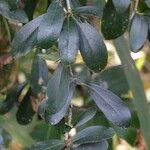
Dovyalis caffra
Kei apple · Umkokolo
Description
Source: leafsnapDovyalis caffra, commonly known as the kei apple, is a small to medium-sized tree native to southern Africa. A member of the Flacourtiaceae family, this tree can grow up to 10 meters tall. It features a dense crown of glossy green, oval-shaped leaves with serrated edges. The kei apple tree produces small, round fruits that turn yellow-orange when ripe. The fruit has tough skin and contains numerous seeds surrounded by juicy pulp, offering a tart flavor reminiscent of apricot or pineapple. Drought-tolerant and adaptable, the kei apple can grow in various soil types, although it prefers well-drained soils with moderate fertility. Its attractive foliage and fruit make it a popular ornamental plant in gardens. Beyond its ornamental appeal, the kei apple has medicinal properties. Its leaves are used to treat diarrhea, and its bark extract has been found effective against malaria parasites. Overall, Dovyalis caffra is an intriguing plant valued for both its aesthetic and medicinal qualities, making it popular among gardeners and herbalists alike.
Care Guide
💧 Water Every 7 days
Wild apricots thrive in subtropical environments with moderate rainfall, where a balance of moisture and well-drained soil is essential. Water these plants every two weeks, providing deep watering during the growing season to encourage strong root development. Due to their size and fruit-bearing characteristics, wild apricots are usually grown outdoors.
What is the best way to water my Wild apricot?
To ensure excellent root development for your plants, place a garden hose at the base of the plant. Avoid spraying water directly on the leaves. Keep in mind that if the leaves are outside and exposed to direct sunlight, they will need more water. You can use bubblers to moisten the roots of each plant, or soaker hoses to cover the entire garden or bed. When adding or removing plants, make sure to water deeply to encourage deep root growth. After watering, drain any excess water and allow the soil to dry before watering again. To prevent diseases, water at ground level instead of spraying water onto the leaves. On a sunny day, it may be beneficial to spray the entire bush with water. Whether your plants are potted or in the ground, it is important to remember that Wild apricots prefer deep watering instead of light sprinkling.
What should I do if I give Wild apricot too much or too little water?
If a Wild apricot is overwatered, it may exhibit yellowing, dropping, and wilting leaves. The plant may also appear dull and unhealthy, with mushy stems. If these signs begin to show, adjust your watering schedule when possible. Wilting can also indicate under-watering, with leaves becoming crispy and dry. In such cases, check the soil and provide a thorough watering when dry. Sufficient water will help the Wild apricot recover, but it may still exhibit dryness and yellow leaves due to root damage. Once it returns to normal, the yellowing of leaves will cease. When keeping a Wild apricot indoors, regularly check the moisture levels of the pot and avoid overwatering. If black spots appear, allow the soil to dry for a few days before watering again. Overwatering can lead to root rot, so consider transferring the plant to a different pot if discolored and slimy roots are present. Prevent root rot by avoiding excessively soggy soil. When planting a Wild apricot outdoors, ensure the soil is adequately moist by checking with your fingers. If the soil is too dry, it may indicate under-watering. Provide adequate watering to facilitate the plant's recovery.
How many times should I give water to my Wild apricot?
The Wild apricot prefers deep and infrequent watering, especially when planted in pots. To ensure proper hydration, soak them in a gallon of water each time. Since flower pots have limited water storage, the soil dries out faster. In cold regions, watering every 3 to 5 days is necessary. Ideally, water the plant early in the morning when the soil is dry, whether it's indoors or outdoors. To determine if watering is needed, check the soil inside the pot. If the top 2-3 inches of soil are dry, it's time for a full watering. On hot days, monitor the moisture daily as the heat rapidly dries the soil. For gardens, irrigation is essential. In hot climates, watering once a week is sufficient. Only water when the top 2-3 inches of soil are too dry, indoors or outdoors. Take into account the amount of rainfall the plant receives to avoid overwatering and root rot. If there is sufficient rainfall, additional watering may not be necessary. Wild apricot plants primarily grow in the spring and fall. When outdoors, adding a layer of mulch, about 3 to 4 inches deep, helps to conserve water. Sandy soil tends to drain faster, so watering should be more frequent. On the other hand, clay soil retains water well, so watering can be less frequent to avoid root rot. To keep track of watering schedules, mark the date on a calendar. Pay attention to the plant's leaves as drooping may indicate a delay in watering.
How much water should I give my Wild apricot plant?
The Wild apricot generally needs about a gallon of water on a regular schedule. For potted plants, water them deeply until the water is dripping from the bottom of the pot. Wait for the soil to dry before watering again. To determine the amount of water given in a week, use a water calculator or a moisture meter. Provide plenty of water during the flowering period, but let the moisture evaporate to prevent root rot. If the Wild apricot is planted outdoors with enough rainfall, it may not need additional watering. When it is young or newly planted, ensure it receives 1-2 inches of rain per week. As it grows, it can survive on rainfall alone. Only when the weather is hot, or if there is no rainfall for 2-3 weeks, consider giving a full watering during the cooler part of the day to prevent heat damage. Additional watering will be needed during extended dry periods.
Should I change how often I water my Wild apricot based on the time of year or the weather?
The Wild apricot requires watering primarily from rain, unless there is extended dry weather. During the spring and fall seasons, the soil should be kept moist but not waterlogged, and it is beneficial to alternate between dry and moist soil conditions. In the summer, hot weather can cause water to evaporate quickly, so more frequent watering may be necessary if there is a lack of rainfall. Generally, the Wild apricot requires less water during winter when it goes dormant. To help with evaporation, it can be planted in well-draining soil like terracotta. Once the plant begins to leaf out and go dormant, watering can be skipped as it can rely on fall and winter rains. When flowering, the plant prefers good drainage to avoid ponding or drought. When planted in pots, the Wild apricot has limited root growth and should be well-watered, especially in summer. It is important to avoid cold and wet roots by providing adequate drainage. Watering the Wild apricot deeply at least once or twice a week, depending on the weather, is recommended, avoiding shallow sprinkles that only reach the leaves. Even during dormancy in fall or winter, the plants should not be allowed to dry out completely. On the other hand, overwatering should be avoided as the plants do not like sitting in water for long periods. Applying mulch can help reduce stress, conserve water, and promote healthy blooms.
☀️ Light Full sun
Wild apricot prefers abundant sunshine and grows best when it receives large amounts of light each day. Its growth may slow if it gets less sun. Though it originally occurred in places with steady sun exposure throughout the day, it can tolerate some shade. Both extremes — too little light or excessively intense light — can harm its health.
How much sunlight does Wild apricot need to grow?
Tropical ornamental plants that thrive in full sun require at least 6 hours of direct sunlight each day. These plants are well-suited to areas with strong and direct sunlight, as they need this light to flourish. In their natural habitats, they tend to grow in open fields or along forest edges, where they can enjoy abundant sunlight all day long.
What will happen if Wild apricot doesn't receive sufficient sunlight?
Tropical ornamental plants that need full sun may face issues if they don't receive enough sunlight. They might become leggy and weak, and their leaves could turn yellow or pale. Furthermore, they may stop producing flowers. Ultimately, if these plants continue to lack the required amount of direct sunlight, there is a possibility that they may die.
What will happen if Wild apricot gets too much sunlight?
Tropical ornamental plants that thrive in full sun require ample direct sunlight, but excessive exposure to intense sunlight can harm them. Prolonged periods of direct sunlight can cause sunburned leaves or the development of unsightly brown spots. Additionally, if the soil dries out too rapidly in full sun, these plants may become dehydrated.
How can you shield Wild apricot from too much sunlight?
To protect tropical ornamental plants that thrive in full sun, it's important to find a spot with ample direct sunlight but some shield from the intense midday heat. If you're growing these plants in containers, you can move them to a shadier area during the hottest hours to shield them from excessive sunlight. Another option is to offer shade using a shade cloth or umbrella during the peak heat of the day.
🌡️ Temperature 20–37.8°C
Wild apricot is native to regions where temperatures range from 68 to 100 °F (20 to 38 ℃). It prefers warm conditions; for optimal growth, keep temperatures within that range across seasons.
What temperature is best for wild apricot?
To help your tropical plants thrive, it's best to maintain a temperature range of 75℉ to 90℉ (25-32℃). While different species can tolerate temperatures outside this range, sticking within a few degrees of these limits will ensure optimal growth. However, there are extreme temperature limits to be aware of. Anything below 50℉ (10℃) or above 95℉ (35℃) can hinder growth and cause issues with the leaves and stems. Low temperatures are particularly damaging, as even a light frost can lead to the death of your tropical plants. In fact, cellular death can occur rapidly, with some species dying within 12 to 24 hours.
Does Wild apricot need varying temperatures during different stages of growth?
Although Wild apricot can enter different growing phases without changes in temperature, it is still important to maintain consistency. Fluctuations in temperature can negatively affect its growth, regardless of its current phase. Therefore, it's recommended to keep Wild apricot in a controlled environment. The optimal temperature range for this plant is between 75℉ and 90℉ (25-32℃), with a focus on staying above the lower limit. While exceeding 90℉ (32℃) is not ideal, this tropical plant can tolerate it to some extent. Conversely, temperatures below 50℉ (10℃), especially below 40℉ (5℃), can directly harm this heat-loving plant species.
Does Wild apricot require varying temperatures for each season?
Wild apricot plants are not picky about temperature variations throughout the year. The key to taking care of them is maintaining an optimal temperature range, which is why it's recommended to keep them indoors. Indoor plants allow for better control over temperature, regardless of the climate outside. In terms of light, tropical plants like wild apricot thrive when exposed to partial shade. This means they should receive filtered or dappled light indoors. Bright yet indirect light is the ideal choice for indoor growth, as too much direct sunlight can harm the leaves and hinder the plant's growth.
What temperatures do you need to keep your Wild apricot healthy?
Here are three tips to help you take care of your plants: 1. Keep your plants away from windows during colder months: Cold air can leak into your home through cracks in the windows, and any plants placed near them will be affected. Move tropical plants to an area with bright but indirect light, while avoiding potential drafts. 2. Watch out for dry patches, which may indicate too much sunlight or heat: If you notice white or scorched leaves, your plant may be getting too much heat or sunlight. This can lead to dehydration and hinder growth. Dry spots can spread and eventually cause your plants to die if left unaddressed. 3. Be cautious of frost: Colder temperatures and frost can damage plants by disrupting their water circulation. This can lead to a lack of moisture in the stems and leaves. Look out for signs of hydrosis (a water-soaked appearance) and if the issue persists, the plant may shrivel and turn dark brown or black, eventually leading to death.
How can I keep my Wild Apricot at the right temperature?
To maintain the ideal temperature for Wild apricot, it is important to consider both the climate and humidity. You can achieve this by controlling the environment in which the plants are placed. Maintain the appropriate temperature range, similar to their natural habitat, by using climate control in the room. Additionally, keep an eye on the humidity levels as they directly affect the temperature. If needed, you can increase humidity artificially using a humidifier or by lightly misting the leaves with water. Growing Wild apricot outdoors may pose challenges in balancing temperature and humidity. In such cases, it is advisable to bring the plant indoors when temperatures drop or the air becomes too dry. Creating an indoor growing space will enable better control over the climate, ensuring the plant thrives.
💨 Humidity
🪴 Soil 6-7
🌱 Fertilizer
Use organic fertilizers (e.g., fish emulsion, compost) instead of chemical ones for Wild apricot. Provide increased nitrogen and phosphorus to young plants during spring. Incorporate compost or fertilizer into the soil before or after planting. For mature plants, supplement in spring with a balanced fertilizer or one targeted to specific deficiencies. Nutrient deficiency causes small leaves, short branches, yellow or bronze leaves, acidic fruits, premature fruit fall, and splitting.
Why do I have to add fertilizer to my Wild apricot?
If the soil in your area is rich, you may not need to fertilize. But if the soil lacks nutrients, a Wild apricot won't be able to produce enough leaves, flowers, and fruits. To find out what nutrients are in the soil and what might be missing, a soil test is the best way. A lack of nutrients in Wild apricot can lead to small leaves and short branches, yellowing or bronze leaves, and less tasty fruits that are more acidic. Certain nutrient deficiencies can also cause fruit to fall early or split.
When should I fertilize my Wild apricot tree?
To support strong leaf and root development in young Wild apricot trees, it is recommended to provide them with higher nitrogen and phosphorus fertilizer. The best time to apply this fertilizer is during the spring of their first growing season. It is also beneficial to incorporate compost or another fertilizer into the soil before or immediately after planting. For mature plants, supplement their fertilizer every few years as necessary, particularly during the spring and summer, using a balanced fertilizer or one that targets specific soil deficiencies in your area. It is important to avoid fertilizing Wild apricot trees during the autumn or winter.
When should I not add fertilizer to my Wild apricot?
To ensure the well-being of a Wild apricot tree, it is important to avoid fertilizing after pruning, during periods of disease, infestation, or stress. Fertilizer primarily addresses soil nutrient deficiencies and cannot resolve other underlying issues that may adversely affect the tree. It is crucial to accurately diagnose the problem before considering the use of fertilizer, as it may not be the appropriate solution. Furthermore, refrain from fertilizing the Wild apricot tree in winter or during excessively hot and dry conditions in the summer.
Which fertilizer should I use for my Wild apricot?
Most types of Wild apricot thrive in tropical locations with abundant decaying organic matter. They can benefit from fertilizer to fulfill their macronutrient and micronutrient needs. For those growing Wild apricot for fruit, using a high-phosphorus organic fertilizer like mushroom compost, bone meal, and poultry manure can promote the development of delicious and well-formed fruits. When buying fertilizer, look for a number (NPK) on the label indicating the ratio of nitrogen, phosphorus, and potassium. Low nitrogen is often a common nutrient deficiency in soil, but conducting a soil test is the most reliable way to identify any nutrient deficiencies in your soil that may require additional supplementation.
How can I give my Wild apricot plant the nutrients it needs to grow?
It is important to follow the instructions provided on the fertilizer you choose. It is better to use too little fertilizer than to use too much, so it is recommended to be conservative when adding fertilizers. This is especially true for chemical fertilizers, as they are usually more concentrated compared to organic fertilizers. Liquid fertilizers are typically diluted with water and then used to water the Wild apricot plant. On the other hand, granular or dry fertilizers can be spread around the base of the plant, ensuring that no fertilizer comes into direct contact with any part of the plant. The most common practice is to use fertilizers once every 2-3 weeks during the growing season. For organic fertilizers, they can be mixed into the soil before planting or spread over the top layer of soil for both newly-planted or mature plants.
🪴 Pot & Repot
✂️ Pruning
Wild apricot plants have thorny branches and produce edible fruit. For the best results, prune them in late winter to remove any dead or crossing branches. This helps create a stronger structure. Regular trimming improves air circulation and fruit quality. Additionally, make sure to use clean tools during the pruning process to prevent infections, which can occur during the plant's dormant period. This practice reduces stress and the risk of disease.
🌿 Propagating
🐛 Diseases & pets
☠️ Toxicity
Characteristics
- Plant Type
- Tree
- Life Cycle
- Perennial
- Genus
- Dovyalis
- Family
- Salicaceae
- Hardiness Zone
- 9-11
- Mature Height
- 2.44 m to 7.62 m
- Mature Spread
- 3.05 m
- Leaf Color
- Dark Green
- Leaf Type
- Semi-evergreen
- Flower Color
- White
- Flower Size
- 2.54 cm
- Bloom Time
- Mid spring, Late spring
- Planting Time
- Spring, Autumn
- Harvest Time
- Mid summer, Late summer, Early fall
- Native Area
- Malawi, Mozambique, Namibia, South Africa, Eswatini, Botswana, Zimbabwe