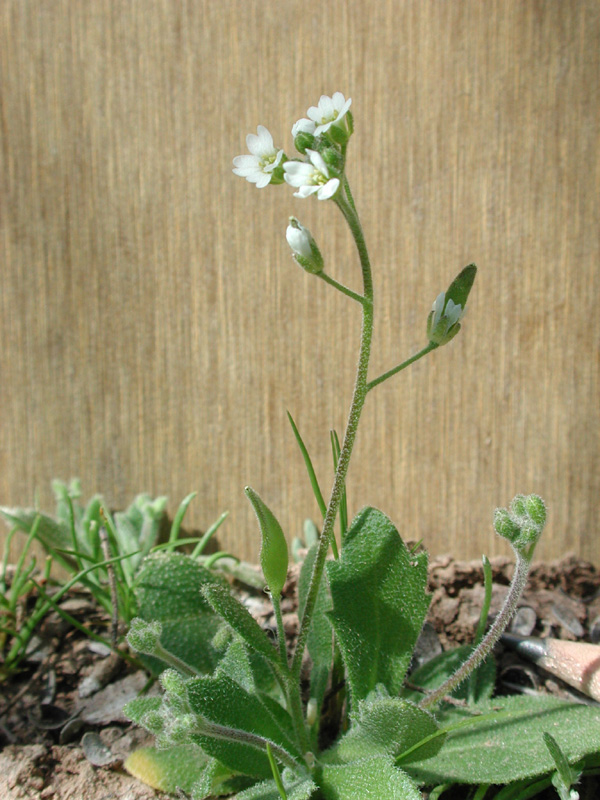
Draba cuneifolia
Wedgeleaf draba
Description
Source: leafsnapDraba cuneifolia, commonly known as wedge-leaved draba, is a small perennial plant in the Brassicaceae family. Native to North America, it thrives in various habitats, including rocky slopes, alpine meadows, and tundra. This plant features a basal rosette of hairy, wedge-shaped leaves with toothed edges. Its stem can grow up to 10 cm tall, bearing small white flowers that bloom in late spring or early summer. The flowers, with their four petals arranged in a cross shape, are characteristic of plants in the Brassicaceae family. Wedge-leaved draba is a crucial food source for various herbivores, such as bighorn sheep and mountain goats. Additionally, it has medicinal properties and has been traditionally used by Native Americans to treat respiratory ailments. The plant prefers well-drained soils with full sun exposure but can also tolerate partial shade. It needs moderate watering during its growing season but can endure drought conditions once established. Overall, Draba cuneifolia is an attractive alpine perennial with significant ecological importance, serving as a food source for wildlife and possessing medicinal properties historically used by humans.
Care Guide
💧 Water Every 7 days
Wedgeleaf draba, a plant that originates from rocky regions, thrives in dry conditions with minimal water. Although it prefers dryness, it does require occasional watering. To keep it healthy, watering once a week is recommended. Typically grown outdoors, wedgeleaf draba flourishes in well-draining soil, which is essential to prevent root rot.
How should I water my Wedgeleaf draba plant?
To water Wedgeleaf draba, you have several options: a garden hose with a spray nozzle, a watering can, or any other common watering tool. This plant is not too fussy about its water source, as it can thrive with rainwater, tap water, or filtered water. However, watering from overhead should be avoided as it can harm leaves and flowers and potentially cause diseases. A drip irrigation system is often the best method for watering this plant, as it delivers water evenly and directly to the soil. If you have a container-grown Wedgeleaf draba, simply change the tools you use, such as a cup, watering can, or tap, but still apply water directly to the soil.
What do I do if I give my Wedgeleaf draba too much or too little water?
The solution to underwatering Wedgeleaf draba is simple: if you notice it lacks moisture, water it more regularly. Overwatering, on the other hand, can be much more serious if not caught early. When a Wedgeleaf draba is overwatered, it can develop diseases that eventually lead to its decline and death. To prevent this, find a suitable location with plenty of sunlight to help dry out the soil and ensure the soil has good drainage to allow excess water to drain away instead of pooling. If you have overwatered a potted Wedgeleaf draba, consider changing it to a new pot with better drainage by using loose soil and an efficient draining pot.
How often do I need to water my Wedgeleaf draba plant?
To properly care for your Wedgeleaf draba, keep in mind these watering guidelines. During the growing season, starting in spring, you should aim to water the plant once a week. As the season progresses and gets hotter, you may need to increase the watering to two or three times per week. However, be careful not to overwater, as this can harm the plant. Regardless of how often you water, make sure the soil remains moist but not saturated. If your Wedgeleaf draba is in a pot, you'll need to adjust the watering schedule. Potted plants tend to dry out more quickly, so you should water them a few times per week. In most cases, this means more frequent watering compared to plants in the ground.
How much water does my Wedgeleaf draba require?
There are a few ways to decide how much water your Wedgeleaf draba needs. Some gardeners like to check the soil moisture by feeling it, and they suggest watering until the top six inches are moist. Another method is to use a specific amount, like two gallons per week, depending on temperature and how fast the soil dries out. However, following strict guidelines can result in overwatering if your plant needs less. When growing in a container, you'll need a different approach. Generally, you should water enough to moisten all the dry soil layers, which you can check by sticking your finger in the soil or by letting a little water drain out of the pot.
How do I know if I'm giving enough water to my Wedgeleaf draba plant?
Avoiding overwatering your Wedgeleaf draba can be a bit challenging due to its unique characteristics. On one hand, these plants have deep roots that require regular watering to keep the soil moist. However, overwatering can lead to root rot and browning of the plant. Underwatering is less of a concern as Wedgeleaf draba can tolerate some dryness, but prolonged lack of water can cause wilting and dry leaves.
☀️ Light Full sun
The wedgeleaf draba flourishes when it is exposed to unfiltered sunlight all day, replicating its natural, open surroundings. Excessive shading can decelerate its development and impair the plant, but the right amount of light enhances its strong growth and prolific flowering. Too much light or too little light can lead to noticeable leaf damage and influence its blossom.
How many hours of sunlight does Wedgeleaf draba need daily to grow well?
To ensure the healthy growth and survival of plants, it is important to provide them with a minimum of 6 to 8 hours of sunlight each day. Particularly during the summer, they thrive with additional exposure to morning light. Specifically, the Wedgeleaf draba plant requires full sun and benefits from as much sunlight as possible. Increasing the amount of light these species receive enables them to produce more food, display vibrant blooms, and ultimately thrive.
What kind of sunlight does Wedgeleaf draba require?
The Wedgeleaf draba thrives in full sunlight. To ensure even sunlight exposure, avoid crowding the plants together. It is important not to deprive the leaves of sunlight. When planting in pots, place the herbaceous flowers in windows with direct sun and make sure they receive full sunlight throughout the year. Partial or filtered light is not ideal as it may weaken stems and affect flower health. It is recommended to consistently expose the Wedgeleaf draba to sunlight.
Does sunlight harm plants? How can we shield Wedgeleaf draba from damage caused by the sun and heat?
The Wedgeleaf draba, a delicate plant, can be damaged by extreme temperatures above 90℉ (32℃), particularly if exposed to prolonged sunlight. To prevent damage, it is advisable to provide some shade in the afternoon during summer. It's important to bear in mind that summer sunlight is stronger and lasts 50% longer than winter sunlight. If the Wedgeleaf draba becomes too stressed from sunlight, keeping them well-watered can help. Water them when the top 2 inches of soil is dry and consider moving potted plants indoors if it's too hot outside. It is normal for the plant leaves to wilt during the day but should recover overnight. However, if you notice persistent drooping, it means the plant is losing water rapidly and requires watering.
Do I need to keep Wedgeleaf draba away from the sun?
The Wedgeleaf draba thrives in sunny conditions and is even heliotropic, meaning it naturally moves towards the sun. To optimize their growth, it is recommended to plant them in south-facing gardens where they can receive morning to afternoon exposure. However, it's important to protect them from potential sunburn by providing shade in the afternoon and midday, such as from a tree or a wall. Growing the Wedgeleaf draba in shady areas is not feasible as it requires abundant sunlight to fuel the growth and production of its larger flowers. Therefore, it is crucial to ensure they are placed in an area with full sun for the best results.
What will happen if Wedgeleaf draba doesn't get enough sunlight?
If the Wedgeleaf draba doesn't receive enough sunlight or is not placed in full sun locations, its photosynthetic process will slow down. Lack of sunlight makes the stems thin and long, as they seek more sunlight, leading to leggy growth. Additionally, the plant will not bloom or produce seeds in shady areas. Insufficient sunlight can cause older leaves to die, while the color of new leaves may be lighter than the old foliage, and the new growth is smaller. Although the Wedgeleaf draba thrives in the sun, it can wilt when exposed to excessive heat and ultraviolet light during the summer. To prevent scorching, consider using a net with a green shade to cover the plant, especially in the summer. When kept indoors, reducing the heat with a fan can be helpful.
🌡️ Temperature 5–35°C
Wedgeleaf draba is capable of adjusting to diverse temperature environments, yet its presence may still be confined by various mixtures of heat and moisture conditions. Its optimal growth is observed in hot climates during the summer season, provided there is sufficient rain or irrigation. Extended durations of overcast and damp weather, along with sustained periods of high heat, can enhance the probability of the Wedgeleaf draba plant perishing. In the winter, adequate shielding from cold weather can bolster the plant's chance of survival.
💨 Humidity
🪴 Soil 6-7
🌱 Fertilizer
Frequent and gentle applications of fertilizer can aid in the healthy growth of Wedgeleaf draba leaves. It is advisable to feed the Wedgeleaf draba monthly throughout the summer season. Nitrogen plays a critical role in the development of foliage, and utilizing resources rich in nitrogen supports the well-being of the Wedgeleaf draba.
🪴 Pot & Repot
✂️ Pruning
Wedgeleaf draba has distinctive wedge-shaped leaves. To keep the plant healthy and encourage growth, prune it from early to late spring. This involves deadheading the spent flowers and removing any faded foliage, which helps improve air circulation. Make sure to use clean, sharp tools to prevent damage, promote blooming, and reduce the risk of disease for a healthier plant.
🌿 Propagating
🐛 Diseases & pets
☠️ Toxicity
Characteristics
- Plant Type
- Herb
- Life Cycle
- Annual
- Genus
- Draba
- Family
- Brassicaceae
- Hardiness Zone
- 5-9
- Mature Height
- 40 cm
- Mature Spread
- 5 cm to 15 cm
- Leaf Color
- Green, Gray
- Leaf Type
- Semi-evergreen
- Flower Color
- White
- Flower Size
- 0.25 cm to 0.51 cm
- Bloom Time
- Late winter, Early spring, Mid spring
- Planting Time
- Spring, Autumn
- Harvest Time
- Mid spring, Late spring, Early summer