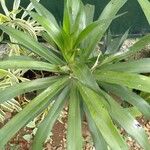
Dracaena angustifolia
Don kayu sugih · Fortune plant · Song of India
Description
Source: leafsnapDracaena angustifolia is a species of Asian tropical forest under-storey plants in the family Asparagaceae; no subspecies are listed in the Catalogue of Life.
🌳 Although it is not widely acknowledged for commercial applications, the rainbow tree provides a distinctive and adaptable color for natural dyes in textiles and artisan crafts. Its capacity to blend easily into eco-friendly artistic practices enables artists to investigate a range of tones rarely encountered in nature, with the potential to transform how natural dyes are viewed and used in sustainable fashion industries.
Care Guide
💧 Water Every week
The rainbow tree flourishes in environments with high humidity and consistent moisture. It is best to water it weekly and mist it regularly if kept indoors. Although the tree can tolerate periods of drought, it does best with a steady supply of moisture. During the growing season, you may need to increase the amount of water it receives, as the tree experiences active growth and higher transpiration rates.
How should I water my Rainbow tree in the best way?
To keep your plant's leaves hydrated without making them too soggy, misting can be helpful. Ensure there is proper drainage to prevent root rot. This plant is sensitive to fluoride, commonly found in public water supplies, and cannot tolerate hard water, especially during its growth stages. Use purified or distilled water with a watering can or sprinkler. Water the entire soil surface evenly to prevent stem rot. Occasionally use distilled water instead of tap water to avoid plant death, leaf burn, or stunted growth. Rainwater is also a good option when available. If planting the Rainbow tree in a pot, keep the soil moist but avoid excessive waterlogging. In the garden, ensure proper drainage and allow the soil to dry before using a sprinkler or garden hose to avoid root rot and yellowing leaves. Some people use hydrogen peroxide for occasional water treatments, but it's not recommended for regular use. A filtration system can help remove nitrates, salt, and lead from water if present.
What should I do if I give the Rainbow tree too much or too little water?
If you see brown tips on the plant, it might be a sign that the plants are not getting enough water. These species are sensitive to boron and fluoride, which are often found in tap water. If they have too much of these minerals, you may notice drooping leaves. When the Rainbow tree is underwatered, the stems show wrinkles and the leaves can become brown, crispy, and start to dry out. In this case, water the plant as soon as possible. Overwatering can lead to root rot, so it's important to remove any damaged roots from the soil. If the leaves look brown and ready to fall off due to overwatering, drain the excess water and wait for the soil to dry before watering again. If there are signs of root rot, replace the soil and ensure proper drainage using pebbles. Lastly, if you notice tan rings or reddish-brown spots on the leaves, discard any excess water at the base of the pot.
How many times should I give water to my Rainbow tree?
The Rainbow tree is a robust species that can withstand drought quite well. To keep it healthy, water it every 1-2 weeks when the soil is completely dry, especially if it's in a pot. Water it generously and ensure the excess water drains out of the pot. Remember to remove any water from the saucer after an hour to prevent waterlogging. When planting the Rainbow tree in your garden, it's important to consider the amount of rainfall it receives. The roots don't like to be constantly soaked, so proper irrigation is necessary for the landscape. In areas with frequent rain or monsoon seasons, water the tree once every 2 weeks.
How much water does my Rainbow tree require?
To properly water a Rainbow tree, there are a few guidelines to follow. When growing the tree outdoors, check the top layer of soil and water when it is about 2 inches dry. This is typically every two weeks, taking into account rainwater, seasonal changes, and moisture in the environment. Avoid overwatering. If the Rainbow tree is potted indoors, check the soil and water when it is approximately 2 inches dry. Since indoor plants may not have access to rainwater or extra moisture, it is recommended to water them at least once a week. If you notice the leaves sagging, give them a drink. Keep the roots moist but not soggy. Watering by soaking the pot and allowing drainage is best. Avoid sticking to a specific watering schedule, as Rainbow trees do not require frequent watering. Wait a couple of days before watering again. Using well-draining soils can assist growth and placing the tree in a location with high humidity is beneficial. During hot summer months and the growing season, water the tree every 1 to 2 weeks. Give them a regular drink as they require more water when growing. In winter or fall, water only every 2 to 4 weeks when the soil is completely dried out.
How can I make sure I'm watering my Rainbow tree enough?
For the Rainbow tree, it is recommended to water bi-weekly or weekly. Wait until the soil is 2 to 4 inches dry before watering, especially for adult plants, to avoid overwatering. When watering, pour generously until water drains out of the drainage holes. Do not let water collect in the saucers and remove any excess. To prevent root rot, it is better to give too little water than too much. The soak and dry method works well for both indoor and outdoor plants. Completely soak the soil around the plant and keep track of watering in an app or calendar. Allow the soil to dry between waterings to promote a healthy root system. Water deeply enough to reach the roots and prevent wilting.
☀️ Light Partial sun
Rainbow tree grows best with moderately filtered sunlight, similar to its original growing environment. It can tolerate comparable light levels, but too much exposure can cause leaf burn, while too little light can hinder healthy growth. The plant’s sunlight requirements remain the same throughout all stages of growth.
What are the sunlight requirements for a Rainbow Tree?
The Rainbow Tree, or Dracaena angustifolia, thrives in conditions where it receives partial sun, approximately 3-6 hours of sunlight daily. It's essential to monitor the movement of sunlight through your garden to find the ideal spot that offers a balance of light and shade, ensuring the plant's wellbeing. Excessive exposure to sunlight can cause leaf burn, whereas insufficient light may hinder its growth. The plant’s need for sunlight remains consistent across all stages of growth.
Can I use artificial lighting for my Rainbow Tree?
Yes, artificial lighting is beneficial for Rainbow Trees, especially when natural sunlight is insufficient, such as in winter or less sunny areas. Artificial lights, like LEDs which can emulate specific wavelengths of light required by plants, are advisable. For optimal growth, full sun plants need 30-50W/sq ft, partial sun plants 20-30W/sq ft, and full shade plants 10-20W/sq ft of artificial light. The light source should be placed 12-36 inches above the plant, with 8-12 hours of light per day to mimic natural daylight.
What are some symptoms of incorrect lighting for a Rainbow Tree?
Incorrect lighting can prompt several symptoms in Rainbow Trees. Symptoms of insufficient light include smaller new leaves, leggy or sparse growth, premature leaf drop, slowed or halted growth, pale new leaves, and chlorosis. Overexposure to sunlight can lead to sunscald, leaf curling, wilting, leaf scorching, and a decline in overall plant health. These symptoms indicate that the plant needs a better balance of sunlight.
How can I address lighting issues for a Rainbow Tree?
To address lighting issues for a Rainbow Tree, gradually adapt the plant to its ideal light conditions by moving it to sunnier spots weekly until it receives 3-6 hours of direct sunlight daily. If the plant is large or not easily movable, supplement with artificial light, keeping a lamp on for at least 8 hours a day or using professional grow lights. Outdoors, make similar gradual adjustments to prevent sunburn. If sunlight is blocked, prune obstructions or consider transplanting smaller plants to sunnier locations during their dormant period for better growth.
🌡️ Temperature 20–37.8°C
Originally from warm regions, the rainbow tree grows best at temperatures of 68 to 100 ℉ (20 to 38 ℃). In cooler seasons, make sure the room temperature does not fall below 68 ℉ (20 ℃). Additional insulation or housing it indoors may be necessary to maintain optimal temperature.
What is the ideal temperature range for a Rainbow tree?
The Rainbow tree, botanically known as Dracaena angustifolia, thrives best in warm climates, with an ideal temperature range between 68 to 100°F (20 to 38°C). To ensure the health of the tree during cooler seasons, it's important to maintain room temperature above 68°F (20°C), providing extra insulation or moving the plant indoors if necessary. This heat-loving plant can suffer in cold temperatures, so during autumn and winter, keeping it indoors near a bright window while avoiding proximity to heaters helps maintain an optimal growing environment.
How does low temperature affect the Rainbow tree, and what are the solutions?
Low temperatures are detrimental to the Rainbow tree, which prefers warmth and struggles to thrive in conditions below 20°C. When exposed to temperatures below 1°C, the tree's leaves may lighten in color, and following frost damage, they can turn brown or black, exhibiting symptoms like wilting and drooping. To protect the tree from cold damage, trim off the frost-damaged parts and relocate it to a warm spot indoors, preferably near a south-facing window to ensure it gets enough sunlight. It's also advisable to avoid placing the plant near heaters or air conditioning vents to prevent the air from becoming excessively dry.
What should be done if a Rainbow tree is exposed to high temperatures?
The Rainbow tree should ideally be kept in temperatures below 100\u00b0F (38\u00b0C) during the summer. Exposure to temperatures above 109\u00b0F (43\u00b0C) can cause the leaves' color to lighten and increase the risk of sunburn. To mitigate damage from high temperatures, trim away the sunburned and dried-up parts of the plant. Then, move the tree to a location that provides shade during the midday and afternoon sun. Watering the tree in the morning and evening can also help keep the soil moist, which is beneficial for the plant's health in hot conditions.
💨 Humidity
🪴 Soil 6-7
🌱 Fertilizer
The best time to fertilize a Rainbow tree is in early spring as it comes out of dormancy. This supports overall growth and flower development. Fertilizing improves the foliage, stems, and branches, and encourages flowers that are larger, more vibrant, and longer-lasting. It also helps transport nutrients from the roots to the flowers and enhances the plant's health and resistance to disease.
Why do I have to use fertilizer on my Rainbow tree?
Rainbow trees require regular fertilization primarily because their showy leaves demand a significant amount of energy for production and maintenance. The challenge lies in not only allocating sufficient energy to maintain leaf quality but also promoting growth in other essential structures like stems, branches, and roots. Neglecting fertilization can result in two probable outcomes. Firstly, the Rainbow tree's leaves may lose their natural color, texture, and overall health, significantly diminishing its ornamental appeal. Secondly, overall growth may slow down, and the tree might produce weak growth prone to breakage.
When should I fertilize my Rainbow tree?
To ensure the well-being of your Rainbow tree, occasional feedings are recommended rather than a fixed schedule upon planting. A simple way to fertilize your tree is to apply the fertilizer when you water it from time to time. Additionally, during the growth season, adequate watering is essential. A feeding cycle of once every two to three weeks should be maintained while the tree is producing new growth.
When is the best time to not add fertilizer to my Rainbow tree?
For most of the year, it's okay to fertilize your Rainbow tree regularly. This includes the active growing season of spring, summer, and early fall. However, during winter, you should avoid giving the plant any fertilizer. This is because the Rainbow tree enters a dormant growth phase during the winter, where it either doesn't grow at all or grows very little. Since there is minimal growth during this time, the tree uses less energy, which is why fertilization is not necessary.
What kind of fertilizer does my Rainbow tree require?
The fertilizer for a Rainbow tree has a specific blend of nutrients, each in relatively low amounts. The ideal fertilizer should have an N-P-K ratio of 3-1-2, but a general-purpose fertilizer with an even blend can also work. However, even with a balanced fertilizer, the ratio of each nutrient volume should be 3 or lower. You can choose between granular or liquid-based fertilizer. If you go with liquid-based fertilizer, it's best to dilute it by half. Granular fertilizer has few downsides, but using liquid fertilizer is usually more practical, especially when you water your Rainbow tree.
How can I make my Rainbow tree healthier by adding fertilizer?
One of the easiest ways to fertilize a Rainbow tree is by feeding it every time you water it. To do this, get your fertilizer and a water container, such as a watering can. Mix the fertilizer with water to weaken its strength and pour the water with the fertilizer onto the soil, allowing it to reach the roots. Another option is to use a granular fertilizer. Simply sprinkle some of it on the soil where your Rainbow tree is planted. Granular fertilizers are usually slow-release, so you won't need to fertilize as often as with liquid fertilizers. It's helpful to water your Rainbow tree while feeding it, regardless of the method you choose.
🪴 Pot & Repot 2-3 years
Repot your rainbow tree every 2 to 3 years in the spring, using a pot that is 2 to 3 inches larger to allow for root expansion. After repotting, place the tree in bright, indirect light and be careful not to overwater it, as this can lead to root rot. Regular repotting helps ensure that your rainbow tree's foliage stays vibrant and lush.
✂️ Pruning
The rainbow tree features long, narrow leaves, which are appreciated for their decorative appeal. To maintain its shape and promote growth, it's best to prune the tree from early to late winter. Remove any dead leaves and trim back long, sparse stems to encourage fullness. Make sure to use clean, sharp tools when cutting above leaf nodes to improve both the tree's appearance and air circulation.
🌿 Propagating
🐛 Diseases & pets
☠️ Toxicity
Characteristics
- Plant Type
- Shrub
- Life Cycle
- Perennial
- Genus
- Dracaena
- Family
- Asparagaceae
- Hardiness Zone
- 10-11
- Mature Height
- 3.05 m
- Mature Spread
- 1.52 m
- Leaf Color
- Dark Green, Forest Green
- Leaf Type
- Evergreen
- Flower Color
- White
- Flower Size
- 2.03 cm
- Bloom Time
- Summer, Early fall
- Planting Time
- Spring, Autumn
- Harvest Time
- Late summer, Fall
- Native Area
- India, Malaysia, Indonesia, Cambodia, Vietnam, Myanmar, Philippines, Bhutan, Bangladesh, Laos, Thailand, China