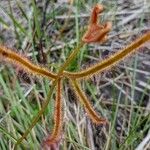
Drosera binata
Forked Sundew · Sundew · Fork-leaved sundew
Description
Source: leafsnapDrosera binata, commonly known as the forked sundew or fork-leaved sundew, is a large, perennial sundew native to Australia and New Zealand. The specific epithet is Latin for "having pairs" - a reference to the leaves, which are dichotomously divided or forked.Like all sundews, it is a Carnivorous plant. It is unique among sundews in having narrow, branching leaves. It is the only species in the Drosera subgenus Phycopsis. D. binata occurs naturally in Australia, primarily in coastal areas from Fraser Island in Queensland, southwards down through New South Wales and Victoria to Tasmania and the south-east corner of South Australia. The range of this species extends to New Zealand where it is common below an elevation of 1000 metres, being found in both the North and South Islands, Stewart Island/Rakiura and farther afield on the Chathams. Some populations go dormant in the winter, while others are truly tropical.
Care Guide
💧 Water
The forked sundew, native to the moist environments of Australia and New Zealand, thrives in consistently damp conditions. To prevent drought stress, it should be watered twice a week. As an insectivorous plant, it benefits from being kept in terrariums that replicate its humid natural habitat. This setup helps with water retention and enhances its ability to capture prey.
How should you water your Forked sundew plant?
To keep your Forked sundew adequately moist, here are some tips: 1. Use a pot with good drainage holes and place it in a plastic dish or tray. Fill the dish with about a third to half an inch of water. This allows the water to naturally reach the plant's roots as the soil dries. Make sure the dish doesn't dry out completely and adjust the amount of water based on how quickly the plant absorbs it. 2. Avoid using terra cotta pots for growing Forked sundews, unless you put the pot inside a larger one. Terra cotta pots allow water to seep through and remove dissolved solids. However, only put water in the larger, outer pot. 3. The mineral content of water is crucial for watering your Forked sundew properly. If possible, collect rainwater as it is the safest option. Alternatively, you can use distilled water or water from a reverse osmosis system. Purified water is also suitable, although it may contain some minerals that the sundew can tolerate. 4. Tap water with less than 50 parts per million of total dissolved solids is safe. You can purchase a meter to measure this easily and inexpensively. Before using the water, fill your watering device 24 hours in advance to allow the chlorine to dissipate from the water.
What should I do if I give too much or too little water to my Forked sundew?
The Forked sundew exhibits several symptoms when overwatered, including brown spots on the undersides of leaves, the development of white mold in the soil, and a general wilted appearance. The wilting occurs because the plant is unable to draw water into the stem properly. Overwatering can lead to root rot, which can be identified by the presence of a bad smell. To address this issue, it is recommended to remove the plant from the soil, rinse it with distilled water, trim away the rotted roots and affected leaves, rinse it again with distilled water, and then replant it in fresh soil. On the other hand, an underwatered Forked sundew will have brittle leaves. In such cases, it is advised to remove the affected leaves, ensure that the soil is damp, and mist the leaves. Though the plant will gradually recover by resuming watering as soon as possible, it's worth noting that yellow leaves may dry out in the short term due to root damage.
How often do I need to water my Forked sundew?
The tray method is the most common way to water insectivorous plants. To use this method for potting Forked sundews, place the plant in a container with multiple drainage holes, then place the container in a tray filled with water that covers about one-third of the tray’s depth. This allows the plant to draw water naturally as the soil dries. Keep an eye on the water level and add water promptly when it drops. Avoid letting the tray dry out completely as this will help you determine how often the plants should be watered. Forked sundews are native to humid environments, so it’s important to find the right balance between watering enough to prevent root rot and allowing the soil to dry out. During the active seasons (spring to autumn), avoid letting the soil dry out completely. In spring and fall, water your Forked sundew 2-3 times per week, and increase the frequency during summer to maintain moist soil. However, during the winter and early spring when the plant goes dormant, you should adjust the amount of water you provide. Allow some of the soil and water in the tray to dry out for a few days before adding more water. This will prevent overwatering and potential harm to the plant. If you live in a naturally dry environment, misting the plant in addition to regular watering may be necessary to replicate its preferred humid conditions. It’s best to mist the plant in the morning to ensure proper water coverage. This is particularly important for areas with low humidity.
How much water does my Forked sundew plant need?
Forked sundew is a carnivorous plant that thrives in a humid environment. It is often kept as a houseplant because of its unique characteristics. To successfully care for a Forked sundew, you will need to recreate its native growing conditions, specifically by maintaining high humidity levels. If you live in a place with naturally high humidity, you can grow Forked sundew plants outdoors in a bog garden, which is a great way to provide the required humidity. However, most people prefer to keep them as houseplants. When choosing a pot for your Forked sundew, opt for one that can retain moisture, such as a plastic pot instead of terra cotta. A self-watering pot works even better. To ensure proper water replenishment, use the tray method. Make sure the water level in the tray pot spreads over the small hole at the bottom. It is important to add water in a timely manner to prevent the trays from drying out. The amount of water added should be enough to keep the pots from drying out, ensuring that your Forked sundew continues to thrive.
Do I need to water my Forked sundew differently if I am planting it inside instead of outside?
Indoor growth of forked sundew plants requires less water because they receive less sunlight. The amount of water needed increases as they receive more light. To keep them healthy, it is important to provide adequate light and water. Additionally, it is beneficial to maintain a humid environment for these indoor plants. One way to achieve this is by growing them in a terrarium or as part of a plant display in an aquarium. The enclosed sides of these containers help to retain the necessary humid air, but it is still important to ensure proper circulation.
☀️ Light Full sun
The forked sundew needs a lot of sunlight but can cope with fewer hours of sun. Plenty of sun increases its photosynthetic effectiveness. Excessive sun may cause the leaves to turn red, while insufficient sun can hinder growth. It originates from open, sunlit habitats that support extensive photosynthetic activity.
What are the sun requirements for Forked Sundew (Drosera binata)?
The Forked Sundew requires full sun, which means it needs above 6 hours of sunlight daily, or it can also thrive in partial sun, with about 3-6 hours of sunlight. It's important to observe the way sunlight moves through your garden to find spots that offer a good balance of light and shade, ensuring your plants grow happily.
What essentials should be considered for the growth of Forked Sundew?
Forked Sundew craves significant sunlight exposure but can also tolerate reduced sun hours, with its photosynthesis process being more effective under ample sunlight. However, too much sun can cause the leaves to turn red, while not enough sun may inhibit growth. Originating from open, sunny habitats allows it to engage in extensive photosynthetic activity. In cases where natural sunlight is insufficient, especially during winter or in darker spaces, artificial lighting can be a viable solution to ensure optimal growth, with LED lights recommended due to their ability to provide specific wavelengths necessary for plant health.
What symptoms indicate insufficient light for Forked Sundew, and how can this be addressed?
Symptoms of insufficient light in Forked Sundew include smaller new leaves, leggy or sparse growth, faster leaf drop, halted or no new growth, paler new leaves, chlorosis, sunscald, leaf curling, wilting, and leaf scorching. To combat insufficient light, gradually move the plant to a sunnier spot or use artificial light for at least 8 hours daily. Outdoor plants should be moved gradually to avoid sunburn. Reducing obstructions or transplanting to a sunny location can help ground-planted sundews. Remember, parts of the plant damaged by light deficiency may not recover, but new growth will be healthier post-adjustment.
🌡️ Temperature 20–35°C
Forked sundew is native to regions where temperatures fall between 68 and 95 °F (20 to 35 ℃). It prefers a temperate climate and benefits from that temperature range for growth. Slightly lowering the temperature in winter supports a healthier growth phase.
What temperature is best for Forked sundew?
Forked sundew thrives within a specific temperature range. Within this range, cold or hot damage to the foliage is unlikely, but changes in leaf colors can indicate the plant's dissatisfaction. To keep your Forked sundew content, aim to maintain a temperature between 70-85℉(21-30℃). However, it is not a cause for concern if the temperature sometimes exceeds 85℉(30℃) during the day or drops to 70℉(21℃) at night.
How can I keep Forked sundew safe from very hot or very cold temperatures outside?
If you have a Forked sundew planted outside, it is difficult to move it indoors. However, you can help it survive unexpected extreme temperatures by providing cover. For example, you can create a shade tent using stakes and cloth to protect it from intense sunlight. Similarly, you can shield it from cold and windy conditions by building a small greenhouse with garden stakes and clear plastic. If you have greenhouse plastic like polycarbonate, that is ideal. Remember to remove the greenhouse once nighttime temperatures reach 40℉ (10℃).
Does the Forked sundew require varying temperatures during different seasons?
Forked sundew has specific temperature preferences throughout the year, but its care requirements can vary. In the hottest months, it benefits from additional shade and airflow. Conversely, during colder months with temperatures below 40℉(10℃), it should be kept away from cold windows and doors.
How can I keep my Forked sundew at the right temperature?
Keeping your Forked sundew at the right temperature can be fairly simple, whether you grow it indoors or outdoors. For indoor growing, you can easily move the plant to different locations within your indoor space that best meet its temperature requirements. However, make sure to avoid placing it near air conditioning vents, heaters, doors that open frequently, or drafty windows. If you grow your Forked sundew outdoors, controlling the temperature becomes a little more challenging. If it's planted in a pot, you can bring it indoors when the temperatures outside become too hot or cold. However, if it remains outside, you'll need to take additional measures to protect it from extreme heat or cold that may cause irreversible damage. A good practice is to place your Forked sundew under cover, shielding it from the scorching sun that can overheat it and protecting it from cold winds that could potentially be fatal to the plant.
💨 Humidity high (>60%)
This plant needs special care because it loves high humidity levels of 60-80% or more. The best way to achieve this is by placing a humidifier near the plant. Daily misting is also essential! Make sure the room has good ventilation.
🪴 Soil 5-6
🌱 Fertilizer
🪴 Pot & Repot 2-3 years
When repotting Forked sundew, select a pot 1–2 inches (2.5–5.1 cm) larger that provides ample drainage. Use a well-draining potting mix. Repot in spring or fall, making sure the root ball sits slightly lower than the rim of the flower pot. Water thoroughly after repotting and place it in a warm spot with indirect sunlight.
✂️ Pruning
In early to late spring, prune forked sundew plants by removing dead leaves and spent flower stalks. This promotes new growth and improves air circulation. Regular monitoring and careful trimming help maintain the plant's health, appearance, and trapping efficiency throughout the year.
🌿 Propagating
🐛 Diseases & pets
☠️ Toxicity
Characteristics
- Plant Type
- Herb
- Life Cycle
- Perennial
- Genus
- Drosera
- Family
- Droseraceae
- Hardiness Zone
- 9
- Mature Height
- 15 cm to 30 cm
- Mature Spread
- 5 cm
- Leaf Color
- Green, White, Red
- Leaf Type
- Evergreen, Deciduous
- Flower Color
- White
- Flower Size
- 1.52 cm
- Bloom Time
- Summer
- Planting Time
- Spring, Summer, Autumn
- Harvest Time
- Late summer, Early fall, Mid fall
- Native Area
- New Zealand