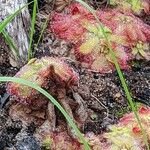
Drosera cuneifolia
Description
Source: leafsnapDrosera cuneifolia is a small rosette-forming species of perennial sundew native to the Cape in South Africa. It was first described in 1781. Drosera cuneifolia produces green somewhat broad carnivorous leaves, up to 7 cm (2.8 in) long. D. cuneifolia can become up to 3 cm (1.2 in) in height without the inflorescence and 15 cm (5.9 in) wide. In early winter, D. cuneifolia produces multiple (up to 20), small, pink to reddish-purple flowers at the end of scapes which can be up to 15 cm (5.9 in) tall. Flowers individually open in the morning and close by mid afternoon, lasting just one day. The flowers can self-pollinate upon closing. The seeds are very small, black, spindle-shaped, and are released from the capsules that form when the flower has died. During summer in South Africa, D. cuneifolia oversummers. It is found only near the Table mountain complex in South Africa.
Care Guide
💧 Water
☀️ Light Full sun
Peninsula sundew is native to habitats that get lots of sunlight, such as open bogs and sunlit wetlands. It favors full sun but can also tolerate partial sun.
What are the sunlight requirements for Peninsula Sundew (Drosera cuneifolia)?
Peninsula Sundew (Drosera cuneifolia) thrives in conditions of full shade, receiving less than 3 hours of sunlight daily. It's essential to observe the movement of sunlight through your garden carefully, to identify spots that offer a perfect balance of light and shade. This careful placement ensures the well-being and happiness of your plants.
🌡️ Temperature 20–37.8°C
Peninsula sundew prefers moderate temperatures, about the same range most people find comfortable. It does best in conditions that are neither very hot nor very cold. The main concern with high temperatures is the risk of sunburn, so providing some shade in summer is advisable to prevent excessive heat. When temperatures fall, the Peninsula sundew becomes dormant. If you want it to keep growing without interruption, you need to maintain warmer temperatures during winter. Frost can harm the plant and should be avoided.
💨 Humidity
🪴 Soil 5-6
🌱 Fertilizer
🪴 Pot & Repot 2-3 years
When repotting a Peninsula sundew, select a pot 1–2 inches (2.5–5.1 cm) larger that offers good drainage. Use a well-draining potting mix. Repot in spring or fall, making sure the root ball sits slightly below the rim of the flower pot. Water thoroughly after repotting and put the plant in a warm location with indirect sunlight.
✂️ Pruning
🌿 Propagating
🐛 Diseases & pets
☠️ Toxicity
Characteristics
- Plant Type
- Herb
- Life Cycle
- Perennial
- Genus
- Drosera
- Family
- Droseraceae
- Hardiness Zone
- 9-11
- Mature Height
- 5 cm to 10 cm
- Mature Spread
- 3 cm to 6 cm
- Leaf Color
- Green, Red
- Leaf Type
- Evergreen
- Flower Color
- White
- Flower Size
- 1.02 cm to 2.03 cm
- Bloom Time
- Winter, Early spring
- Planting Time
- Spring, Summer, Autumn
- Harvest Time
- Spring, Early summer
- Native Area
- South Africa