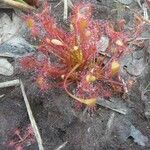
Drosera intermedia
Oblong-leaf sundew · Narrow-leaved Sundew · Oblong-leaved Sundew · Spatulate-leaved Sundew · Spoonleaf Sundew
Description
Source: leafsnapDrosera intermedia, commonly known as the oblong-leaved sundew, spoonleaf sundew, or spatulate leaved sundew, is an insectivorous plant species belonging to the sundew genus. It is a temperate or tropical species native to Europe, southeastern Canada, the eastern half of the United States, Cuba, Hispaniola, and northern South America.
Care Guide
💧 Water Twice per week
The spoonleaf sundew thrives in humid and moist conditions, requiring watering twice a week to maintain its sticky traps. While it is typically grown outdoors, it benefits from morning dew for hydration, which is essential for capturing insects effectively.
What is the best way to water your Spoonleaf sundew?
To keep your Spoonleaf sundew properly watered, follow these steps: 1. Use a pot with good drainage holes and place it in a plastic dish or tray. 2. Fill the dish with about a third to half an inch of water. This will naturally supply water to the roots as the soil dries. 3. Avoid letting the dish completely dry out and adjust the amount of water based on how quickly the plant absorbs it. 4. If using terra cotta pots, place the pot inside a larger pot to prevent water leakage. Only put water in the outer pot. This allows water to seep through and filter out dissolved solids. 5. The mineral content of the water is crucial for watering your Spoonleaf sundew. If possible, collect rainwater as it is the safest for plants. Alternatively, use distilled water or water from a reverse osmosis system. 6. Purified water can also be used, but be aware that it may contain some minerals that the Sundew can tolerate. 7. Tap water with less than 50 parts per million of total dissolved solids is safe. You can buy a meter to measure this for a small cost. 8. It is recommended to fill your watering device 24 hours in advance to allow chlorine to evaporate from the water before using it.
What should I do if I give too much or too little water to the Spoonleaf sundew plant?
Symptoms of an overwatered Spoonleaf sundew include brown spots on the underside of leaves, the development of white mold in the soil, and a general wilted appearance. This wilting occurs because the plant is unable to draw water into its stem, possibly due to overwatering. Root rot can be a consequence of overwatering, and if the roots have rotted and emit a bad smell, it is recommended to remove the plant from its soil and rinse it with distilled water. Cut away the rotted roots and affected leaves, rinse again with distilled water, and replant in fresh soil. On the other hand, if the Spoonleaf sundew is underwatered, its leaves may become brittle. In this case, it is advised to remove the affected leaves, ensure that the soil is slightly damp, and mist the leaves. With proper watering, the plant should gradually recover. However, due to root damage, yellow leaves may dry out in the short term.
How often should I give water to my Spoonleaf sundew?
The Tray method is the most common way to water insectivorous plants. Here's how to do it: First, pot your Spoonleaf sundew in something with several drainage holes and place it in a dish or tray. Fill the tray about one-third with water. This will allow the plant to draw up water as the soil dries. Make sure to add water promptly after the water level drops, and don't let the dish dry out completely. By doing this, you'll get a better idea of how often the plant needs to be watered. Keep in mind that the Spoonleaf sundew is native to a humid environment. To water it properly, you need to find the right balance. In the active seasons (spring to autumn), avoid letting the soil dry out completely. Water your Spoonleaf sundew 2-3 times per week in spring and fall, and more frequently in summer to keep the soil moist. However, during the winter and early spring, the Spoonleaf sundew goes dormant. If you care for it the same way you do during the active season, it will likely die. During this time, reduce the amount of water you give it. Allow some of the soil to dry out and let the water level in the tray dry out for a few days before adding more. If you live in a naturally dry environment, misting the plant above and beyond regular watering may be necessary to replicate its natural humid conditions. It is best to do this in the morning. Remember, proper water spraying is crucial in dry areas.
How much water does my Spoonleaf sundew require?
Spoonleaf sundew is a type of carnivorous plant that thrives in humid environments. Many people choose to keep them as houseplants because they are fascinating and unique. To successfully care for a Spoonleaf sundew, it's important to replicate its native growing conditions, particularly by maintaining high humidity levels. If you live in a place with naturally high humidity, you can grow Spoonleaf sundews outdoors in a bog garden, which is a great way to create a humid environment for these plants. However, most people choose to grow them as houseplants instead. When choosing a pot for your Spoonleaf sundew, opt for one that will retain moisture, such as a plastic pot. Terra cotta pots tend to dry out too quickly. If possible, use a self-watering pot, as this will help ensure that the plant receives a consistent level of moisture. To replenish water for your Spoonleaf sundew, the tray method is the most effective. Make sure that the water level in the tray pots covers the small hole at the bottom. Check the trays regularly and add water as needed to prevent them from drying out. Remember, the amount of water added should be enough to keep the pots moist and prevent them from drying out, thus allowing your Spoonleaf sundew to thrive.
Do I need to water Spoonleaf sundew in a different way when I keep it indoors instead of outdoors?
When growing Spoonleaf sundew indoors, they typically need less water due to limited sunlight. The amount of water required to grow increases with more light. To ensure their health, it is important to provide adequate light and water. Additionally, it is recommended to create a humid environment for indoor plants. One way to achieve this is by growing them in a terrarium or as part of a plant display in an aquarium. This enclosure helps to retain humidity. However, it is important to maintain proper air circulation.
☀️ Light Full sun
The spoonleaf sundew does best with plentiful light. If it does not get enough sunlight, its health and growth may decline, particularly during critical periods like flowering. Native to brightly lit habitats, the spoonleaf sundew is adapted to those conditions. However, too much light can cause leaf burn, while too little can slow or stunt growth.
What are the sunlight requirements for Spoonleaf Sundew and how can you ensure it gets enough light?
Spoonleaf Sundew thrives in conditions where it receives full sun, which means it needs more than 6 hours of sunlight daily. It's crucial to observe the movement of sunlight through your garden to find spots that provide a balanced environment of light and shade, ensuring the plant's well-being. If you're growing it indoors or in areas with insufficient natural light, especially during winter, you can resort to artificial lighting. Indoor plants benefit greatly from LED lights, which can be adjusted to provide the necessary wavelengths of light. For plants requiring full sun, aim for an artificial light output of 30-50W/sq ft, while those in partial sun need 20-30W/sq ft, and full shade plants require 10-20W/sq ft. Place the light source 12-36 inches above the plant and simulate natural daylight hours, usually 8-12 hours of light per day, to promote healthy growth.
What are the indicators of insufficient light for Spoonleaf Sundew and how can they be addressed?
When Spoonleaf Sundew lacks sufficient light, it may display symptoms such as smaller new leaves, leggy or sparse growth, premature leaf drop, stalled or absent new growth, pale or irregularly colored new leaves, and signs of chlorosis or sunscald. Addressing insufficient light involves a gradual adjustment to brighter conditions. Indoors, move plants to a south-facing window or supplement with artificial light, ensuring at least 8 hours of light daily. Outdoors, gently transition plants to areas with more sun exposure over weeks to prevent sunburn. Also, consider reducing obstructions that block sunlight, such as pruning tree branches. For ground-planted species, transplant them during their dormant period to a sunnier location with good drainage. Note that while parts of the plant affected by low light might not recover, new growth should be healthy with improved light conditions.
🌡️ Temperature 5–35°C
The spoonleaf sundew is native to temperate regions and prefers cool to moderate temperatures of 41 to 95 °F (5 to 35 °C). Seasonal adjustments may be necessary to maintain healthy growth, particularly during extreme temperatures.
What is the native environment of Spoonleaf Sundew?
Spoonleaf sundew is native to temperate environments, where it thrives in a cool to moderate temperature range. It prefers temperatures between 41 to 95 °F (5 to 35 °C). To maintain healthy growth, especially during extreme temperatures, seasonal adjustments may be necessary. This includes ensuring the plant is kept above 5°C during winter to avoid freezing damage. When temperatures approach -5°C (25°F) during winter, it's advisable to bring the plant indoors or protect it with a temporary greenhouse or materials like plastic film or fabric.
How does Spoonleaf Sundew respond to low temperatures?
Spoonleaf sundew has a moderate tolerance to low temperatures but thrives best within a temperature range of 5°C to 35°C. During winter, it is essential to keep it above -25°C. Exposure to temperatures below -30°C can lead to the darkening of leaves, wilting, drooping, and in severe cases, leaves may turn brown due to water-soaked necrosis. To mitigate frost damage, the frost-damaged parts should be trimmed away, and the plant should be moved indoors to a warm environment or protected by setting up a makeshift greenhouse. When placed indoors, locating the plant near a south-facing window ensures ample sunlight, or supplemental lighting can be used if natural light is insufficient.
How should Spoonleaf Sundew be cared for during high temperatures?
During the summer, it's important to ensure that the temperature around the Spoonleaf sundew does not exceed 35°C. High temperatures above 38°C can hinder the plant's growth, lighten the color of its leaves, and increase susceptibility to sunburn. To care for the plant under high temperature conditions, sunburned and dried parts should be trimmed away. The plant should also be moved to a shaded location, especially away from the harsh afternoon sun. Additionally, watering in the morning and evening can help keep the soil moist and further protect the plant from heat stress.
💨 Humidity
🪴 Soil 5-6
🌱 Fertilizer
Drosera does not require fertilizer but when it's planted indoors it's good to use the fertilizer in small amounts. Maxsea can be applied once in a month, ¼ of the fertilizer can be mixed with a gallon of water and sprayed on the plants
🪴 Pot & Repot 2-3 years
When repotting Spoonleaf sundew, select a flower pot 1-2 inches (2.5–5.1 cm) larger that has ample drainage. Use a well-draining potting mix. Repot in spring or fall, making sure the root ball sits slightly lower than the rim of the flower pot. Water thoroughly after repotting and place the plant in a warm location with indirect sunlight.
✂️ Pruning
The Spoonleaf Sundew thrives with minimal pruning. To promote healthy growth, simply remove any dead leaves. It's best to prune from early to late spring to encourage strong development and prevent disease. For effective pruning, use clean, sharp scissors, which will improve both the plant's vitality and appearance.
🌿 Propagating
🐛 Diseases & pets
☠️ Toxicity
Drosera is not toxic, and it's considered safe to human and pets, in fact some people use Drosera as homeopathic medicine
Characteristics
- Plant Type
- Herb
- Life Cycle
- Perennial
- Genus
- Drosera
- Family
- Droseraceae
- Hardiness Zone
- 4-9
- Mature Height
- 15 cm to 20 cm
- Mature Spread
- 30 cm to 91 cm
- Leaf Color
- Green, Red
- Leaf Type
- Deciduous
- Flower Color
- White
- Flower Size
- 0.76 cm
- Bloom Time
- Summer, Early fall, Mid fall
- Planting Time
- Spring, Summer
- Harvest Time
- Late summer, Fall, Early winter
- Native Area
- Turkey, Sweden, Austria, Croatia, Slovenia, Belarus, Russia, Germany, Cuba, Venezuela, Estonia, Romania, Latvia, Belgium, Netherlands, Portugal, France, Czech Republic, Poland, Ukraine, Lithuania, Norway, Italy, Spain, Switzerland, Denmark, Finland, Guyana, Ireland, United Kingdom