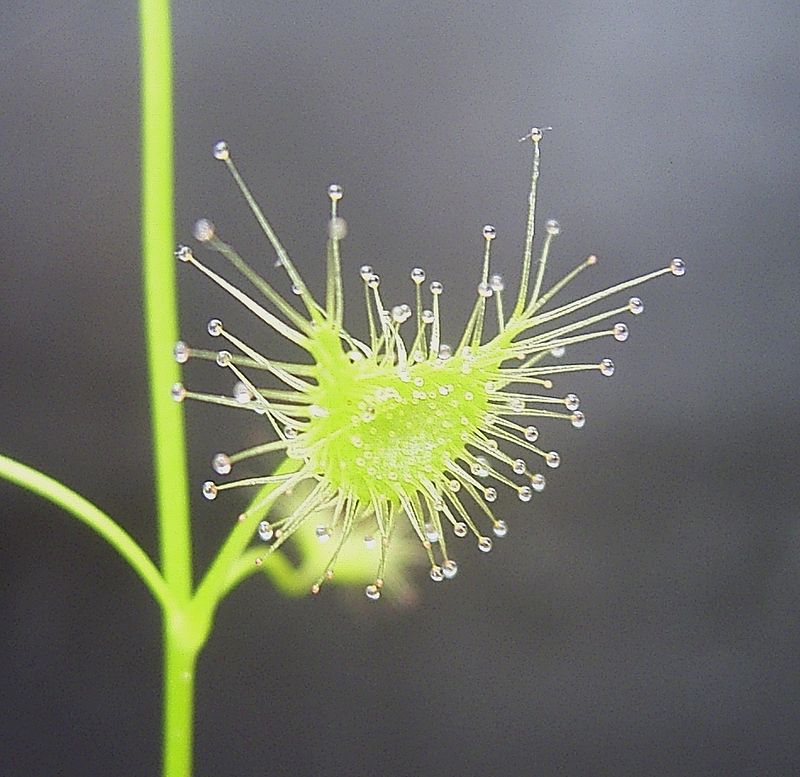
Drosera peltata
Pale sundew · Shield sundew
Description
Source: leafsnapDrosera peltata, commonly called the shield sundew or pale sundew, is a climbing or scrambling perennial tuberous species in the carnivorous plant genus Drosera. Among the tuberous sundews, D. peltata has the largest distribution, which includes eastern and western Australia, New Zealand, India, and most of Southeast Asia including the Philippines. The specific epithet is Latin for "shield shaped", a reference to the shape of the cauline leaves. It is either a single extremely variable species, or a complex of several closely related species of uncertain taxonomic boundaries. In Australia at least four forms have had or still have specific taxonomic recognition: Drosera peltata subsp. peltata (an autonym), D. peltata subsp. auriculata, D. foliosa (also as D. peltata var. foliosa) and D. gracilis (also as D. peltata var. gracilis).Tuberous sundews are species of the genus Drosera that have evolved to live in summer drought conditions and aestivate as a dormant underground tuber. While many tuberous sundews are ground-hugging rosettes, D. peltata is an upright species with a simple or branching inflorescence.
Care Guide
💧 Water
The shield sundew flourishes in damp environments and prefers high humidity. Watering it twice a week helps support its growth. This plant thrives in containers that retain moisture well, making it an excellent choice for indoor gardening.
How should you water your Shield sundew plant?
To adequately moisten your Shield sundew, follow these steps
What should I do if I give too much/not enough water to the Shield sundew?
When a Shield sundew is overwatered, you may notice brown spots on the undersides of leaves, white mold in the soil, and a general wilted appearance. This happens because the plant is not able to absorb water properly, resulting in a wilted look. Overwatering can also lead to root rot. If you discover root rot and a foul smell, it is recommended to remove the plant from its soil, rinse it with distilled water, trim away the affected roots and leaves, rinse again with distilled water, and replant in fresh soil. On the other hand, if a Shield sundew is underwatered, its leaves will become brittle. To address this issue, carefully remove the affected leaves, ensure the soil is slightly damp, and mist the leaves. Although the plant will eventually recover by resuming watering, the yellow leaves will initially dry out due to root damage.
How often do I need to water my Shield sundew?
The tray method is commonly used for watering insectivorous plants, such as the Potting Shield sundew. To use this method, place the plant in a container with several drainage holes, and place the container in a tray or dish filled with about one-third water. As the soil dries, the plant will naturally draw up water. Make sure to add water promptly when the water level drops, and don't let the dish completely dry out. By following this method, you can get a better understanding of how often the plants need to be watered. The Shield sundew is originally found in humid environments, so it's important to find the right balance between watering enough to avoid root rot and allowing the soil to dry out. During the active seasons of spring to autumn, avoid letting the soil dry out completely. In these seasons, water the Shield sundew 2-3 times per week, and increase watering frequency in the summer to maintain moist soil. However, during the winter and early spring when the plant goes dormant, you should decrease the amount of water. Allow some of the soil to dry out and let the water level in the tray dry for a few days before adding more. If you live in a naturally dry environment, additional misting may be necessary to replicate the plant's humid growing conditions. It's best to mist the plant in the morning. Proper water spraying is particularly important in dry areas.
How much water does my Shield sundew plant need?
The Shield sundew is a carnivorous plant that is often kept as a houseplant because it thrives in humid environments. To successfully care for one, you'll need to recreate its natural growing conditions by maintaining high humidity levels. While Shield sundews naturally thrive in high humidity and low nutrient environments, they can also be grown outdoors in a bog garden if you live in a place with naturally high humidity. However, most people prefer to grow them as houseplants. When choosing a pot, opt for one that retains moisture, such as a plastic pot or a self-watering pot. It's important to use the tray method to replenish water, ensuring that the water level in the tray pots covers the small hole at the bottom. Be sure to add water before the trays dry out to keep the pots from drying out as well, as the amount of water added should be sufficient to meet the plant's needs for healthy growth.
Do I need to water Shield sundew differently if I plant it inside instead of outside?
Shield sundew plants grown indoors generally require less water due to receiving less sunlight. Increased light exposure corresponds to an increased need for water to support growth. It is crucial to provide sufficient light and water for these plants to thrive. Additionally, it is important to create a humid environment for indoor plants. One effective method is growing them in a terrarium or incorporating them as part of a plant display in an aquarium. The enclosed sides will help retain the necessary humid air. However, it is essential to ensure proper air circulation.
☀️ Light Full sun
Shield sundew is native to areas that receive plentiful sunlight, such as open bogs and sunny wetlands. It prefers full sun but can also tolerate partial sun.
What are the sunlight requirements for Shield sundew?
Shield sundew thrives best in environments with abundant sunlight, much like its natural habitat in open bogs and sunny wetlands. It prefers full sun, which means it ideally needs above 6 hours of sunlight daily, but it can also tolerate partial sun, receiving about 3-6 hours of sunlight. It's crucial to watch how sunlight interacts with your garden throughout the day to ensure you choose spots that provide an ideal balance for your plants, catering to their need for both light and shade.
Can Shield sundew grow under artificial lighting?
Yes, Shield sundew can grow under artificial lighting, which becomes a vital solution when natural sunlight is insufficient, such as during winter or in less sunny spaces. Indoor plants like Shield sundew require adequate lighting to promote optimal growth. LED lights are recommended for indoor plant lighting due to their customization to provide specific wavelengths needed by plants. For full sun plants, 30-50W/sq ft of artificial light is needed; partial sun plants require 20-30W/sq ft; and full shade plants need 10-20W/sq ft. The light source should be placed 12-36 inches above the plant, mimicking natural sunlight as closely as possible, and most plants need between 8-12 hours of light per day.
What are the symptoms of insufficient light in Shield sundew?
Shield sundew shows several symptoms when it receives insufficient lighting, which can hinder its growth. Symptoms include small or underdeveloped leaves, leggy or sparse growth, faster leaf drop, slower or halted new growth, lighter-colored new leaves indicating a lack of chlorophyll, chlorosis or yellowing of the leaves, sunscald, leaf curling as a defense mechanism against excessive sunlight exposure, wilting from loss of turgor pressure, and leaf scorching due to excessive sunlight. These symptoms indicate the plant's struggle with adapting to its lighting conditions, either due to insufficient or excessive light.
How can you help Shield sundew thrive in less than ideal light conditions?
To support the growth of Shield sundew in less than ideal light conditions, you can gradually move the plant to a location with more sunlight, ensuring it receives at least 6 hours of direct sunlight daily when indoors. Keeping the plant near a south-facing window with open curtains during the day can maximize sunlight exposure. For outdoor plants, gradually transitioning them to sunnier spots while avoiding sudden changes in light intensity is crucial to prevent sunburn. Additionally, if natural light is not sufficient, using artificial lighting, like desk lamps or professional grow lights, for at least 8 hours daily can provide the needed light. Obstructions to sunlight should be minimized by pruning trees or branches that shade the plant too much, and for smaller plants, consider transplanting during the dormant period to a location with better sunlight and drainage.
🌡️ Temperature 15–37.8°C
The shield sundew is a plant suited to conditions between 59 and 100.4 °F (15 to 38 ℃). It naturally does best in temperate climates and prefers that temperature range. Seasonal adjustments may be needed to keep it within this temperature bracket.
What is the optimal temperature range for Shield sundew?
Shield sundew thrives in environments with temperatures ranging from 59 to 100.4 °F (15 to 38 °C), favoring temperate climates. To ensure optimal growth, it is important to maintain this temperature range throughout the year. During winter, temperatures should be kept above 15°C to prevent damage to the plant, ensuring that the minimum temperature does not fall below the freezing point. If temperatures approach -5°C (25°F), it is advisable to move the Shield sundew indoors or protect it with a temporary greenhouse or coverings like plastic film or fabric.
How does Shield sundew react to low temperatures, and what are the solutions?
Shield sundew has moderate tolerance to low temperatures, performing best within 15°C to 38°C. In winter, the temperature should be kept above -5°C to avoid damage. Exposure to temperatures below -10°C can result in the leaves darkening, and severe cold can cause water-soaked necrosis, wilting, and the leaves to gradually turn brown. To combat frost damage, trim the frost-damaged parts of the plant. If cold exposure occurs, move the plant to a warmer indoor setting or create a makeshift greenhouse for protection. For indoor care, positioning the plant near a south-facing window will ensure it receives enough sunlight, and if natural light is insufficient, supplemental lighting can be used.
What should be done if Shield sundew experiences high temperatures?
During summer, it's crucial to keep the Shield sundew's temperature below 38°C. Temperatures above 43°C can slow the plant's growth, leading to lighter leaf colors and increased susceptibility to sunburn. If sunburn or drying occurs, trim away the damaged sections of the plant and relocate it to a cooler spot, ideally where it can be shaded from the harsh afternoon sun. To ensure the soil remains moist and supports the plant's health, water the Shield sundew in the morning and evening.
💨 Humidity
🪴 Soil 4-5
🌱 Fertilizer
🪴 Pot & Repot 2-3 years
When repotting Shield sundew, select a pot 1–2 inches (2.5–5.1 cm) larger with good drainage. Use a well-draining potting mix. Repot in spring or fall, making sure the root ball is slightly lower than the rim of the flower pot. Water thoroughly after repotting and place it in a warm spot with indirect sunlight.
✂️ Pruning
The shield sundew, a carnivorous plant known for its shield-like traps, requires minimal pruning, best done from early to late spring. To promote growth and improve airflow, remove any dead foliage. Proper pruning helps prevent disease and maintains the plant's appearance. Always sterilize your tools to keep the shield sundew healthy.
🌿 Propagating
🐛 Diseases & pets
☠️ Toxicity
Characteristics
- Plant Type
- Herb
- Life Cycle
- Perennial
- Genus
- Drosera
- Family
- Droseraceae
- Hardiness Zone
- 8-11
- Mature Height
- 9 cm to 32 cm
- Mature Spread
- 5 cm to 10 cm
- Leaf Color
- Green, Red
- Leaf Type
- Deciduous
- Flower Color
- White
- Flower Size
- 1.02 cm to 1.52 cm
- Bloom Time
- Late spring, Early summer, Mid summer
- Planting Time
- Spring, Summer, Autumn
- Harvest Time
- Late summer, Early fall, Mid fall
- Native Area
- Nepal, Sri Lanka, India, Malaysia, Philippines, Bangladesh, Laos, China, Indonesia, Cambodia, Vietnam, Myanmar, Japan, Koppen, Bhutan, South Korea, Thailand