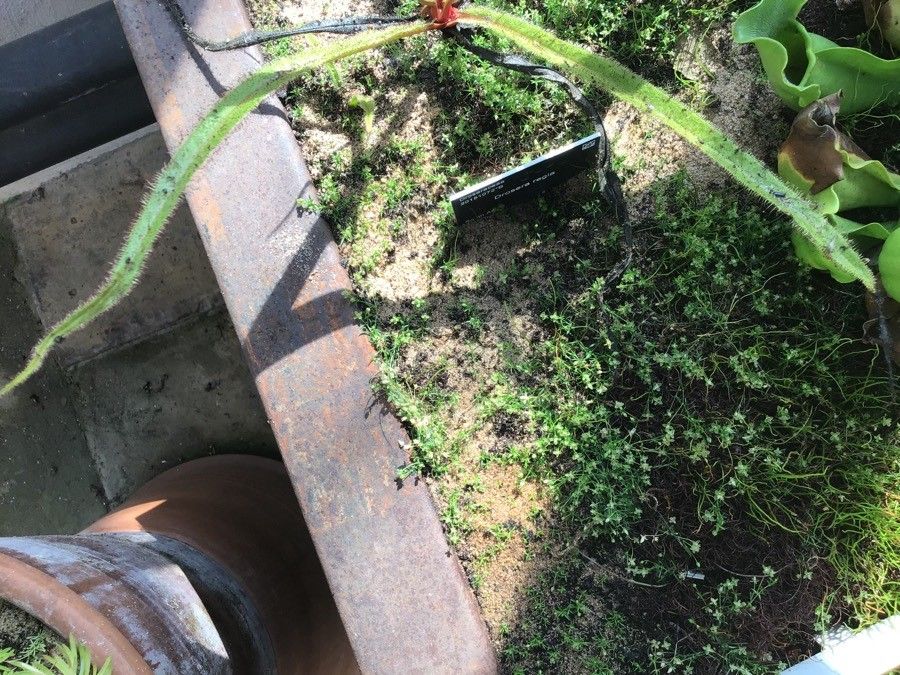
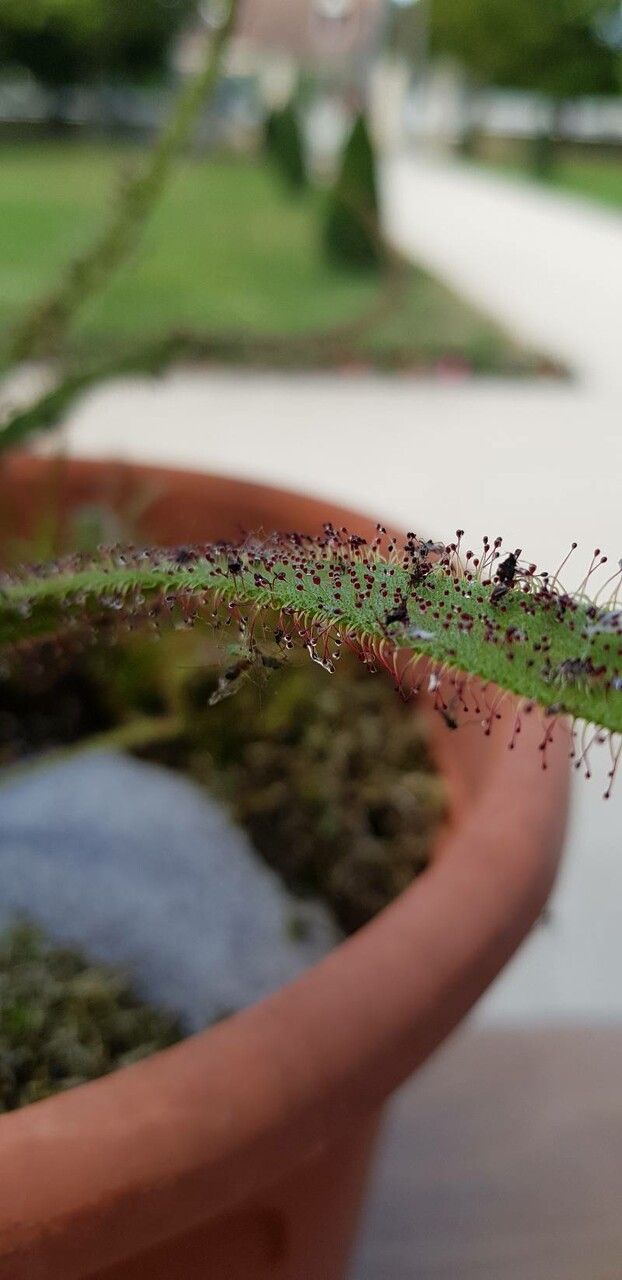
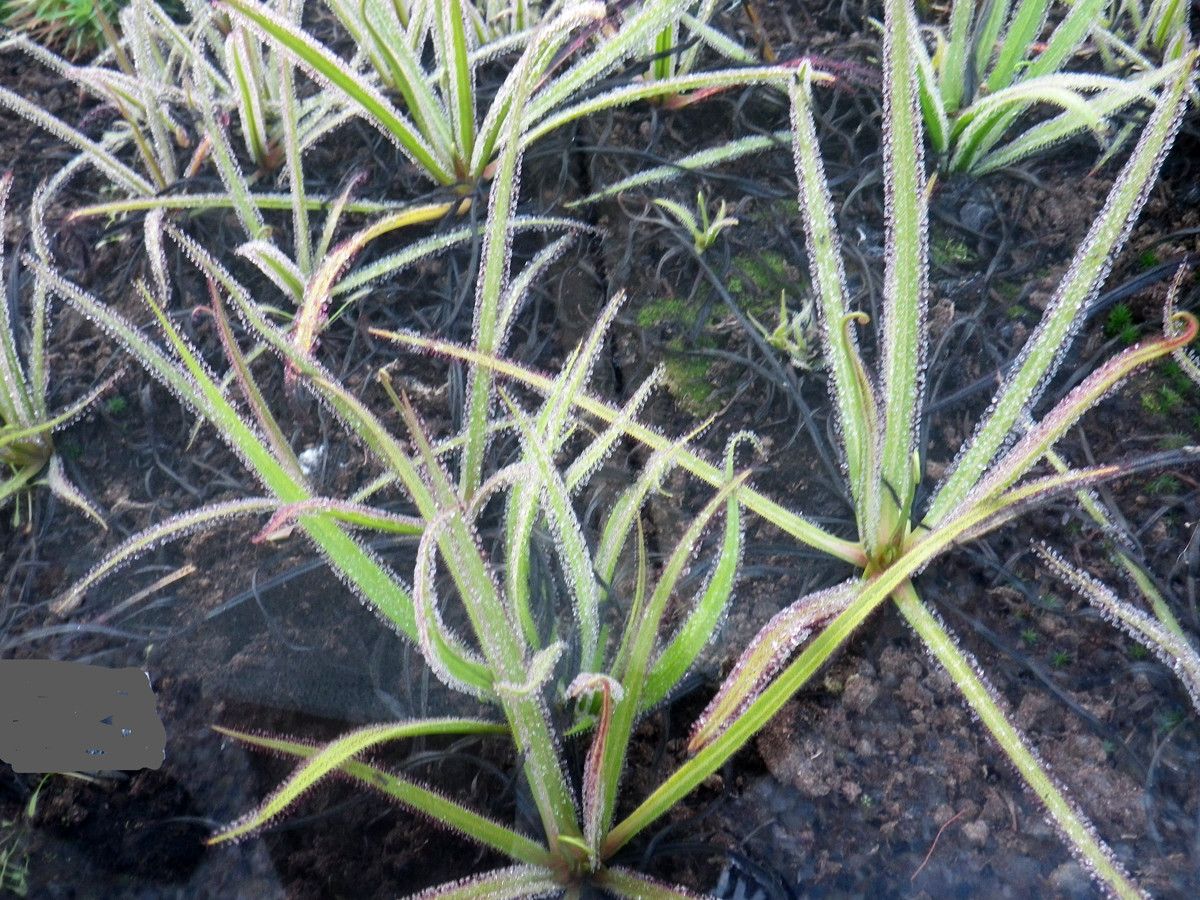
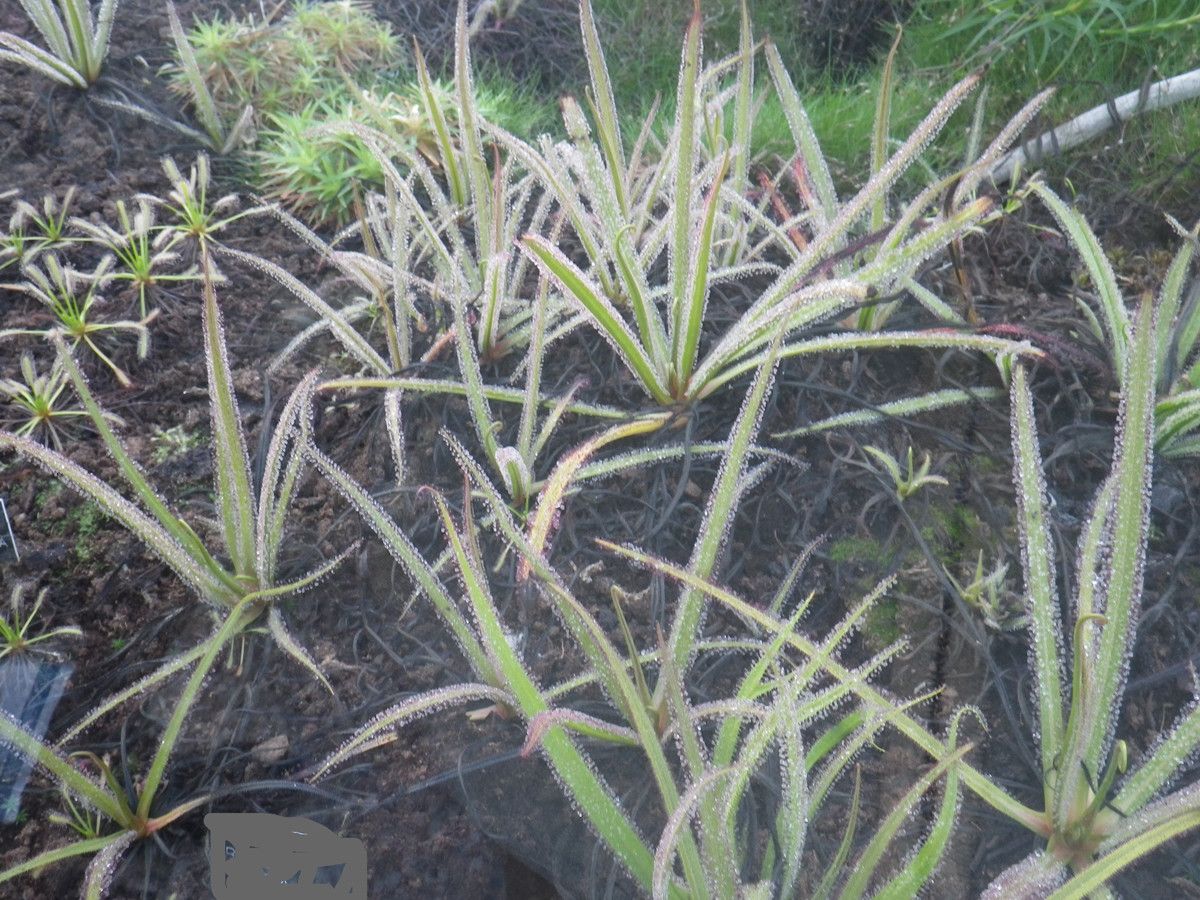
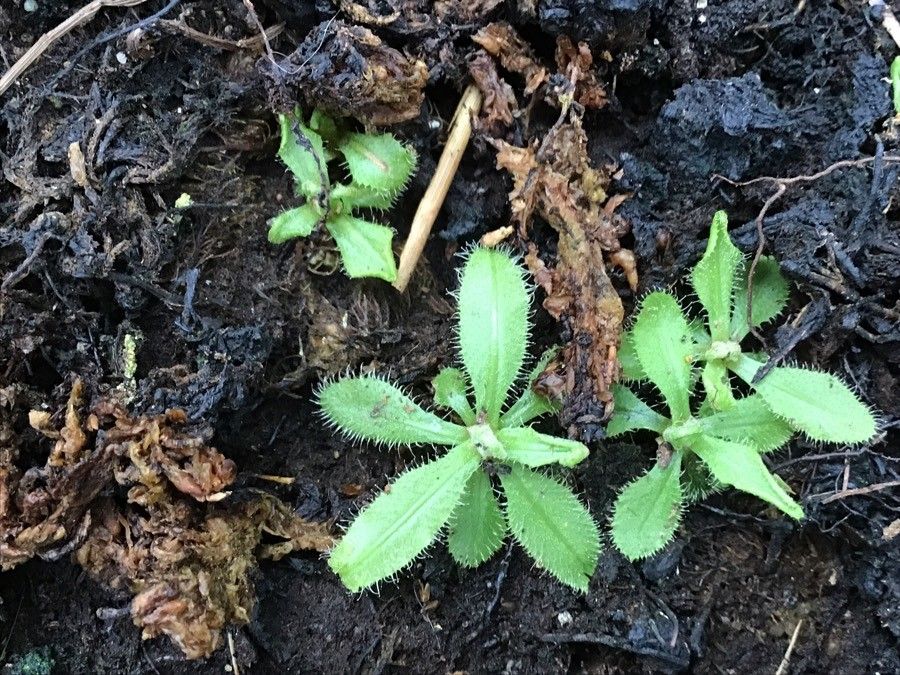
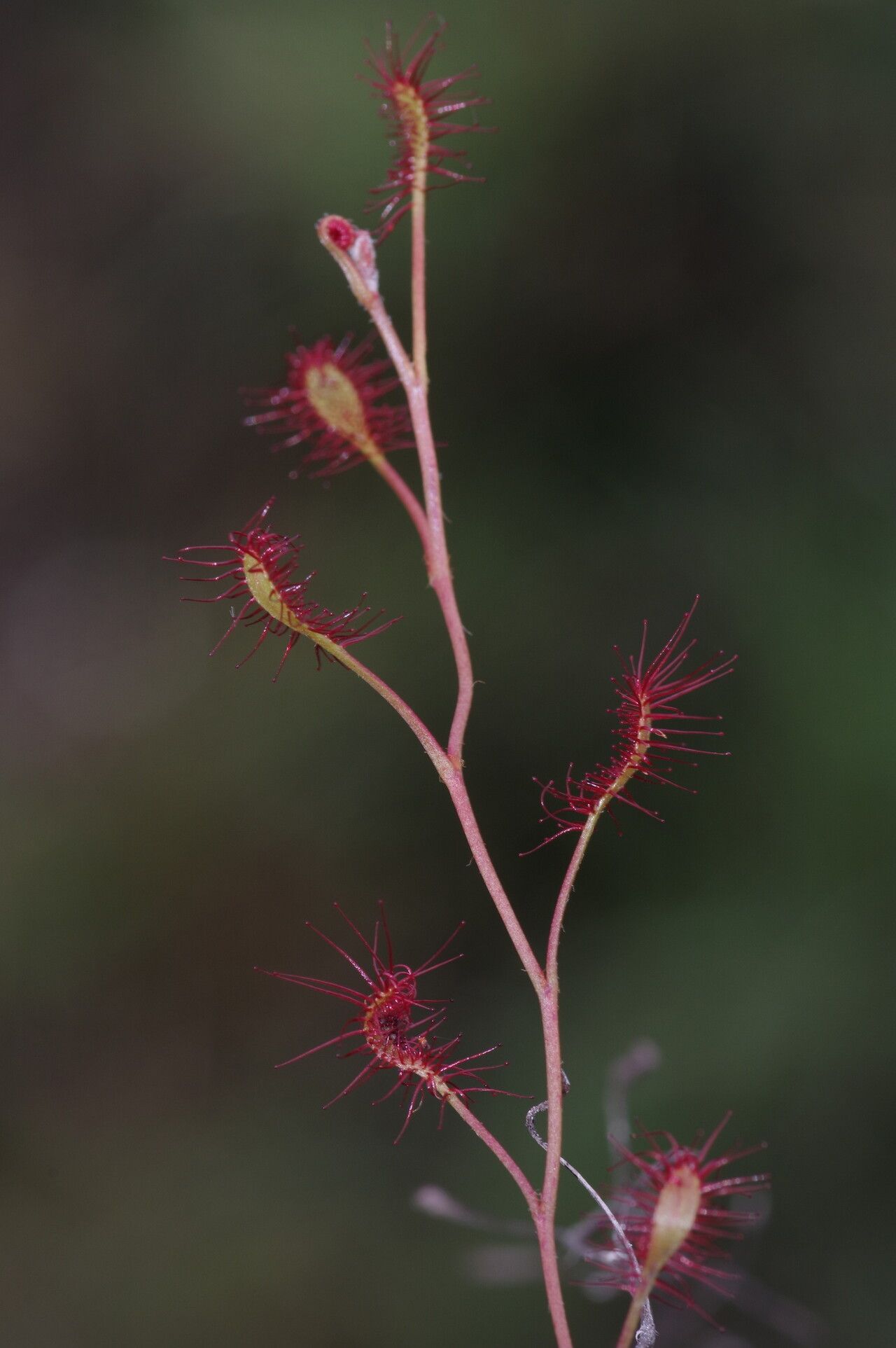
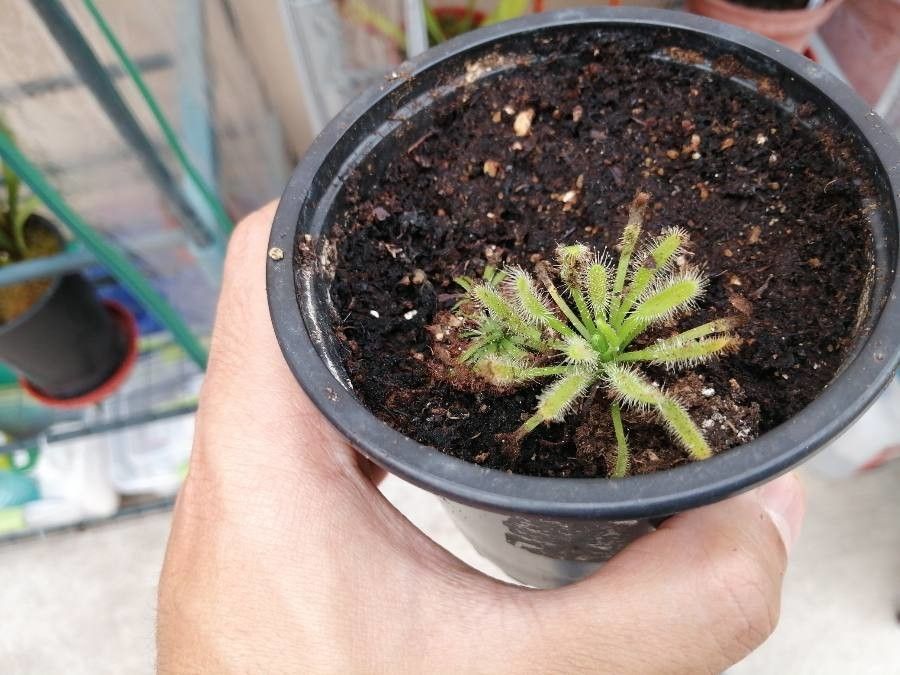
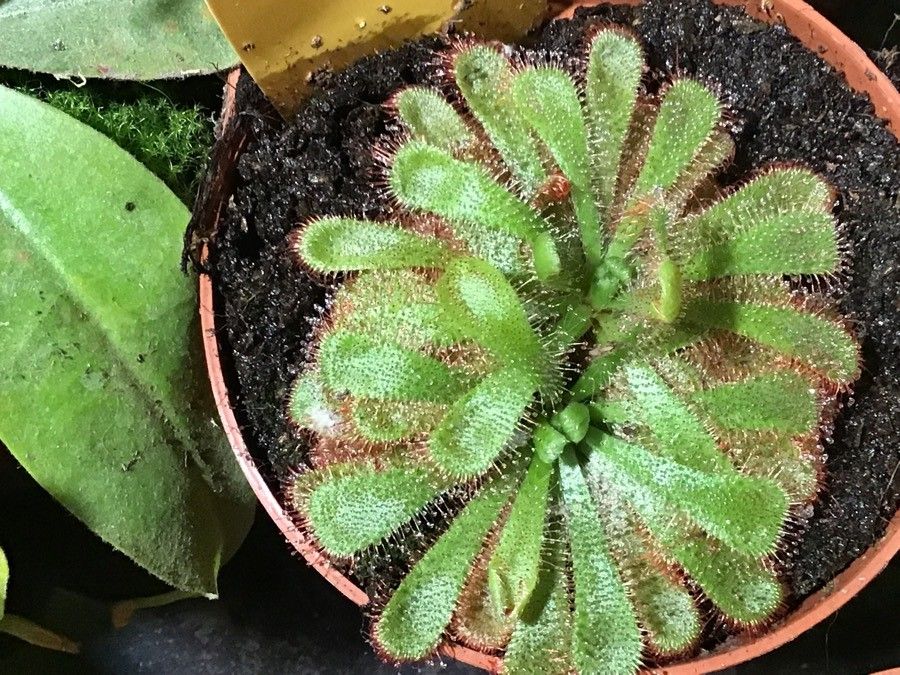
Drosera regia, commonly known as the king sundew, is a carnivorous plant in the sundew genus Drosera that is endemic to a single valley in South Africa. The genus name Drosera comes from the Greek word droseros, meaning "dew-covered". The specific epithet regia is derived from the Latin for "royal", a reference to the "striking appearance" of the species. Individual leaves can reach 70 cm (28 in) in length. It has many unusual relict characteristics not found in most other Drosera species, including woody rhizomes, operculate pollen, and the lack of circinate vernation in scape growth. All of these factors, combined with molecular data from phylogenetic analysis, contribute to the evidence that D. regia possesses some of the most ancient characteristics within the genus. Some of these are shared with the related Venus flytrap (Dionaea muscipula), which suggests a close evolutionary relationship. The tentacle-covered leaves can capture large prey, such as beetles, moths, and butterflies. The tentacles of all Drosera species have special stalked glands on the leaf's upper surface that produce a sticky mucilage. The leaves are considered active flypaper traps that respond to captured prey by bending to surround it. In its native fynbos habitat, the plants compete for space with native marsh grasses and low evergreen shrubs. Of the two known populations of D. regia, the higher altitude site appears to be overgrown and is essentially extirpated. The lower altitude site is estimated to have about 50 mature plants, making it the most endangered Drosera species, since it is threatened with extinction in the wild. It is often cultivated by carnivorous plant enthusiasts, and a single cultivar has been registered.
How to keep Drosera Regia.
Pruning
King sundew plants have long, narrow leaves that are sticky and effective at trapping insects. To promote healthy growth and improve air circulation, prune these plants in early spring to remove any dead foliage. Always use sterilized tools to prevent infection. Regular maintenance helps ensure a pest-free environment and supports the plant's overall well-being.
Botanical profile.
- Life Cycle
- Perennial
- Genus
- Drosera
- Family
- Droseraceae