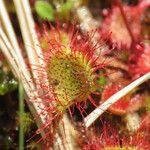
Drosera rotundifolia
Round-leaf sundew · Roundleaf sundew · Round-leaved Sundew · Common Sundew · Dew-plant
Description
Source: leafsnapDrosera rotundifolia, commonly known as the round-leaved sundew, is a carnivorous plant belonging to the Droseraceae family. Native to North America, it thrives in wetlands, bogs, and other moist habitats. The plant features small, round leaves covered in sticky hairs called tentacles, which secrete a substance that traps insects and other small prey. The round-leaved sundew uses its carnivorous nature to supplement its nutrient intake, as it typically grows in nutrient-poor soils. Once an insect or other prey is trapped on the leaves, it is digested by enzymes secreted by the sundew. For centuries, Drosera rotundifolia has been valued for its medicinal properties, particularly its anti-inflammatory effects. It has also been used as an herbal remedy for respiratory ailments such as coughs and bronchitis. Overall, this fascinating plant is not only beautiful but also plays a crucial ecological role by capturing insects and providing medicinal benefits to humans when used responsibly.
Care Guide
💧 Water Every 3 days
The roundleaf sundew flourishes in humid, marshy environments and needs consistent moisture. To mimic its natural conditions, water it twice a week. Typically grown outdoors, this evergreen plant relies on plenty of water throughout the year to support its insect-trapping abilities.
How should you water your Roundleaf sundew?
To keep your Roundleaf sundew properly hydrated, there are a few steps you can follow. Firstly, choose a pot with good drainage holes and place it in a plastic dish or tray. Fill the dish with about a third to half an inch of water. This will allow the plant to draw water from the pot as the soil dries out. Avoid letting the dish dry completely, and adjust the amount of water based on how quickly the plant absorbs it. It's important to note that terra cotta pots are not suitable for growing Roundleaf sundews unless you place the pot inside a larger one. The terra cotta material allows water to seep through and filter out dissolved solids. Only add water to the outer pot in this case. When it comes to the quality of water, using rainwater is the safest option for your sundew. Distilled water and water from a reverse osmosis system are also good alternatives. Purified water can be used, but keep in mind that it may contain some minerals within a tolerable range for the sundew. If you use tap water, make sure it has less than 50 parts per million of total dissolved solids. You can purchase a meter to measure this at a low cost. Lastly, fill your watering device 24 hours before using it to allow chlorine to dissipate from the water.
What should I do if I give too much or too little water to a Roundleaf sundew?
If a Roundleaf sundew is overwatered, it shows symptoms like brown spots on the underside of leaves, white mold in the soil, and a wilting appearance. The reason for the wilting is that the plant cannot draw water into its stem effectively. Overwatering can lead to root rot, which can be identified by a bad smell. To address this issue, remove the plant from the soil, rinse it with distilled water, and cut off any rotted roots and affected leaves. Rinse it again with distilled water and replant it in new soil. On the other hand, an underwatered Roundleaf sundew will have brittle leaves. In this case, remove the affected leaves, ensure that the soil is damp, and mist the leaves. The plant will gradually recover if watered promptly, although yellow leaves may dry out temporarily due to root damage.
How many times should I water my Roundleaf sundew?
The Tray method is a common way to water insectivorous plants. To do this, you should pot the Roundleaf sundew in a container with several drainage holes and place it in a dish or tray that is filled about one-third with water. This allows the plant to draw up water as the soil dries. It's important to add water promptly after the water level drops and not let the dish dry out completely. By following this method, you can better understand how often the plants need to be watered. The Roundleaf sundew is native to a humid environment, so it's important to find the right balance when watering. During the active seasons (spring to autumn), you should water the Roundleaf sundew 2-3 times per week, and more frequently during summer to keep the soil moist. However, during the winter and early spring when the plant goes dormant, it's important to cut back on watering. Allowing some of the soil to dry out and letting the water level in the tray dry out for a few days before adding more water can help with this. If you live in a naturally dry environment, you may need to mist the plant in addition to regular watering to replicate its natural humid growing conditions. It's best to mist in the morning. Proper water spraying is especially important in dry environments.
How much water does my Roundleaf sundew require?
Roundleaf sundew is a carnivorous plant that is prized as a houseplant. To successfully care for it, you need to replicate its native growing conditions, which include high humidity levels. These plants thrive in environments that are high in humidity and low in nutrients. If you live in a place with naturally high humidity, you can grow them outdoors in a bog garden, which is a unique way to provide lots of humidity. Most people, however, choose to grow them as houseplants. To ensure proper moisture levels, it is recommended to use a pot that retains moisture, such as plastic or a self-watering pot. The tray method is the most effective way to water these plants as it allows water to spread over the small hole at the bottom of the pot. It is important to regularly check the water level in the tray and add water before it dries out. The amount of water added should be enough to keep the pots from drying out and support healthy growth of your Roundleaf sundew.
Do I need to water Roundleaf sundew differently when I plant it inside instead of outside?
When growing roundleaf sundew plants indoors, they need less water because they get less sunlight. The more light they receive, the more water they need to grow. Having adequate light and water is crucial for their health. However, it's important to keep a humid environment for indoor plants. One effective method is to grow them in a terrarium or as part of a plant display in an aquarium. These enclosed spaces will help retain essential humid air. Just ensure there is proper air circulation.
☀️ Light Full sun
Roundleaf sundew prefers receiving ample sunlight throughout the day, yet it can tolerate locations where sunlight is occasionally less abundant. The species thrives in the abundant sun typical of its native habitats, such as open, wet, nutrient-poor grounds. However, insufficient or excessive sun can negatively impact its growth and health.
What are the sunlight requirements for Roundleaf sundew?
Roundleaf sundew (Drosera rotundifolia) flourishes in full sun, which means it requires more than 6 hours of sunlight daily, but it can also thrive in partial sun, receiving about 3-6 hours of sunlight. It's crucial to observe how sunlight moves through your garden to find spots that offer a balance of light and shade, ensuring your plants are happy. This species is adapted to the ample sunlight conditions of its natural habitats, like open, wet, and nutrient-poor grounds, but it can exhibit resilience even when sunlight is less abundant occasionally.
What should I do if natural sunlight is insufficient for my Roundleaf sundew?
If your Roundleaf sundew isn't receiving enough natural sunlight, especially during winter or in less sunny spaces, artificial lighting can be a great solution. For indoor plants, it's essential to provide adequate lighting for optimal growth. LED lights are recommended because they can be customized to supply the specific wavelengths needed by your plants. Full sun plants require 30-50W/sq ft of artificial light, partial sun plants need 20-30W/sq ft, and full shade plants need 10-20W/sq ft. Ensure the light source is placed 12-36 inches above the plant and mimics natural daylight hours, with most plants needing 8-12 hours of light per day.
What are the signs of insufficient lighting in Roundleaf sundew?
When Roundleaf sundew doesn't get enough light, it may exhibit several symptoms indicating light deficiency, such as new leaves growing smaller than mature ones, leggy or sparse growth, faster leaf drop, slower or stopped growth, and leaves that develop irregular color patterns or appear pale. Other signs include chlorosis, where leaves lose their green color and turn yellow; sunscald, with pale or necrotic areas on plant tissue; leaf curling as a defense mechanism to minimize water loss; wilting due to increased water loss through transpiration; and leaf scorching, characterized by brown, dry edges on leaves.
How can I improve my Roundleaf sundew's exposure to sunlight?
To optimize your Roundleaf sundew's sunlight exposure, gradually move plants to sunnier locations, ensuring they receive at least 6 hours of direct sunlight daily. For indoor plants not easily moved, consider using artificial lighting, keeping a desk or ceiling lamp on for at least 8 hours daily, or investing in professional plant grow lights. For outdoor plants, avoid sudden changes in light intensity to prevent sunburn. If light obstruction is an issue, identify what's blocking sunlight and consider pruning or transplanting smaller plants to sunnier spots with ample sunlight and good drainage. Note that parts of the plant that have been affected by insufficient sunlight may not recover, but new growth will be healthy with increased light exposure.
🌡️ Temperature 0–35°C
The roundleaf sundew is native to habitats where temperatures typically range from 32 to 70 °F (0 to 21 ℃). It especially does well in cooler conditions, and reducing watering as the seasons change can help it cope with the lower temperatures.
What is the native environment temperature range for Roundleaf sundew?
Roundleaf sundew, or Drosera rotundifolia, is native to environments where temperatures generally range from 32 to 70 °F (0 to 21 °C). It thrives in cooler weather conditions.
How should Roundleaf sundew be cared for in winter?
During winter, it's crucial to maintain temperatures above 0°C for Roundleaf sundew to prevent freezing damage. When outdoor temperatures approach -5°C (25°F), the plant should be brought indoors or protected by a temporary greenhouse or with materials such as plastic film or fabric.
How does low temperature affect Roundleaf sundew, and what are the solutions?
Roundleaf sundew has a moderate tolerance to low temperatures, thriving best between 0°C and 21°C. Exposure to temperatures below -35°C may cause the leaves to darken and exhibit water-soaked necrosis, wilting, and drooping, eventually turning brown. Solutions include trimming frost-damaged parts, moving the plant to a warm environment indoors, or setting up a greenhouse for protection. It's also beneficial to place the plant near a south-facing window for ample sunlight or use supplemental lighting if natural light is insufficient.
What should be done if Roundleaf sundew is exposed to high temperatures?
In high temperatures, especially above 21°C, the growth of Roundleaf sundew may slow, and its leaves can lighten in color and become susceptible to sunburn. To mitigate this, trim away sunburned and dried parts, move the plant to a shaded area particularly avoiding afternoon sun, and ensure the soil remains moist by watering in the morning and evening.
💨 Humidity high (>60%)
This plant needs special care because it loves high humidity levels of 60-80% or more. The best way to achieve this is by placing a humidifier near the plant. Daily misting is also essential! Make sure the room has good ventilation.
🪴 Soil 5-5
🌱 Fertilizer
🪴 Pot & Repot 2-3 years
When repotting Roundleaf sundew, pick a pot 1–2 inches (2.5–5.1 cm) larger with good drainage. Use a well-draining potting mix. Repot in spring or fall, making sure the root ball sits slightly below the rim of the flower pot. Water thoroughly after repotting and place it in a warm spot with indirect sunlight.
✂️ Pruning
The roundleaf sundew is a carnivorous plant known for its sticky leaves that trap insects. To promote growth and vitality, it's best to prune the plant from early to late spring. Carefully remove any dead leaves to improve light and air circulation, which helps the plant conserve energy. Be cautious not to over-prune, as this can stress the plant.
🌿 Propagating
🐛 Diseases & pets
☠️ Toxicity
Drosera is not toxic, and it's considered safe to human and pets, in fact some people use Drosera as homeopathic medicine
Characteristics
- Plant Type
- Herb
- Life Cycle
- Perennial
- Genus
- Drosera
- Family
- Droseraceae
- Hardiness Zone
- 1
- Mature Height
- 5 cm to 25 cm
- Mature Spread
- 10 cm to 15 cm
- Leaf Color
- Green, Red
- Leaf Type
- Evergreen
- Flower Color
- White, Pink
- Flower Size
- 2.54 cm
- Bloom Time
- Summer
- Planting Time
- Spring
- Harvest Time
- Late summer, Early fall, Mid fall
- Native Area
- Turkey, Sweden, Austria, Slovakia, Slovenia, Croatia, Belarus, Russia, Germany, Iceland, Estonia, Koppen, South Korea, Latvia, Romania, Belgium, Portugal, Netherlands, France, Czech Republic, Bulgaria, Poland, Greece, Ukraine, Lebanon, Serbia, Lithuania, Norway, China, Italy, Kazakhstan, Spain, Switzerland, Denmark, Japan, Mongolia, Finland, Ireland, United Kingdom, Hungary