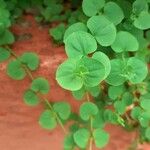
Drymaria cordata
Drymaria · Tropical chickweed · West Indian chickweed · Drymary · West Indian Drymary
Description
Source: leafsnapDrymaria cordata, commonly known as Tropical Chickweed, is a small herbaceous plant that belongs to the Caryophyllaceae family. Native to tropical and subtropical regions of Asia, Africa, and the Americas, this plant features a prostrate growth habit with stems extending up to 30 cm in length. The leaves are small, heart-shaped, and glossy green. The flowers of Drymaria cordata are white or pinkish and have five deeply divided petals. Blooming throughout the year in warm climates, they tend to flower more profusely during the summer months. The plant prefers moist soil conditions but can tolerate periods of drought once established. It thrives in full sun or partial shade and is often used as ground cover or as an ornamental plant in hanging baskets. Traditionally, Drymaria cordata has been used for medicinal purposes, such as treating skin conditions like eczema, healing wounds, and reducing fever, due to its anti-inflammatory properties. Overall, Drymaria cordata is an attractive, low-growing herbaceous perennial with ornamental value, suitable for use both indoors as potted plants and outdoors as ground cover.
Care Guide
💧 Water Every 7 days
Tropical chickweed thrives in humid conditions and soil that stays consistently moist, which aligns with its tropical origins. To maintain its ideal environment, water the plant weekly. Although it is usually grown outdoors, tropical chickweed benefits from additional humidity. You can enhance the environmental humidity by misting the plant or placing it in areas with regular rainfall, promoting optimal growth.
How should I water my Tropical chickweed in the best way?
Watering Tropical chickweed is easy and flexible. You have various options like using a garden hose with a spray nozzle or a watering can. This plant isn't particular about the source of water; it can thrive on rainwater, tap water, or filtered water. However, avoid watering from above as it can harm the leaves, flowers, and potentially cause disease. A drip irrigation system is a great watering method for Tropical chickweed as it provides even and direct watering to the soil. If you have a container-grown Tropical chickweed, you can apply water directly to the soil using a cup, watering can, or tap.
What should I do if I give my Tropical chickweed too much or too little water?
To avoid underwatering Tropical chickweed, make sure to water it regularly when you notice it's lacking moisture. On the other hand, overwatering can have serious consequences, leading to diseases and the plant's death. To prevent this, choose a well-lit location with good drainage to help dry the soil and avoid waterlogged conditions. If you have overwatered chickweed in a pot, you might need to transfer it to a new pot with better drainage and loose soil.
How often do I need to water my Tropical chickweed?
Tropical chickweed requires regular watering throughout the growing season. In spring, you should water it once a week. As the season progresses and it gets warmer, you may need to water it two to three times per week, but be careful not to exceed this amount as it can harm the plant. Regardless of how often you need to water, make sure the soil remains moist but not wet. When watering a potted tropical chickweed, you'll generally need to water it more frequently than if it were planted in the ground. In most cases, plan to water a container-grown tropical chickweed a few times per week compared to once per week for an in-ground plant.
How much water does my Tropical chickweed require?
To decide how much water your Tropical chickweed needs, there are a few approaches you can take. One method is to check the soil's moisture level by feeling it. If the top six inches of soil feel dry, you should water until they become moist. Another option is to use a specific measurement. Generally, giving your Tropical chickweed around two gallons of water per week is recommended, considering factors like temperature and soil dryness. However, be cautious not to overwater if your plant needs less. For container gardening, a different approach is necessary. You should water enough to dampen all of the dry soil layers. To check this, simply put your finger in the soil to assess moisture or water until you see a slight trickle exiting the pot's drainage holes.
How can I know if I am giving enough water to my Tropical chickweed?
Avoiding overwatering your Tropical chickweed can be a bit challenging due to conflicting factors. On one hand, these plants need weekly watering to keep their relatively deep roots moist. However, Tropical chickweed is highly prone to root rot and may show signs of browning if overwatered. Underwatering is less of a concern as Tropical chickweed can survive without supplemental watering for some time. However, if you neglect to water the plant for too long, it will start to wilt, and you may notice dry leaves.
☀️ Light Full sun
Native to the tropics, tropical chickweed thrives in full sunlight. It can also do well in places where the sun is less intense. Excessive or insufficient sunlight can harm it: too much causes scorching, while too little results in slow growth.
What are the sunlight requirements for Tropical chickweed?
Tropical chickweed requires full sunlight, which is above 6 hours of sunlight daily, to thrive. It can also grow in partial sun, receiving about 3-6 hours of sunlight. However, it's essential to observe how sunlight moves through your garden to ensure that the plants are placed in spots that provide a perfect balance of light and shade, promoting their health and happiness.
How does insufficient or excessive sunlight affect Tropical chickweed?
Belonging to the tropics, Tropical chickweed flourishes under the full intensity of the sun but can also prosper in less powerful sun rays. Both too much and too little sunlight can adversely affect its health. Excessive sunlight can cause scorching, while insufficient sunlight may lead to slow growth. It's crucial to find the right balance to maintain the plant's health.
What artificial lighting requirements do plants have?
Indoor plants require adequate lighting for optimal growth, especially when natural sunlight is insufficient. Artificial lights, particularly LED lights, provide vital support by offering customized wavelengths necessary for plants. Full sun plants need 30-50W/sq ft of artificial light, partial sun plants require 20-30W/sq ft, and full shade plants need 10-20W/sq ft. The light source should be placed 12-36 inches above the plant to mimic natural sunlight, and most plants need 8-12 hours of light per day.
What are the symptoms of light deficiency in Tropical chickweed?
Tropical chickweed shows several symptoms when grown indoors with inadequate light, including smaller new leaves, leggy or sparse growth, faster leaf drop, slower or no new growth, lighter-colored new leaves, chlorosis, sunscald, leaf curling, wilting, and leaf scorching. These symptoms indicate the plant's struggle to adapt to poor light conditions.
What solutions exist for light deficiency problems in plants?
To address light deficiency, gradually moving plants to sunnier locations each week until they receive at least 6 hours of sunlight daily can be beneficial. For indoor or non-movable plants, using artificial light such as desk or ceiling lamps for at least 8 hours a day or investing in professional plant grow lights is recommended. Outdoor plants should be gradually adapted to the best sunlight spots, avoiding sudden changes to prevent sunburn. Reducing obstructions like pruning trees that block sunlight or transplanting smaller plants during their dormant period to sunnier locations with good drainage can also help.
🌡️ Temperature 15–35°C
Tropical chickweed comes from warm areas and prefers temperatures between 68 to 95 °F (20 to 35 °C). In cooler seasons, keep conditions closer to 68 °F (20 °C) for best growth.
What is the ideal temperature range for growing Tropical chickweed?
Tropical chickweed, scientifically known as Drymaria cordata, thrives in warm regions with an ideal temperature range between 68 to 95°F (20 to 35°C). During cooler seasons, maintaining an environment closer to 68°F (20°C) is optimal for its growth. The plant has some cold tolerance and generally doesn't require special care when temperatures are above 0°C. However, temporary measures for cold protection are necessary when temperatures are expected to drop below freezing. These measures include wrapping the plant with plastic, fabric, or other suitable materials, which should be removed once temperatures rise again.
How should Tropical chickweed be cared for in low temperatures?
Tropical chickweed has a moderate tolerance to low temperatures and shows optimal growth when the temperature stays above 20°C. In winter, it's crucial to keep it above 0°C. If temperatures fall below -10°C, the plant's leaves may droop and, in severe cases, wilt and eventually fall off. To manage frost damage, trim off affected parts. To prevent damage in future cold events, wrap the plant with non-woven fabric or cloth and construct a wind barrier for added protection against cold winds.
What steps should be taken if Tropical chickweed experiences high temperatures?
During the summer, it is important to ensure that Tropical chickweed's environment remains below 35°C to prevent heat stress. Temperatures exceeding 41°C can cause the leaves to lighten in color, tips to dry and wither, leaves to curl, and increase susceptibility to sunburn. In the event of sunburn or drying, trim away the damaged parts. To protect the plant from excessive heat, relocate it to a shaded area during midday and the afternoon, or use a shade cloth. Additionally, watering the plant in the morning and evening can help keep the soil adequately moist and support the plant's cooling needs.
💨 Humidity
🪴 Soil 6-7
🌱 Fertilizer
Tropical chickweed does well with regular, light applications of fertilizer to encourage healthy leaf growth. You should feed Tropical chickweed about once a month during the summer months. Nitrogen is vital for foliage, and providing nitrogen-rich sources helps Tropical chickweed thrive.
🪴 Pot & Repot
✂️ Pruning
🌿 Propagating
🐛 Diseases & pets
☠️ Toxicity
Characteristics
- Plant Type
- Herb
- Life Cycle
- Annual, Perennial, Biennial
- Genus
- Drymaria
- Family
- Caryophyllaceae
- Hardiness Zone
- 8-10
- Mature Height
- 15 cm to 30 cm
- Mature Spread
- 30 cm to 46 cm
- Leaf Color
- Light Green
- Leaf Type
- Semi-evergreen
- Flower Color
- White
- Flower Size
- 2.54 cm
- Bloom Time
- All year round
- Planting Time
- Spring
- Harvest Time
- All year round
- Native Area
- Chile, Belize, Honduras, Mexico, Guatemala, Peru, Panama, Uruguay, Colombia, Argentina, Bolivia, Guyana, El Salvador, Ecuador, Suriname, Costa Rica