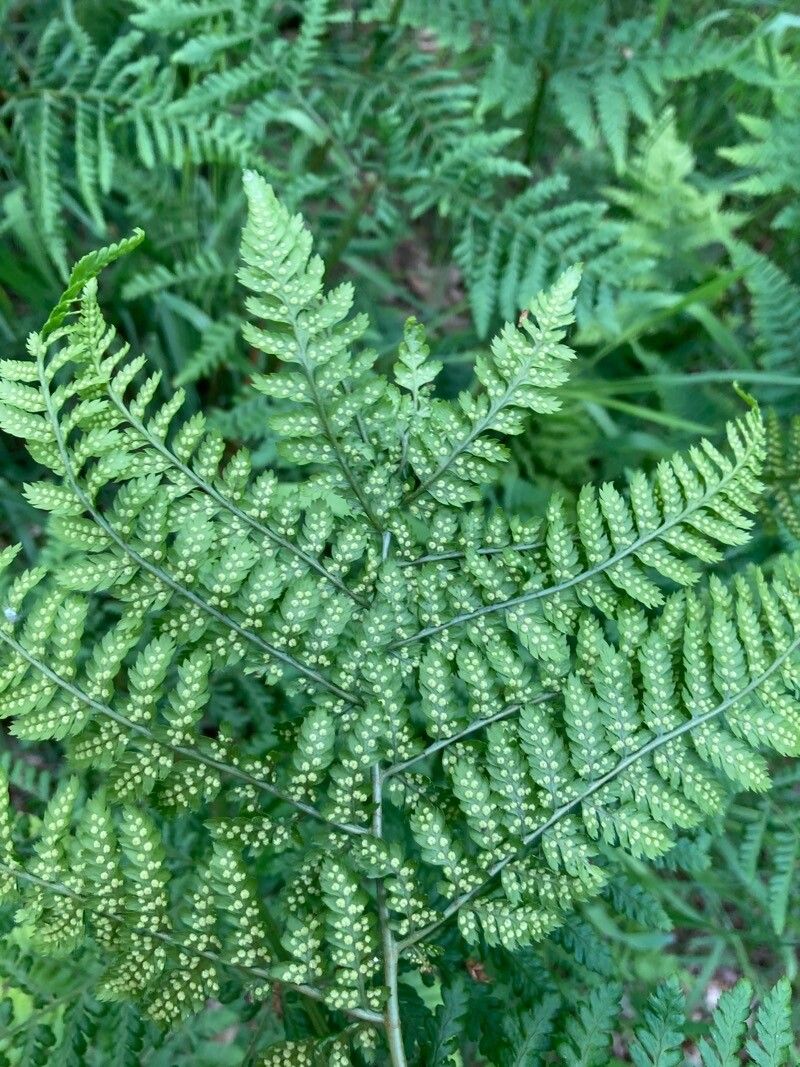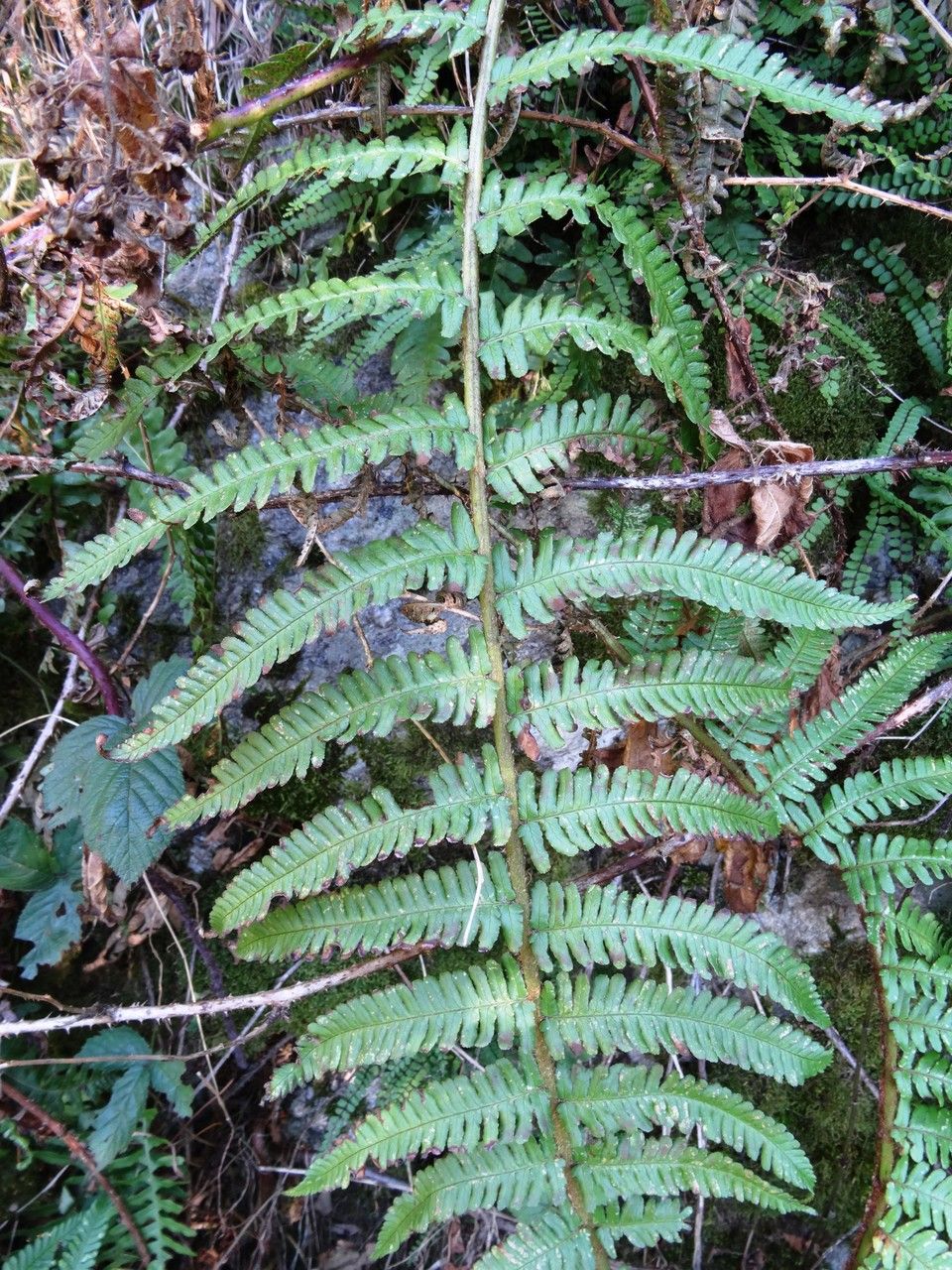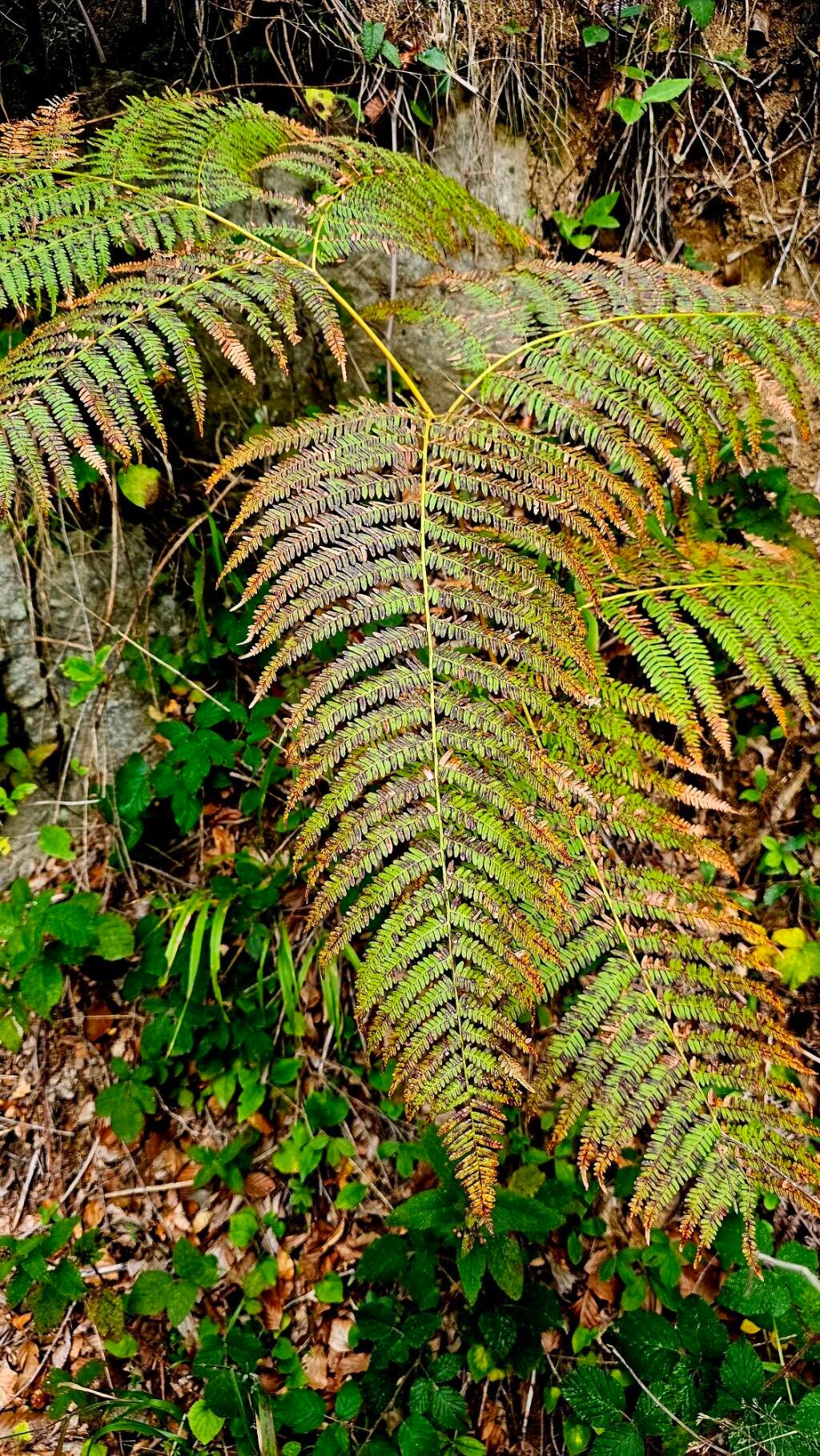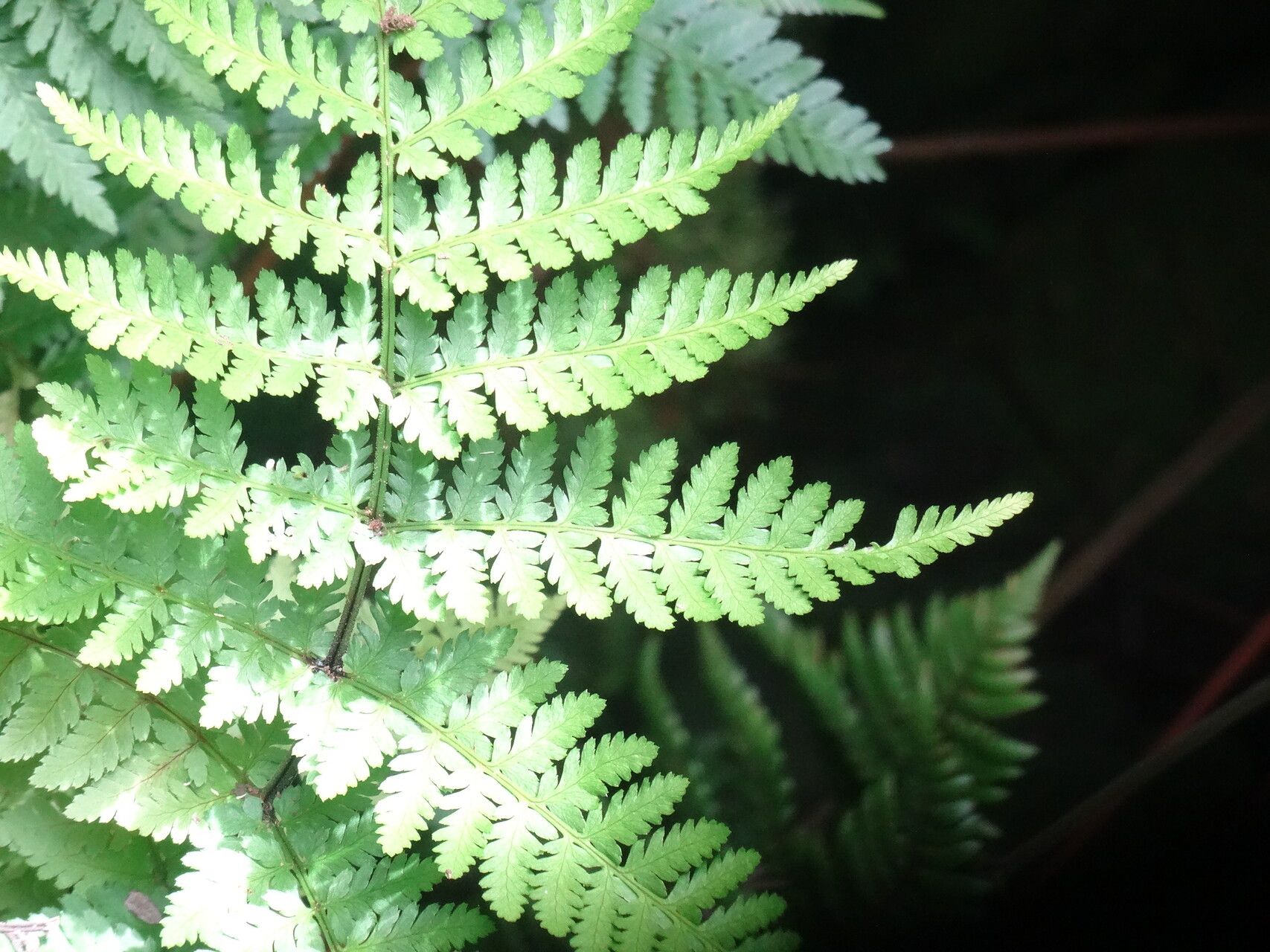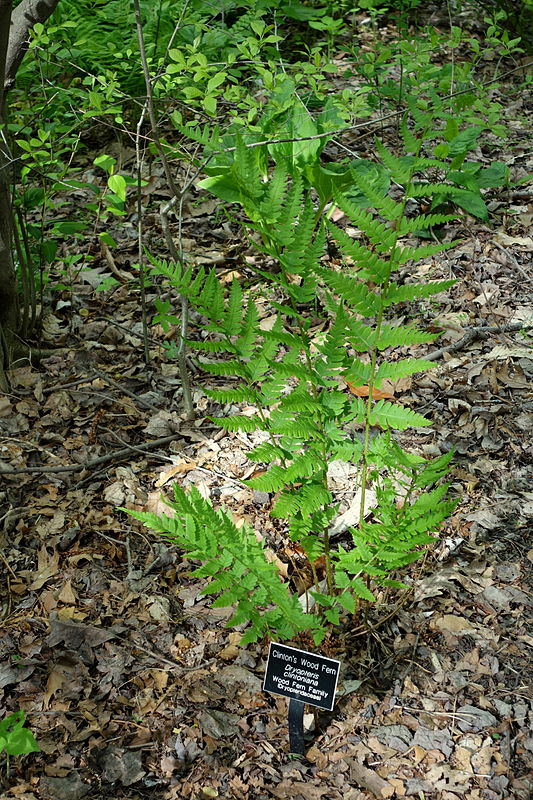
Dryopteris clintoniana, commonly known as Clinton's wood fern, is a fern of hybrid origin native to the northern hemisphere. It is a fertile hexaploid, arising as a species by doubling of its chromosome number from a hybrid between Dryopteris cristata, a tetraploid, and Dryopteris goldieana, a diploid. It is more northern in its range than either parent species. This fern will be found in wet areas, similar to the habitat of D. cristata.
Clinton's wood fern is resistant to disease and is generally not prone to illnesses. However, it can be vulnerable to pests and diseases present in its surroundings. These outbreaks are usually not serious. For care, this plant needs moderate maintenance. It should be pruned regularly to keep a neat appearance and support healthy growth. Fertilizing can also help encourage flowering. Clinton's wood fern is suitable for anyone with outdoor space, such as a garden or patio, and does not demand a lot of care experience. It may need more attention when kept indoors.
How to keep Dryopteris Clintoniana.
Light
Clinton's wood fern is native to habitats like forest understories and rocky areas, where it grows in natural shade. It prefers partial sun but can adapt to full sun or full shade, showing its hardy and versatile nature.
Water
Clinton's wood fern thrives in woodland environments with consistent moisture and humidity. Although it can become moderately drought-tolerant once established, it still benefits from weekly watering. For indoor care, occasional misting is recommended. Being an evergreen, this fern requires careful watering during the growing season to keep its foliage lush and healthy.
Temperature
Clinton's wood fern can tolerate a wide range of temperatures, but its range may still be constrained by various combinations of moisture and heat. It does best in warm summers with sufficient rainfall or watering. Extended periods of cloudy, rainy weather or prolonged high temperatures can raise the chance of Clinton's wood fern dying. In winter, adequate protection from cold can increase the plant's survival.
Fertilizer
Usually a single fertilizer application in spring suffices for Clinton's wood fern, though repeated feedings can enhance growth. Apply fertilizer every month to a month and a half. Fertilizing improves the leaves' appearance and function, helping maintain even color and a healthy texture. It also encourages root development and better nutrient uptake, supporting the plant's long-term health.
Pruning
Clinton's wood fern has lush, arching fronds that require minimal pruning. It's best to prune in early to late spring by removing any damaged fronds to promote growth and improve air circulation. Be sure to monitor for pests and avoid excessive cutting to maintain the plant's shape. This will enhance the garden's aesthetics and prevent overcrowding.
Botanical profile.
- Plant Type
- Herb
- Life Cycle
- Perennial
- Genus
- Dryopteris
- Family
- Polypodiaceae
- Hardiness Zone
- 3-7
- Mature Height
- 0.61 m to 1.22 m
- Mature Spread
- 61 cm
- Leaf Color
- Dark Green, Forest Green
- Leaf Type
- Deciduous
- Planting Time
- Spring, Summer, Autumn
Other names.
Reader questions.
What are the sunlight requirements for Clinton's wood fern?
Clinton's wood fern, also known by its botanical name Dryopteris clintoniana, thrives in specific sunlight conditions to maintain its health and beauty. It requires 'Full shade,' which means it should receive less than 3 hours of sunlight daily. Additionally, it can tolerate 'Partial sun,' indicating it can flourish with about 3-6 hours of sunlight. It's important to observe how sunlight moves through your garden carefully, finding the ideal spots that offer the right balance of light and shade. This careful placement ensures the plant's happiness and growth.
What is Clinton's wood fern?
Clinton's wood fern, scientifically known as Dryopteris clintoniana, is a species of fern. Unfortunately, the provided information does not include details on its characteristics, habitat, or care instructions.