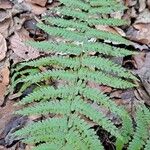
Dryopteris filix-mas
Common Male Fern · Male fern · Male Woodfern · Male Shield Fern · Male Wood Fern
Description
Source: leafsnapDryopteris filix-mas, commonly known as the male fern, is a deciduous fern native to Europe, Asia, and North America. It typically thrives in damp, shady areas such as woodlands, hedgerows, and riverbanks. The plant can grow up to 1.5 meters tall, with fronds that are triangular in shape and have a feathery appearance. The male fern has been used for medicinal purposes for centuries due to its anti-inflammatory properties. Additionally, its attractive foliage makes it a popular choice for ornamental planting in gardens. The plant prefers moist soil with good drainage, though it can tolerate some drought once established. It is relatively easy to propagate, either from spores or by dividing the rhizomes of an established plant. Overall, Dryopteris filix-mas is a versatile and attractive fern that serves both medicinal and ornamental purposes effectively.
💡 Woodfern leaves resemble a squirrel's tail, with each leaf neatly arranged along the stem. The leaves gradually shorten as they extend from the base to the tip. This orderly arrangement of woodfern leaves can be quite soothing for those with obsessive-compulsive tendencies.
🌳 The male fern is a shade-loving plant commonly used for under-planting around shrubs and roses in cottage gardens or within woodlands. It thrives when left undisturbed, preferring cool, moist environments. This fern is largely free from diseases and pests, adding visual interest during winter and displaying beautiful copper colors in the fall.
🎭 Authenticity, modesty, enchantment and bonds of love
Care Guide
💧 Water Every 7 days
Native to temperate forest understories, the male fern flourishes in moist and well-drained soil with consistent humidity. It prefers stable moisture levels. Watering twice a week is recommended. Although it benefits from outdoor rainfall, the male fern also adapts well to containers if the water is carefully monitored.
If I give my Male fern too much or too little water, what should I do?
The Male fern can be overwatered if it is left in standing water or if the planter doesn't have drainage holes. This can cause the roots to be unable to absorb nutrients and moisture, and can also lead to fungal or bacterial diseases. Signs of overwatering include wilted and yellow leaves, drooping stems, and soft/mushy texture. However, it's important to check for other causes as well since other issues can mimic overwatering. On the other hand, the Male fern can also become underwatered if not monitored closely, especially if a self-watering planter is not used. In dry conditions, the plant can quickly turn brown and crispy. In severe cases, it may appear completely dried up, but if some roots are still healthy, the plant can potentially be saved. Trimming off dry and dead stems, followed by thorough watering and returning the plant to its usual location, can help. The Male fern is resilient and can regrow its fronds, though it may take several months to reach its previous size with proper care.
How do I properly water my Male fern?
To properly care for your Male fern, it's vital to maintain consistently moist soil, replicating its native environment. This may require watering every one to two days, as the plant should never be allowed to dry out. When you notice the top layer of soil feeling slightly dry, it's time to water again. Be sure to thoroughly soak the soil until water drains from the pot's bottom. Afterward, make sure to dispose of any excess water to prevent the pot from sitting in a puddle. Following this method will help keep the soil from becoming too dry.
What do I need to think about when watering my Male fern?
The frequency of watering your Male fern is influenced by the humidity level in the air. Higher humidity means less watering. Avoid placing the fern near heating or cooling vents as it will dry out faster. Choose a draft-free location with dappled and indirect sunlight, and temperatures between 55-80 degrees F (13-27 degrees C). Putting the fern on a warm, sunny windowsill may cause dehydration. Rainwater or distilled water is preferable, but tap water usually works fine. Tap water may cause brown leaf tips due to minerals and chemicals. Small pots dry out quickly, so give the fern more space in a larger pot. Consider using a self-watering planter for a consistent moisture level in the soil, which benefits the roots.
☀️ Light Full shade
Male fern does best with a good amount of sunlight but can also tolerate fairly shady conditions. Sunlight promotes its healthy growth, though extended exposure may be harmful. Native to forests and rocky slopes, male fern is adapted to habitats where light is filtered or scarce.
What are the sunlight requirements for Male Fern?
Male Fern, scientifically known as Dryopteris filix-mas, thrives in environments with varying sunlight exposures. It can flourish under partial sun, which is about 3-6 hours of sunlight daily, and also adapt well to full shade conditions, where it receives less than 3 hours of sunlight a day. It's essential to observe the movement of sunlight through your garden to find the ideal spot that offers a harmonious balance of light and shade, ensuring the plant's well-being. Male Fern’s native habitats, such as forests and rocky slopes, have conditioned it to thrive in areas where light can be filtered or sparse. Nonetheless, artificial lighting can supplement natural sunlight, especially in less sunny spaces or during shorter daylight periods, by providing the required light intensity for healthy growth.
How does light affect the health of Male Fern?
Male Fern prefers shady environments and can withstand low light conditions, but adequate lighting is paramount for its optimal growth and health. Insufficient light can lead to symptoms such as slower or halted growth, a condition known as survival mode, where leaf production ceases. Excessive sunlight, however, may result in chlorosis, leaf scorching, sunscald, leaf curling, and wilting. Chlorosis, for instance, is the loss of the green pigment in leaves due to chlorophyll breakdown, affecting photosynthesis. Sunscald makes the plant's leaves or stems develop pale, bleached, or necrotic patches. Leaf curling is a defense mechanism to minimize water loss, while wilting occurs when the plant can't maintain adequate hydration under intense sunlight. To manage these conditions, gradually adapt the plants to receive 3-6 hours of sunlight by slowly moving them to sunnier spots or using artificial lighting to supplement natural light.
What solutions are available for light-related issues in Male Fern?
To address light-related issues in Male Fern, consider gradually adapting the plant to changing light conditions, both indoor and outdoor, to prevent stress and sunburn. Indoors, if the plant is large or not easily movable, supplement natural light with artificial sources, such as desk or ceiling lamps for at least 8 hours daily. Opt for professional plant grow lights for adequate illumination. Outdoors, move your plants to sunnier locations gradually over weeks. Reducing obstructions, such as pruning trees that block sunlight, can help too. When transplanting smaller plants for better light exposure, do so during their dormant period, usually late winter or early spring, to minimize stress and encourage healthy new growth post-adjustment. Remember, parts of the plant that have already been affected by poor lighting conditions may not recover, but new growth will be healthy with improved lighting.
🌡️ Temperature 5–32.2°C
The male fern thrives in temperatures from 41℉ (5℃) to 89.6℉ (32℃). Native to temperate regions, it prefers cooler conditions of about 59℉ (15℃) during its growing season. In winter it can tolerate freezing temperatures as low as 23℉ (-5℃).
What are the ideal temperature conditions for growing male fern?
The male fern (Dryopteris filix-mas) thrives in temperatures ranging from 41°F (5°C) to 89.6°F (32°C) and is native to temperate regions. It prefers cool temperatures, ideally around 59°F (15°C), during its growing season. The plant has strong cold resistance and is capable of withstanding winter temperatures down to 23°F (-5°C). Although special frost protection measures are usually not necessary, if temperatures are expected to drop below the critical limit, protecting the plant with soil or straw is advisable. It is also recommended to water the plant abundantly before the first freeze in autumn to keep the soil moist and help prevent drought during winter and early spring.
How does male fern react to low and high temperatures, and what are the solutions?
Male fern exhibits strong cold tolerance, prospering best when temperatures remain above its minimum suitable growth temperature. In winter, it's important to keep it above the minimum tolerable growth temperature to prevent damage. If temperatures fall below the limit growth temperature, there might not be noticeable changes during winter, but a decreased ability to sprout or a complete lack of sprouting might occur in spring. The solution to this issue is to remove any non-sprouting parts in spring. Conversely, during summer, the fern should be maintained below the maximum suitable growth temperature to avoid leaf discoloration, curling, and susceptibility to sunburn. If temperatures exceed the tolerable maximum, the leaves might get sunburned. The solutions include trimming away sunburned and dried parts, relocating the plant to a shaded area or using a shade cloth to protect it from midday and afternoon sun, and ensuring the soil remains moist by watering in the morning and evening.
💨 Humidity high (>60%)
This plant needs special care because it loves high humidity levels of 60-80% or more. The best way to achieve this is by placing a humidifier near the plant. Daily misting is also essential! Make sure the room has good ventilation.
🪴 Soil 5-7
🌱 Fertilizer
To promote foliage growth, fertilize male ferns in the spring using a high-nitrogen fertilizer at one-quarter strength. Be sure to water the soil before applying the fertilizer and carefully follow the product's instructions. In the fall, decrease the frequency of fertilization to prevent root burn and maintain the plant's overall health.
Why should I put plant food on my Male fern?
Fertilizing Male fern is important because it provides your plant with necessary nutrients for healthy new growth. Additionally, the extra nutrients help to maintain the health of existing growth and enhance the plant's ability to defend against diseases and pests.
When should I fertilize my Male fern?
The feeding schedule for Male fern depends on its location. Although it is not an overly hungry plant, it does need some additional nutrients. Outdoor plants only need to be fertilized once in the spring. On the other hand, indoor specimens should be fed monthly, starting in the spring and continuing through the summer.
When is it not a good idea to fertilize my Male fern?
To avoid excessive growth before winter, avoid fertilizing after early autumn. Additionally, refrain from fertilizing Male fern during hot and dry periods, as dry soil is not as receptive to fertilizer and can stimulate growth that requires additional water. It is recommended to apply fertilizer earlier in the season when temperatures are cooler. Lastly, take care not to inadvertently double-dose ferns with fertilizer that has been applied to neighboring plants or lawns.
What kind of fertilizer does my Male fern require?
When selecting a fertilizer for Male fern, there are different options depending on whether the plant is being grown indoors or in the garden. For outdoor plants, using mulch or compost will help them thrive. Indoor plants, on the other hand, will benefit from an ideal fertilizer with an N-P-K ratio of 3-1-2. In certain cases, a general-purpose fertilizer with an even blend of nutrients can also be effective. However, it is important to ensure that the ratio number representing the volume of each nutrient is at 3 or lower, even when using a balanced fertilizer.
How do I help my Male fern grow better using plant food?
Fertilizing Male fern is simple, but it varies depending on the plant's location. For outdoor garden plants, the best approach is to add a layer of mulch or compost to the soil, ensuring it is placed around the base of the plant. On the other hand, indoor plants usually do well with a diluted liquid fertilizer applied prior to watering. It is recommended to fertilize them on a monthly basis during the spring and summer.
🪴 Pot & Repot 2-3 years
When repotting the Male fern, select a pot 1–2 inches (2.5–5.1 cm) larger with ample drainage. Use a well-draining potting mix. Repot in spring or fall, ensuring the root ball is placed slightly lower than the rim of the flower pot. Water thoroughly after repotting and put it in a warm spot with indirect sunlight.
✂️ Pruning
The male fern is characterized by its large, arching fronds. To promote healthy growth, it is important to prune in early spring by removing any dead fronds. Instead of heavy pruning, make a habit of regularly removing old or withered fronds. This will improve air circulation, reduce the risk of disease, and enhance the plant's appearance. For the best results, always use clean and sharp tools.
🌿 Propagating
🐛 Diseases & pets
☠️ Toxicity
Characteristics
- Plant Type
- Fern
- Life Cycle
- Perennial
- Genus
- Dryopteris
- Family
- Polypodiaceae
- Hardiness Zone
- 4-8
- Mature Height
- 0.49 m to 1.22 m
- Mature Spread
- 0.61 m to 1.22 m
- Leaf Color
- Green, Brown
- Leaf Type
- Deciduous
- Planting Time
- Spring, Summer
- Harvest Time
- Mid summer, Late summer, Early fall
- Native Area
- Turkey, Sweden, Austria, Mexico, Pakistan, Morocco, Belarus, Uzbekistan, Russia, Germany, Iceland, Romania, Belgium, Netherlands, Portugal, France, Tunisia, Bulgaria, Poland, Greece, Ukraine, China, Norway, Afghanistan, Italy, Kazakhstan, Spain, Switzerland, Denmark, Finland, Iran, Albania, Ireland, United Kingdom, Hungary, Algeria