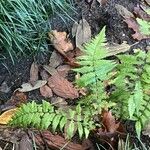
Dryopteris lepidopoda
Sunset fern
Care Guide
💧 Water
The Sunset fern flourishes in moist woodland environments that require consistent moisture, much like tropical rainforests. To maintain optimal soil moisture, water it twice a week. Indoors, higher humidity with occasional misting will support vibrant frond growth during its active growing season. Despite this, the Sunset fern also exhibits moderate drought tolerance.
☀️ Light Full shade
The Sunset fern comes from habitats such as forest understories or rocky areas that provide natural shade. It prefers Full Shade but can tolerate Partial Sun.
What are the sunlight requirements for a Sunset Fern?
The Sunset Fern (Dryopteris lepidopoda) thrives in conditions where it can receive partial sun, which equates to about 3-6 hours of sunlight daily. It's important to observe the movement of sunlight through your garden to identify areas that offer a balanced mix of light and shade. This careful selection of planting spots is crucial for ensuring the optimal growth and health of your Sunset Fern, keeping in mind to provide it with the perfect ambiance for its development.
🌡️ Temperature 5–35°C
Sunset fern is native to regions where temperatures generally fall between 41 and 95 °F (5 to 35 ℃). It prefers this range, which is crucial for its optimal growth. If temperatures vary considerably, adjust conditions as needed to maintain this temperature range throughout the seasons.
What is the ideal temperature range for growing Sunset Fern?
The Sunset Fern, scientifically known as Dryopteris lepidopoda, thrives best in temperatures ranging from 41 to 95 °F (5 to 35 °C). It's crucial to maintain this temperature range for optimum growth. Significant fluctuations outside of this band should be adjusted for to ensure the plant's health throughout the various seasons.
💨 Humidity
🪴 Soil 5-7
🌱 Fertilizer
🪴 Pot & Repot
✂️ Pruning
The Sunset fern is known for its golden-green fronds accented with hints of red, and it requires minimal pruning. To encourage new growth and improve the plant's appearance, remove any dead fronds at the base in early spring. This will also enhance air circulation, which helps prevent diseases. Be sure to use clean, sharp tools for the best results.
🌿 Propagating
🐛 Diseases & pets
☠️ Toxicity
Characteristics
- Plant Type
- Fern
- Life Cycle
- Perennial
- Genus
- Dryopteris
- Family
- Polypodiaceae
- Hardiness Zone
- 5-9
- Mature Height
- 61 cm
- Mature Spread
- 61 cm
- Leaf Color
- Green
- Leaf Type
- Deciduous
- Planting Time
- Spring
- Native Area
- Nepal, India, Myanmar, Bhutan, Pakistan, China