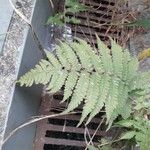
Dryopteris ludoviciana
Southern woodfern
Description
Source: leafsnapDryopteris ludoviciana, the southern woodfern, is fern native to southern United States from Florida west to Texas and as far north as Kentucky and North Carolina. It is an evergreen in mild climates. Its growth habit is tall and upright with shiny and leathery dark green fronds. It will tolerate dry conditions but will perform best in moist areas. The growth rate is slow to moderate and reaches a mature height at 30–48 inches. D. ludoviciana is hardy in USDA plant hardiness zones 5–10.
💡 Woodfern leaves resemble a squirrel's tail, with each leaf neatly arranged along the stem. The leaves gradually shorten as they extend from the base to the tip. This orderly arrangement of woodfern leaves can be quite soothing for those with obsessive-compulsive tendencies.
Care Guide
💧 Water Every 3-5 days
The Southern wood fern thrives in moist, shaded environments similar to its native forests in the southeastern United States. It requires consistently moist soil and benefits from weekly watering. Once established, it has moderate drought tolerance. As an evergreen, the Southern wood fern needs extra care during dry winter months to prevent desiccation.
How should I water my Southern wood fern?
To ensure the health of the Southern wood fern, it is recommended to water it with filtered water at room temperature or slightly warmer. Tap water may contain harmful particles, which is why filtered water is preferred. Since the fern is accustomed to a warm environment, cold water can be a shock to its system. To avoid foliage complications, it's best to avoid watering from above. Instead, water the plant by applying filtered room temperature water directly to the soil until it is thoroughly soaked. This helps moisten the roots and supports their spread through the soil, facilitating nutrient absorption.
What should I do if I give my Southern wood fern too much water or not enough water?
Overwatering is a common issue for Southern wood ferns and can cause wilting, yellowing leaves, and diseases like root rot. Underwatering is less common but can cause brittle, brown leaves. It's important to notice signs of overwatering early and reduce watering immediately. Check the soil's drainage and replace it if necessary. If your fern is underwatered, simply water it more regularly.
How much should I water my Southern wood fern?
If your Southern wood fern is in a pot, you can easily determine if it needs water by checking the moisture of the soil. Simply stick your finger into the soil and if the top two to three inches are dry, then it's time to water it. If you have your Southern wood fern planted outdoors in the ground, you can use the same method to test the soil. Once you notice that the top few inches of soil have dried out, it's time to water it. Typically, during the spring and early fall, watering your plant once a week using this method is sufficient. However, in extremely hot weather, you may need to water it about twice or more per week. It's worth noting that mature and well-established Southern wood ferns have a great ability to withstand drought.
How much water does my Southern wood fern require?
To properly water your Southern wood fern, don't be afraid to give it a generous amount of water. Wait until the top two to three inches of soil are dry, then provide a deep watering that saturates the entire soil. Make sure to add enough water so that the excess drains out from the pot's drainage holes. If you don't see any excess water draining, it means you haven't watered enough. However, be careful not to let the water accumulate in the soil as it can harm the plant. On the other hand, if water doesn't drain through the pot, it could mean that the soil doesn't drain well, which is not good for the plant's health. If the fern is planted outside, one inch of rain per week should be sufficient.
How should I water my Southern wood fern as it grows?
The water needs of the Southern wood fern can vary depending on its growth stages. In the first few years or after transplanting, you should provide more water than usual. During these stages, the fern focuses on developing new roots to support future growth, so they require extra moisture. As the fern matures, it will require less water. Additionally, during the bloom period, the plant may need more water as the flowers use up a significant amount of moisture.
☀️ Light Partial sun
Southern wood fern is native to habitats such as forest understories or rocky areas, where it is naturally shaded. It prefers partial sun but can tolerate full sun or full shade, showing its versatile and hardy nature.
What are the sunlight requirements for Southern wood fern?
Southern wood fern thrives in partial sun conditions, receiving about 3-6 hours of sunlight daily, but it can also grow well in full shade, with less than 3 hours of sunlight. It's essential to observe the light patterns in your garden to find spots that offer an ideal balance of light and shade, ensuring the plant's health and happiness. Native to environments like forest understories or rocky areas, this perennial herbaceous plant has adapted to natural shade, making it flexible in its light requirements.
Can Southern wood fern be grown indoors, and how can artificial lighting be utilized?
Yes, Southern wood fern can be grown indoors, especially in spaces where natural sunlight is insufficient, like during winter or in less sunny areas. Artificial lighting serves as a crucial substitute for natural sunlight, fostering faster and healthier growth. LED lights are recommended because they can provide specific light wavelengths needed by plants. For optimal growth, full sun plants require 30-50W/sq ft, partial sun plants need 20-30W/sq ft, and full shade plants need 10-20W/sq ft of artificial light. The artificial light source should be placed 12-36 inches above the plant, and most plants benefit from 8-12 hours of artificial light per day to mimic natural daylight hours.
What symptoms indicate insufficient light for Southern wood fern when grown indoors?
When Southern wood fern is grown indoors with insufficient light, it may display several symptoms signaling light deficiency. These include smaller new leaves compared to older ones, leggy or sparse growth due to elongated spaces between leaves or stems, faster leaf drop to conserve resources, slower or halted growth as the plant enters survival mode, lighter-colored or irregularly patterned new leaves indicating a lack of chlorophyll, and chlorosis where leaves lose their green color and turn yellow. Symptoms like sunscald, leaf curling, wilting, and leaf scorching arise from excessive sunlight, damaging plant tissues and affecting overall health.
How can I address insufficient light for my Southern wood fern?
To address insufficient light for Southern wood fern, consider gradually moving the plant to sunnier locations each week to enable adaptation to brighter conditions. Indoors, if the plant is large or difficult to move, supplement with artificial light, keeping a desk or ceiling lamp on for at least 8 hours daily or investing in professional grow lights for enough illumination. Outdoors, avoid sudden changes in light intensity to prevent sunburn. Reducing obstructions like pruning branches that block sunlight and transplanting smaller plants during their dormant period to brighter areas with good drainage can also improve light exposure. Note that parts of the plant affected by insufficient light may not recover, but new growth with increased light exposure will be healthy.
🌡️ Temperature 5–35°C
Southern wood fern is quite adaptable to temperature, capable of withstanding higher heat and significant temperature swings. During hot periods, care should be taken to water it and provide suitable shade to prevent sunburn. On the other hand, it is relatively sensitive to cold; although it can tolerate some chill, very low temperatures may cause frost damage.
💨 Humidity
🪴 Soil 6-8
🌱 Fertilizer
One fertilizer application in spring is generally adequate for Southern wood fern, though repeated feedings can maximize growth. Apply fertilizer about every one to one and a half months. Fertilizing improves the leaves' appearance and function, helping maintain even color and a healthy texture. It also encourages root development and better nutrient uptake, supporting the plant's long-term health.
Why should I add fertilizer to my Southern wood fern?
The leaves of the Southern wood fern are essential for its overall structure. To maintain the health and appearance of these leaves, fertilization is highly impactful. Proper fertilization results in consistent leaf color and a healthy texture. Additionally, fertilization benefits the root system by promoting both the growth of new roots and the maintenance of existing ones. This not only ensures the fern's current health but also enhances its ability to absorb soil nutrients in the long run.
When should I fertilize my Southern wood fern for the best results?
When you grow your Southern wood fern outdoors, it will send out new growth in early spring. This indicates that it's time to start fertilizing. Usually, a single application of fertilizer in spring is sufficient. However, if you want to promote maximum growth, you can fertilize multiple times during spring and early summer. In this case, you can feed the fern every month to a month and a half.
When is it not a good idea to add fertilizer to my Southern wood fern?
During late fall and winter, the Southern wood fern enters a dormant phase and stops producing new growth. It's important not to fertilize the fern during this time. In spring and summer, if you choose to fertilize, start reducing the amount as summer approaches because the fern's growth rate will also slow down. It is not recommended to fertilize the fern during very hot weather or when the soil is excessively dry as this can cause stress and premature death.
What kind of fertilizer does my Southern wood fern need?
Choosing the best fertilizer for a Southern wood fern is easy. Use a general-purpose garden fertilizer with equal parts nitrogen, phosphorus, and potassium (ratio of 10-10-10 or similar). Avoid high nitrogen fertilizers if unsure. Granular slow-release fertilizers are ideal for Southern wood ferns and are easy to apply. Additionally, consider using an organic soil amendment like compost to feed the fern.
How should I fertilize my Southern wood fern?
To take care of your Southern wood fern, start by waiting until its first leaves poke through the soil in early spring. Once this happens, apply a balanced slow-release fertilizer to the soil around the base of the fern. You can repeat this process later in the season if you want. Remember to apply the fertilizer to the soil, not the plant itself. Sometimes, you may need to move the leaves to access the soil above the roots. Additionally, it's a good idea to water the fern before and after fertilizing.
🪴 Pot & Repot
✂️ Pruning
To help Southern wood fern thrive, it's important to prune it annually in early to late spring. Remove any dead or damaged fronds to encourage fresh growth. This practice improves air circulation and reduces the risk of disease. Make sure to use clean, sharp tools for cutting, as this minimizes stress and supports the plant's overall health and vitality.
🌿 Propagating
🐛 Diseases & pets
☠️ Toxicity
Despite being used as a culinary and therapeutic herb, southernwood is harmful to both humans and animals when consumed in any form. For safety reasons, keep your furry pets—especially curious kids—away from the area where you are growing your southern wood fern.
Characteristics
- Plant Type
- Herb
- Life Cycle
- Perennial
- Genus
- Dryopteris
- Family
- Polypodiaceae
- Hardiness Zone
- 5-9
- Mature Height
- 0.91 m to 1.22 m
- Mature Spread
- 61 cm to 91 cm
- Leaf Color
- Green
- Leaf Type
- Semi-evergreen
- Planting Time
- Spring, Summer, Autumn
- Native Area
- Georgia