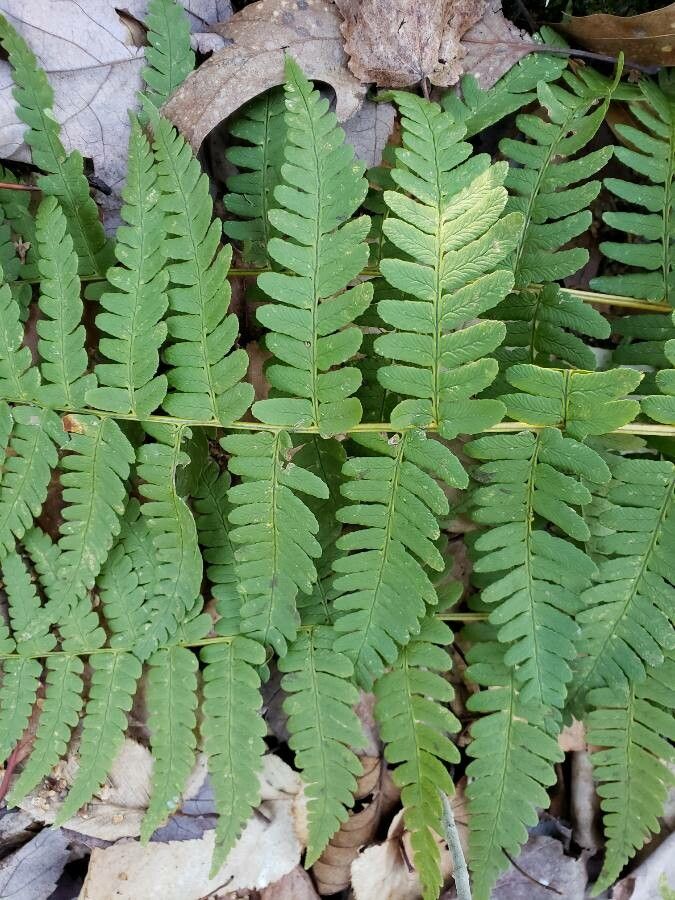
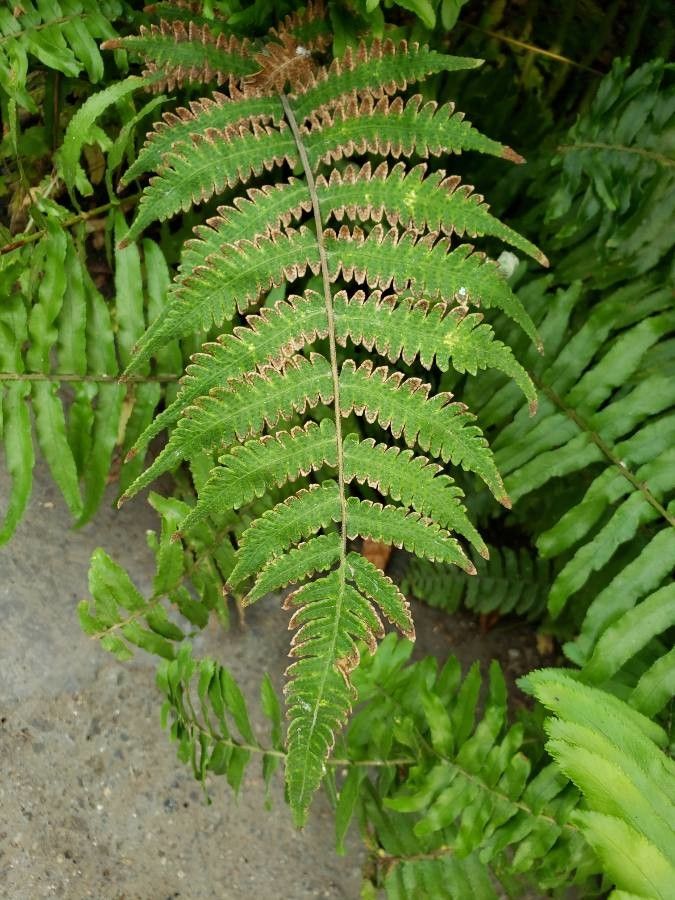
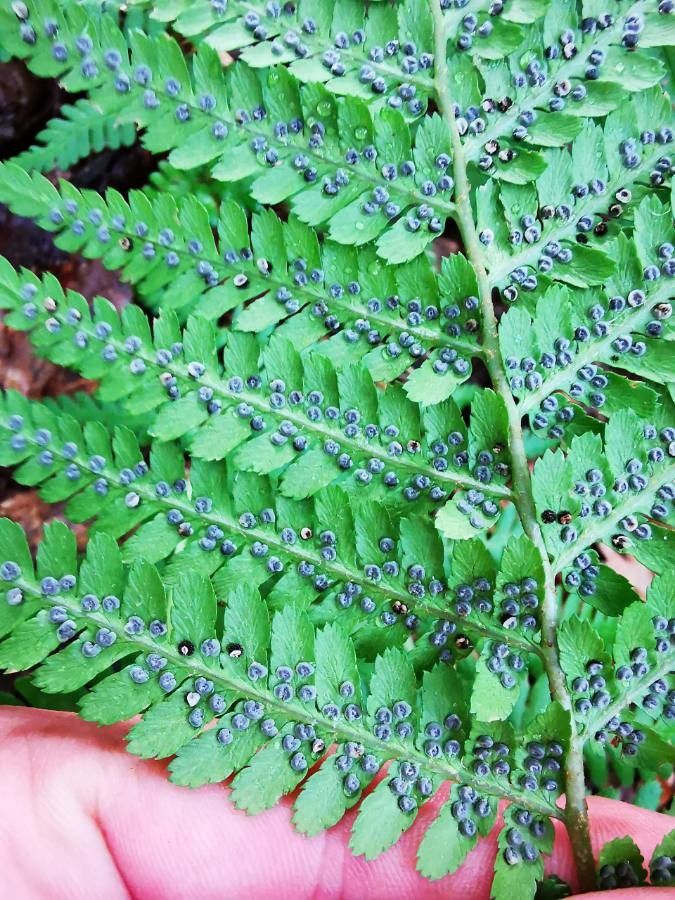
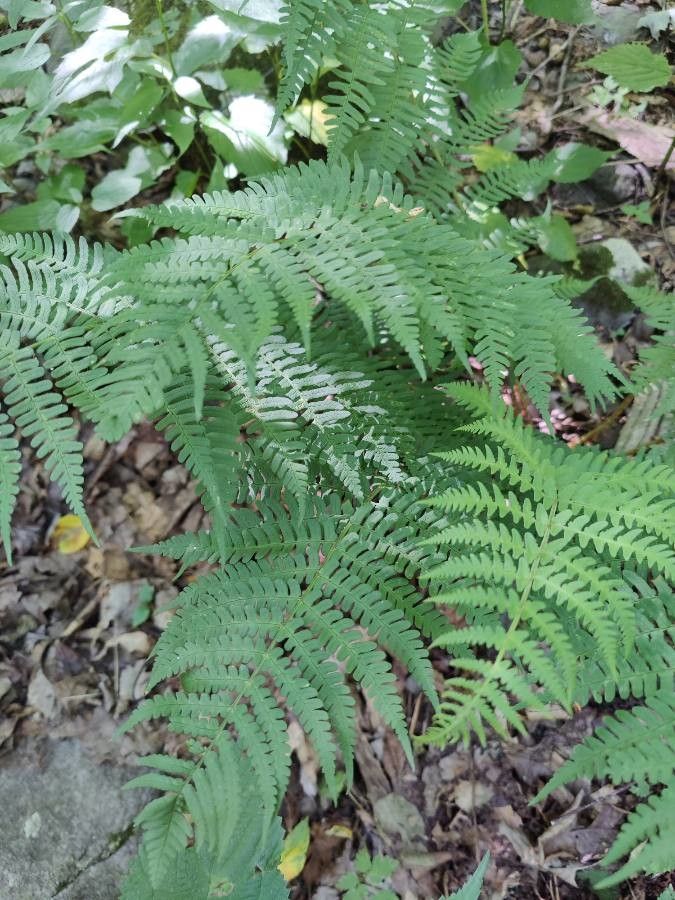
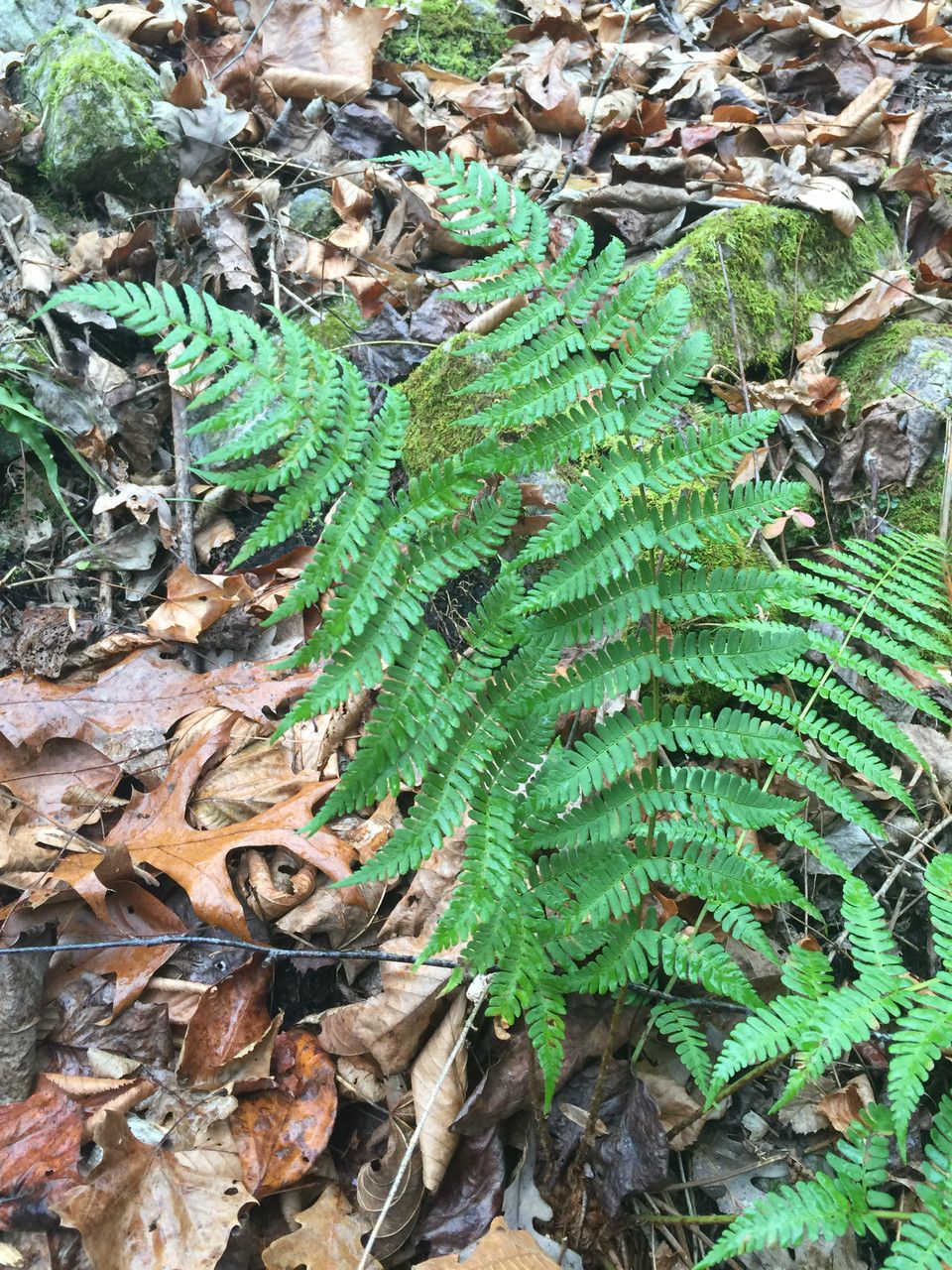
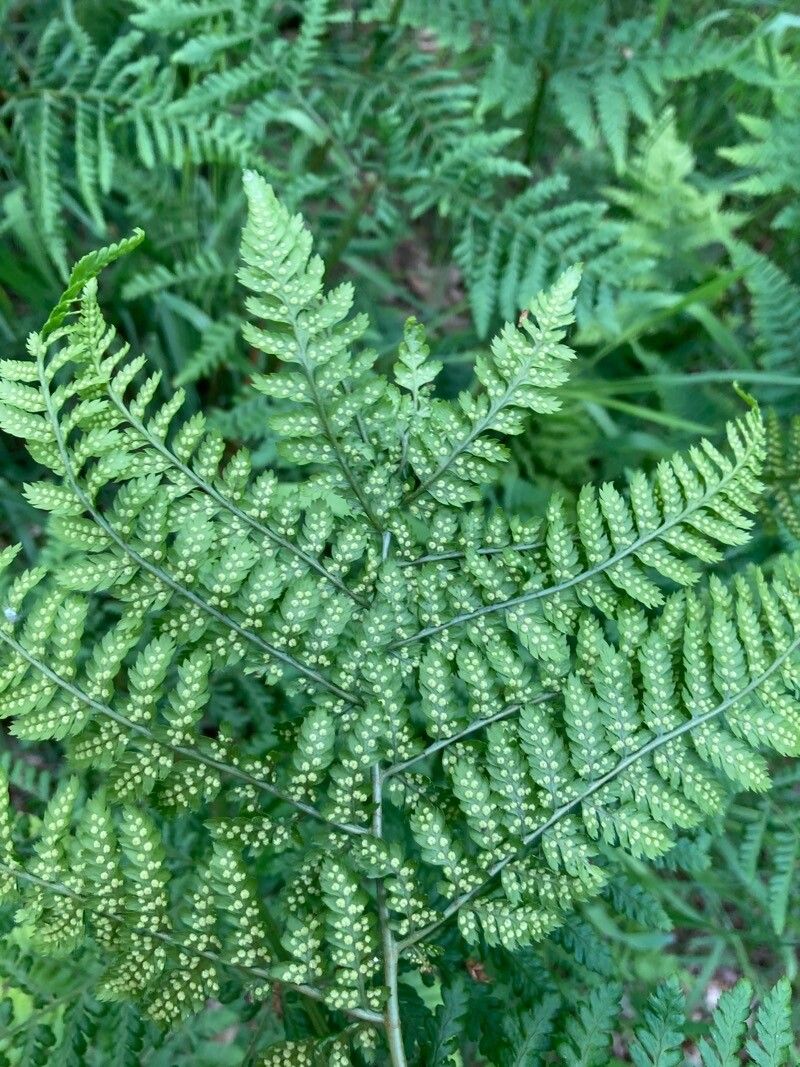
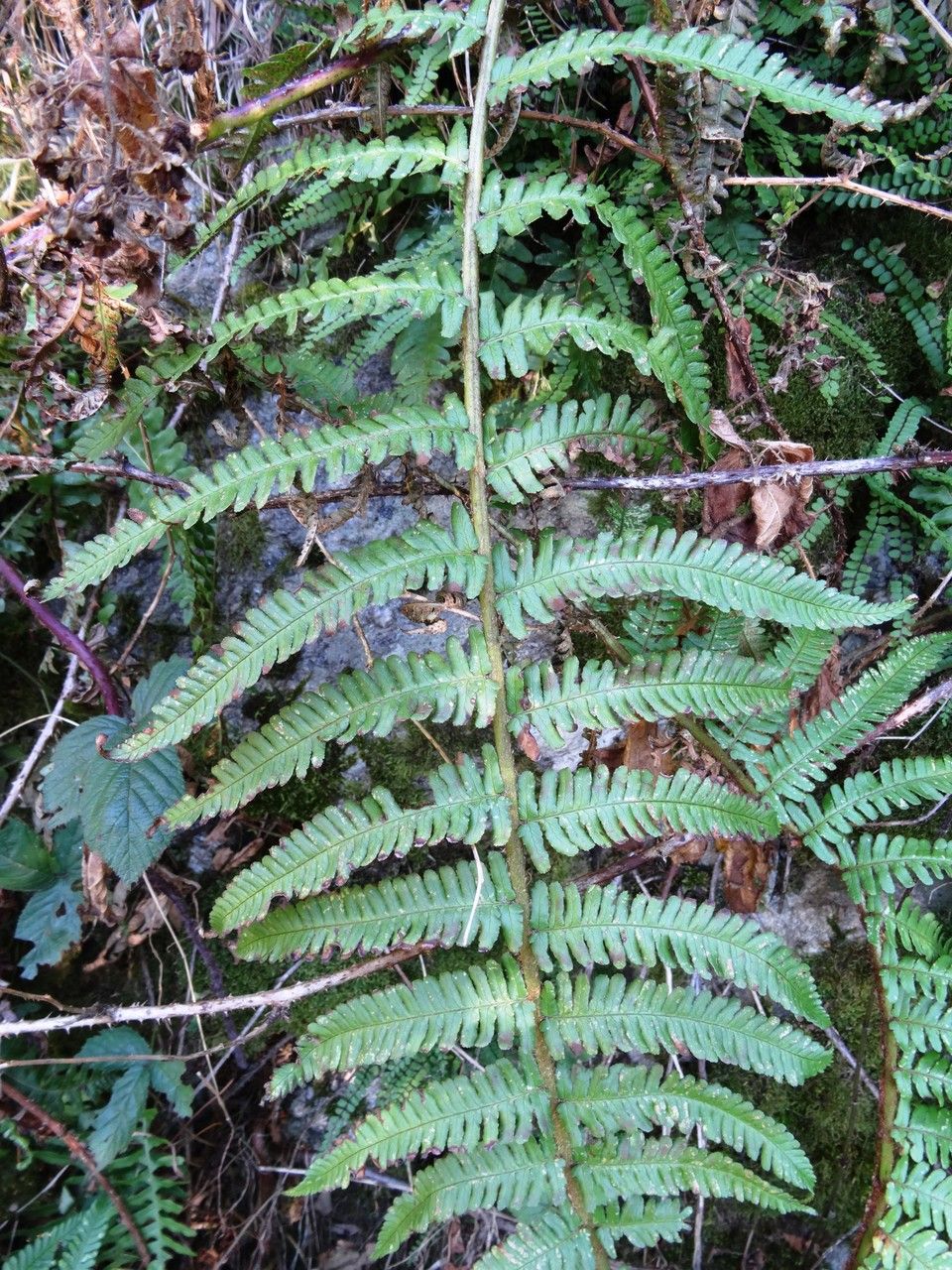
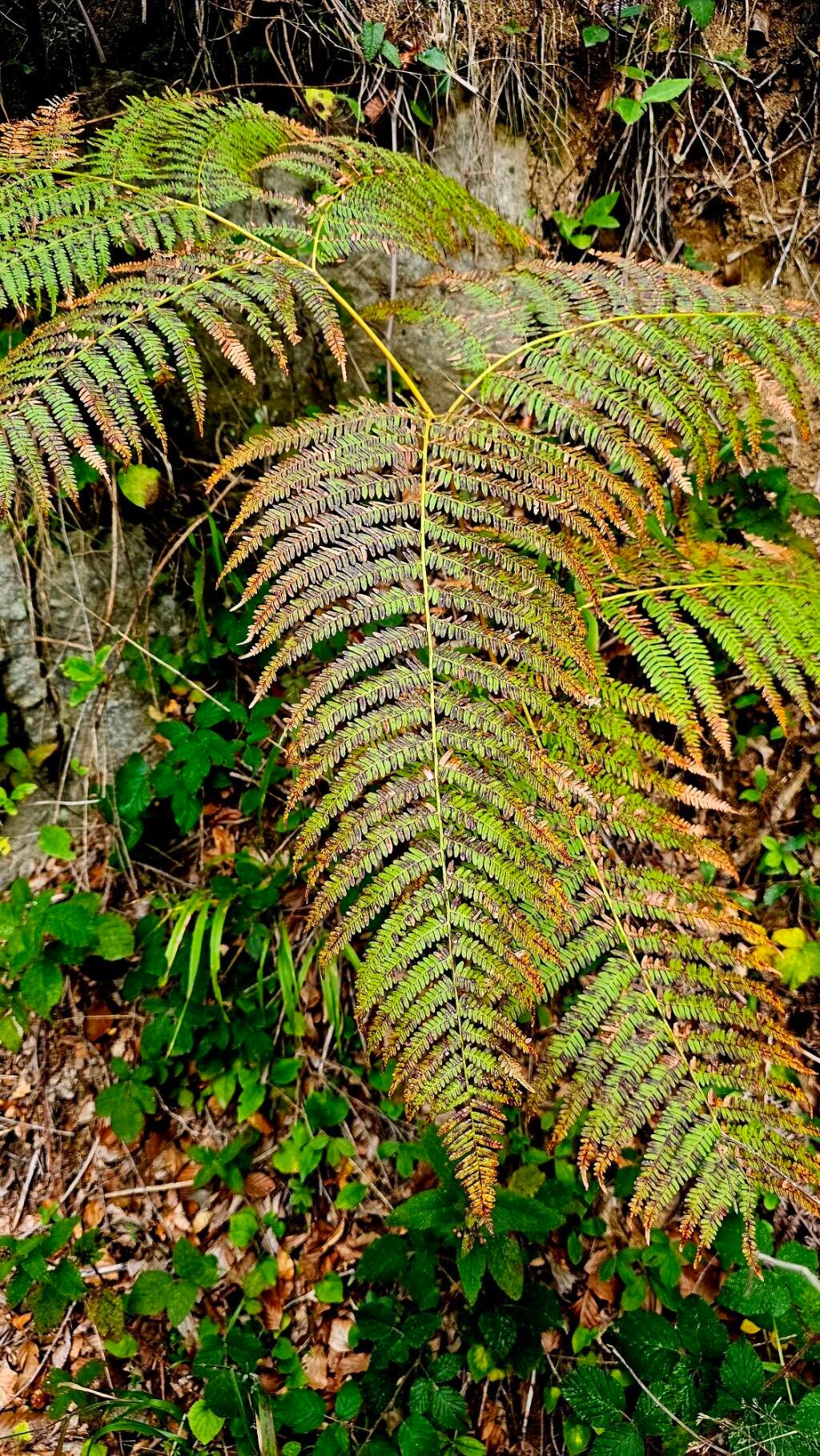
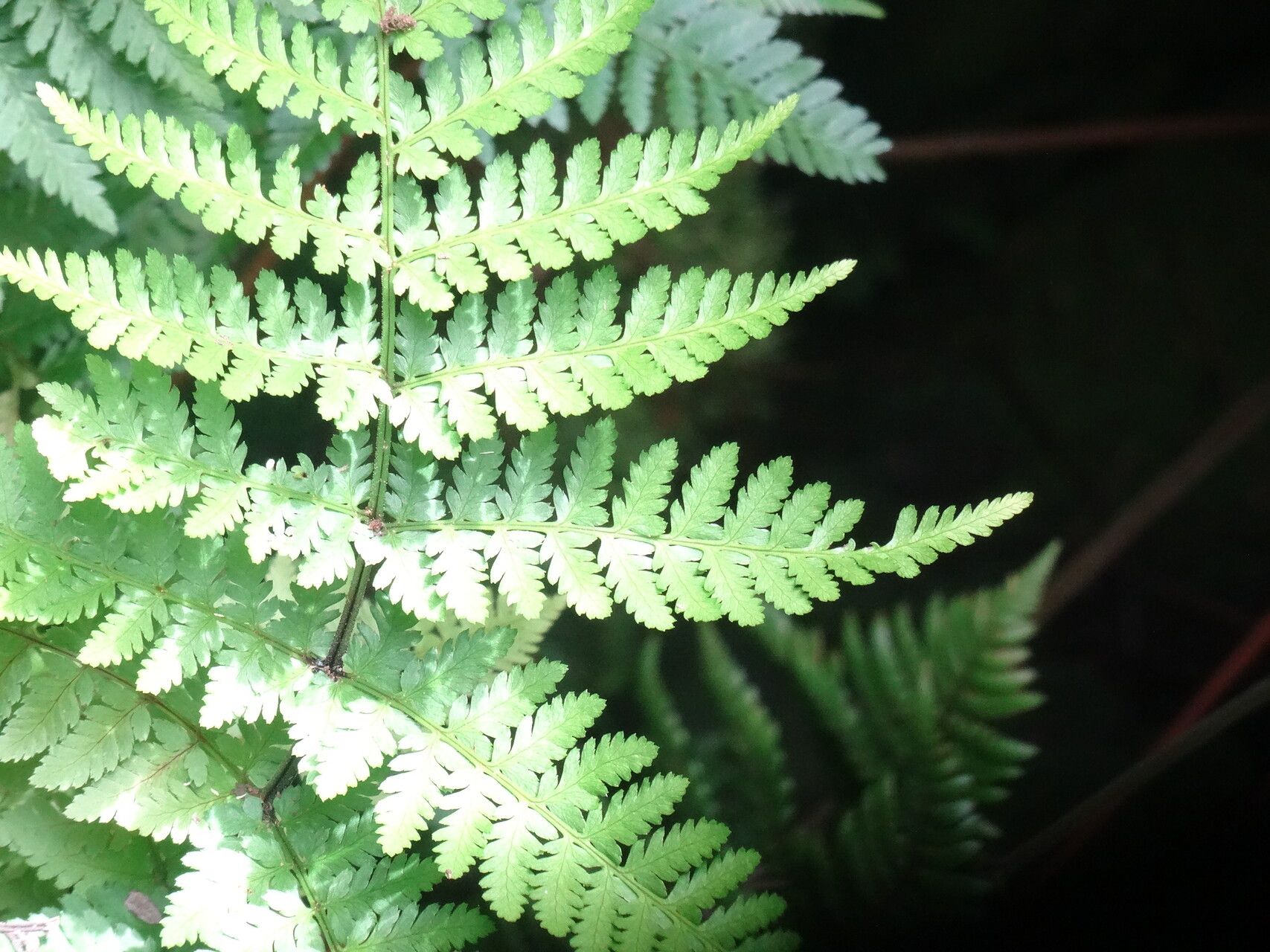
Dryopteris marginalis, commonly known as the marginal wood fern, is a species of fern native to North America. It belongs to the Dryopteridaceae family and can thrive in various habitats, including forests, rocky slopes, and wetlands.
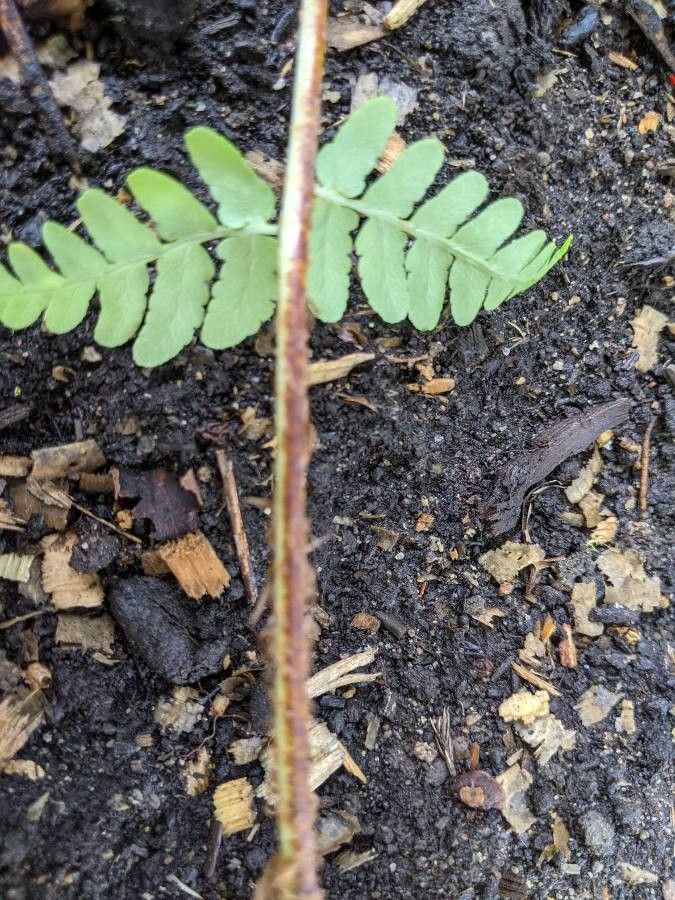
This plant features fronds that grow up to 2 feet in length and are triangular in shape with finely divided leaflets. The fronds emerge from a central crown and are supported by dark brown or black stalks.
Dryopteris marginalis prefers moist soil conditions but can tolerate some drought once established. Although it is shade-tolerant, it grows best with some sunlight exposure.
Woodfern leaves resemble a squirrel's tail, with each leaf neatly arranged along the stem. The leaves gradually shorten as they extend from the base to the tip. This orderly arrangement of woodfern leaves can be quite soothing for those with obsessive-compulsive tendencies. FUN FACT · FROM THE LIBRARY
Historically, Native American tribes have used this plant for medicinal purposes to treat various ailments such as fever, coughs, and rheumatism.
Overall, Dryopteris marginalis is an attractive fern that adds texture and interest to any garden or landscape setting. It also offers ecological benefits such as erosion control and providing habitat for wildlife.
Marginal wood fern has strong disease resistance and is usually not susceptible to illnesses. However, it can be affected by pests and diseases present in its environment. These infections are generally mild. Regarding care, this plant needs moderate maintenance. It should be pruned regularly to preserve a tidy appearance and support healthy growth. Fertilizing can also help encourage flowering. Marginal wood fern is suitable for anyone with outdoor space, like a garden or patio, and does not require extensive gardening experience. It may need more attention when kept indoors.
How to keep Dryopteris Marginalis.
Light
Marginal wood fern does well with moderate sunlight but is sturdy enough to tolerate locations with limited light. Excessive sun can harm its growth, so shadier areas encourage more lush foliage.
Water
The marginal wood fern thrives in humid, shaded environments, where it absorbs moisture from the air. It does best with weekly watering, but care should be taken to avoid overwatering. As an evergreen fern, it keeps its foliage throughout the year, so it needs regular hydration to maintain a lush appearance.
Humidity
This plant needs special care because it loves high humidity levels of 60-80% or more. The best way to achieve this is by placing a humidifier near the plant. Daily misting is also essential! Make sure the room has good ventilation.
Temperature
In its native habitat, marginal wood fern is commonly found where temperatures fluctuate from 41 to 95 °F (5 to 35 ℃). It prefers cooler climates and may need extra shade in summer to guard it against excessive heat.
Fertilizer
Generally, one application of fertilizer in spring is enough for Marginal wood fern, though multiple feedings can boost growth. Fertilize every one to one and a half months. Feeding improves leaf appearance and function, helping maintain even color and a healthy texture. It also promotes root development and nutrient uptake, supporting the plant's long-term health.
Pruning
To promote healthy growth, prune marginal wood fern annually between early and late spring. Remove any old or damaged fronds to improve airflow and prevent overcrowding. Always use clean, sharp tools to reduce the risk of disease. For more detailed guidance, consider consulting resources such as the Royal Horticultural Society.
Botanical profile.
- Plant Type
- Herb
- Life Cycle
- Perennial
- Genus
- Dryopteris
- Family
- Dryopteridaceae
- Hardiness Zone
- 4-9
- Mature Height
- 46 cm to 91 cm
- Mature Spread
- 61 cm to 91 cm
- Leaf Color
- Green, Blue, Yellow, Gold, Brown
- Leaf Type
- Evergreen
- Planting Time
- Summer, Autumn
- Native Area
- Georgia, Denmark
Other names.
Reader questions.
What do I do if I give my Marginal wood fern too much water or too little water?
Overwatering is a common issue that can harm your Marginal wood fern by causing its stems and leaves to wilt and turn yellow. It can also lead to serious diseases like root rot, mold, and mildew that can kill the plant. Underwatering is less common, but when it happens, the leaves of your Marginal wood fern may become brittle and brown. It's important to identify signs of overwatering early and reduce your watering schedule immediately. If you notice poor soil drainage, replace it with a well-draining potting mix. If you see signs of underwatering, simply water more regularly until the signs subside.
Why should I put fertilizer on my Marginal wood fern?
The Marginal wood fern is mainly composed of leaves, and proper fertilization is crucial for maintaining their appearance and functionality. By fertilizing the fern, you can ensure that the leaves maintain consistent color and a healthy texture. Additionally, fertilization supports the fern's root system by aiding the growth of new roots and maintaining existing ones. This not only promotes the fern's current health but also improves its ability to absorb nutrients from the soil over time.
What are the sunlight requirements for Marginal wood fern?
Marginal wood fern needs varying amounts of sunlight to thrive. It can do well in partial sun, requiring about 3-6 hours of sunlight daily, and can also adapt to full shade conditions, where it gets less than 3 hours of sunlight. It's important to observe the movement of sunlight through your garden to find spots that offer the right balance of light and shade, ensuring the plants' well-being. Too much sun exposure can be detrimental, leading to symptoms like smaller leaves, leggy growth, faster leaf drop, and even leaf scorching, among others.
What are the essential care tips for Marginal wood fern?
Marginal wood fern (Dryopteris marginalis) thrives in native settings where temperatures fluctuate between 41 to 95 °F (5 to 35 °C), favoring cooler climates. It may need additional shade during summer to protect it from excessive heat. Thanks to its strong cold resistance, special frost protection measures aren't usually essential. However, in winter, if temperatures are expected to drop below -30°C, protecting the fern with soil or straw coverings is recommended. Also, watering the plant abundantly before the first freeze in autumn to keep the soil moist can help prevent drought and water scarcity during the colder months.
How often do I need to water my Marginal wood fern?
If your Marginal wood fern is in a pot, you can determine if it needs water by checking the soil. Simply stick your finger into the soil and if the top two to three inches are dry, it's time to water it. If your Marginal wood fern is planted outdoors, you can use the same method to check the soil. Once the top few inches are dry, it's time to water. Typically, during the spring and early fall, you'll need to water this plant about once a week. However, in extremely hot weather, you may need to water it twice a week or even more. It's worth noting that mature, well-established Marginal wood ferns have the ability to withstand drought.
When should I fertilize my Marginal wood fern?
To care for your Marginal wood fern, start by growing it outdoors each year. In early spring, watch for new growth to appear, which signals it's time to fertilize. Generally, one application of fertilizer will suffice. However, if you want to promote maximal growth, you can fertilize multiple times during spring and early summer. In this case, aim to feed your fern approximately once every month to a month and a half.
How can artificial lighting support Marginal wood fern indoors?
When natural sunlight is not adequate, especially in winter or less sunny spaces, artificial lights can be a viable alternative to support Marginal wood fern's growth. A variety of artificial light options exist, with LED lights being a popular choice due to their ability to provide specific wavelengths needed for plant growth. The guidance for artificial lighting includes selecting the correct intensity based on plant type (30-50W/sq ft for full sun plants, 20-30W/sq ft for partial sun, and 10-20W/sq ft for full shade), positioning the light source 12-36 inches above the plant, and ensuring plants receive 8-12 hours of light per day to mimic natural daylight conditions.
How does low temperature affect Marginal wood fern and what are the solutions?
Marginal wood fern is cold-tolerant, best thriving when the temperature stays above 5°C. During winter, it's advised to keep temperatures above -25°C. If temperatures fall below -30°C, you might not notice changes in the winter, but there could be decreased sprouting or no sprouting in the spring. A solution for the spring following such low-temperature exposure is to remove any parts of the plant that have failed to sprout.
How often should I water my Marginal wood fern?
To properly water your Marginal wood fern, make sure to give it enough water without being shy. Wait until the top two to three inches of soil are dry, then water the plant thoroughly until the entire soil is soaked. It's important to add enough water so that excess water drains out of the pot through the drainage holes. If you don't see any excess water draining, it means you haven't watered enough. However, be careful not to let water accumulate in the soil, as this can harm the plant. On the other hand, if water is not draining well, it indicates that the soil doesn't drain properly, which is not good for the plant's health. If the plant is outside, receiving about 1 inch of rain per week should be enough.
When is it not a good idea to add fertilizer to my Marginal wood fern?
During late fall and winter, your Marginal wood fern will go into a dormant phase, meaning it won't grow anymore. So, it's best to avoid fertilizing it during this time. In spring and summer, you can fertilize it multiple times but remember to reduce the rate as summer approaches because the fern's growth rate will also slow down. In general, it's not a good idea to fertilize the fern when it's extremely hot or when the soil is very dry. Doing so can stress the fern and cause it to die earlier than expected.
What symptoms indicate that Marginal wood fern is receiving insufficient light?
Symptoms of insufficient light in Marginal wood fern include smaller new leaves, leggy or sparse growth, faster leaf drop, slower or no new growth, lighter-colored new leaves, and conditions like chlorosis and sunscald. These signs suggest that the plant is not receiving enough sunlight, affecting its ability to grow and maintain health. Conversely, overexposure can lead to leaf curling, wilting, and leaf scorching, indicating that the plant is receiving too much light.
What should I do if my Marginal wood fern is exposed to high temperatures?
During summer, it's vital to ensure that Marginal wood fern does not endure temperatures above 35°C. Exposure to temperatures exceeding 38°C can cause the leaves to lighten in color, curl, become prone to sunburn, and in severe cases, lead the whole plant to wilt and dry out. To mitigate these effects, trim away any sunburned and dried-up parts of the plant. Move the plant to a shaded location, especially away from the midday and afternoon sun, or use a shade cloth. Additionally, watering the plant in the morning and evening can help maintain soil moisture, providing relief from high temperatures.