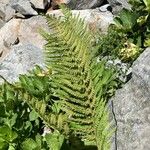
Dryopteris villarii
Rigid buckler fern · Wood Fern
Description
Source: wikipedia (CC BY-SA)Dryopteris villarii, commonly known as the rigid buckler fern, is a perennial leptosporangiate fern native to Central and South East Europe as well as the Western Caucasus. It was first described in 1915.
💡 Woodfern leaves resemble a squirrel's tail, with each leaf neatly arranged along the stem. The leaves gradually shorten as they extend from the base to the tip. This orderly arrangement of woodfern leaves can be quite soothing for those with obsessive-compulsive tendencies.
Care Guide
💧 Water
☀️ Light Full shade
The rigid buckler fern is native to habitats such as forest understories and rocky sites that provide natural shade. Its ideal light exposure is Full Shade, though it can tolerate Partial Sun.
What are the sunlight requirements for Rigid Buckler Fern (Dryopteris villarii)?
Rigid Buckler Fern, also known by its botanical name Dryopteris villarii, thrives under specific sunlight conditions. For optimal growth, it requires 'Full shade,' which is defined as receiving less than 3 hours of sunlight per day. It can also tolerate 'Partial sun,' meaning it can grow well in areas that receive about 3 to 6 hours of sunlight daily. When planning where to plant your Rigid Buckler Fern, it's crucial to observe how sunlight moves through your garden throughout the day. Choosing locations that offer the right balance of light and shade will ensure the plant's health and happiness, as highlighted in the warning to watch how sunlight gracefully moves through your garden and to select spots that provide the ideal mix of light and shade for your plants.
🌡️ Temperature 20–37.8°C
What is the name of the fern?
The name of the fern is Rigid buckler fern.
What is the botanical name of Rigid buckler fern?
The botanical name of Rigid buckler fern is Dryopteris villarii.
💨 Humidity
🪴 Soil 6-7
🌱 Fertilizer
🪴 Pot & Repot
✂️ Pruning
To help your rigid buckler fern thrive, prune it in early spring by removing dead or damaged fronds. This enhances growth and improves airflow. Be careful not to trim excessively, as this can stress the plant. Pruning in accordance with the fern's growth cycle boosts its vigor and helps prevent disease, ensuring lush foliage.
🌿 Propagating
🐛 Diseases & pets
☠️ Toxicity
Characteristics
- Plant Type
- Fern
- Life Cycle
- Perennial
- Genus
- Dryopteris
- Family
- Polypodiaceae
- Hardiness Zone
- 10-12
- Mature Height
- 30 cm to 40 cm
- Mature Spread
- 30 cm to 61 cm
- Leaf Type
- Deciduous
- Native Area
- Germany, Austria, Italy, Switzerland, Serbia, Montenegro, Bulgaria, Albania, United Kingdom, Greece, Croatia, Slovenia, France