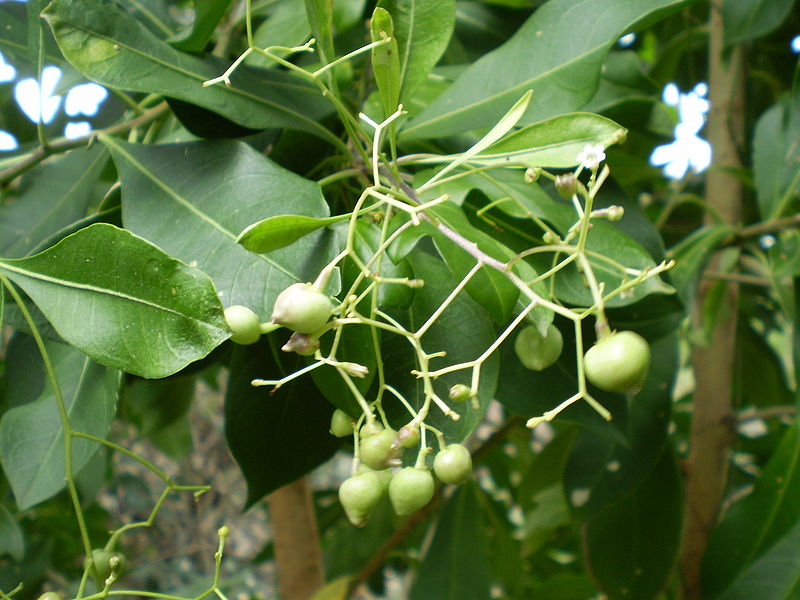
Duboisia myoporoides, commonly known as corkwood or pituri, is a small tree or shrub native to Australia. It belongs to the Solanaceae family and is renowned for its medicinal properties. The plant features smooth bark and glossy green, oval-shaped leaves with pointed tips. It produces small white flowers, followed by green berries that turn black when ripe.
The leaves of Duboisia myoporoides contain alkaloids such as hyoscyamine and scopolamine, which indigenous Australians have used for centuries for medicinal purposes, including pain relief, sedation, and treatment of respiratory conditions.
In the pharmaceutical industry, the plant has been utilized to produce drugs such as atropine, which is used to treat bradycardia (slow heart rate) and other heart conditions.
Duboisia myoporoides thrives in well-drained soils and can grow in either full sun or partial shade. It can be propagated from seeds or cuttings but requires regular pruning to maintain its shape.
While Duboisia myoporoides offers many benefits, it can be toxic if consumed in large quantities. Therefore, it should only be used under medical supervision by trained professionals who understand its potential risks and benefits.
The corkwood tree is fairly disease-resistant and typically not susceptible to illnesses. Regarding care, this plant is fairly low-maintenance. When grown outdoors it needs only light watering, and larger specimens usually do not require pruning. Smaller plants, however, should be trimmed after they finish blooming. The corkwood tree is well-suited for anyone with an outdoor area, such as a garden or a deck, and does not demand extensive care experience.
How to keep Duboisia Myoporoides.
Light
The Corkwood tree originates in open habitats, such as sunny meadows and forest edges, which offer abundant light. It does best in Full Sun but can also tolerate Partial Sun, adapting well to a range of sunlight conditions.
Temperature
Corkwood tree is fairly adaptable to heat, tolerating high temperatures and wide temperature fluctuations. When it is hot, care should be taken with watering and providing adequate shade to prevent sunburn. Conversely, Corkwood tree has limited tolerance for cold. While it can endure some cold, very low temperatures can cause frost damage.
Fertilizer
Fertilize your Corkwood tree in early spring to encourage healthy growth. Regular fertilization improves overall health, leading to vigorous growth, increased resilience to harsh conditions, and enhanced resistance to pests and diseases. Maintain a specific fertilization schedule for your Corkwood tree to promote vibrant, deeply colored foliage and a lush appearance.
Pruning
The corkwood tree is an evergreen plant celebrated for its height and fragrant white flowers. To maintain its health and encourage abundant flowering, it is important to prune the tree in early spring. This process involves removing dead wood, thinning dense branches, and shaping the tree to enhance air circulation. Be sure to sterilize your tools before pruning to prevent the spread of disease. It is also crucial to time your pruning to align with the tree's growth cycle for the best results.
Botanical profile.
- Plant Type
- Tree
- Life Cycle
- Perennial
- Genus
- Duboisia
- Family
- Solanaceae
- Hardiness Zone
- 9-11
- Mature Height
- 3.05 m to 10.06 m
- Mature Spread
- 2.13 m to 3.96 m
- Leaf Color
- Dark Green
- Leaf Type
- Evergreen
- Flower Color
- White
- Flower Size
- 0.51 cm to 1.02 cm
- Bloom Time
- Mid spring, Late spring, Early summer
- Planting Time
- Summer
- Harvest Time
- Mid summer, Late summer, Early fall