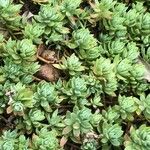
Dudleya greenei
Greene's liveforever · Moonsilver · Lilac Mist · Greene's dudleya
Description
Source: leafsnapDudleya greenei, commonly known as Greene's dudleya, is a succulent plant species native to California, specifically the Channel Islands. It belongs to the Crassulaceae family and is characterized by its rosette growth habit. The plant features fleshy, blue-green leaves covered with a powdery coating, which are arranged in an overlapping pattern to form an attractive, symmetrical shape. Typically, Dudleya greenei grows up to 6 inches tall and 8 inches wide, making it an ideal choice for container gardening or rock gardens. It thrives in well-draining soil under full sun exposure but can also tolerate partial shade. During the summer months, the plant produces tall stalks adorned with yellow flowers, which attract pollinators such as bees and butterflies. While Dudleya greenei is drought-tolerant, it does require occasional watering during extended dry periods. Due to its unique appearance and low maintenance requirements, Dudleya greenei has gained popularity among succulent enthusiasts and landscapers seeking drought-tolerant plants for xeriscaping projects. It is important to note that this species is protected under California law because of its limited distribution on the Channel Islands. Therefore, it should not be collected or disturbed from its natural habitat without proper permits or authorization from relevant authorities.
Care Guide
💧 Water Every 7 days
Greene's liveforever is an evergreen plant known for its exceptional drought tolerance, thriving in dry conditions. It requires minimal watering—ideally just once every 2 to 3 weeks—to prevent root rot. Typically grown outdoors, this plant retains its water-storing leaves year-round, which further reduces its watering needs.
How should I water my Greene's liveforever plant?
To ensure the well-being of the Greene's liveforever plant, it is recommended to use filtered water at room temperature for watering. Tap water may contain harmful particles, so filtering it is preferable. It's also important to avoid using cold water as this plant is accustomed to warm environments and cold water can be a shock to its system. Additionally, overhead watering should be avoided as it can cause problems with the foliage. Instead, apply the filtered room temperature water directly to the soil until it is fully saturated. This method is beneficial for the plant as it helps moisten the roots and supports their growth and nutrient absorption in the soil.
What should I do if I give too much or too little water to my Greene's liveforever?
When taking care of your Greene's liveforever, both overwatering and underwatering can harm its health. However, overwatering is a more common problem. When this plant gets too much water, its stems and leaves may wilt and turn yellow. Overwatering for a long time can also lead to diseases like root rot, mold, and mildew, which can be fatal for your plant. Underwatering is less likely to happen to Greene's liveforever because it has good drought tolerance. But it's still possible, and if it occurs, the leaves may become brittle and brown. It's important to recognize the signs of overwatering early on. Some diseases caused by overwatering, such as root rot, may be irreversible if you wait too long. If you notice early signs of overwatering, reduce your watering schedule immediately. Check the soil quality where your plant grows. If it drains poorly, replace it with loose, well-draining potting mix. If you notice signs of underwatering, simply water more regularly until the signs disappear.
How frequently should I water my Greene's liveforever plant?
If your Greene's liveforever plant is in a pot, the most precise way to determine if it needs water is by checking the soil with your finger. If the top two to three inches of soil feel dry, it's time to water it. Similarly, if you are growing it outdoors in the ground, you can use this method to test the soil as well. When the top few inches of soil have dried out, it's time to add some water. Typically, during spring and early fall, watering once a week is sufficient. However, during extremely hot weather, you may need to water about twice or more per week. It's worth noting that mature, well-established Greene's liveforever plants can withstand droughts quite well.
How much water does my Greene's liveforever plant need?
To properly water your Greene's liveforever, don't hold back on the amount of water you provide. Wait until the top few inches of soil are dry, then give the plant a thorough watering, making sure to saturate the entire soil. It's important to add enough water that it flows through the drainage holes at the bottom of the pot. If you don't see excess water draining, you might have given too little water. However, be careful not to let water accumulate in the soil, as this can harm the plant. On the other hand, if water doesn't drain properly from the pot, it could mean the soil doesn't drain well, which is not good for the plant's health. If the plant is outdoors, about an inch of rain per week should be enough.
How do I give water to my Greene's liveforever plant as it grows at different stages?
The water needs of the Greene's liveforever depend on its growth stages. In the first few years or after transplanting, you'll need to give more water because the plant is developing new roots for future growth. Once it has matured, less water is necessary. Additionally, during the bloom period, when flowers are developing, more water may be needed.
☀️ Light Full sun
Greene's liveforever grows best in full sun but can persist in locations with reduced light. Its origins in very sunny habitats contribute to its vigorous growth. Too little light can hinder its development, while excessive sun may cause scorching. Its capacity to tolerate changing light conditions enhances its hardiness.
What are the sunlight requirements for Greene's liveforever?
Greene's liveforever requires full sun exposure, benefitting from more than 6 hours of sunlight daily, but it can also tolerate partial sun, receiving about 3-6 hours of sunlight. Observing how sunlight moves through your garden is crucial to find the ideal balance of light and shade for the plant, ensuring its growth and health. This resilient plant is native to areas with pronounced sunlight, which is vital for its vigorous growth. However, inadequate light may hinder its growth, while too much can cause damage.
How does artificial lighting support indoor plants like Greene's liveforever?
For indoor plants, when natural sunlight is not sufficient, especially during winter or in less sunny locations, artificial lights are essential. They ensure optimal growth by providing vital light energy. LED lights are often chosen for indoor plant lighting as they can be customized to the specific light wavelengths needed by the plant. Full sun plants require 30-50W per square foot, partial sun plants 20-30W per square foot, and full shade plants need 10-20W per square foot of artificial light. The light source should be placed 12-36 inches above the plant to mimic natural sunlight conditions, and most plants benefit from 8-12 hours of artificial light per day.
What are the symptoms of inadequate lighting for Greene's liveforever?
Symptoms of inadequate lighting in Greene's liveforever include smaller new leaves, leggy or sparse growth, faster leaf drop, slower or no new growth, and lighter-colored new leaves. Conditions like chlorosis, where leaves lose their green color and turn yellow, sunscald with pale or necrotic areas on leaves, leaf curling to minimize water loss, wilting from excessive water loss, and leaf scorching with brown crispy edges are indicative of too much sunlight or poor light conditions.
What solutions can improve the light conditions for Greene's liveforever?
To improve light conditions for Greene's liveforever, indoors, you can gradually move the plant to a sunnier spot or use artificial lighting if the plant is large. Ensure it gets at least 6 hours of direct sunlight daily and consider using a desk or ceiling lamp, or investing in grow lights. Outdoors, move plants to sunnier spots gradually to prevent sunburn. If the issue is due to obstructions, identify what's blocking sunlight and consider pruning or transplanting smaller plants to more illuminated areas. Remember, parts of the plant damaged by insufficient sunlight may not recover, but new growth should be healthy with improved light exposure.
🌡️ Temperature 20–37.8°C
Although Greene's liveforever can tolerate some heat, it mainly flourishes and grows in the cooler seasons and goes dormant in summer. In very hot summer temperatures, give it shade to prevent scorching from strong sunlight. Watering should be reduced or stopped during the hottest part of the year to avoid root rot. Greene's liveforever shows vigorous growth in winter and spring. As long as temperatures do not fall too low, it will continue to grow steadily.
💨 Humidity dry (<40%)
This plant prefers dry conditions, so don't mist it. However, watering it less often can also thrive in higher humidity.
🪴 Soil 6-7
🌱 Fertilizer
Greene's liveforever requires only light fertilizer applications once or twice a year during the growing season. Do not fertilize in winter or summer when the plant is dormant. Cut back on fertilizer for repotted plants and wait a couple of months after repotting before applying fertilizer. Fertilizing promotes healthy growth and encourages blooms.
Why should I put fertilizer on my Greene's liveforever?
The leaves of the Greene's liveforever play a vital role in its overall structure, and fertilization is key to keeping these leaves looking their best and functioning properly. By properly fertilizing your Greene's liveforever, you can ensure that its leaves maintain a consistent color and healthy texture. Fertilization also has benefits below the soil's surface, as it helps the plant generate new roots and maintain existing ones. This means that fertilizing not only promotes current plant health but also enhances its ability to absorb nutrients from the soil in the long run.
When should I fertilize my Greene's liveforever?
If you grow your Greene's liveforever outdoors, it will produce new growth in early spring. This is a sign that it's time to fertilize the plant. In most cases, one application of fertilizer in the spring will be enough for the plant to thrive. However, if you want to maximize its growth, you can fertilize it multiple times during the spring and early summer. If you choose this option, feed your Greene's liveforever about once every month to a month and a half.
When is it not a good idea to fertilize my Greene's liveforever?
During the late fall and winter, your Greene's liveforever goes into a dormant phase where it stops growing. It's best not to fertilize it during this time. In the spring and summer, if you decide to fertilize, start reducing the amount as summer approaches because the plant's growth rate slows down. It's generally not a good idea to fertilize your Greene's liveforever during extremely hot weather or when the soil is very dry. Doing so can cause your plant to become stressed and die prematurely.
What kind of fertilizer does my Greene's liveforever plant require?
Choosing the best fertilizer for a Greene's liveforever is actually quite simple. These plants thrive on a general-purpose garden fertilizer that contains equal amounts of nitrogen, phosphorus, and potassium. Opt for a fertilizer with a ratio of 10-10-10 or something similar, as this will be effective. It's wise to steer clear of fertilizers with high nitrogen levels when unsure. Granular fertilizers, typically slow-release, are ideal for Greene's liveforever and easy to apply to the soil. Additionally, feeding your plant with organic soil amendments like compost can be beneficial.
How should I put fertilizer on my Greene's liveforever?
To ensure proper growth of your Greene's liveforever, wait until its first leaves emerge in early spring. Once you notice this, apply a balanced granular slow-release fertilizer to the soil surrounding the base of the plant. If desired, you can repeat this process later in the season. When applying fertilizer, remember to focus on the soil at the base of the plant rather than directly on the plant itself. This may require moving some leaves to access the soil above the roots. Additionally, watering your Greene's liveforever before and after feeding it is generally a good practice.
🪴 Pot & Repot 2-3 years
Greene's liveforever is a rosette-forming succulent that should be repotted every 2-3 years in the spring. Use a shallow, well-draining pot that is slightly larger than the previous one. Fill it with fresh succulent soil and water sparingly after repotting to prevent rot and aid the plant's recovery.
✂️ Pruning
Greene's liveforever is characterized by its thick, fleshy leaves and rosette growth pattern. To encourage healthy growth, prune it minimally from early to late spring, and make sure to remove any dead leaves to improve airflow. Regularly check for pests and ensure the plant is in well-draining soil to help it thrive. Pruning not only promotes healthier growth but also enhances the plant's vibrant appearance.
🌿 Propagating
🐛 Diseases & pets
☠️ Toxicity
Characteristics
- Plant Type
- Herb
- Life Cycle
- Perennial
- Genus
- Dudleya
- Family
- Crassulaceae
- Hardiness Zone
- 9-11
- Mature Height
- 10 cm to 15 cm
- Mature Spread
- 10 cm to 15 cm
- Leaf Color
- Green, Blue
- Leaf Type
- Evergreen
- Flower Color
- Yellow
- Flower Size
- 1.02 cm to 2.03 cm
- Bloom Time
- Mid spring, Late spring, Early summer
- Planting Time
- Spring, Summer, Autumn
- Harvest Time
- Summer
- Native Area
- North America, Central America