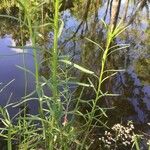
Dulichium arundinaceum
Three-Way Sedge · Threeway sedge · Stargrass
Description
Source: leafsnapDulichium arundinaceum, commonly known as three-way sedge or umbrella sedge, is a perennial plant belonging to the Cyperaceae family. Native to North America, it thrives in wetlands such as marshes, swamps, and bogs. This plant has a distinctive appearance, featuring triangular stems that can grow up to 1 meter tall, with umbrella-like clusters of small, brownish-green flowers at the top. Dulichium arundinaceum plays a vital role in wetland ecosystems by providing habitat for various species of birds, insects, and mammals. Its extensive root system also helps prevent erosion by stabilizing the soil. Indigenous people have utilized this plant for various purposes, including making baskets from its stems and using it medicinally to treat ailments like diarrhea and fever. Overall, Dulichium arundinaceum is an essential component of wetland ecosystems, with unique physical characteristics that make it easily recognizable.
Care Guide
💧 Water Every 7 days
Threeway sedge thrives in consistently moist soils and shows moderate tolerance to drought. To maintain its moisture levels, it benefits from weekly watering. As an herbaceous perennial, the growth of threeway sedge depends on water availability, and it flourishes in regions with regular rainfall.
How should I water my Threeway sedge plant?
To properly care for the Threeway sedge, it is important to use filtered water at room temperature. Tap water may contain harmful particles, so using filtered water is recommended. It is also crucial to ensure that the water is not too cold, as this plant is accustomed to warm conditions. Avoid overhead watering, as it can lead to issues with the foliage. Instead, gently soak the soil with filtered room temperature water until it is completely saturated. This method is beneficial for the plant by providing moisture to the roots and aiding in nutrient absorption.
What should I do if I give too much or too little water to my Threeway sedge plant?
Both overwatering and underwatering can harm your Threeway sedge, but overwatering is more commonly experienced. When this species gets too much water, its stems and leaves may wilt and turn yellow. Overwatering for a long time can also cause diseases like root rot, mold, and mildew, which can be fatal to the plant. Although underwatering is less common for Threeway sedge because it can tolerate drought, it is still possible. When underwatering occurs, the leaves of your Threeway sedge will become brittle and brown. It is important to recognize the signs of overwatering early when caring for your Threeway sedge because some of the diseases caused by overwatering, such as root rot, may be irreparable if not addressed promptly. If you notice early signs of overwatering, reduce watering immediately and consider replacing the soil if it drains poorly. Conversely, if you observe signs of under-watering, increase watering frequency until the signs subside.
How often do I need to water my Threeway sedge?
If your Threeway sedge is in a pot, the most accurate way to determine if it needs water is by checking the soil. Plunge your finger into the soil and if the top two to three inches are dry, it's time to water. For Threeway sedge planted in the ground outdoors, the same method applies. When the top few inches of soil have dried out, it's time to add water. Usually, watering once a week in spring and early fall is sufficient. However, during hot weather, you may need to water twice or more per week. It's worth noting that mature, well-established Threeway sedge can tolerate drought quite well.
How much water does my Threeway sedge require?
To properly water your Threeway sedge, don't hesitate to give it a generous amount of water. Wait until the top two to three inches of soil are dry, then water the plant thoroughly. Make sure to saturate the soil completely, allowing excess water to drain from the pot's drainage holes. If you don't see any excess water draining, you may have not watered enough. However, be careful not to let water accumulate in the soil, as this can harm the plant. Alternatively, if there is no drainage, it may indicate poorly draining soil, which is unhealthy for the plant and should be avoided. If the plant is outside, 1 inch of rain per week will suffice.
How should I water my Threeway sedge as it grows?
The water needs of the Threeway sedge can vary depending on its growth stages. In the early years and after transplanting, it requires more water because it focuses on developing new roots for future growth. These roots need extra moisture. As the plant matures, it will need less water. Additionally, during the bloom period, the Threeway sedge may require more water as flower development relies on significant moisture.
☀️ Light Full sun
Threeway sedge comes from habitats with plenty of sunlight, such as the shallow margins of ponds and lakes. It prefers full sun, although it can tolerate partial sun.
🌡️ Temperature 5–37.8°C
Threeway sedge is native to temperate climates and performs best in temperatures from 41 to 100 °F (5 to 38 ℃). When temperatures are at the extremes of this range, seasonal adjustments to temperature may be necessary to optimize its growth conditions.
What temperature is best for Threeway sedge?
Threeway sedge's temperature needs vary depending on the season. During the growing season, which is when it starts to sprout, the ideal temperature range is 65-80℉ (18-27℃). If it gets colder than 15℉ (-10℃), the plant may suffer and its leaves could turn brown and wilt. However, if it's just a short cold snap, Threeway sedge might survive with some assistance. Similarly, during the warmer parts of the year, the plant needs protection from excessively high temperatures. It can tolerate temperatures up to 95-105℉ (35-40℃), but anything higher than that will damage its leaves and blooms. High temperatures can cause wilting, drooping, and even sunburn on the leaves, which are hard for Threeway sedge to recover from. Fortunately, there are several easy ways to address this issue.
The temperature needs for Threeway sedge seedlings in their first year.
If this is the first year you have a Threeway sedge plant outside, it may need some extra care during the coldest months. Frost can cause more damage and prevent the plant from growing back in the spring. To protect it, keep the temperature above 40℉ (5℃) by bringing it inside or using mulch or fabric barriers. In the first year or two, it's best to plant the Threeway sedge in a shadier spot. Smaller and weaker plants have a harder time regulating their temperatures in the heat, so limit their direct sunlight to no more than five hours per day if the temperature exceeds 80℉ (27℃). Use shadecloth and water or mist the plant frequently to control the summer heat.
How do I keep Threeway sedge safe from really hot or really cold weather?
If cold temperatures (below 15℉(-10℃)) happen during the growing season, there are ways to protect Threeway sedge from frost or cold damage. For Threeway sedge grown in containers, simply bring the container indoors in bright, indirect light until temperatures rise above the lower threshold. For ground-planted Threeway sedge, use mulch or horticultural fabric to create an insulated barrier around the plant. This will protect it from frost and cold wind. In temperatures hotter than 80℉(27℃) in the shade during the day, be cautious about exposing Threeway sedge to more than six hours of sunlight per day, particularly in the morning. To reduce direct sunlight during the hottest parts of the day, consider using shade cloth or a fine plastic mesh. Installing a misting system that releases cooling mist around the base of the plant can also help lower ground temperatures throughout the day.
Recommendations for the temperature during the dormant season for Threeway sedge.
Threeway sedge requires a specific amount of cold in winter to remain dormant until it's time to sprout. If it sprouts too early, before the last frost danger is gone, it can be fatal. It's best for winter temperatures to stay below 32℉(0℃), but up to 40℉(5℃) is still okay. In more temperate climates, like woodland rainforests, a warm spell during winter can cause Threeway sedge to sprout prematurely. If frost is still likely, you can protect the new sprout by covering it with clear plastic on stakes. Remove this setup once the danger of frost has passed. Sometimes Threeway sedge can sprout correctly on its own, but this method increases the chance of a successful second sprouting.
💨 Humidity
🪴 Soil
🌱 Fertilizer
For healthy growth, threeway sedge needs balanced fertilizers applied twice a year, in the spring and fall. To prevent root sensitivity and foliage burn, use a diluted solution. As the threeway sedge matures, adjust the fertilizer accordingly. Always apply the fertilizer to moist soil to ensure optimal nutrient absorption.
Why should I add fertilizer to my Threeway sedge?
The structure of the Threeway sedge is mainly made up of its leaves. Fertilization greatly impacts the appearance and function of these leaves. Proper fertilization ensures that the leaves maintain a consistent color and healthy texture. Fertilization also benefits the plant below the ground by promoting the growth of new roots and maintaining existing ones. This not only keeps the plant healthy in the present, but also improves its ability to absorb nutrients from the soil in the future.
When should I fertilize my Threeway sedge plant?
If you grow your Threeway sedge outdoors, it will start growing new leaves in early spring. This is when you should start fertilizing it for the year. Usually, one application of fertilizer is enough for the plant to do well. However, if you want your Threeway sedge to grow as much as possible, you can fertilize it multiple times in spring and early summer. In this case, you can fertilize it about once every month to a month and a half.
When is the best time to not put fertilizer on my Threeway sedge?
During the late fall and winter, your Threeway sedge will go into a dormant phase and stop producing new growth. It is recommended to avoid fertilizing your Threeway sedge during this time. In the spring and summer, if you decide to fertilize, you should start reducing the amount of fertilizer as summer approaches because the growth rate of your Threeway sedge will slow down. In general, it is not a good idea to fertilize your Threeway sedge when the weather is unusually hot or when the soil is very dry. Fertilizing in such conditions can stress your Threeway sedge and cause it to die prematurely.
What type of fertilizer should I use for my Threeway sedge?
Choosing the best fertilizer for a Threeway sedge is actually quite straightforward. These plants do well with a general-purpose garden fertilizer that has equal amounts of nitrogen, phosphorus, and potassium, usually in a 10-10-10 ratio or something similar. It is best to avoid fertilizers with high nitrogen content if you're unsure. Granular fertilizers are often the most effective for Threeway sedges, especially slow-release ones that are easy to apply to the soil. Additionally, feeding your Threeway sedge with organic soil amendments like compost can be beneficial.
How can I give my Threeway sedge plant the nutrients it needs?
To ensure proper growth of your Threeway sedge, wait until the first leaves start emerging in early spring. Once you see this, apply a granular slow-release fertilizer with a balanced formula to the soil around the base of the plant. You can repeat this process later in the season if desired. Remember to always apply the fertilizer to the soil, rather than the plant itself, even if you need to move some leaves aside to access the soil near the roots. Additionally, it's a good idea to water the Threeway sedge before and after applying fertilizer.
🪴 Pot & Repot
✂️ Pruning
Threeway sedge is an aquatic perennial that benefits from pruning between early and late spring. Cutting the dead stems back to ground level encourages new growth and helps prevent fungal issues. Removing spent flowers enhances the plant's vigor, while regular thinning improves air circulation and maintains its aesthetic appeal.
🌿 Propagating
🐛 Diseases & pets
☠️ Toxicity
Characteristics
- Plant Type
- Herb
- Life Cycle
- Perennial
- Genus
- Dulichium
- Family
- Cyperaceae
- Hardiness Zone
- 5-11
- Mature Height
- 0.25 m to 1.07 m
- Mature Spread
- 61 cm
- Leaf Color
- Green
- Leaf Type
- Deciduous
- Flower Size
- 6.35 cm to 30.48 cm
- Bloom Time
- Early summer, Mid summer
- Planting Time
- Spring, Summer
- Harvest Time
- Late summer, Early fall