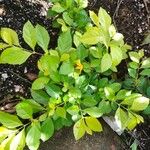
Duranta erecta
دارايي · شبنم طلایی · Golden dewdrops · Skyflower · Pigeon berry
Description
Source: leafsnapDuranta erecta, commonly known as golden dewdrop or pigeon berry, is a tropical shrub native to the Americas. This fast-growing plant can reach heights of up to 6 meters and widths of up to 3 meters. It features glossy green leaves and produces clusters of small, tubular flowers that are typically blue or purple. These flowers are followed by small, round berries that transition from green to yellow as they mature. Duranta erecta is widely used as an ornamental plant due to its attractive foliage and colorful flowers. It can be grown as a hedge or pruned into a tree shape with regular maintenance. The plant prefers full sun but can tolerate partial shade and requires well-draining soil. In addition to its ornamental value, Duranta erecta has been utilized for medicinal purposes by indigenous peoples of the Americas for centuries. The leaves have traditionally been used for their anti-inflammatory properties, while the roots have been employed for their diuretic effects. However, it is important to note that all parts of Duranta erecta are toxic if ingested. Caution should be exercised when handling the plant without gloves, as contact with its sap or thorns on older branches can cause skin irritation.
🌳 Sky Flower offers little-known practical benefits: it draws numerous pollinating insects as well as bird species, which are attracted by its bright flowers and appealing berries. This trait makes Sky Flower a useful plant for maintaining biodiversity within garden ecosystems. Additionally, it has been used as a biological pest-control agent, since it supports predatory insects that feed on common garden pests.
🎭 Brutality, harmfulness, wickedness, forceful defense
Care Guide
💧 Water Every 7 days
Golden dewdrops thrive in the moist, humid conditions typical of tropical environments. Given its moderate drought tolerance, it should be watered every 1-2 weeks. This plant is best grown outdoors and benefits from mulching to retain moisture during its active growing season.
When Should I Water My Golden Dewdrops?
Proper hydration is crucial for the health and robust growth of golden dewdrops. Recognizing the signs indicating a need for watering can prevent unnecessary damage and maintain the plant's overall wellbeing. The indicators include soil dryness, where watering is needed when the top 1-2 inches of soil around the plant are completely dry, and leaf condition, where a vibrant green indicates health, while wilting, fading, or yellowing suggests dehydration. Additionally, leaf drop can be a sign of insufficient water. However, it's crucial to avoid overwatering and underwatering, as they can lead to root rot, fungal infections, dehydration, and stunted growth.
How Should I Water My Golden Dewdrops?
Watering golden dewdrops effectively involves thoroughly watering the plant until water drains from the bottom of the pot, ensuring the roots receive adequate hydration. The soil should be allowed to dry out slightly on the top inch before the next watering to avoid overhydration, as golden dewdrops prefer slightly moist soil. Using a watering can with a narrow spout helps direct water to the plant's base, avoiding excessive moisture on the foliage, which could lead to issues. This technique helps maintain the right moisture balance for healthy growth.
How Much Water Does Golden Dewdrops Really Need?
Golden dewdrops thrive with evenly moist soil, tailored to its environment. Factors influencing watering frequency include pot size, root depth, and plant size. For example, plants in smaller pots dry out faster and need more frequent watering compared to those in larger pots. A general rule is to water the plant thoroughly, allowing the water to reach the root zone, then waiting for the top layer of soil to partially dry before the next watering. Adequate hydration results in healthy, green leaves, while signs like wilting or yellowing leaves and excessive moisture may indicate incorrect water levels. Organic matter improves water retention, and adjusting watering based on climate conditions is essential.
What Kind of Water is Best for Golden Dewdrops?
Golden dewdrops have moderate water sensitivity, preferring well-draining conditions without being overly saturated. Distilled water is ideal for its purity, with filtered and rainwater being suitable alternatives. Tap water is a last resort due to potential chlorine and fluoride content, which can harm the plant. To mitigate chlorine effects, let tap water sit for 24 hours before use, or use a water filter to remove contaminants. The plant prefers room temperature water, avoiding extremes that could shock it.
How Do Golden Dewdrops's Watering Needs Change with the Seasons?
Golden dewdrops' watering needs vary through the seasons. In spring, as growth resumes, keep the soil moderately moist without being waterlogged. During the summer growth spurt, maintain consistent watering, avoiding standing water in the plant saucer and opting for deep watering. As growth slows in autumn, reduce watering to prevent soil from drying out completely, careful not to overwater. In winter, during dormancy, significantly lessen watering but ensure the soil retains slight moisture to prevent drying out.
☀️ Light Full sun
Sky Flower prospers with plentiful light, mirroring its native habitat, which encourages vigorous growth and enhances flowering. Its needs may vary slightly at different growth stages, but a bright environment is generally advantageous. It can withstand some shade without major harm. Still, insufficient or excessively intense light can result in stunted growth or burned leaves.
What are the sunlight requirements for Golden Dewdrops?
Golden Dewdrops, or Duranta erecta, thrives in conditions that closely mirror its native habitat, which includes abundant light to encourage lush growth and vibrant flower bloom. Full sun, defined as over 6 hours of sunlight, is ideal, although the plant can also grow in partial sun, approximately 3-6 hours of sunlight. It's important to observe how sunlight moves through your garden, selecting spots that ensure a balance of light and shade. Despite its preference for well-lit environments, Golden Dewdrops can tolerate slight shade without significant growth hindrance. However, minimal light or overly intense exposure could lead to stunted growth or leaf burn.
How does artificial lighting affect the growth of Golden Dewdrops indoors?
Indoor Golden Dewdrops can benefit greatly from artificial lighting, especially when natural sunlight is insufficient—like in winter or less sunny rooms. Artificial lights, particularly LED due to their customizable light wavelengths, are essential for promoting faster, healthier growth. The amount of artificial light needed varies depending on the light requirements of the plant; full sun plants need 30-50W/sq ft, partial sun plants need 20-30W/sq ft, and full shade plants need 10-20W/sq ft. The artificial light source should be placed 12-36 inches above the plant, mimicking natural sunlight as closely as possible, and should be on for about 8-12 hours per day to match the plant species' natural daylight hours.
What are the symptoms of light deficiency in Golden Dewdrops?
When Golden Dewdrops doesn't receive enough light, especially indoors during winter, it exhibits clear symptoms of light deficiency. These symptoms include smaller new leaves, leggy or sparse growth, premature leaf drop, halted or no new growth, and paler new leaves. Insufficient sunlight leads to low chlorophyll and essential nutrients, highlighted by irregular color patterns or paleness. Chlorosis, where leaves lose their green color, sunscald characterized by damaged tissue due to intense sunlight, leaf curling as a defense against excessive sunlight, wilting from rapid water loss, and leaf scorching, indicating damage from excessive sunlight, are also common signs of not meeting the plant's light requirements.
What solutions can mitigate the effects of light deficiency in Golden Dewdrops?
To counteract light deficiency in Golden Dewdrops, gradually increase light exposure to at least 6 hours of direct sunlight daily for optimal growth. For indoor plants, consider using artificial lights like desk or ceiling lamps for at least 8 hours daily, or invest in professional grow lights if the plant is large. Outdoors, it's crucial to adapt plants gradually to sunnier spots to avoid sunburn. But note that parts of the plant already affected by low light may not recover, though new growth should be healthy. Reducing obstructions by pruning or transplanting during a plant’s dormant phase to a sunnier location can also help. Always aim for a spot with good sunlight and drainage for best results.
🌡️ Temperature 20–37.8°C
Sky Flower is a temperate woody plant that favors temperatures between 68 and 100 ℉ (20 and 38 ℃). In its native habitat, Golden dewdrops can tolerate extreme temperatures for short periods but will not survive prolonged exposure. To cope with seasonal changes, keep the plant in a sheltered spot during the winter months and provide shade during the hot summer months.
What is the ideal temperature range for Golden dewdrops (Duranta erecta)?
Golden dewdrops thrives in temperate conditions, preferring temperatures between 68 to 100°F (20 to 38°C). It adapts well to its native growth environment, enduring extreme temperatures briefly but cannot withstand prolonged exposure. In order to manage seasonal shifts effectively, it's advisable to position the plant in a protected area during winter and offer shade during the intense heat of summer. The plant is notably heat-loving, and exposure to cold can be detrimental. Thus, during autumn, it's wise to relocate Golden dewdrops grown outdoors indoors, placing it near a bright window yet away from direct heat sources. Keeping the temperature above the suitable growth minimum during winter is crucial for its wellbeing, as nearing the tolerable growth minimum can harm the plant.
How does low temperature affect Golden dewdrops and what are the solutions?
Golden dewdrops is sensitive to low temperatures and flourishes best above its minimum suitable growth temperature. In winter, it's important to maintain the temperature above its tolerable growth minimum to prevent damage. Exposure to temperatures below its growth limit can lead to leaf color lightening, with frost damage manifesting as leaves turning brown or black along with wilting and drooping symptoms. To mitigate frost damage, affected parts should be trimmed off and the plant moved indoors to a warmer setting for protection against the cold. Placing the plant near a south-facing window ensures ample sunlight, but it should not be placed near heaters or air conditioning vents to avoid the air becoming excessively dry.
What measures should be taken for Golden dewdrops during high temperatures?
During summer, it is essential to keep Golden dewdrops below its maximum suitable growth temperature. Exceeding its tolerable growth maximum can lighten leaf colors and increase susceptibility to sunburn. To address damage from high temperatures, trim the sunburned and dried parts of the plant. Relocating the plant to an area with shade from the midday and afternoon sun is crucial. Additionally, watering the plant in the morning and evening helps maintain soil moisture, aiding in the plant's resilience against heat.
💨 Humidity normal (40-60%)
This plant will thrive in moderate humidity, which is probably the level in your home. However, misting it a few times a week can be very beneficial. Make sure the room has good ventilation.
🪴 Soil 5-6
🌱 Fertilizer Every 6 months
Fertilization is essential for caring for Sky Flower. Regular feeding during the growing season keeps up the energy needed for its showy leaves and encourages overall growth. Failing to fertilize can lead to unhealthy foliage, reduced ornamental value, and stunted or weak growth that is prone to breaking.
Why do I have to put fertilizer on my Golden dewdrops?
Golden dewdrops require regular fertilization primarily because their showy leaves demand a significant amount of energy to be produced and maintained. The challenge lies in the fact that not only do these plants need enough energy to maintain their leaves, but they also require sufficient energy to support the growth of their stems, branches, roots, and other vital structures. Neglecting fertilization can lead to two possible outcomes. Firstly, the leaves of Golden dewdrops may lose their natural color and texture, giving them an overall unhealthy appearance that greatly diminishes their ornamental appeal. Secondly, this neglect can cause Golden dewdrops to experience slowed growth or produce weak growth that is susceptible to breakage.
When should I fertilize my Golden dewdrops?
Golden dewdrops do not require a fixed feeding schedule, but they can benefit from occasional feedings. When watering the plant, simply apply fertilizer sometimes. Throughout the growing season, make sure the plant receives a good amount of water. You can feed it once every two to three weeks, continuously, while it is producing new growth.
When is the best time to not add fertilizer to my Golden dewdrops?
For most of the year, you can stick to a regular fertilization schedule for your Golden dewdrops. This includes the active growing season of spring, summer, and early fall. However, it's important to refrain from fertilizing during the winter. During this time, the plant enters a dormant phase with little to no new growth. Since the plant is not using much energy, fertilization is unnecessary during winter months.
What kind of fertilizer does my Golden dewdrops plant need?
Golden dewdrops require a specific blend of nutrients in their fertilizer, but each nutrient is needed in small amounts. Ideally, the fertilizer should have a ratio of 3 parts nitrogen, 1 part phosphorus, and 2 parts potassium (N-P-K). However, a general-purpose fertilizer with an even blend of nutrients can also work in some cases. Even when using a balanced fertilizer, make sure the ratio number for each nutrient is 3 or lower. You can choose between granular or liquid-based fertilizer. If you opt for liquid fertilizer, it's recommended to dilute it by half. Granular fertilizer is generally fine to use, but using liquid fertilizer may be more practical, especially if you water your Golden dewdrops while feeding them.
How can I add plant food to my Golden dewdrops?
The easiest way to fertilize a Golden dewdrops plant is by feeding it whenever you water it. To do this, simply mix your chosen fertilizer with water in a watering can. Pour the diluted fertilizer onto the soil, making sure it reaches the roots. Another option is to use a granular fertilizer. Just sprinkle it on the soil where the plant is located. Granular fertilizers are slow-release, so you won't have to fertilize as frequently as you would with liquids. It's advisable to water the plant while feeding it, regardless of the method chosen.
🪴 Pot & Repot 2-3 years
When repotting Sky Flower, choose a pot 1-2 inches (2.5–5.1 cm) larger with ample drainage. Use a well-draining potting mix. Repot in spring or fall, ensuring that the root ball is slightly lower than the rim of the flower pot. Water thoroughly after repotting and place in a warm spot with indirect sunlight.
✂️ Pruning
Golden dewdrops can reach a height and width of up to 6 meters (19.7 feet), requiring annual pruning to manage their growth. The plant may bloom twice a year. Pruning in early spring encourages flowering, and it's essential to remove the small, poisonous orange fruits. When handling the plant, wear gloves to protect against thorns and potential allergic reactions from the sap.
🌿 Propagating
🐛 Diseases & pets
☠️ Toxicity
Characteristics
- Plant Type
- Shrub
- Life Cycle
- Perennial
- Genus
- Duranta
- Family
- Verbenaceae
- Hardiness Zone
- 9-11
- Mature Height
- 0.91 m to 7.01 m
- Mature Spread
- 0.61 m to 3.05 m
- Leaf Color
- Green
- Leaf Type
- Evergreen
- Flower Color
- Purple, White, Blue
- Flower Size
- 2.54 cm
- Bloom Time
- Mid spring, Late spring, Summer, Early fall
- Planting Time
- Spring, Autumn
- Harvest Time
- All year round
- Native Area
- Belize, Honduras, Mexico, Guatemala, Peru, Dominican Republic, Panama, Jamaica, Colombia, Bahamas, Cuba, Paraguay, Argentina, Haiti, Bolivia, Venezuela, Brazil, El Salvador, Nicaragua, Ecuador, Suriname, Costa Rica