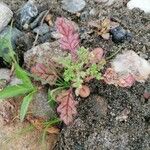
Dysphania botrys
Jerusalem-oak · Jerusalem-oak goosefoot · Feather-geranium · Sticky Goosefoot
Description
Source: leafsnapDysphania botrys, commonly known as Jerusalem oak or feathered geranium, is a herbaceous annual plant belonging to the Amaranthaceae family. Native to the Mediterranean region, it can be found across various parts of Europe, Asia, and North Africa. The plant reaches up to 60 cm in height and features a bushy appearance with finely divided leaves arranged alternately on its stem. Jerusalem oak produces small, greenish-yellow flowers clustered at the tips of its branches. These flowers bloom from mid-summer to early autumn and are followed by small fruits containing black seeds. Historically, the plant has been valued for its medicinal properties, particularly its anti-inflammatory effects. Additionally, it has been used as a culinary herb in some European regions, where it is added to salads or cooked dishes. Dysphania botrys thrives in well-drained soil with full sun exposure but can also tolerate partial shade. It requires moderate watering during dry periods but is drought-resistant once established. Overall, Dysphania botrys is an attractive ornamental plant with valuable medicinal properties, making it an excellent addition to any garden or landscape design project.
Care Guide
💧 Water Every 7 days
Jerusalem oak goosefoot, which originates from temperate regions, thrives in conditions of moderate moisture without becoming waterlogged. It requires weekly watering, benefiting from outdoor environments where natural rainfall helps keep it hydrated. As an annual herb, the growth cycle of Jerusalem oak goosefoot is closely tied to water availability, making the most of seasonal rains.
How should I water my Jerusalem oak goosefoot plant?
To water Jerusalem oak goosefoot, you have a few options. You can use a garden hose with a spray nozzle, a watering can, or any other common watering tool. The type of water you use isn't too important, as this plant can survive with rainwater, tap water, or filtered water. It's generally best to avoid watering from above, as this can harm the leaves, flowers, and possibly cause diseases. A drip irrigation system is often the most effective way to water Jerusalem oak goosefoot, as it provides even and direct water to the soil. If you have a potted Jerusalem oak goosefoot, you can use a cup, watering can, or tap to water the plant directly at the soil level.
What should I do if I give my Jerusalem oak goosefoot plant too much or too little water?
The remedy for underwatering Jerusalem oak goosefoot is simple: just water it regularly when you notice it lacks moisture. However, overwatering can be a more serious issue if not caught early. When overwatered, the plant may develop diseases that can lead to its decline and death. To prevent this, choose a suitable location for growing the plant. This location should have plenty of sunlight to dry the soil and good drainage to prevent water from pooling and causing waterlogged soil. If you overwater a potted Jerusalem oak goosefoot, consider switching it to a new pot with better drainage. When repotting, use loose soil and ensure the new pot drains efficiently.
How often should I give water to my Jerusalem oak goosefoot plant?
To care for your Jerusalem oak goosefoot, it is important to provide regular watering throughout the growing season. In the spring, water the plant about once per week. As the weather gets warmer, you may need to increase the frequency to two to three times per week. However, overwatering can be harmful to the plant, so be cautious. It is also important to keep the soil moist, but not wet, regardless of how often you water. When it comes to a potted Jerusalem oak goosefoot, the watering requirements are slightly different. The soil in pots tends to dry out faster, so you will likely need to water it more frequently. In most cases, plan to water a potted plant a few times per week instead of just once per week for a ground-planted one.
How much water does my Jerusalem oak goosefoot plant require?
Determining the right amount of water for your Jerusalem oak goosefoot can be done in a few different ways. Some gardeners prefer to gauge the soil's moisture level by feeling it and watering until the top six inches are moist. Alternatively, you can follow a recommended measurement, such as providing your plant with two gallons of water per week. However, be cautious not to overwater your plant if it requires less than the recommended amount. When growing Jerusalem oak goosefoot in a container, a different approach is needed. You should water enough to moisten all the dry layers of soil, which can be determined by inserting your finger into the soil or observing slight excess water escaping through the drainage holes.
How can I know if I'm giving my Jerusalem oak goosefoot enough water?
Avoiding overwatering your Jerusalem oak goosefoot can be somewhat difficult. While these plants have deep roots that need weekly watering, they are also highly susceptible to root rot. Overwatering can cause browning in the plant. Underwatering is less likely as the plants can survive without additional watering for a period of time, but if they are not watered for too long, wilting and dry leaves may occur.
☀️ Light Full sun
Jerusalem oak goosefoot does best in locations that receive generous sunlight. It is not known to tolerate low-light conditions, so ample sun is important for its healthy growth. It originates from regions where sunlight is plentiful. Both too much and too little sunlight can negatively affect its growth.
What are the sunlight requirements for Jerusalem oak goosefoot?
Jerusalem oak goosefoot requires full sun, defined as more than 6 hours of sunlight daily. It thrives in environments that are generously bathed in sunlight, as it originates from habitats where sunlight is abundant. It is crucial to observe how sunlight moves through your garden to select spots that provide the right balance of light and shade, ensuring the plant's happiness. Insufficient sunlight can deter its growth, so it's important to ensure it gets adequate sunlight.
How does artificial lighting support indoor plants, and what guidelines should be followed?
When natural sunlight is insufficient, artificial lighting provides an essential solution for indoor plants, including Jerusalem oak goosefoot, promoting their growth. The guidelines for using artificial lights include choosing the right type such as LED lights, which can offer the specific wavelengths needed by plants. For full sun plants, 30-50W/sq ft of artificial light is needed, partial sun plants require 20-30W/sq ft, and full shade plants need 10-20W/sq ft. The light source should be placed 12-36 inches above the plant, mimicking natural sunlight's intensity and duration, with most plants needing 8-12 hours of light per day.
What are the common symptoms of light deficiency in Jerusalem oak goosefoot?
Common symptoms of light deficiency in Jerusalem oak goosefoot include small new leaves, leggy or sparse growth, faster leaf drop, slower or no new growth, lighter-colored new leaves, chlorosis, sunscald, leaf curling, wilting, and leaf scorching. These symptoms indicate adjustments in the plant's growth patterns and health due to inadequate sunlight. Ensuring the plant receives sufficient sunlight or supplemental artificial lighting can help mitigate these symptoms.
What solutions can alleviate light deficiency problems in Jerusalem oak goosefoot?
To address light deficiency in Jerusalem oak goosefoot, gradual relocation to sunnier spots is advisable, ensuring at least 6 hours of direct sunlight daily. For indoor plants, using a south-facing window or artificial light such as desk, ceiling lamps, or professional plant grow lights can help. Outdoors, gradual relocation helps avoid sunburn. Reducing obstructions such as pruning obstructive trees or transplanting the plant to sunnier locations with good drainage can also be beneficial. While parts of the plant affected by insufficient light may not recover fully, promoting new growth through increased light exposure will result in healthier growth.
🌡️ Temperature 5–35°C
Jerusalem oak goosefoot can tolerate a wide span of temperatures, though its distribution may still be restricted by specific combinations of moisture and heat. It performs best in warm summer climates with sufficient rainfall or supplemental watering. Extended stretches of cloudy, rainy weather, as well as prolonged high heat, can raise the risk of the plant dying. In winter, shielding it from cold improves its chances of survival.
💨 Humidity
🪴 Soil 6-7
🌱 Fertilizer
Jerusalem oak goosefoot benefits from regular, dilute applications of fertilizer to encourage healthy leaf growth. You should fertilize Jerusalem oak goosefoot about once a month during the summer. Nitrogen is essential for foliage, and providing nitrogen-rich sources helps Jerusalem oak goosefoot prosper.
🪴 Pot & Repot
✂️ Pruning
Prune Jerusalem oak goosefoot from early to late spring by trimming away any dead stems. This encourages growth and improves airflow. Regular pruning helps prevent legginess, controls its spread, and enhances both the plant's appearance and health. Additionally, to manage its invasiveness, remove spent flowers to limit seeding opportunities.
🌿 Propagating
🐛 Diseases & pets
☠️ Toxicity
Characteristics
- Plant Type
- Herb
- Life Cycle
- Annual
- Genus
- Dysphania
- Family
- Amaranthaceae
- Hardiness Zone
- 5-9
- Mature Height
- 10 cm to 61 cm
- Mature Spread
- 61 cm to 91 cm
- Leaf Color
- Light Green, Yellow Green
- Leaf Type
- Semi-evergreen
- Flower Color
- Yellow, Green, Purple, Brown
- Flower Size
- 2.54 cm
- Bloom Time
- Mid summer, Late summer, Early fall
- Planting Time
- Spring, Summer, Autumn
- Harvest Time
- Early fall, Mid fall
- Native Area
- Egypt, India, Turkey, Austria, Slovakia, Montenegro, Pakistan, Croatia, Slovenia, Yemen, Belarus, Uzbekistan, Russia, Iraq, Estonia, Oman, Romania, Latvia, Belgium, Portugal, Nepal, Saudi Arabia, France, Tajikistan, Cyprus, Bulgaria, Poland, Armenia, Greece, Ukraine, Lebanon, China, Lithuania, Afghanistan, Syria, Kyrgyzstan, Kazakhstan, Italy, Spain, Switzerland, Vietnam, Mongolia, Bhutan, Iran, Albania, Azerbaijan, Hungary, Turkmenistan