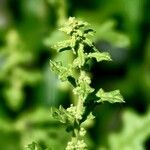
Dysphania schraderiana
Care Guide
💧 Water
Schrader's goosefoot flourishes in consistently moist soil and benefits from weekly watering. To replicate its natural environment, it's best to maintain higher humidity levels. Its ability to adapt to a range of indoor temperatures makes Schrader's goosefoot a versatile choice for indoor greenery.
How should I water my Schrader's goosefoot plant?
To water Schrader's goosefoot, you have several options for watering tools such as a garden hose with a spray nozzle or a watering can. The plant is not too demanding when it comes to water, as it can thrive with rainwater, tap water, or filtered water. However, it's best to avoid watering this plant from above as it can harm the leaves and flowers and potentially cause disease. Instead, using a drip irrigation system is often the most effective method as it ensures water is evenly distributed and directly reaches the soil. For Schrader's goosefoot in a container, you can use a cup, watering can, or tap water to water the soil directly.
What should I do if I give too much or too little water to my Schrader's goosefoot?
To remedy underwatering Schrader's goosefoot, simply water it more regularly when you notice it lacks moisture. Overwatering, on the other hand, can be a serious issue that may lead to diseases and, ultimately, the death of the plant. To prevent overwatering, choose a sunny location with good drainage for the plant to help dry the soil and avoid waterlogged conditions. If you have overwatered a potted Schrader's goosefoot, consider repotting it in a container with better drainage. Use loose soil and a pot that drains efficiently.
How often should I give water to my Schrader's goosefoot?
To ensure the health of your Schrader's goosefoot plant, it is important to water it regularly throughout the growing season. In the spring, watering once per week should be sufficient. However, as the weather gets warmer, you may need to increase the frequency to two or three times per week. Be careful not to exceed this watering rate, as it can be harmful to the plant. It is also important to keep the soil moist, but not overly wet, regardless of how often you water. If your Schrader's goosefoot is in a pot, you will need to water it more frequently compared to an in-ground plant. Potted plants have soil that can heat up and dry out faster, so watering it a few times per week is usually necessary.
How much water does my Schrader's goosefoot plant need?
There are various ways to decide how much water to give to your Schrader's goosefoot plant. A common approach is to assess the moisture level of the soil, aiming to water until the top six inches of soil feel damp. Another option is to use a specific measurement, such as around two gallons per week, adjusting based on temperature and how quickly the soil dries out. However, strictly adhering to these guidelines may result in overwatering if your plant requires less water. For container-grown Schrader's goosefoot, you need a different method. Ensure all layers of dry soil are moistened, which can be checked by sticking your finger in the soil or observing a slight trickle of excess water from the pot's drainage holes.
How can I know if I'm giving enough water to my Schrader's goosefoot?
Caring for your Schrader's goosefoot can be a challenge. While they need weekly watering to keep their deep roots moist, they are also very prone to root rot and browning if overwatered. Underwatering is not as big of a concern, as these plants can tolerate some drought, but if neglected for too long, they may wilt and develop dry leaves.
☀️ Light Full sun
Schrader's goosefoot comes from bright, open habitats and does best in full sun. It can endure some partial shade but favors direct sunlight for the best growth. This plant, which can be either annual or biennial, is noted for its preference for sunny conditions.
What are the sunlight requirements for Schrader's goosefoot?
Schrader's goosefoot thrives in full sun, requiring above 6 hours of sunlight daily for optimal growth. It can also grow in partial sun, which means about 3-6 hours of sunlight. It's important to monitor the movement of sunlight through your garden to ensure that your plants are placed in locations that offer a balance of light and shade, conducive to their health and happiness.
How does artificial lighting support Schrader's goosefoot?
When natural sunlight is insufficient, especially during winter or in less sunny spaces, artificial lighting becomes essential for Schrader's goosefoot's growth. LED lights are recommended as they can provide specific wavelengths needed for plant growth. Full sun plants need 30-50W/sq ft, partial sun plants require 20-30W/sq ft, and full shade plants should have 10-20W/sq ft of artificial light. The light source should be placed 12-36 inches above the plant to mimic natural sunlight, with most plants needing 8-12 hours of light per day.
What are the symptoms of light deficiency or overexposure in Schrader's goosefoot?
Symptoms of light deficiency in Schrader's goosefoot include smaller new leaves, leggy or sparse growth, faster leaf drop, slower or no new growth, and lighter-colored or yellow (chlorosis) leaves. Overexposure to sunlight can cause sunscald, leaf curling, wilting, leaf scorching, and negatively affect the plant's ability to photosynthesize. These symptoms indicate either insufficient sunlight or too much exposure, both of which can impair the plant's health and growth.
How can I address sunlight issues for Schrader's goosefoot?
To optimize growth for Schrader's goosefoot, gradually move plants to sunnier locations until they receive at least 6 hours of direct sunlight daily. For indoor plants, use south-facing windows or artificial light sources like desk or ceiling lamps, or professional plant grow lights for at least 8 hours a day. Outdoors, adjust plant positioning to avoid sunburn. If obstructed by trees, consider pruning to allow more sunlight. For ground plants, transplanting during the dormant season to areas with better sunlight and drainage may be beneficial. Remember, affected parts might not recover, but new growth will be healthy with improved light exposure.
🌡️ Temperature 20–37.8°C
Schrader's goosefoot kann sich an ein weites Spektrum von Temperaturverhältnissen anpassen, doch seine Verbreitung kann durch verschiedene Kombinationen von Wasser- und Wärmebedingungen eingeschränkt sein. Am besten gedeiht die Pflanze in warmen Sommerklimata bei ausreichendem Niederschlag oder Bewässerung. Längere Phasen mit wolkigem, regnerischem Wetter sowie anhaltend hohe Temperaturen erhöhen die Wahrscheinlichkeit, dass Schrader's goosefoot abstirbt. Im Winter kann ein angemessener Kälteschutz die Überlebenschancen der Pflanze verbessern.
💨 Humidity
🪴 Soil 6-7
🌱 Fertilizer
Schrader's goosefoot benefits from regular, light applications of fertilizer to encourage healthy leaf development. You should feed Schrader's goosefoot roughly once a month during the summer months. Nitrogen is essential for foliage, and adding nitrogen-rich sources helps Schrader's goosefoot thrive.
🪴 Pot & Repot
✂️ Pruning
Pruning Schrader's goosefoot from early to late spring encourages healthy growth by removing dead branches. Use clean, sharp tools to make precise cuts and minimize damage. This practice improves air circulation, prevents fungal issues, and enhances the plant's vigor and appearance, resulting in denser foliage.
🌿 Propagating
🐛 Diseases & pets
☠️ Toxicity
Characteristics
- Plant Type
- Herb
- Life Cycle
- Annual
- Genus
- Dysphania
- Family
- Amaranthaceae
- Hardiness Zone
- 9-11
- Mature Height
- 30 cm to 76 cm
- Mature Spread
- 20 cm to 40 cm
- Leaf Color
- Light Green, Yellow Green
- Leaf Type
- Semi-evergreen
- Flower Color
- Yellow, Green
- Flower Size
- 0.10 cm to 0.20 cm
- Bloom Time
- Summer, Early fall, Mid fall
- Planting Time
- Spring, Summer, Autumn
- Harvest Time
- Late summer, Fall, Early winter
- Native Area
- Saudi Arabia, Djibouti, Somalia, Lesotho, Angola, Namibia, South Africa, Zambia, Rwanda, Pakistan, Eritrea, Sudan, Yemen, Kenya, Uganda, Tanzania, Zimbabwe, Russia, Belarus, Ukraine, Chad, China, Ethiopia, Botswana