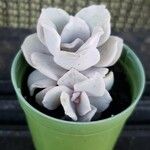
Echeveria Laui
Ivory spooned echeveria
Description
Source: leafsnapEcheveria laui is a succulent plant that belongs to the Crassulaceae family. It is a small, slow-growing species, typically reaching up to 6 inches in height and 8 inches in width. The leaves of Echeveria laui are fleshy and spoon-shaped, bearing a bluish-green hue with pinkish-red tips. During the summer months, the plant produces small pink flowers atop tall stalks. Native to Mexico, Echeveria laui thrives in well-draining soil and requires plenty of sunlight. It needs minimal watering, as it can store water in its leaves for extended periods. This plant has gained popularity among succulent enthusiasts due to its unique appearance and ease of care. It can be cultivated both indoors and outdoors, provided it receives adequate sunlight. Overall, Echeveria laui is an attractive addition to any garden or indoor space, thanks to its striking appearance and low maintenance requirements.
Care Guide
💧 Water Every 7 days
The Echeveria laui is a drought-tolerant succulent native to arid regions, known for storing water in its fleshy leaves. To care for this plant, water it once every 2-3 weeks, ensuring that the soil dries out completely between waterings. It thrives indoors when planted in well-draining soil, which helps prevent waterlogging and root rot.
What should I do if I give my Echeveria laui too much or too little water?
Echeveria laui is a succulent that can tolerate long periods without water, so it is uncommon for them to suffer from underwatering. However, if you forget to water your plant for a month or more, you may notice that it looks thirsty or damaged due to lack of watering. Signs of underwatering include a lackluster and wrinkled appearance, dried up leaves, browning, or dropping off of leaves, and completely dried out soil. To address underwatering, give your Echeveria laui plenty of water by submerging the pot in water for 5-10 minutes. Once you feel moisture on the soil surface, the watering is adequate. On the other hand, overwatering is dangerous for Echeveria laui and can lead to root rot, which hinders nutrient and water absorption. Root rot occurs when wet conditions allow fungi and bacteria to thrive and feed on the roots. Symptoms of overwatering include yellow, swollen, and translucent organs that may burst open from excess water. If left untreated, the plant may turn brown or black and lose leaves easily. Check the soil to confirm if overwatering is the issue, as similar symptoms can arise from other problems. Saving an overwatered plant can be challenging, but it's possible if caught early. Remove the plant from its pot and inspect the roots and soil. Remove wet soil, rinse the roots in room-temperature water to eliminate fungi, and assess their health. If root rot is present, the roots will appear dark brown or black, soft, mushy, or slimy. If most of the roots are affected, saving the plant may not be possible. However, if only a portion is affected, there is a chance it can be saved. Use a sterilized cutting tool to cut away any unhealthy-looking roots. Dip the remaining firm and pale roots in a fungicide to eliminate spores. Repot the Echeveria laui in fresh, well-draining soil. While this method does not always guarantee success, in most cases, the plant will recover and produce new growth in the next growing season.
How often should I give water to my Echeveria laui?
Determining how often to water Echeveria laui is not strictly defined. To gauge when watering is necessary, it is advised to check the soil and only proceed if it is completely dry. Two methods for checking the soil are either sticking a finger in the pot or using a moisture meter to assess the soil below the surface. In the case of a deep pot, one can use a stick or chopstick for this purpose. If the soil feels even slightly moist, it is recommended to wait a few days and check again. Generally, most individuals will need to water Echeveria laui approximately every two weeks in the summer and once a month in the winter. However, there are additional factors that can influence the frequency of watering. See the following section for a list of considerations that can assist in determining the appropriate watering schedule.
What should I think about when I water my Echeveria laui?
To properly water your Echeveria laui, you need to consider several environmental factors. These include the size of the container, the type of soil, the temperature, and the humidity. For container and soil selection, it's important to choose a container with drainage holes to prevent excess water from building up. A small container will hold less moisture, so it needs to be watered more frequently, while a larger pot will retain moisture longer and require less frequent watering. Avoid using an oversized pot, as it can lead to overwatering. When repotting, choose a container that is just one size larger than the current one, and opt for a shallow container since Echeveria laui has shallow roots. The frequency of watering will also vary with the seasons. In winter, when growth slows down, Echeveria laui requires less water as it doesn't use as much energy. Additionally, the cooler air reduces evaporation, which means the soil stays wet for longer periods compared to the summer. The climate in your area also plays a role in watering frequency. In humid regions with regular rainfall, you may need to water less often compared to arid and dry climates. Keep in mind that even within the same geographic location, conditions can still change with the seasons and indoor heating or air conditioning. If you have planted Echeveria laui in the ground, it generally won't need supplemental watering once its root system is established. It will rely on natural precipitation and dew. However, during extended dry periods, intermittent watering may be necessary. In regions where Echeveria laui can only be grown in containers, you can move the plant outdoors during spring and summer when temperatures are suitable and bring it back indoors as temperatures drop. Keep in mind that a potted Echeveria laui kept outdoors will generally require more water, as it is exposed to more sunlight, even on a shaded porch.
How do you water Echeveria laui?
To water Echeveria laui effectively, soak it until saturated and then wait for it to dry out before watering again. This plant can tolerate drought, so it's okay to let it get quite dry before watering. It's always better to give too little water than too much. When watering, ensure that the entire pot's soil gets thoroughly soaked. Avoid pouring water in just one spot; instead, go around the rim of the planter to wet all sides of the plant. The amount of water needed depends on the container size and how well the soil absorbs water. Allow the water to drain out from the drainage holes, ideally leaving it in the saucer for 20-30 minutes to absorb into dry pockets of soil. Afterward, discard any excess water to prevent waterlogging. Bottom-watering is another effective method, as it ensures thorough moisture penetration. This involves placing the pot in a saucer of water and allowing the soil to absorb moisture through the drainage holes. You'll know the soil has absorbed enough water when the top layer feels moist. This method takes a little longer than top-watering but provides a more even distribution of water throughout the pot. Considering Echeveria laui's natural habitat, which is relatively dry with infrequent rain, bottom-watering when the soil is completely dry mimics this situation. Deep soil bathing is better than frequent light watering for Echeveria laui.
☀️ Light Full sun
Echeveria laui prefers direct, unobstructed sunlight but also does well in partially shaded settings. Environments with intense sun encourage its best growth. However, too much exposure can cause damage, while too little light may stunt growth or prevent blooming.
What are the sunlight requirements for Echeveria laui?
Echeveria laui requires a significant amount of sunlight to thrive optimally. It craves full sun, which is defined as more than 6 hours of direct sunlight daily, but it can also flourish under partial sun, meaning it does well with about 3-6 hours of sunlight. The plant's native habitat is characterized by intense sunlight, which promotes its growth. However, it's important to watch how sunlight moves through your garden or home to find the perfect spot for your Echeveria laui, as too much direct sunlight can be harmful, leading to issues like leaf scorching or sunscald, and too little can result in reduced growth or blooming.
What are the signs of light deficiency in Echeveria laui?
When Echeveria laui does not receive enough light, it may exhibit several symptoms indicating light deficiency. These include smaller new leaves, leggy or sparse growth, faster leaf drop, slower or halted new growth, and lighter-colored new leaves. Insufficient sunlight leads to a decrease in chlorophyll, which can cause the leaves to develop irregular color patterns or appear pale, a condition known as chlorosis. Additionally, intense sunlight exposure can result in sunscald, leaf curling as a defense mechanism against excessive light, wilting due to increased water loss, and leaf scorching, characterized by brown, dry edges on leaves.
How can indoor lighting be optimized for Echeveria laui?
For optimal growth of Echeveria laui indoors, especially when natural sunlight is insufficient, artificial lighting can be a vital solution. It is suggested to use LED lights, which can be customized to provide specific wavelengths of light needed by the plant. Full sun plants require 30-50W per square foot, partial sun plants 20-30W per square foot, and full shade plants 10-20W per square foot of artificial light. The light source should be placed 12-36 inches above the plant to mimic natural sunlight, and it's crucial to mimic natural daylight hours, generally ensuring the plant receives 8-12 hours of light per day.
What steps should be taken to address insufficient sunlight for Echeveria laui?
To address insufficient sunlight for Echeveria laui, consider gradually moving the plant to a sunnier location, aiming for it to receive at least 6 hours of direct sunlight daily. For indoor plants that are large or hard to move, using artificial light such as desk lamps or professional grow lights for at least 8 hours daily can help. Outdoor plants should also be moved gradually to sunnier spots to prevent sunburn. If trees or other environmental elements block sunlight, pruning or transplanting may be necessary. It’s crucial to choose the plant's dormant period for transplanting to ensure it adapts well to the new location with ample sunlight and good drainage. While parts of the plant that suffered due to low light may not recover, new growth will be healthy with improved lighting conditions.
🌡️ Temperature 20–37.8°C
Echeveria laui naturally occurs in climates with temperatures between 68 and 100 °F (20 to 38 °C). It prefers conditions within that range. Depending on your local climate, you may need to make seasonal adjustments to maintain those optimal temperatures.
What are the ideal growing conditions for Echeveria laui?
Echeveria laui thrives in climates with temperatures ranging from 68 to 100°F (20 to 38°C), preferring these temperatures for optimal growth. It is a heat-loving plant that goes dormant in winter. During colder months, if the temperature drops below 32°F (0°C), it should be brought indoors to a location with ample sunlight, preferably near a south-facing window. Supplemental lighting may be needed if natural light is insufficient. As temperatures fall below 68°F (20°C), the plant's growth slows, and watering should be reduced or stopped to prevent root rot. For outdoor plants, halt watering completely in low temperatures. Temporary insulation such as a greenhouse or wrapping with fabric or plastic film can help protect the plant in cold conditions.
How does low temperature affect Echeveria laui and what are the solutions?
Echeveria laui is not tolerant of low temperatures and thrives when temperatures are above 68°F (20°C). When temperatures drop below freezing (32°F or 0°C), it should be kept above this point to avoid damage. Exposure to temperatures below -5°C can weaken the plant, making it wilt and prone to root rot. Initial frost damage may not show immediately, but symptoms like withering can appear after a week. In such cases, frostbitten areas should be trimmed away, checking for and removing any rotted roots. The plant can then be propagated through cuttings if necessary. Moving the plant to a warm indoor environment and ensuring it receives ample sunlight or supplemental lighting can help it recover.
What should I do if Echeveria laui is exposed to high temperatures?
During summer, Echeveria laui should be maintained below 100°F (38°C), as it stops growing and becomes prone to water loss, wilting, and sunburn when temperatures exceed 109°F (43°C). If the plant suffers from sunburn or root rot under these conditions, sunburned and rotten parts should be removed. To aid recovery, shield the plant from direct afternoon sunlight and refrain from watering until signs of new growth, particularly new roots, are evident.
💨 Humidity dry (<40%)
This plant prefers dry conditions, so don't mist it. However, watering it less often can also thrive in higher humidity.
🪴 Soil 6-7
🌱 Fertilizer Every 30 days
For Echeveria laui, fertilizing once or twice a year during the growing season is sufficient. Avoid fertilizing in winter and in summer when the plant is dormant. Cut back on fertilizer for plants that have been repotted, and wait a couple of months after repotting before you fertilize. Fertilizing helps maintain healthy growth and promotes blooming.
Why should I put fertilizer on my Echeveria laui?
Applying plant food to Echeveria laui during the growing season helps provide nutrients for healthy growth. Although this plant does store water and nutrients, fertilizing can further support its growth and even promote the production of blooms.
When should I fertilize my Echeveria laui?
Echeveria laui, a type of plant, requires a small amount of fertilizer during its growing season. It is recommended to fertilize it 1-2 times a year, specifically in the spring and autumn. It should not be fertilized during its dormant periods in the winter and summer. When repotting Echeveria laui, be cautious and use less fertilizer. It is also advisable to wait a couple of months after repotting before applying any fertilizer.
When shouldn't I add fertilizer to my Echeveria laui?
Echeveria laui, like many plants, has a dormancy period in which you should avoid fertilizing. This occurs during the summer and winter when the plant stops growing. It is also advisable to refrain from fertilizing for the first couple of months after repotting in the spring.
What kind of plant food should I use for my Echeveria laui?
To properly fertilize Echeveria laui, it is recommended to use a liquid plant food specifically made for succulents and cacti. Make sure to dilute the fertilizer with water to make it half as strong. It is important to avoid excessive buildup of fertilizer in the soil. Apply the fertilizer to the base of the plant and water it thoroughly. Ensure that any excess moisture drains out of the container or is absorbed into the ground.
How do I give my Echeveria laui plant nutrients?
When fertilizing Echeveria laui, liquid plant food is the easier option, but granules can also be used. Follow the instructions on the packaging, ensuring that you dilute liquid fertilizers to half-strength. Whether you choose granules or liquid plant food, apply it to the soil. Cover the granules with a thin layer of soil and water, regardless of the type of plant food you are using.
🪴 Pot & Repot Every 2 years
When repotting Echeveria laui, choose a pot slightly larger than the current one with good drainage. Use a gritty, well-draining succulent or cactus mix. Gently remove the plant from its old pot, brush off excess soil, and plant it at the same depth. Wait several days before watering to allow any root damage to heal. Repot in spring or fall, and place it in a brightly lit spot.
✂️ Pruning
To keep your Echeveria laui in good shape, prune any excess or densely growing branches during the spring and fall. If you want to propagate the plant, follow these steps: First, cut a sturdy stem with 5-6 leaves. Then, treat the cut area with sulfur powder. Allow the wound to heal before planting the stem in slightly moist soil.
🌿 Propagating
🐛 Diseases & pets
☠️ Toxicity
Characteristics
- Plant Type
- Succulent
- Life Cycle
- Perennial
- Hardiness Zone
- 9-11
- Mature Height
- 15 cm
- Mature Spread
- 15 cm
- Leaf Color
- Powder Blue, Light Gray
- Leaf Type
- Semi-evergreen
- Flower Color
- Pink
- Flower Size
- 1.02 cm to 1.52 cm
- Bloom Time
- All year round
- Planting Time
- Spring, Summer, Autumn
- Harvest Time
- All year round
- Native Area
- Mexico